Data may be outdated
Last updated: 7 months ago — Click refresh to get the latest statistics.
Alexander Mosolov is considered the prime representative of 1920s Russian Futurism. His music from before 1930 is mechanistic, highly dramatic, anti-sentimental and demonstrates no concern for popular appeal. Mosolov emphasizes motor rhythms and ostinati, and his futurist pieces are written at an extremely high level of dissonance. Although Mosolov was forced to abandon this idiom with the rise of Stalin, his futurist compositions garnered a lot of attention, had a definite impact on composers such as <a href="spotify:artist:6s1pCNXcbdtQJlsnM1hRIA">Shostakovich</a>, and speak effectively to later trends -- in this sense they were truly "futuristic."
Mosolov was the son of an opera singer; he began piano studies with her at age three. His mother's second marriage brought Mosolov into contact with modernist painter Mikhail Leblan, who introduced him to international currents within the art world. Mosolov volunteered in the Red Army during the October Revolution, and in 1921 was discharged due to injuries. Mosolov enrolled in the Moscow Conservatoire, studying composition with <a href="spotify:artist:07yD267mZTiHoptqdYd5mc">Nikolai Myaskovsky</a> and Reinhold Glière. While neither of them subscribed to the concept of industrial modernism Mosolov was already idealizing, both agreed that his talent was unmistakable, and offered their support to him for decades afterward.
Mosolov's first works were launched at an Association of Contemporary Music concert held in Moscow in September 1924. The immediate critical response to Mosolov's music was strongly negative, Mosolov being attacked over the "unsuitability" of his artistic goals and his aloof attitude towards public taste. Mosolov answered these charges with the ballet, Stal (Steel), first given in December 1927. The first section of the ballet (Zavod [The Iron Foundry]) was a monumental success both in Russia and throughout the world. While the piece is dissonant in the extreme, Mosolov coordinates the mechanistic rhythms into specific orchestral groups that work together like cogs in a well-oiled machine. The dramatic intensity of Zavod has kept it in use as cinematic stock library music long after it was forgotten as a concert work.
Mosolov's String Quartet No. 1 was heard at the ISCM Festival in Frankfurt in 1927, earning him a contract with Universal Edition. Mosolov's most remarkable surviving composition, Piano Concerto No. 1, was first heard in Leningrad (St. Petersburg) in February 1928, with Mosolov himself as soloist. Other extant works from this period include Four Newspaper Advertisements, Three Children's Songs, and a wide miscellany of piano and chamber music.
With the piano pieces Turkmenistan Nights (1928) Mosolov began to work more extensively with ethnic folk forms. His interest in this realm would prove convenient, as Mosolov was already under scrutiny by the Soviet government, which regarded his music as of no use to the proletariat and too closely tied to Western modernism. Mosolov took it upon himself to make an exhaustive survey of folk songs in Kyrgyz, Turkmenistan, Stavropol, and other remote regions of the Soviet domain. His Second Piano Concerto (1932) combines these folk elements with a mild remainder of earlier stylistic gestures. This proved not enough to keep Mosolov out of trouble, and in 1938 he was arrested by the NKVD and sent to a forced labor camp. The intervention of <a href="spotify:artist:07yD267mZTiHoptqdYd5mc">Myaskovsky</a> and <a href="spotify:artist:2wk53EBcWhriq03tl5nDYV">Glière</a> saw to it that Mosolov only served nine months of an eight-year sentence.
Afterward, Mosolov continued to compose, albeit largely in the idiom approved by the Soviet State. Mosolov's work list shows that he was one of the most prolific composers of the twentieth century, but the vast majority of his works are believed lost or otherwise unaccounted for. Fortunately, as Mosolov's value as a composer is better understood, once suppressed manuscripts of his work are coming to light.
Mosolov was the son of an opera singer; he began piano studies with her at age three. His mother's second marriage brought Mosolov into contact with modernist painter Mikhail Leblan, who introduced him to international currents within the art world. Mosolov volunteered in the Red Army during the October Revolution, and in 1921 was discharged due to injuries. Mosolov enrolled in the Moscow Conservatoire, studying composition with <a href="spotify:artist:07yD267mZTiHoptqdYd5mc">Nikolai Myaskovsky</a> and Reinhold Glière. While neither of them subscribed to the concept of industrial modernism Mosolov was already idealizing, both agreed that his talent was unmistakable, and offered their support to him for decades afterward.
Mosolov's first works were launched at an Association of Contemporary Music concert held in Moscow in September 1924. The immediate critical response to Mosolov's music was strongly negative, Mosolov being attacked over the "unsuitability" of his artistic goals and his aloof attitude towards public taste. Mosolov answered these charges with the ballet, Stal (Steel), first given in December 1927. The first section of the ballet (Zavod [The Iron Foundry]) was a monumental success both in Russia and throughout the world. While the piece is dissonant in the extreme, Mosolov coordinates the mechanistic rhythms into specific orchestral groups that work together like cogs in a well-oiled machine. The dramatic intensity of Zavod has kept it in use as cinematic stock library music long after it was forgotten as a concert work.
Mosolov's String Quartet No. 1 was heard at the ISCM Festival in Frankfurt in 1927, earning him a contract with Universal Edition. Mosolov's most remarkable surviving composition, Piano Concerto No. 1, was first heard in Leningrad (St. Petersburg) in February 1928, with Mosolov himself as soloist. Other extant works from this period include Four Newspaper Advertisements, Three Children's Songs, and a wide miscellany of piano and chamber music.
With the piano pieces Turkmenistan Nights (1928) Mosolov began to work more extensively with ethnic folk forms. His interest in this realm would prove convenient, as Mosolov was already under scrutiny by the Soviet government, which regarded his music as of no use to the proletariat and too closely tied to Western modernism. Mosolov took it upon himself to make an exhaustive survey of folk songs in Kyrgyz, Turkmenistan, Stavropol, and other remote regions of the Soviet domain. His Second Piano Concerto (1932) combines these folk elements with a mild remainder of earlier stylistic gestures. This proved not enough to keep Mosolov out of trouble, and in 1938 he was arrested by the NKVD and sent to a forced labor camp. The intervention of <a href="spotify:artist:07yD267mZTiHoptqdYd5mc">Myaskovsky</a> and <a href="spotify:artist:2wk53EBcWhriq03tl5nDYV">Glière</a> saw to it that Mosolov only served nine months of an eight-year sentence.
Afterward, Mosolov continued to compose, albeit largely in the idiom approved by the Soviet State. Mosolov's work list shows that he was one of the most prolific composers of the twentieth century, but the vast majority of his works are believed lost or otherwise unaccounted for. Fortunately, as Mosolov's value as a composer is better understood, once suppressed manuscripts of his work are coming to light.
Monthly Listeners
2,283
Monthly Listeners History
Track the evolution of monthly listeners over the last 28 days.
Followers
1,971
Followers History
Track the evolution of followers over the last 28 days.
Top Cities




Related Artists

Ensemble Musikfabrik
Maxim Mikhailov
Philippe Lefebvre

Ivan Wyschnegradsky

Boris Mikolayovich Lyatoshinsky
Eastman-Rochester Orchestra

Byelorussian Radio and TV Symphony Orchestra
Moscow Philharmonic Symphony Orchestra

Christopher Ward
Gavriil Popov
Jiří Stárek
Joly Braga Santos

Cape Town Philharmonic Orchestra
Poznan Philharmonic Orchestra

Juan Jose Olives

Vasily Kalinnikov
Miloslav Kabeláč


Karol Maciej Szymanowski

Glenn Dicterow
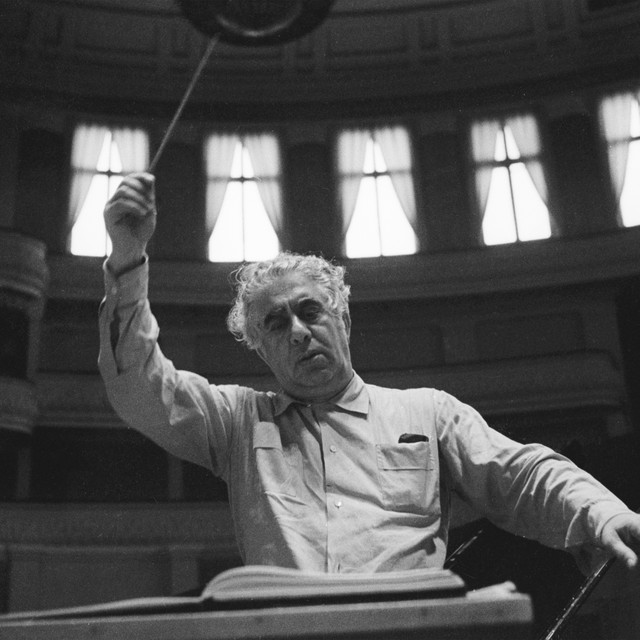
Aram Ilyich Khachaturian