Data may be outdated
Last updated: 9 months ago — Click refresh to get the latest statistics.
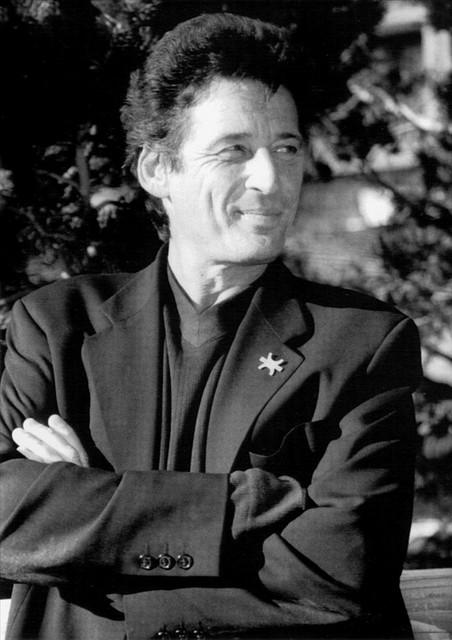
Born in 1953 in Pueblo, CO, to a Latina mother and "an Okie farmer with a German name," Blaine Reininger has the advantage of not only one of the most distinct names in music but an equally distinct and often fascinating career in general, thanks to his nearly continuous membership in one of America's most underrated bands, <a href="spotify:artist:4zn0m3hBUQVl6Nf36Sb0A6">Tuxedomoon</a>, which started off in San Francisco in 1977 around a core of Reininger and <a href="spotify:artist:2szO9JwHaj3hOnNVTUdqXL">Steven Brown</a>. The band's subsequent career, first as Ralph Records semi-stalwarts and then as expatriates struggling on a number of levels in Europe, is its own tale of persistence, but one that Reininger didn't always participate in.
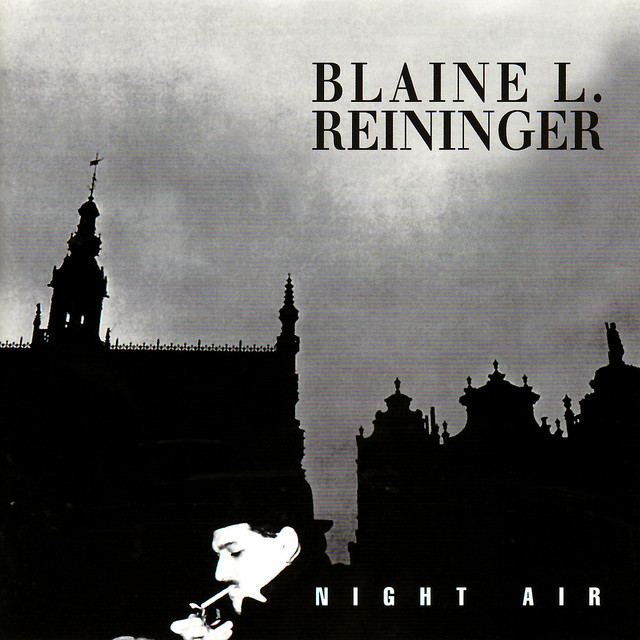
He first started doing solo shows when the band was in Brussels, on one night suffering a terrible hand injury when he was mugged after a show. The incident provided grist for what later turned out to be his solo debut, the moodily experimental Broken Fingers, in 1982. While not intended to be a formal solo start at the time -- a number of tracks were already planned as <a href="spotify:artist:4zn0m3hBUQVl6Nf36Sb0A6">Tuxedomoon</a> efforts -- other factors led to Reininger deciding to separate from the band in 1983. A reunion with former <a href="spotify:artist:4zn0m3hBUQVl6Nf36Sb0A6">Tuxedomoon</a> guitarist Michael Belfer resulted in Reininger's second album, the confident Night Air, getting a release in 1984, gaining Reininger more attention and later resulting two subsequent EPs, Colorado Suite and Paris en Automne, that found him working more closely with a backing band. Following the shows that provided the tracks for Live in Brussels, however, Reininger and his band split, with the follow-up effort in 1987, Byzantium, proving to be a somewhat strident and weak third full album.
Happily Reininger and his <a href="spotify:artist:4zn0m3hBUQVl6Nf36Sb0A6">Tuxedomoon</a> bandmates <a href="spotify:artist:2szO9JwHaj3hOnNVTUdqXL">Brown</a> and <a href="spotify:artist:2MUm5usw8rC4vVfKf0lcp9">Peter Principle</a> had settled their differences and reunited the following year to begin a new if more sporadic existence, predominantly consisting of live performances rather than studio work, that continued into the 21st century. Reininger's solo career, meanwhile, continued as well, resulting in a combination of full-on solo efforts (such as 1991's Instrumentals), collaborations with <a href="spotify:artist:2szO9JwHaj3hOnNVTUdqXL">Brown</a> (One Hundred Years of Music and Croatian Variations), and soundtracks (Radio Moscow and Manic Man). As of 2004 Reininger split his time between Greece and Italy, continuing to record with and without <a href="spotify:artist:4zn0m3hBUQVl6Nf36Sb0A6">Tuxedomoon</a> while also maintaining his often dryly witty website at www.mundoblaineo.com. ~ Ned Raggett, Rovi
He first started doing solo shows when the band was in Brussels, on one night suffering a terrible hand injury when he was mugged after a show. The incident provided grist for what later turned out to be his solo debut, the moodily experimental Broken Fingers, in 1982. While not intended to be a formal solo start at the time -- a number of tracks were already planned as <a href="spotify:artist:4zn0m3hBUQVl6Nf36Sb0A6">Tuxedomoon</a> efforts -- other factors led to Reininger deciding to separate from the band in 1983. A reunion with former <a href="spotify:artist:4zn0m3hBUQVl6Nf36Sb0A6">Tuxedomoon</a> guitarist Michael Belfer resulted in Reininger's second album, the confident Night Air, getting a release in 1984, gaining Reininger more attention and later resulting two subsequent EPs, Colorado Suite and Paris en Automne, that found him working more closely with a backing band. Following the shows that provided the tracks for Live in Brussels, however, Reininger and his band split, with the follow-up effort in 1987, Byzantium, proving to be a somewhat strident and weak third full album.
Happily Reininger and his <a href="spotify:artist:4zn0m3hBUQVl6Nf36Sb0A6">Tuxedomoon</a> bandmates <a href="spotify:artist:2szO9JwHaj3hOnNVTUdqXL">Brown</a> and <a href="spotify:artist:2MUm5usw8rC4vVfKf0lcp9">Peter Principle</a> had settled their differences and reunited the following year to begin a new if more sporadic existence, predominantly consisting of live performances rather than studio work, that continued into the 21st century. Reininger's solo career, meanwhile, continued as well, resulting in a combination of full-on solo efforts (such as 1991's Instrumentals), collaborations with <a href="spotify:artist:2szO9JwHaj3hOnNVTUdqXL">Brown</a> (One Hundred Years of Music and Croatian Variations), and soundtracks (Radio Moscow and Manic Man). As of 2004 Reininger split his time between Greece and Italy, continuing to record with and without <a href="spotify:artist:4zn0m3hBUQVl6Nf36Sb0A6">Tuxedomoon</a> while also maintaining his often dryly witty website at www.mundoblaineo.com. ~ Ned Raggett, Rovi
Monthly Listeners
2,321
Monthly Listeners History
Track the evolution of monthly listeners over the last 28 days.
Followers
5,268
Followers History
Track the evolution of followers over the last 28 days.
Top Cities


Related Artists


Martyn Bates


Anni Hogan
Stano

Holy Toy


Peter Principle
Duet Emmo



Syrduk

Nicola Alesini & Pier Luigi Andreoni

Dave Greenfield
Drem Bruinsma

Niki Mono

Pheizy





Natalia Levi