Data may be outdated
Last updated: 9 months ago — Click refresh to get the latest statistics.
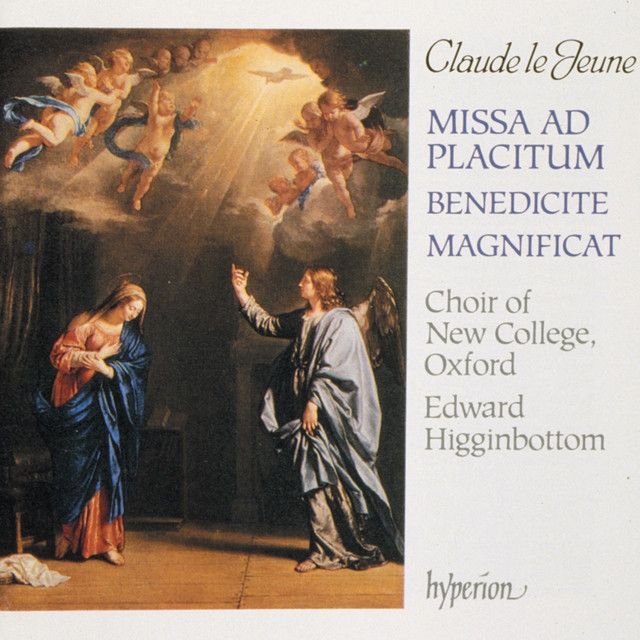
Claude Le Jeune was one of the greatest composers of his time; in his day, Le Jeune was as prominent in France as Orlando di Lasso was in Germany. It is unfortunate that the name of Le Jeune doesn't carry more weight today.
Born at Valenciennes only a few years before Jean-Antoine de Baif, Le Jeune probably received his initial musical training there. By the age of 24 he had already made some headway as a composer; four of his chansons appear in contemporary anthologies of the music of the Imperial Low Countries along with the works of important composers such as <a href="spotify:artist:2IWtBVBi9Ic1xYNnVVx3JB">Clemens non Papa</a>. Le Jeune's most significant early publication appeared in Paris in 1556 with the Dix pseaumes de David en forme de motets. Despite a strong dependence on the model of Willaert, the motets show the early signs of Le Jeune's later abilities and brought him to public attention for the first time. Also in 1556 Le Jeune met lyricist Jean-Antoine de Baif, who was to become his key collaborator and a pricelessly important inspiration to him. Baif founded the Academie de Poésie et de Musique in 1570. One of the driving goals of this exclusive organization was to return music (and poetry) to an imagined Classical glory through a method called musique mesurée à l'antique. Le Jeune's contributions count for well over half of the known works produced in this genre, and it is only through his astoundingly adaptable imagination that the form ever achieved artistic success.
During the next few active years at the Academie, Le Jeune may have met Orlando di Lasso, as at this time their names began to appear together in numerous famous chanson collections. With Baif, D'Aubigné, and <a href="spotify:artist:1IKQUwKW4Q6iGMUPPyZ19N">Ronsard</a>, Le Jeune prepared music and entertainments for the 1581 wedding of the Duke of Joyeuse to Marie de Lorraine. The following year, he became maistre des enfants de musique in the court of the Duke of Anjou.
The turbulent religious situation in France at the time led Le Jeune into difficulties more than once. A Protestant who once declared himself hostile to the Catholic League, he was lucky to have the protection of certain Huguenot noblemen, including William of Orange, and the sympathy of some prominent Catholics. The most telling anecdote comes from the 1590 siege of Paris: Trying to flee the city, Le Jeune was stopped by guards, who would have executed him and burned Le Jeune's manuscript music at the St. Denis gate if not for the intercession of his Catholic friend, composer <a href="spotify:artist:6CBqj4Tx6NtYctPXllp4PI">Jacques Mauduit</a>. Le Jeune subsequently took shelter at the Protestant refuge La Rochelle where his Dodecacorde, a collection of psalm settings, was published in 1598. By 1596, Le Jeune had been granted the title maistre compositeur ordinaire de la musique de nostre chamber by the French King Henry IV. It is not known if Le Jeune lived his last years in exile, but he was buried with honors in the cemetary of La Trinité, Paris, on September 26, 1600. More than 628 works, sacred and profane, survive by Le Jeune, almost all of them published after his death. Publisher Pierre Ballard brought out eight collections of Le Jeune's work between 1601 - 1612; Le Jeune's Les 150 pseaumes remained in print through most of the eighteenth century.
Born at Valenciennes only a few years before Jean-Antoine de Baif, Le Jeune probably received his initial musical training there. By the age of 24 he had already made some headway as a composer; four of his chansons appear in contemporary anthologies of the music of the Imperial Low Countries along with the works of important composers such as <a href="spotify:artist:2IWtBVBi9Ic1xYNnVVx3JB">Clemens non Papa</a>. Le Jeune's most significant early publication appeared in Paris in 1556 with the Dix pseaumes de David en forme de motets. Despite a strong dependence on the model of Willaert, the motets show the early signs of Le Jeune's later abilities and brought him to public attention for the first time. Also in 1556 Le Jeune met lyricist Jean-Antoine de Baif, who was to become his key collaborator and a pricelessly important inspiration to him. Baif founded the Academie de Poésie et de Musique in 1570. One of the driving goals of this exclusive organization was to return music (and poetry) to an imagined Classical glory through a method called musique mesurée à l'antique. Le Jeune's contributions count for well over half of the known works produced in this genre, and it is only through his astoundingly adaptable imagination that the form ever achieved artistic success.
During the next few active years at the Academie, Le Jeune may have met Orlando di Lasso, as at this time their names began to appear together in numerous famous chanson collections. With Baif, D'Aubigné, and <a href="spotify:artist:1IKQUwKW4Q6iGMUPPyZ19N">Ronsard</a>, Le Jeune prepared music and entertainments for the 1581 wedding of the Duke of Joyeuse to Marie de Lorraine. The following year, he became maistre des enfants de musique in the court of the Duke of Anjou.
The turbulent religious situation in France at the time led Le Jeune into difficulties more than once. A Protestant who once declared himself hostile to the Catholic League, he was lucky to have the protection of certain Huguenot noblemen, including William of Orange, and the sympathy of some prominent Catholics. The most telling anecdote comes from the 1590 siege of Paris: Trying to flee the city, Le Jeune was stopped by guards, who would have executed him and burned Le Jeune's manuscript music at the St. Denis gate if not for the intercession of his Catholic friend, composer <a href="spotify:artist:6CBqj4Tx6NtYctPXllp4PI">Jacques Mauduit</a>. Le Jeune subsequently took shelter at the Protestant refuge La Rochelle where his Dodecacorde, a collection of psalm settings, was published in 1598. By 1596, Le Jeune had been granted the title maistre compositeur ordinaire de la musique de nostre chamber by the French King Henry IV. It is not known if Le Jeune lived his last years in exile, but he was buried with honors in the cemetary of La Trinité, Paris, on September 26, 1600. More than 628 works, sacred and profane, survive by Le Jeune, almost all of them published after his death. Publisher Pierre Ballard brought out eight collections of Le Jeune's work between 1601 - 1612; Le Jeune's Les 150 pseaumes remained in print through most of the eighteenth century.
Monthly Listeners
2,495
Monthly Listeners History
Track the evolution of monthly listeners over the last 28 days.
Followers
918
Followers History
Track the evolution of followers over the last 28 days.
Top Cities




Related Artists
Andrea Gabrieli

Les Sacqueboutiers

Bruno Boterf
Ludwig Senfl

Candace Smith
Erik van Nevel

Cappella Artemisia

Eustache du Caurroy
John Ward

Adrian Willaert
Marcello Vargetto

Chiara Margarita Cozzolani
Juan Gutiérrez de Padilla
Claudio Merulo

Adriano Banchieri
Cristofano Malvezzi
Annibale Padovano
Pierre Sandrin
Philippe de Monte

Grzegorz Gerwazy Gorczycki
Bartłomiej Pękiel
Costanzo Festa

Rosso Porpora


Consort Of Musicke
Juan Vasquez
Michael East

Ercole Nisini
Raitis Grigalis

Maria Luisa Baldassari