Data may be outdated
Last updated: 9 months ago — Click refresh to get the latest statistics.
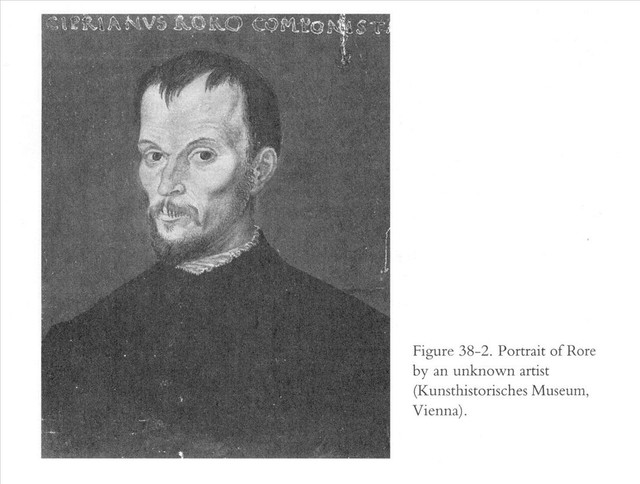
With the exception of <a href="spotify:artist:66hSfMemmixjY58p7KcTV6">Lassus</a>, who was not primarily a madrigal composer and whose astonishing versatility warrants separate consideration, Giaches de Wert was the last of the great Franco-Flemish madrigal composers. Wert was born in Antwerp in 1535, but spent most of his life in Italy, first as a pupil of <a href="spotify:artist:0TobDXzXWtbsQp0ksRxI48">Rore</a> in Ferrara, then at the courts of Mantua and Parma. Wert's early madrigals show the distinct influence of <a href="spotify:artist:7df6bRaEtlbQbWA3BYZhbY">Willaert</a> and <a href="spotify:artist:0TobDXzXWtbsQp0ksRxI48">Rore</a>, but later encompassed new development of the virtuoso madrigal for highly skilled professional performers: a court such as Mantua was now wealthy enough to attract some of the greatest vocal talents of the day. Wert and his contemporaries expanded the scoring of the madrigal, frequently writing in five parts as opposed to four; the upper three parts of the five were invariably for female voices. Wert followed <a href="spotify:artist:0TobDXzXWtbsQp0ksRxI48">Rore</a> in a taste for highly cultivated poetry, setting more poems of Petrarch than did any other madrigalist, and being the first to set texts by the greatest Italian poet of the day, <a href="spotify:artist:0UVULyt93vXAFVEXHv5Ib3">Torquato Tasso</a>, with whom he became friendly at Mantua. Less inspired by amorous poetry, Wert frequently turned to poems of a philosophical or even religious nature, of which Solo e pensoso from his Book VII (published in 1581, the fully mature book of the 13 Wert published) is an outstanding example of the former. The text is a sonnet by Petrarch that represents the philosophical musings and extreme introspection of a lonely wanderer. Here Wert is more concerned with the creation of a mood of solitariness than with individual word painting; the texture is far more contrapuntal than in the majority of earlier madrigals. The setting of the final three lines is gloriously sonorous, the upper voices tellingly contrasted with the lower as the climax is reached. Wert's most emotionally intense pieces have been called expressionistic, but he also sometimes adopted a declamatory style; in both these aspects his works point forward to the madrigal's final stages of development.
Monthly Listeners
2,172
Monthly Listeners History
Track the evolution of monthly listeners over the last 28 days.
Followers
1,026
Followers History
Track the evolution of followers over the last 28 days.
Top Cities


Related Artists
Philippe de Monte
Raúl Mallavibarrena
Contrapunctus

Adrian Willaert

Annibale Padovano
Sebastián de Vivanco
Pierre de Manchicourt
Andrea Gabrieli
Juan Gutiérrez de Padilla
Duarte Lobo
Andreas Pevernage
Thomas Crecquillon
Loyset Compère
Erik van Nevel
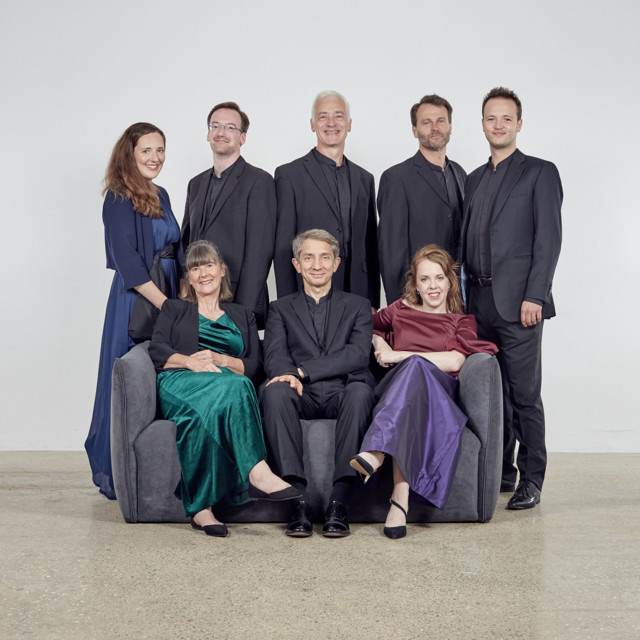
Utopia

Jean Richafort
Robert Morton

Nicola Vicentino
Manuel Cardoso
Benedictus Appenzeller

Bruno Boterf

Rosso Porpora
Cristofano Malvezzi

Candace Smith
Estêvão Lopes Morago