
Data may be outdated
Last updated: 8 months ago — Click refresh to get the latest statistics.
One of the greatest cellists of the twentieth century, a performer who combined technical brilliance with soulful expressiveness, Danil Shafran was born in 1923, in Leningrad (now St. Petersburg). Shafran's first teacher was his father, who was the principal cellist of the Leningrad Philharmonic Orchestra. At the age of eight, Shafran started studying with Alexander Shtrimer, at the Special Music School for Children. Two years later, he was among a group of students selected to advance directly to the Leningrad Conservatory. When he was eleven, Shafran made his debut with the Leningrad Philharmonic, continuing his studies with Shtrimer, who taught the young cellist to appreciate music in the wider context of humanistic culture and of art in general. In 1937, Shafran won the All-Union competition for cellists and violinists. The prize was a magnificent 1630 Amati cello, which Shafran played until the end of his life. This instrument had a delicate, but gorgeous, tone, and Shafran was sometimes criticized for playing an instrument that was perceived as more appropriate for chamber music. In 1950, the year he graduated from the Leningrad Conservatory, Shafran won the Prague International Cello Competition. Although Shafran toured Europe, the U.S., and Japan, he shunned the glamour of international fame, preferring to perform and record in the U.S.S.R. His recordings, for the Melodiya label, include much of the standard cello repertoire, with particular emphasis on Romantic and -century Russian music. For example, he recorded <a href="spotify:artist:46wMXZ6bEoXUlToxUglEtY">Kabalevsky</a>'s Cello Concerto No. 1 in 1954, creating, two years later, a legendary recording of the Cello Sonata by <a href="spotify:artist:6s1pCNXcbdtQJlsnM1hRIA">Shostakovich</a>, with the composer at the piano. One of the high points of Shafran's career was his 1967 performance of <a href="spotify:artist:46wMXZ6bEoXUlToxUglEtY">Kabalevsky</a>'s Cello Concerto No. 2, one of the most demanding works of the cello repertoire. Written as a musical monument to the victims of World War II, and dedicated to Shafran, <a href="spotify:artist:46wMXZ6bEoXUlToxUglEtY">Kabalevsky</a>'s extraordinarily difficult work provided the cellist with an opportunity to display his prodigious technique and profound musicality. Throughout his career, Shafran sought to enrich the cello repertoire by playing transcriptions of works for other instruments. Many of these transcriptions, which include the Franck Violin Sonata and the <a href="spotify:artist:6s1pCNXcbdtQJlsnM1hRIA">Shostakovich</a> Viola Sonata, are miniatures by composers such as <a href="spotify:artist:2UqjDAXnDxejEyE0CzfUrZ">Schumann</a>, <a href="spotify:artist:7y97mc3bZRFXzT2szRM4L4">Chopin</a>, and <a href="spotify:artist:5wTAi7QkpP6kp8a54lmTOq">Brahms</a>, which he often offered as recital encores. Shafran's performances of these familiar encore miniatures, such as <a href="spotify:artist:2UqjDAXnDxejEyE0CzfUrZ">Schumann</a>'s "Träumerei," from the Kinderszenen for piano, were truly magical, for his playing could transform a familiar piano piece into cello music of unearthly beauty. Shafran was particularly known for his rich, expressive tone; his vibrato was unique, and when he played without vibrato, Shafran used his prodigious bowing technique to enrich his tone. A hallmark of Shafran's highly personal style, in addition to his finely nuanced and profoundly expressive tone, was his inimitablerubato. All in all, Shafran was a stupendous virtuoso whose breath-taking technical skill was totally subservient to a profound, overwhelmingly powerful musicality. Always in total control of the formal aspects of the music he played, Shafran constantly sought, as he revisited a particular piece, to probe deeper into its inner being, methodically striving to reveal the sometimes incomprehensible complexity of the music that he played. He died in 1998.
Monthly Listeners
2,318
Monthly Listeners History
Track the evolution of monthly listeners over the last 28 days.
Followers
3,853
Followers History
Track the evolution of followers over the last 28 days.
Top Cities
58 listeners

35 listeners

32 listeners

28 listeners
27 listeners

Related Artists
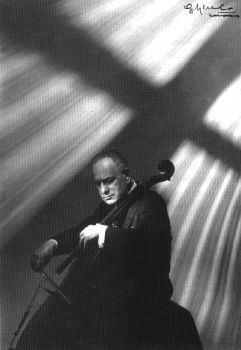
Gaspar Cassadó

Quirine Viersen

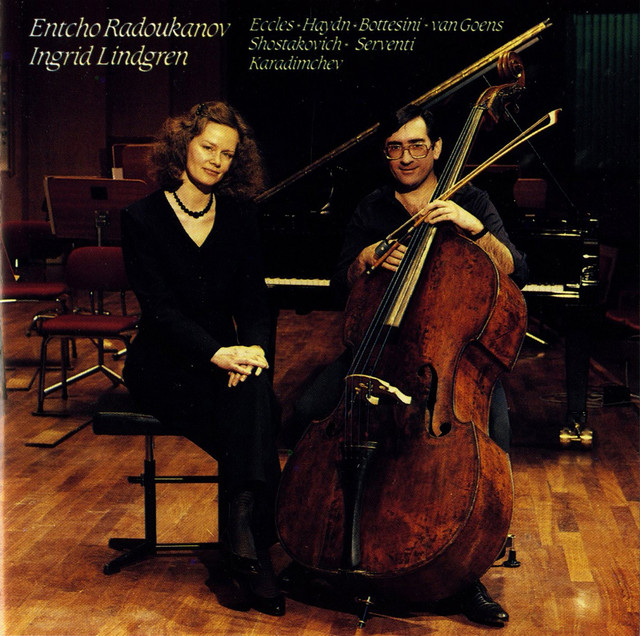
Entcho Radoukanov
Marco Misciagna
Nicolas Dautricourt

Marco Ciannella
Pierre Lénert
Friedrich August Kummer
Reiner Ginzel
Peter Laul

Christoph Schickedanz
Philippe Muller
Dongkyun An

Xavier Gagnepain
Florin Szigeti

Martin Ostertag
Noël Lee

Artur Balsam

Antal Zalai
Reiner Hochmuth
Mauro Tortorelli
Alain Meunier

Alfredo Campoli

Serge Collot

Clay Ruede
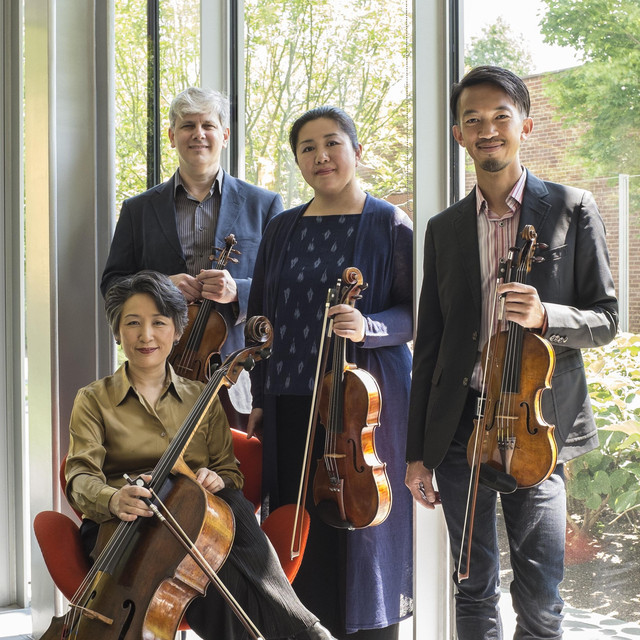
Borromeo String Quartet

Johanna Martzy
Alexander Zagorinsky
