Data may be outdated
Last updated: 9 months ago — Click refresh to get the latest statistics.
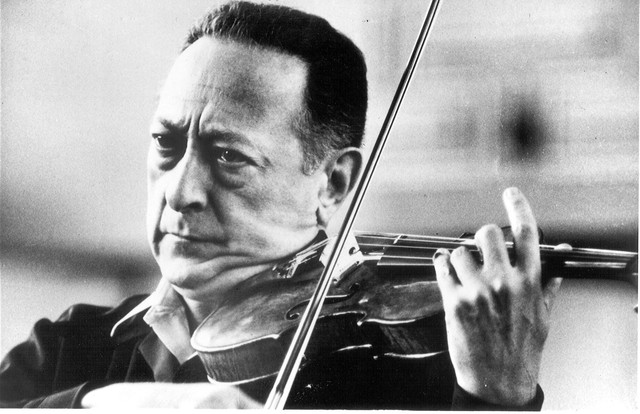
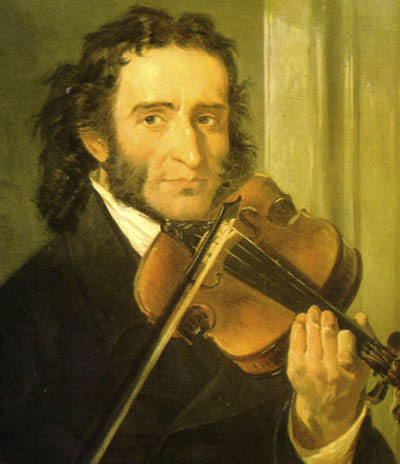
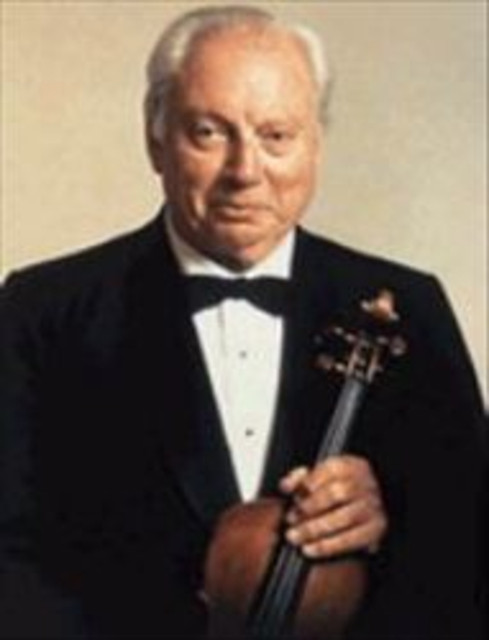
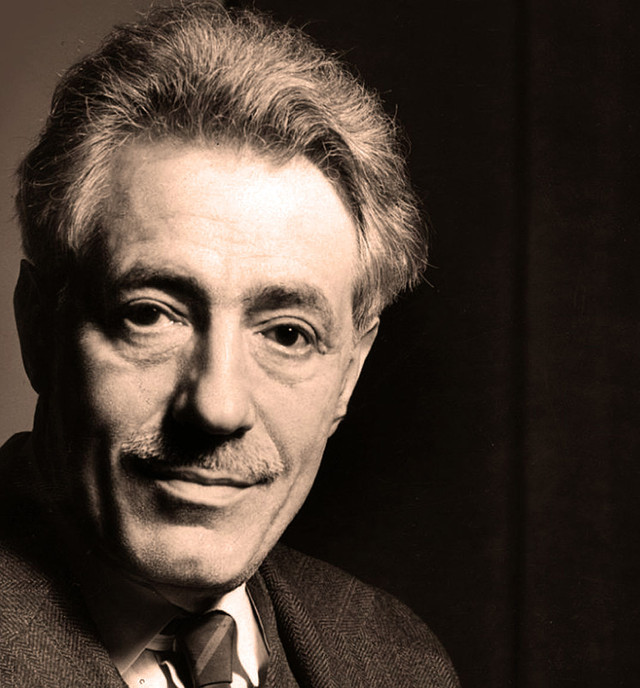
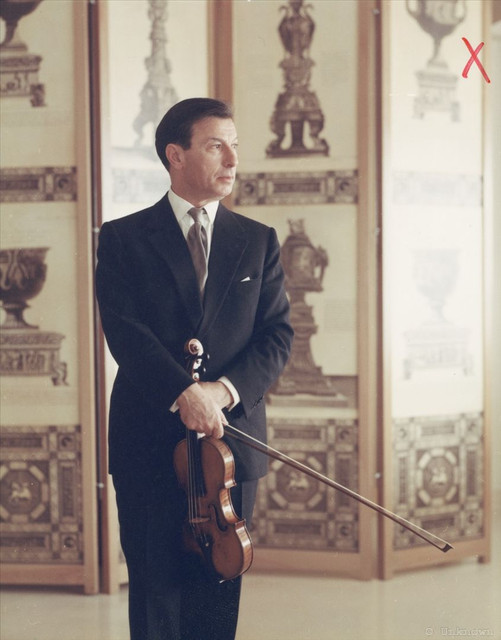
David Oistrakh is considered the premiere violinist of mid-20th century Soviet Union. His recorded legacy includes nearly the entire standard violin repertory up to and including <a href="spotify:artist:4kHtgiRnpmFIV5Tm4BIs8l">Prokofiev</a> and <a href="spotify:artist:5zyNXVd952fWOjkdGHCvPd">Bartók</a>. Oistrakh's violin studies began in 1913 with famed teacher Pyotr Stolyarsky. Later he officially joined Stolyarsky's class at the Odessa Conservatory, graduating in 1926 by playing <a href="spotify:artist:4kHtgiRnpmFIV5Tm4BIs8l">Prokofiev</a>'s First Violin Concerto. Performances of the <a href="spotify:artist:78t7WfwhjZLkDHN5QKwS5u">Glazunov</a> concerto in Odessa and Kiev in 1927, and a 1928 debut in Leningrad (<a href="spotify:artist:3MKCzCnpzw3TjUYs2v7vDA">Tchaikovsky</a> concerto), gave Oistrakh the confidence to move to Moscow. He made his premiere there in early 1929, but the event went largely unnoticed. In 1934, however, after several years of patiently refining his craft, Oistrakh was invited to join the Moscow Conservatory, eventually rising to the rank of full professor in 1939.
Meanwhile, Oistrakh was gaining success on the competition circuit, winning the 1930 All-Ukrainian contest, and the All-Soviet competition three years later. In 1935 he took second prize at the <a href="spotify:artist:7wEcQTGkugQxXzikls4izh">Wieniawski</a> competition. In 1937 the Soviet government sent the now veteran violinist to Brussels to compete in the International <a href="spotify:artist:662RkpOvE7MIPWnfYbY5xs">Ysaÿe</a> Competition, where he took home first prize.
With his victory in Brussels, Soviet composers began to take notice of their young compatriot, enabling Oistrakh to work closely with <a href="spotify:artist:07yD267mZTiHoptqdYd5mc">Myaskovsky</a> and <a href="spotify:artist:5WIoytpqi3VWoFSHnl49in">Khachaturian</a> on their concertos in 1939 and 1940, respectively. In addition, his close friendship with <a href="spotify:artist:6s1pCNXcbdtQJlsnM1hRIA">Shostakovich</a> led the composer to write two concertos for the instrument (the first of which Oistrakh played at his, and its, triumphant American premiere in 1955). During the 1940s Oistrakh's active performing schedule took him across the Soviet Union but his international career had to wait until the 1950s, when the political climate had cooled enough for Soviet artists to be welcomed in the capitals of the West.
The remaining decades of Oistrakh's life were devoted to maintaining the highest possible standards of excellence throughout an exhausting touring schedule (he returned to the U.S. six times in the 1960s), and he began a small but successful sideline career as an orchestral conductor. His death came suddenly in Amsterdam in 1974, during a cycle of <a href="spotify:artist:5wTAi7QkpP6kp8a54lmTOq">Brahms</a> concerts in which he both played and conducted. Oistrakh's unexpected death left a void in the Soviet musical world which was never really filled.
Throughout his career David Oistrakh was known for his honest, warm personality; he developed close friendships with many of the leading musicians of the day. His violin technique was virtually flawless, though he never allowed purely physical matters to dominate his musical performances. He always demanded of himself (and his students) that musical proficiency, intelligence, and emotion be in balance, regardless of the particular style. Oistrakh felt that a violinist's essence was communicated through clever and subtle use of the bow, and not through overly expressive use of vibrato. To this end he developed a remarkably relaxed, flexible right arm technique, capable of producing the most delicate expressive nuances, but equally capable of generating great volume and projection.
As a teacher, David Oistrakh maintained that a teacher should do no more than necessary to help guide the student toward his or her own solutions to technical and interpretive difficulties. He rarely played during lessons, fearing that he might distract the student from developing a more individual approach, and even encouraged his students to challenge his interpretations. Perhaps the best evidence of the Oistrakh's gift for teaching is that he felt that he gained as much from the teaching experience as his students did.
Meanwhile, Oistrakh was gaining success on the competition circuit, winning the 1930 All-Ukrainian contest, and the All-Soviet competition three years later. In 1935 he took second prize at the <a href="spotify:artist:7wEcQTGkugQxXzikls4izh">Wieniawski</a> competition. In 1937 the Soviet government sent the now veteran violinist to Brussels to compete in the International <a href="spotify:artist:662RkpOvE7MIPWnfYbY5xs">Ysaÿe</a> Competition, where he took home first prize.
With his victory in Brussels, Soviet composers began to take notice of their young compatriot, enabling Oistrakh to work closely with <a href="spotify:artist:07yD267mZTiHoptqdYd5mc">Myaskovsky</a> and <a href="spotify:artist:5WIoytpqi3VWoFSHnl49in">Khachaturian</a> on their concertos in 1939 and 1940, respectively. In addition, his close friendship with <a href="spotify:artist:6s1pCNXcbdtQJlsnM1hRIA">Shostakovich</a> led the composer to write two concertos for the instrument (the first of which Oistrakh played at his, and its, triumphant American premiere in 1955). During the 1940s Oistrakh's active performing schedule took him across the Soviet Union but his international career had to wait until the 1950s, when the political climate had cooled enough for Soviet artists to be welcomed in the capitals of the West.
The remaining decades of Oistrakh's life were devoted to maintaining the highest possible standards of excellence throughout an exhausting touring schedule (he returned to the U.S. six times in the 1960s), and he began a small but successful sideline career as an orchestral conductor. His death came suddenly in Amsterdam in 1974, during a cycle of <a href="spotify:artist:5wTAi7QkpP6kp8a54lmTOq">Brahms</a> concerts in which he both played and conducted. Oistrakh's unexpected death left a void in the Soviet musical world which was never really filled.
Throughout his career David Oistrakh was known for his honest, warm personality; he developed close friendships with many of the leading musicians of the day. His violin technique was virtually flawless, though he never allowed purely physical matters to dominate his musical performances. He always demanded of himself (and his students) that musical proficiency, intelligence, and emotion be in balance, regardless of the particular style. Oistrakh felt that a violinist's essence was communicated through clever and subtle use of the bow, and not through overly expressive use of vibrato. To this end he developed a remarkably relaxed, flexible right arm technique, capable of producing the most delicate expressive nuances, but equally capable of generating great volume and projection.
As a teacher, David Oistrakh maintained that a teacher should do no more than necessary to help guide the student toward his or her own solutions to technical and interpretive difficulties. He rarely played during lessons, fearing that he might distract the student from developing a more individual approach, and even encouraged his students to challenge his interpretations. Perhaps the best evidence of the Oistrakh's gift for teaching is that he felt that he gained as much from the teaching experience as his students did.
Monthly Listeners
166,927
Monthly Listeners History
Track the evolution of monthly listeners over the last 28 days.
Followers
43,444
Followers History
Track the evolution of followers over the last 28 days.
Top Cities
9,263 listeners

3,016 listeners

2,933 listeners

2,479 listeners

2,428 listeners

Related Artists