Data may be outdated
Last updated: 9 months ago — Click refresh to get the latest statistics.
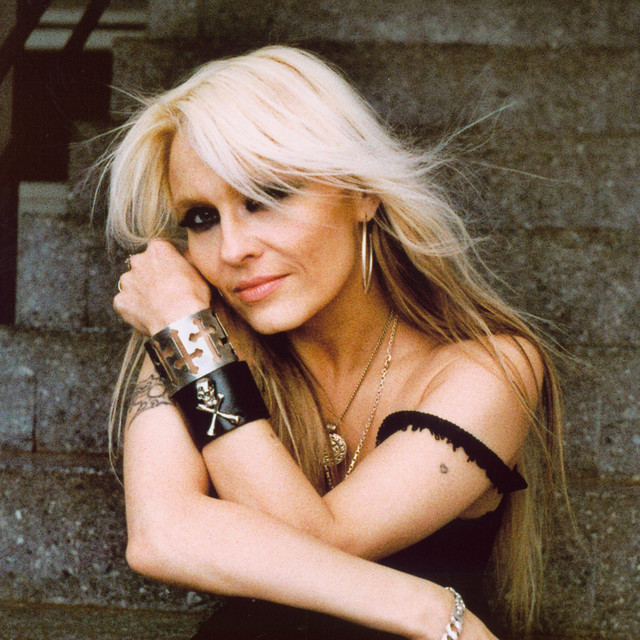
German heavy metal/hard rock vocalist Doro is best known for her years with the power metal band <a href="spotify:artist:5XDeFQDarnwpR5WAfD6S0d">Warlock</a>, but she has had a long solo career and continues to command a loyal following (especially in Europe) long after the group's demise. After releasing four albums with <a href="spotify:artist:5XDeFQDarnwpR5WAfD6S0d">Warlock</a> in the 1980s, Doro set out on her own, touring and recording under her first name. She released Force Majeure in 1989, dialing back the gothic fantasy metal of <a href="spotify:artist:5XDeFQDarnwpR5WAfD6S0d">Warlock</a>, Doro adopted a more pop-metal/hard rock sound, which she would continue to hone well into the next century. Shifting musical tastes in the early '90s resulted in her finding most of her success in the European market, where metal still reigned supreme, but as the 2000s progressed, Doro once again found favor abroad with standouts like 2006's Warrior Soul, 2018's Forever Warriors, Forever United, and 2023's Conqueress Forever Strong and Proud.
Doro Pesch, who only uses her first name professionally, was born in Dusseldorf, Germany, on June 3, 1964. Although she grew up in a country where German is the primary language, Pesch speaks fluent English and has done most of her singing in English, something she has in common with <a href="spotify:artist:27T030eWyCQRmDyuvr1kxY">the Scorpions</a>, <a href="spotify:artist:3JDIAtVrJdQ7GFOX26LYpv">Accept</a>, and other German headbangers. Pesch was in her late teens when, in the early '80s, she started singing lead for an obscure Dusseldorf-based metal band called Snakebite. In 1983, she left Snakebite and became the lead singer for <a href="spotify:artist:5XDeFQDarnwpR5WAfD6S0d">Warlock</a>, a forceful yet melodic fantasy metal outfit along the lines of <a href="spotify:artist:5M52tdBnJaKSvOpJGz8mfZ">Black Sabbath</a>, <a href="spotify:artist:6mdiAmATAx73kdxrNrnlao">Iron Maiden</a>, <a href="spotify:artist:2tRsMl4eGxwoNabM08Dm4I">Judas Priest</a>, and <a href="spotify:artist:4M3c7tg4BzLQ5pIOupZL65">Ronnie James Dio</a>. At the time, heavy metal and hard rock were very male-dominated, but thanks to artists including Joan Jett, <a href="spotify:artist:43mhFhQ4JAknA7Ik1bOZuV">Pat Benatar</a>, <a href="spotify:artist:34jw2BbxjoYalTp8cJFCPv">Heart</a>, <a href="spotify:artist:2TRtXTjjmyzK5oUGec1Gv8">Girlschool</a>, <a href="spotify:artist:77tBvvyd6SD4Y9Um1xcbxP">Lita Ford</a>, and <a href="spotify:artist:5eTq3PxbOh5vgeRXKNqPyV">the Runaways</a>, headbangers had grown more comfortable with the idea of women singing aggressive rock. But there weren't that many women singing gothic fantasy metal about witches, demons, ghosts, or sorcerers. So when Pesch belted out <a href="spotify:artist:5XDeFQDarnwpR5WAfD6S0d">Warlock</a>'s fantasy-oriented lyrics and did so with as much aggression as <a href="spotify:artist:6ZLTlhejhndI4Rh53vYhrY">Ozzy Osbourne</a> or <a href="spotify:artist:4M3c7tg4BzLQ5pIOupZL65">Ronnie James Dio</a>, she stood out.
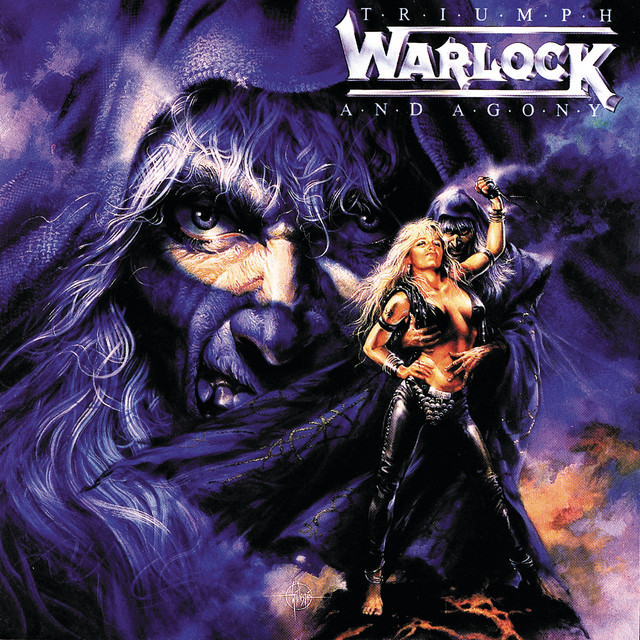
After playing the Dusseldorf club scene for several months and acquiring a small local following, <a href="spotify:artist:5XDeFQDarnwpR5WAfD6S0d">Warlock</a> recorded a demo and was signed by the independent <a href="spotify:search:label%3A%22Mausoleum%22">Mausoleum</a> label; after that, the band ended up recording for <a href="spotify:search:label%3A%22Mercury%22">Mercury</a>/<a href="spotify:search:label%3A%22Polygram%22">Polygram</a> (where Pesch remained for 11 years). <a href="spotify:artist:5XDeFQDarnwpR5WAfD6S0d">Warlock</a>'s debut album, Burning the Witches, was released on <a href="spotify:search:label%3A%22Mercury%22">Mercury</a> in 1984 and was followed by Hellbound in 1985, True as Steel in 1986, and Triumph & Agony in 1987. That year, <a href="spotify:artist:5XDeFQDarnwpR5WAfD6S0d">Warlock</a> toured Europe as an opening act for <a href="spotify:artist:4CYeVo5iZbtYGBN4Isc3n6">Dio</a> but didn't tour the United States until 1988 (when the band opened for <a href="spotify:artist:1Yox196W7bzVNZI7RBaPnf">Megadeth</a> on an extensive North American tour). Although <a href="spotify:artist:5XDeFQDarnwpR5WAfD6S0d">Warlock</a> had an enthusiastic cult following, it wasn't as large as the headbangers were hoping for, so in 1989, the name <a href="spotify:artist:5XDeFQDarnwpR5WAfD6S0d">Warlock</a> was put to rest and Pesch started billing herself as a solo artist.
She didn't inundate listeners with the sort of gothic fantasy themes that <a href="spotify:artist:5XDeFQDarnwpR5WAfD6S0d">Warlock</a> was known for. Released in 1989, Pesch's debut solo album, Force Majeure, is more pop-metal/hard rock than gothic fantasy -- the album is closer to Crimes of Passion-era <a href="spotify:artist:43mhFhQ4JAknA7Ik1bOZuV">Pat Benatar</a> than <a href="spotify:artist:6mdiAmATAx73kdxrNrnlao">Iron Maiden</a>, <a href="spotify:artist:2OgUPVlWYgGBGMefZgGvCO">Queensrÿche</a>, or <a href="spotify:artist:5i0ph60TnwTlIGrOZAmcZa">King Diamond</a>. The singer's second album, Doro (which contains her cover of <a href="spotify:artist:1kkpNi8Ii5MhBMxmUhN5g9">the Electric Prunes</a>' psychedelic hit "I Had Too Much to Dream") was released by <a href="spotify:search:label%3A%22Mercury%22">Mercury</a> in 1990 and was followed by True at Heart (a European release), in 1991.
A few years later, Pesch and similar artists suffered a major setback. When grunge icons <a href="spotify:artist:6olE6TJLqED3rqDCT0FyPh">Nirvana</a> and <a href="spotify:artist:1w5Kfo2jwwIPruYS2UWh56">Pearl Jam</a> exploded commercially in 1992 and 1993, alternative rock became rock's primary direction, and all of a sudden the styles of metal and hard rock that had been huge in the '80s were out of vogue. There were still plenty of metal bands getting signed to major labels, but they were alternative metal bands -- not hair metal pop bands and not gothic fantasy metallers in the <a href="spotify:artist:5M52tdBnJaKSvOpJGz8mfZ">Sabbath</a>/<a href="spotify:artist:2tRsMl4eGxwoNabM08Dm4I">Priest</a>/<a href="spotify:artist:6mdiAmATAx73kdxrNrnlao">Maiden</a> tradition. In this brave new rock world, the women who defined heavy rock were folks like <a href="spotify:artist:3Xdna5z74yNICNKqdaNX9z">Babes in Toyland</a>, <a href="spotify:artist:2zMQOJ4Cyl4BYbw6WqaO3h">L7</a>, <a href="spotify:artist:535KSdsDbNGj6w6eCBkRP5">7 Year Bitch</a>, and <a href="spotify:artist:5SHQUMAmEK5KmuSb0aDvsn">Hole</a>'s <a href="spotify:artist:4vI0xGbQl2cMnMiagUEBOj">Courtney Love</a>; Pesch, like <a href="spotify:artist:43mhFhQ4JAknA7Ik1bOZuV">Benatar</a>, <a href="spotify:artist:4lPDIYPFDs5gpcToUczJDs">Wilson</a>, and <a href="spotify:artist:77tBvvyd6SD4Y9Um1xcbxP">Ford</a>, was considered part of metal/hard rock's old school.
Nonetheless, Pesch continued to command a small but loyal following -- especially in Europe -- and kept touring and recording as a solo artist. In 1993, two Pesch albums were released by <a href="spotify:search:label%3A%22Polygram%22">Polygram</a> in Europe: Angels Never Die (her fourth solo album) and Doro Live (her first live album and fifth album overall). In 1995, <a href="spotify:search:label%3A%22Polygram%22">Polygram</a> released Machine II Machine in Europe; that year, her contract with <a href="spotify:search:label%3A%22Polygram%22">Polygram</a> ended and she signed with <a href="spotify:search:label%3A%22WEA%22">WEA</a> in Europe. It was also in 1995 that Pesch made her acting debut with a role on the German television series Verbotene Liebe (Forbidden Love). The headbanger's next album, Love Me in Black, came out on <a href="spotify:search:label%3A%22Warner+Bros.%22">Warner Bros.</a> in Europe in 1998; that year, she parted company with <a href="spotify:search:label%3A%22WEA%22">WEA</a> and signed two deals -- one with <a href="spotify:search:label%3A%22Koch%22">Koch</a> in the U.S., the other with <a href="spotify:search:label%3A%22SPV+Steamhammer%22">SPV Steamhammer</a> in Europe.
In 1999, Pesch recorded Calling the Wild, which was released in both Europe and the U.S. in 2000. Calling the Wild was her first North American release since 1990's Doro; True at Heart, Angels Never Die, Doro Live, Machine II Machine, and Love Me in Black had only been released in Europe, although the LPs were sold in U.S. stores as imports. Pesch remained prolific throughout the 2000s, issuing a flurry of well-received solo releases, including Fight (2002), Classic Diamonds (2004), Warrior Soul (2006), Fear No Evil (2009), and Raise Your Fist (2012), the latter three of which helped to re-establish her in the American market. In 2017, she released her first German-language LP, Für Immer, via <a href="spotify:search:label%3A%22Rare+Diamonds+Productions%22">Rare Diamonds Productions</a>, and in 2018 she released the ambitious and anthemic double album Forever Warriors, Forever United. 2020 saw the arrival of the career retrospective Magic Diamonds: Best of Rock, Ballads & Rare Treasures, and the following year she issued the concert LP Warlock: Triumph & Agony Live. Conqueress Forever Strong and Proud, Pesch's first collection of new studio recordings in five years, appeared in 2023. Released on <a href="spotify:search:label%3A%22Napalm%22">Napalm</a>, the15-song set featured guest spots from <a href="spotify:artist:7CTjkl9M3enzBBfm1u10Sy">Rob Halford</a> and Sammy Amara. ~ Alex Henderson, Rovi
Doro Pesch, who only uses her first name professionally, was born in Dusseldorf, Germany, on June 3, 1964. Although she grew up in a country where German is the primary language, Pesch speaks fluent English and has done most of her singing in English, something she has in common with <a href="spotify:artist:27T030eWyCQRmDyuvr1kxY">the Scorpions</a>, <a href="spotify:artist:3JDIAtVrJdQ7GFOX26LYpv">Accept</a>, and other German headbangers. Pesch was in her late teens when, in the early '80s, she started singing lead for an obscure Dusseldorf-based metal band called Snakebite. In 1983, she left Snakebite and became the lead singer for <a href="spotify:artist:5XDeFQDarnwpR5WAfD6S0d">Warlock</a>, a forceful yet melodic fantasy metal outfit along the lines of <a href="spotify:artist:5M52tdBnJaKSvOpJGz8mfZ">Black Sabbath</a>, <a href="spotify:artist:6mdiAmATAx73kdxrNrnlao">Iron Maiden</a>, <a href="spotify:artist:2tRsMl4eGxwoNabM08Dm4I">Judas Priest</a>, and <a href="spotify:artist:4M3c7tg4BzLQ5pIOupZL65">Ronnie James Dio</a>. At the time, heavy metal and hard rock were very male-dominated, but thanks to artists including Joan Jett, <a href="spotify:artist:43mhFhQ4JAknA7Ik1bOZuV">Pat Benatar</a>, <a href="spotify:artist:34jw2BbxjoYalTp8cJFCPv">Heart</a>, <a href="spotify:artist:2TRtXTjjmyzK5oUGec1Gv8">Girlschool</a>, <a href="spotify:artist:77tBvvyd6SD4Y9Um1xcbxP">Lita Ford</a>, and <a href="spotify:artist:5eTq3PxbOh5vgeRXKNqPyV">the Runaways</a>, headbangers had grown more comfortable with the idea of women singing aggressive rock. But there weren't that many women singing gothic fantasy metal about witches, demons, ghosts, or sorcerers. So when Pesch belted out <a href="spotify:artist:5XDeFQDarnwpR5WAfD6S0d">Warlock</a>'s fantasy-oriented lyrics and did so with as much aggression as <a href="spotify:artist:6ZLTlhejhndI4Rh53vYhrY">Ozzy Osbourne</a> or <a href="spotify:artist:4M3c7tg4BzLQ5pIOupZL65">Ronnie James Dio</a>, she stood out.
After playing the Dusseldorf club scene for several months and acquiring a small local following, <a href="spotify:artist:5XDeFQDarnwpR5WAfD6S0d">Warlock</a> recorded a demo and was signed by the independent <a href="spotify:search:label%3A%22Mausoleum%22">Mausoleum</a> label; after that, the band ended up recording for <a href="spotify:search:label%3A%22Mercury%22">Mercury</a>/<a href="spotify:search:label%3A%22Polygram%22">Polygram</a> (where Pesch remained for 11 years). <a href="spotify:artist:5XDeFQDarnwpR5WAfD6S0d">Warlock</a>'s debut album, Burning the Witches, was released on <a href="spotify:search:label%3A%22Mercury%22">Mercury</a> in 1984 and was followed by Hellbound in 1985, True as Steel in 1986, and Triumph & Agony in 1987. That year, <a href="spotify:artist:5XDeFQDarnwpR5WAfD6S0d">Warlock</a> toured Europe as an opening act for <a href="spotify:artist:4CYeVo5iZbtYGBN4Isc3n6">Dio</a> but didn't tour the United States until 1988 (when the band opened for <a href="spotify:artist:1Yox196W7bzVNZI7RBaPnf">Megadeth</a> on an extensive North American tour). Although <a href="spotify:artist:5XDeFQDarnwpR5WAfD6S0d">Warlock</a> had an enthusiastic cult following, it wasn't as large as the headbangers were hoping for, so in 1989, the name <a href="spotify:artist:5XDeFQDarnwpR5WAfD6S0d">Warlock</a> was put to rest and Pesch started billing herself as a solo artist.
She didn't inundate listeners with the sort of gothic fantasy themes that <a href="spotify:artist:5XDeFQDarnwpR5WAfD6S0d">Warlock</a> was known for. Released in 1989, Pesch's debut solo album, Force Majeure, is more pop-metal/hard rock than gothic fantasy -- the album is closer to Crimes of Passion-era <a href="spotify:artist:43mhFhQ4JAknA7Ik1bOZuV">Pat Benatar</a> than <a href="spotify:artist:6mdiAmATAx73kdxrNrnlao">Iron Maiden</a>, <a href="spotify:artist:2OgUPVlWYgGBGMefZgGvCO">Queensrÿche</a>, or <a href="spotify:artist:5i0ph60TnwTlIGrOZAmcZa">King Diamond</a>. The singer's second album, Doro (which contains her cover of <a href="spotify:artist:1kkpNi8Ii5MhBMxmUhN5g9">the Electric Prunes</a>' psychedelic hit "I Had Too Much to Dream") was released by <a href="spotify:search:label%3A%22Mercury%22">Mercury</a> in 1990 and was followed by True at Heart (a European release), in 1991.
A few years later, Pesch and similar artists suffered a major setback. When grunge icons <a href="spotify:artist:6olE6TJLqED3rqDCT0FyPh">Nirvana</a> and <a href="spotify:artist:1w5Kfo2jwwIPruYS2UWh56">Pearl Jam</a> exploded commercially in 1992 and 1993, alternative rock became rock's primary direction, and all of a sudden the styles of metal and hard rock that had been huge in the '80s were out of vogue. There were still plenty of metal bands getting signed to major labels, but they were alternative metal bands -- not hair metal pop bands and not gothic fantasy metallers in the <a href="spotify:artist:5M52tdBnJaKSvOpJGz8mfZ">Sabbath</a>/<a href="spotify:artist:2tRsMl4eGxwoNabM08Dm4I">Priest</a>/<a href="spotify:artist:6mdiAmATAx73kdxrNrnlao">Maiden</a> tradition. In this brave new rock world, the women who defined heavy rock were folks like <a href="spotify:artist:3Xdna5z74yNICNKqdaNX9z">Babes in Toyland</a>, <a href="spotify:artist:2zMQOJ4Cyl4BYbw6WqaO3h">L7</a>, <a href="spotify:artist:535KSdsDbNGj6w6eCBkRP5">7 Year Bitch</a>, and <a href="spotify:artist:5SHQUMAmEK5KmuSb0aDvsn">Hole</a>'s <a href="spotify:artist:4vI0xGbQl2cMnMiagUEBOj">Courtney Love</a>; Pesch, like <a href="spotify:artist:43mhFhQ4JAknA7Ik1bOZuV">Benatar</a>, <a href="spotify:artist:4lPDIYPFDs5gpcToUczJDs">Wilson</a>, and <a href="spotify:artist:77tBvvyd6SD4Y9Um1xcbxP">Ford</a>, was considered part of metal/hard rock's old school.
Nonetheless, Pesch continued to command a small but loyal following -- especially in Europe -- and kept touring and recording as a solo artist. In 1993, two Pesch albums were released by <a href="spotify:search:label%3A%22Polygram%22">Polygram</a> in Europe: Angels Never Die (her fourth solo album) and Doro Live (her first live album and fifth album overall). In 1995, <a href="spotify:search:label%3A%22Polygram%22">Polygram</a> released Machine II Machine in Europe; that year, her contract with <a href="spotify:search:label%3A%22Polygram%22">Polygram</a> ended and she signed with <a href="spotify:search:label%3A%22WEA%22">WEA</a> in Europe. It was also in 1995 that Pesch made her acting debut with a role on the German television series Verbotene Liebe (Forbidden Love). The headbanger's next album, Love Me in Black, came out on <a href="spotify:search:label%3A%22Warner+Bros.%22">Warner Bros.</a> in Europe in 1998; that year, she parted company with <a href="spotify:search:label%3A%22WEA%22">WEA</a> and signed two deals -- one with <a href="spotify:search:label%3A%22Koch%22">Koch</a> in the U.S., the other with <a href="spotify:search:label%3A%22SPV+Steamhammer%22">SPV Steamhammer</a> in Europe.
In 1999, Pesch recorded Calling the Wild, which was released in both Europe and the U.S. in 2000. Calling the Wild was her first North American release since 1990's Doro; True at Heart, Angels Never Die, Doro Live, Machine II Machine, and Love Me in Black had only been released in Europe, although the LPs were sold in U.S. stores as imports. Pesch remained prolific throughout the 2000s, issuing a flurry of well-received solo releases, including Fight (2002), Classic Diamonds (2004), Warrior Soul (2006), Fear No Evil (2009), and Raise Your Fist (2012), the latter three of which helped to re-establish her in the American market. In 2017, she released her first German-language LP, Für Immer, via <a href="spotify:search:label%3A%22Rare+Diamonds+Productions%22">Rare Diamonds Productions</a>, and in 2018 she released the ambitious and anthemic double album Forever Warriors, Forever United. 2020 saw the arrival of the career retrospective Magic Diamonds: Best of Rock, Ballads & Rare Treasures, and the following year she issued the concert LP Warlock: Triumph & Agony Live. Conqueress Forever Strong and Proud, Pesch's first collection of new studio recordings in five years, appeared in 2023. Released on <a href="spotify:search:label%3A%22Napalm%22">Napalm</a>, the15-song set featured guest spots from <a href="spotify:artist:7CTjkl9M3enzBBfm1u10Sy">Rob Halford</a> and Sammy Amara. ~ Alex Henderson, Rovi
Monthly Listeners
232,553
Monthly Listeners History
Track the evolution of monthly listeners over the last 28 days.
Followers
210,224
Followers History
Track the evolution of followers over the last 28 days.
Top Cities
8,207 listeners

8,165 listeners
6,907 listeners
6,468 listeners
5,649 listeners
Related Artists



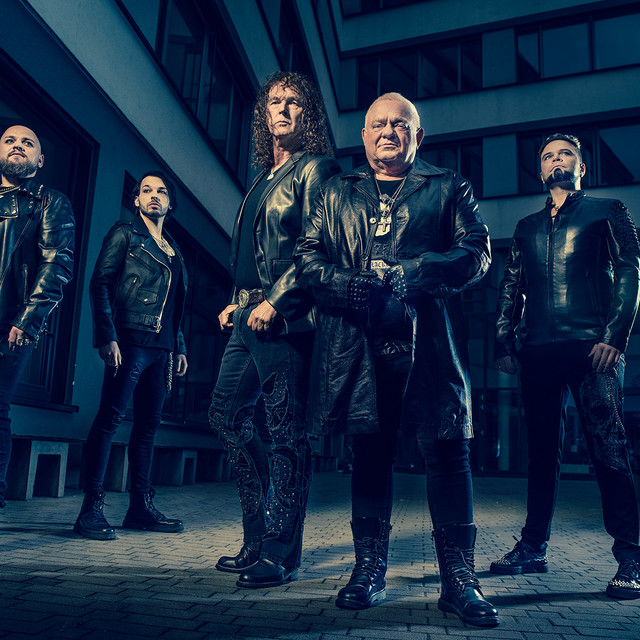
Dirkschneider

Thundermother
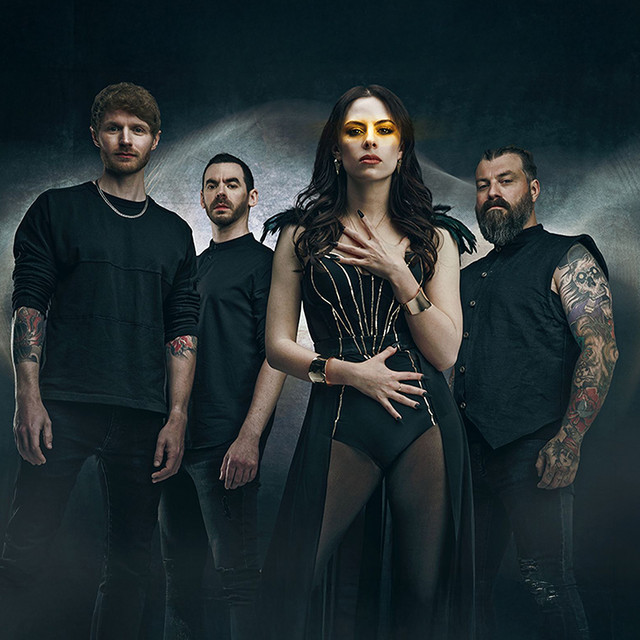


The Gems