Data may be outdated
Last updated: 9 months ago — Click refresh to get the latest statistics.
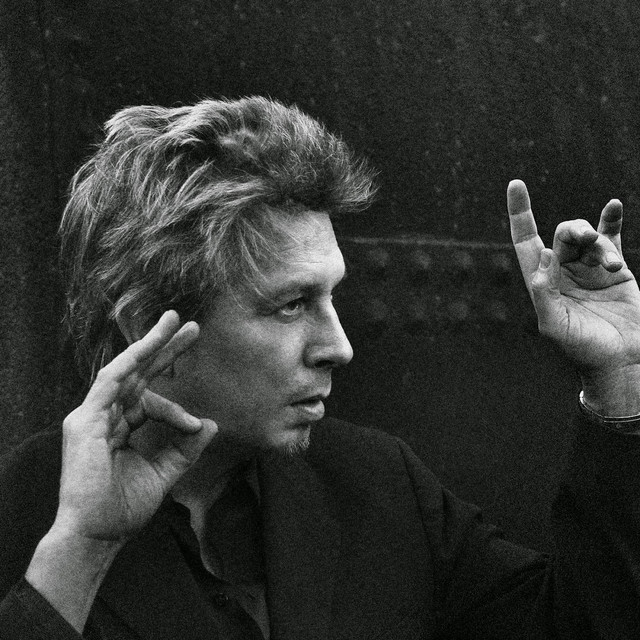
Composer Elliot Goldenthal has forged a unique soundtrack language that he has applied to both mainstream and more experimental films. He has also written opera and other theatrical music, sometimes collaborating with his long-term partner, theater director Julie Taymor. The range of the kinds of films he has scored is great -- from <a href="spotify:artist:0xZ9fVp0OnYjYPeX9Z3c8x">Shakespeare</a> adaptations to horror. His music is well represented on recordings, and in 2024, conductor <a href="spotify:artist:34bKiLjmHfp1mAX5Tq3d2y">Dirk Brossé</a> led the Brussels Philharmonic in the anthology album Elliot Goldenthal: Music for Film.
Goldenthal was born in Brooklyn, New York, on May 2, 1954. Of Romanian Jewish background, he was the son of a housepainter father and a seamstress mother. He soaked up the multicultural background of his Brooklyn neighborhood and became interested in music early on; at 14 he had a ballet performed by his high school orchestra. In the '70s, he performed in rock bands and studied at the Manhattan School of Music with composer <a href="spotify:artist:0aHSAeZ39EVErXuOjm2XDR">John Corigliano</a>; he also had lessons from American symphonic giant <a href="spotify:artist:0nJvyjVTb8sAULPYyA1bqU">Aaron Copland</a>. Another composer whose music influenced Goldenthal's eclectic and often atonal style was Japan's <a href="spotify:artist:5p6TCmGe9IygOnvamIaZpA">Toru Takemitsu</a>. In 1979 and 1980, Goldenthal scored two films for experimental German director Ulli Lommel, Cocaine Cowboys and Blank Generation; on the latter score, he collaborated with the punk band Richard Hell & the Voidoids. In 1984, he wrote a song, "Dream Baby," that was included on the New Wave pop group <a href="spotify:artist:3sc7iUG1Wwpwx7bHeZolgx">Bananarama</a>'s self-titled album of that year. In 1988, his theatrical-vocal work Juan Darien: A Carnival Mass, on which he collaborated with Taymor, won an Obie Award. Goldenthal's breakthrough came in 1989 with two films, one mainstream, the <a href="spotify:artist:6cXlNJGEwzOrgajIqpUUcg">Stephen King</a> adaptation Pet Sematary, and one independent, director <a href="spotify:artist:1iokknnSrYMMhGHYgZDUMB">Gus Van Sant</a>'s crime drama Drugstore Cowboy starring Matt Dillon.
Goldenthal continued to write theatrical and orchestral music, including Shadow Play Scherzo (1990), written in commemoration of conductor and composer <a href="spotify:artist:2LmyJyCF5V1eQyvHgJNbTn">Leonard Bernstein</a>'s 70th birthday. But he remains best known for film music, with major Hollywood and British productions such as Alien 3 (1992), Interview with the Vampire (1995), and Frida (2002) bearing his imprint. The latter score earned an Academy Award for Best Original Score. Goldenthal has scored two <a href="spotify:artist:0xZ9fVp0OnYjYPeX9Z3c8x">Shakespeare</a> films directed by Taymor, Titus (1999) and The Tempest (2010). He also wrote music for a three-act ballet based on <a href="spotify:artist:0xZ9fVp0OnYjYPeX9Z3c8x">Shakespeare</a>'s Othello, adapting that music into an Othello Symphony that was recorded in 2014 by the <a href="spotify:artist:0TtzLRGl6mjf5x0Y4Kls9s">AUKSO Orchestra</a>. Goldenthal's pace in scoring films slowed somewhat in the 2010s and 2020s, but he returned with a score for Taymor's The Glorias in 2021. Among Goldenthal's champions has been Belgian conductor <a href="spotify:artist:34bKiLjmHfp1mAX5Tq3d2y">Dirk Brossé</a>, who led the Brussels Philharmonic on the 2024 anthology album Elliot Goldenthal: Music for Film, released on the <a href="spotify:search:label%3A%22Silva+Screen%22">Silva Screen</a> label. ~ James Manheim, Rovi
Goldenthal was born in Brooklyn, New York, on May 2, 1954. Of Romanian Jewish background, he was the son of a housepainter father and a seamstress mother. He soaked up the multicultural background of his Brooklyn neighborhood and became interested in music early on; at 14 he had a ballet performed by his high school orchestra. In the '70s, he performed in rock bands and studied at the Manhattan School of Music with composer <a href="spotify:artist:0aHSAeZ39EVErXuOjm2XDR">John Corigliano</a>; he also had lessons from American symphonic giant <a href="spotify:artist:0nJvyjVTb8sAULPYyA1bqU">Aaron Copland</a>. Another composer whose music influenced Goldenthal's eclectic and often atonal style was Japan's <a href="spotify:artist:5p6TCmGe9IygOnvamIaZpA">Toru Takemitsu</a>. In 1979 and 1980, Goldenthal scored two films for experimental German director Ulli Lommel, Cocaine Cowboys and Blank Generation; on the latter score, he collaborated with the punk band Richard Hell & the Voidoids. In 1984, he wrote a song, "Dream Baby," that was included on the New Wave pop group <a href="spotify:artist:3sc7iUG1Wwpwx7bHeZolgx">Bananarama</a>'s self-titled album of that year. In 1988, his theatrical-vocal work Juan Darien: A Carnival Mass, on which he collaborated with Taymor, won an Obie Award. Goldenthal's breakthrough came in 1989 with two films, one mainstream, the <a href="spotify:artist:6cXlNJGEwzOrgajIqpUUcg">Stephen King</a> adaptation Pet Sematary, and one independent, director <a href="spotify:artist:1iokknnSrYMMhGHYgZDUMB">Gus Van Sant</a>'s crime drama Drugstore Cowboy starring Matt Dillon.
Goldenthal continued to write theatrical and orchestral music, including Shadow Play Scherzo (1990), written in commemoration of conductor and composer <a href="spotify:artist:2LmyJyCF5V1eQyvHgJNbTn">Leonard Bernstein</a>'s 70th birthday. But he remains best known for film music, with major Hollywood and British productions such as Alien 3 (1992), Interview with the Vampire (1995), and Frida (2002) bearing his imprint. The latter score earned an Academy Award for Best Original Score. Goldenthal has scored two <a href="spotify:artist:0xZ9fVp0OnYjYPeX9Z3c8x">Shakespeare</a> films directed by Taymor, Titus (1999) and The Tempest (2010). He also wrote music for a three-act ballet based on <a href="spotify:artist:0xZ9fVp0OnYjYPeX9Z3c8x">Shakespeare</a>'s Othello, adapting that music into an Othello Symphony that was recorded in 2014 by the <a href="spotify:artist:0TtzLRGl6mjf5x0Y4Kls9s">AUKSO Orchestra</a>. Goldenthal's pace in scoring films slowed somewhat in the 2010s and 2020s, but he returned with a score for Taymor's The Glorias in 2021. Among Goldenthal's champions has been Belgian conductor <a href="spotify:artist:34bKiLjmHfp1mAX5Tq3d2y">Dirk Brossé</a>, who led the Brussels Philharmonic on the 2024 anthology album Elliot Goldenthal: Music for Film, released on the <a href="spotify:search:label%3A%22Silva+Screen%22">Silva Screen</a> label. ~ James Manheim, Rovi
Monthly Listeners
78,151
Monthly Listeners History
Track the evolution of monthly listeners over the last 28 days.
Followers
17,880
Followers History
Track the evolution of followers over the last 28 days.
Top Cities
3,663 listeners

1,022 listeners

1,018 listeners

963 listeners

844 listeners

Related Artists

Malcolm Ross
Trio Marimberos


Carter Burwell