Data may be outdated
Last updated: 9 months ago — Click refresh to get the latest statistics.
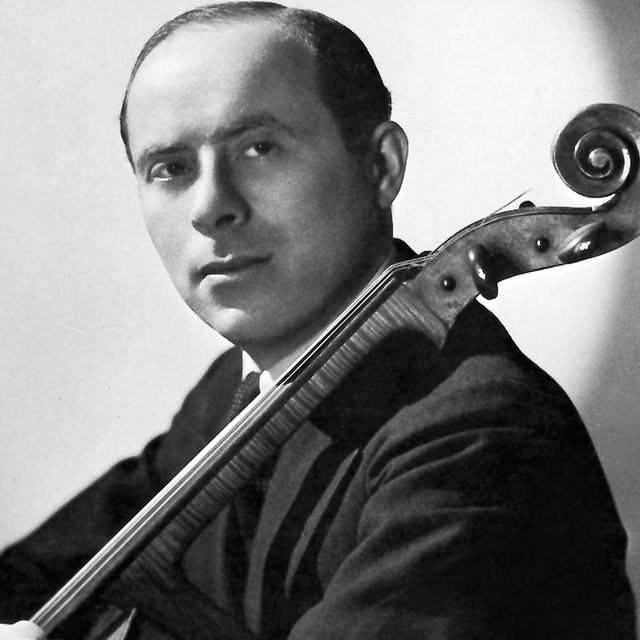
Emmanuel Feuermann's father was a self-taught violinist and cellist. Emmanuel's elder brother, Zigmund, was a prodigy on the violin. Their father presented Emmanuel with a violin, but the boy insisted on holding it upright, like a cello, so his father bought him a small cello. The family moved to Vienna so Zigmund could continue his violin studies and launch a concert career. Emanuel took lessons from Fridrich Buxbaum, the principal cellist of the <a href="spotify:artist:003f4bk13c6Q3gAUXv7dGJ">Vienna Philharmonic</a> and a member of the Rosé String Quartet. Later, Feuermann became a pupil of Anton Walter at the Vienna Music Academy.
When Feuermann was ten years old, he heard the debut of <a href="spotify:artist:42ZCvzken6DllCB1xghinZ">Pablo Casals</a> in Vienna in 1912. Feuermann realized that the great Catalan cellist was "truly re-creating the instrument." He demanded to study more substantial works. Feuermann's concert debut was in Vienna in February 1914, playing the <a href="spotify:artist:656RXuyw7CE0dtjdPgjJV6">Haydn</a> D Major Concerto with <a href="spotify:artist:2a955Xo7CLf6XhE437Uf60">Felix Weingartner</a> conducting the Vienna Philharmonic Orchestra. The debut was a success, but not spectacular. He joined his brother on a concert tour with his father.
In 1917 Emanuel went to study with <a href="spotify:artist:3mNsamKBQEN899jGMk6zDO">Julius Klengel</a>. Now Feuermann began to soak up training, music, and general knowledge. He systematically divided his day into practice sessions, work in music theory, piano practice, and building a repertoire. He interspersed this with avid reading. In 1918 the cello professor at the Gürzenich Conservatoire in Cologne, Friedrich Grützmacher, died. <a href="spotify:artist:3mNsamKBQEN899jGMk6zDO">Klengel</a> proposed Feuermann replace him. Sixteen-year-old Feuermann was hired, with full responsibilities of a professorship, but not the august title.
During the 1920s Feuermann added frequent and arduous concert tours and appearances to his schedule and began making recordings. He joined the faculty of the Berlin Hochschule für Musik in 1929, now ready for the title of professor. He formed a string trio with Joseph Wolfstahl (later replaced by <a href="spotify:artist:3fjlPWNyUXfGqx6OcoWEWT">Szymon Goldberg</a>) on violin and <a href="spotify:artist:3u1fWmwpwPOmMelTAo0Gb8">Paul Hindemith</a> on viola. This famous trio made several recordings, including a one of <a href="spotify:artist:3u1fWmwpwPOmMelTAo0Gb8">Hindemith</a>'s String Trio No. 2.
The ascension to power of the Nazi Party in 1933 left him looking for a place to settle. He took a world tour in 1934 and 1935, with a pair of memorable New York concerts in January 1935. He and his wife settled in Zurich, where he gave master classes and based his touring career. He traveled to Austria, where he was trapped when Hitler's forces poured in to take the country. Violinist <a href="spotify:artist:3X9T5qpavOOovdQBr528Sw">Bronislaw Huberman</a> managed to get Feuermann out and into Palestine. A month later Feuermann, his wife, and his daughter arrived in New York and applied for citizenship. He taught at the Curtis Institute in Philadelphia and in summers settled in Los Angeles, where he gave master classes. There, he could be close to <a href="spotify:artist:7yaBUcdjmqPP2vIv6F5bFD">Jascha Heifetz</a> and <a href="spotify:artist:5N1GUHhFMRFFgMTjSOJDb9">Artur Rubinstein</a>, making up one of the greatest of trio ensembles.
Following the example of his early idol <a href="spotify:artist:42ZCvzken6DllCB1xghinZ">Casals</a>, Feuermann advanced the instrument's playing technique. He worked hard to eliminate the remainder of a nasal tone that had been thought part of the natural sound of the instrument. He stressed the role of the entire body in playing the instrument. He is credited, along with <a href="spotify:artist:42ZCvzken6DllCB1xghinZ">Casals</a>, as having established the cello as a solo instrument. On May 19, 1942, he was admitted for routine, minor surgery. As a result of carelessness, peritonitis set in and he died six days later at the age of 39.
When Feuermann was ten years old, he heard the debut of <a href="spotify:artist:42ZCvzken6DllCB1xghinZ">Pablo Casals</a> in Vienna in 1912. Feuermann realized that the great Catalan cellist was "truly re-creating the instrument." He demanded to study more substantial works. Feuermann's concert debut was in Vienna in February 1914, playing the <a href="spotify:artist:656RXuyw7CE0dtjdPgjJV6">Haydn</a> D Major Concerto with <a href="spotify:artist:2a955Xo7CLf6XhE437Uf60">Felix Weingartner</a> conducting the Vienna Philharmonic Orchestra. The debut was a success, but not spectacular. He joined his brother on a concert tour with his father.
In 1917 Emanuel went to study with <a href="spotify:artist:3mNsamKBQEN899jGMk6zDO">Julius Klengel</a>. Now Feuermann began to soak up training, music, and general knowledge. He systematically divided his day into practice sessions, work in music theory, piano practice, and building a repertoire. He interspersed this with avid reading. In 1918 the cello professor at the Gürzenich Conservatoire in Cologne, Friedrich Grützmacher, died. <a href="spotify:artist:3mNsamKBQEN899jGMk6zDO">Klengel</a> proposed Feuermann replace him. Sixteen-year-old Feuermann was hired, with full responsibilities of a professorship, but not the august title.
During the 1920s Feuermann added frequent and arduous concert tours and appearances to his schedule and began making recordings. He joined the faculty of the Berlin Hochschule für Musik in 1929, now ready for the title of professor. He formed a string trio with Joseph Wolfstahl (later replaced by <a href="spotify:artist:3fjlPWNyUXfGqx6OcoWEWT">Szymon Goldberg</a>) on violin and <a href="spotify:artist:3u1fWmwpwPOmMelTAo0Gb8">Paul Hindemith</a> on viola. This famous trio made several recordings, including a one of <a href="spotify:artist:3u1fWmwpwPOmMelTAo0Gb8">Hindemith</a>'s String Trio No. 2.
The ascension to power of the Nazi Party in 1933 left him looking for a place to settle. He took a world tour in 1934 and 1935, with a pair of memorable New York concerts in January 1935. He and his wife settled in Zurich, where he gave master classes and based his touring career. He traveled to Austria, where he was trapped when Hitler's forces poured in to take the country. Violinist <a href="spotify:artist:3X9T5qpavOOovdQBr528Sw">Bronislaw Huberman</a> managed to get Feuermann out and into Palestine. A month later Feuermann, his wife, and his daughter arrived in New York and applied for citizenship. He taught at the Curtis Institute in Philadelphia and in summers settled in Los Angeles, where he gave master classes. There, he could be close to <a href="spotify:artist:7yaBUcdjmqPP2vIv6F5bFD">Jascha Heifetz</a> and <a href="spotify:artist:5N1GUHhFMRFFgMTjSOJDb9">Artur Rubinstein</a>, making up one of the greatest of trio ensembles.
Following the example of his early idol <a href="spotify:artist:42ZCvzken6DllCB1xghinZ">Casals</a>, Feuermann advanced the instrument's playing technique. He worked hard to eliminate the remainder of a nasal tone that had been thought part of the natural sound of the instrument. He stressed the role of the entire body in playing the instrument. He is credited, along with <a href="spotify:artist:42ZCvzken6DllCB1xghinZ">Casals</a>, as having established the cello as a solo instrument. On May 19, 1942, he was admitted for routine, minor surgery. As a result of carelessness, peritonitis set in and he died six days later at the age of 39.
Monthly Listeners
2,986
Monthly Listeners History
Track the evolution of monthly listeners over the last 28 days.
Followers
2,188
Followers History
Track the evolution of followers over the last 28 days.
Top Cities
88 listeners

58 listeners
40 listeners
38 listeners
37 listeners

Related Artists
Samuel Rhodes


Jacques Thibaud

Emanuel Bay

Robert Mann
Raphael Hillyer
Christian Ferras


Zino Francescatti
Claus Adam
Wu Han

Martin Ostertag
Goldner String Quartet

PD
Pierre Barbizet
Valentin Radutiu
Maggini Quartet
William Pleeth
Joel Quarrington


Pascal Devoyon