Data may be outdated
Last updated: 9 months ago — Click refresh to get the latest statistics.
Blue-eyed soul singer Frankie Miller made his name on the English pub rock circuit of the early '70s, and spent around a decade-and-a-half cutting albums of traditional R&B, rock & roll, and country-rock. In addition to his recorded legacy as an avatar of American roots music, his original material was covered by artists from the worlds of rock, blues, and country, from <a href="spotify:artist:485uL27bPomh29R4JmQehQ">Bob Seger</a> and <a href="spotify:artist:0SD4eZCN4Kr0wQk56hCdh2">Bonnie Tyler</a> to <a href="spotify:artist:0uIrm4Ub9qBmp4t7A2Rchk">Lou Ann Barton</a> and <a href="spotify:artist:5iB5AWIa7qreioi0AF3Bxa">the Bellamy Brothers</a>. And Miller himself scored a surprise U.K. Top Ten smash in 1978 with "Darlin'," giving his likable, soulful style the popular airing many fans felt it deserved all along.
Frankie Miller was born November 2, 1949, in Glasgow, Scotland; he began singing with local bands beginning in 1967, in a style influenced by American soul singers like <a href="spotify:artist:6hnWRPzGGKiapVX1UCdEAC">Sam Cooke</a>, <a href="spotify:artist:1eYhYunlNJlDoQhtYBvPsi">Ray Charles</a>, and <a href="spotify:artist:60df5JBRRPcnSpsIMxxwQm">Otis Redding</a>. After a few years, he moved to the more fertile music scene in London, where he soon met ex-<a href="spotify:artist:0GbqW5TJr7n4is453VOY4C">Procol Harum</a> guitarist <a href="spotify:artist:0MAvx5yzdhylg2ztJC3MD3">Robin Trower</a> in the summer of 1971. Impressed with Miller's talents as a raw soul belter in the vein of a <a href="spotify:artist:2y8Jo9CKhJvtfeKOsYzRdT">Rod Stewart</a> or <a href="spotify:artist:3pFCERyEiP5xeN2EsPXhjI">Joe Cocker</a>, <a href="spotify:artist:0MAvx5yzdhylg2ztJC3MD3">Trower</a> offered him a job as lead vocalist of his new band Jude. It wasn't to be Miller's big break, though; internal conflicts had split the group apart by the following year, and Miller returned to the London pub rock circuit. During 1972, he made frequent appearances at the Tally Ho in Kentish Town, often sitting in with <a href="spotify:artist:722MDCdw3Ee4SdESC4uy38">Brinsley Schwarz</a>, and signed a solo record deal with <a href="spotify:search:label%3A%22Chrysalis%22">Chrysalis</a>. Using the Brinsleys as a backing band, Miller recorded his debut album, Once in a Blue Moon, that year. Though it wasn't a hit, it was reviewed respectably; more importantly, Miller sent a copy to New Orleans R&B legend <a href="spotify:artist:63aP18bg2ABSOqSNQcAMNy">Allen Toussaint</a>, who was impressed enough to produce Miller's next album. Miller traveled to New Orleans in 1973 to record High Life with an authentic <a href="spotify:artist:63aP18bg2ABSOqSNQcAMNy">Toussaint</a>-led backing band, resulting in one of his most acclaimed and artistically satisfying albums.
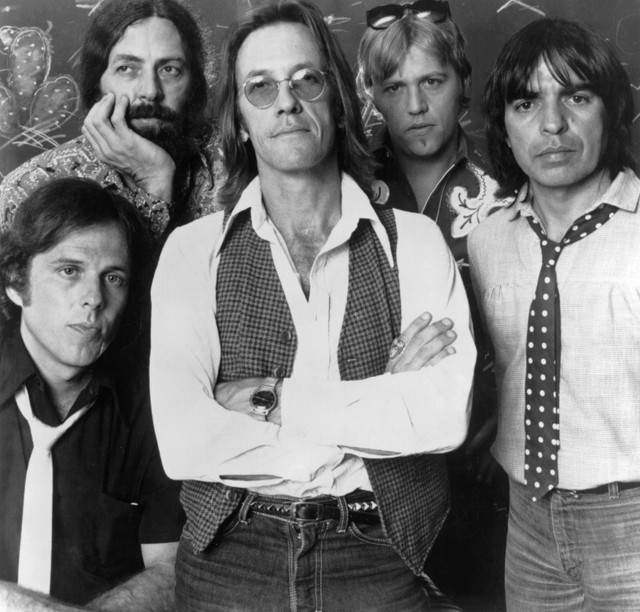
Upon returning to England, Miller assembled a <a href="spotify:search:label%3A%22Stax%22">Stax</a>-style backing band -- dubbed simply the Frankie Miller Band -- featuring guitarist <a href="spotify:artist:0sGQZQz9UbEkvrLtFb7IUn">Henry McCullough</a>, keyboardist Mick Weaver, bassist Chrissy Stewart, and drummer Stu Perry. This group traveled to San Francisco to record The Rock (named after Alcatraz), which was released in 1975. The band dissolved not long after, and Miller put together a new outfit called Full House, featuring guitarist Ray Minhinnett, keyboardist <a href="spotify:artist:5pMmqpG3HsoJ6EDDoXGXEr">Jim Hall</a>, bassist <a href="spotify:artist:69CwrTwxNAObBQawsTO6MF">Charlie Harrison</a>, and drummer Graham Deacon. They issued the aptly titled Full House in 1977, which, oddly enough, became fairly popular in Sweden. However, once again, Miller's backing band imploded, and he was back on his own for 1978's Double Trouble, which produced his first British Top 30 hit in "Be Good to Yourself." Late that year, Miller scored a runaway Top Ten hit in the U.K. with "Darlin'," a single included on his 1979 LP Falling in Love (aka Perfect Fit). (Typical of Miller's luck in the record business, his best-known song wasn't an original.) 1980's Easy Money was recorded in Nashville, and some of 1982's Standing on the Edge was recorded at Alabama's legendary Muscle Shoals Sound Studios. During this period, Miller also had a Scottish hit with his cover of Dougie McLean's "Caledonia." 1986's Dancing in the Rain was his final studio album.
In August 1994, Miller suffered a devastating brain hemorrhage that left him in a coma for five months. Unable to walk or talk upon his emergence, Miller rehabilitated himself enough to begin writing songs again; at a late-'90s benefit concert in Edinburgh, Miller's new collaboration with <a href="spotify:artist:1Mq5WQehpxWHq4S2KTB3HI">Will Jennings</a>, "The Sun Goes Up, the Sun Comes Down," was performed by <a href="spotify:artist:0SD4eZCN4Kr0wQk56hCdh2">Bonnie Tyler</a>, <a href="spotify:artist:0FFuvdY7fuiuTmHN9unYoz">Paul Carrack</a>, and <a href="spotify:artist:6eLbRJP12OhyvUv4ntto4e">Jools Holland</a>. In 2016, an album called Frankie Miller's Double Take saw release. The album featured a clutch of unreleased Miller originals he'd recorded prior to his hemorrhage, all performed by admirers of <a href="spotify:artist:5TYe8MT9vU4uQe9JuTgFlF">Frankie</a>'s, including <a href="spotify:artist:3PhoLpVuITZKcymswpck5b">Elton John</a>, <a href="spotify:artist:2y8Jo9CKhJvtfeKOsYzRdT">Rod Stewart</a>, <a href="spotify:artist:7dOBabd5O4CvKrg4iriHTM">Kid Rock</a>, <a href="spotify:artist:2OU0OH164ypvP4G3AYynXs">Huey Lewis</a>, <a href="spotify:artist:0FFuvdY7fuiuTmHN9unYoz">Paul Carrack</a>, and <a href="spotify:artist:5W5bDNCqJ1jbCgTxDD0Cb3">Willie Nelson</a>. ~ Steve Huey, Rovi
Frankie Miller was born November 2, 1949, in Glasgow, Scotland; he began singing with local bands beginning in 1967, in a style influenced by American soul singers like <a href="spotify:artist:6hnWRPzGGKiapVX1UCdEAC">Sam Cooke</a>, <a href="spotify:artist:1eYhYunlNJlDoQhtYBvPsi">Ray Charles</a>, and <a href="spotify:artist:60df5JBRRPcnSpsIMxxwQm">Otis Redding</a>. After a few years, he moved to the more fertile music scene in London, where he soon met ex-<a href="spotify:artist:0GbqW5TJr7n4is453VOY4C">Procol Harum</a> guitarist <a href="spotify:artist:0MAvx5yzdhylg2ztJC3MD3">Robin Trower</a> in the summer of 1971. Impressed with Miller's talents as a raw soul belter in the vein of a <a href="spotify:artist:2y8Jo9CKhJvtfeKOsYzRdT">Rod Stewart</a> or <a href="spotify:artist:3pFCERyEiP5xeN2EsPXhjI">Joe Cocker</a>, <a href="spotify:artist:0MAvx5yzdhylg2ztJC3MD3">Trower</a> offered him a job as lead vocalist of his new band Jude. It wasn't to be Miller's big break, though; internal conflicts had split the group apart by the following year, and Miller returned to the London pub rock circuit. During 1972, he made frequent appearances at the Tally Ho in Kentish Town, often sitting in with <a href="spotify:artist:722MDCdw3Ee4SdESC4uy38">Brinsley Schwarz</a>, and signed a solo record deal with <a href="spotify:search:label%3A%22Chrysalis%22">Chrysalis</a>. Using the Brinsleys as a backing band, Miller recorded his debut album, Once in a Blue Moon, that year. Though it wasn't a hit, it was reviewed respectably; more importantly, Miller sent a copy to New Orleans R&B legend <a href="spotify:artist:63aP18bg2ABSOqSNQcAMNy">Allen Toussaint</a>, who was impressed enough to produce Miller's next album. Miller traveled to New Orleans in 1973 to record High Life with an authentic <a href="spotify:artist:63aP18bg2ABSOqSNQcAMNy">Toussaint</a>-led backing band, resulting in one of his most acclaimed and artistically satisfying albums.
Upon returning to England, Miller assembled a <a href="spotify:search:label%3A%22Stax%22">Stax</a>-style backing band -- dubbed simply the Frankie Miller Band -- featuring guitarist <a href="spotify:artist:0sGQZQz9UbEkvrLtFb7IUn">Henry McCullough</a>, keyboardist Mick Weaver, bassist Chrissy Stewart, and drummer Stu Perry. This group traveled to San Francisco to record The Rock (named after Alcatraz), which was released in 1975. The band dissolved not long after, and Miller put together a new outfit called Full House, featuring guitarist Ray Minhinnett, keyboardist <a href="spotify:artist:5pMmqpG3HsoJ6EDDoXGXEr">Jim Hall</a>, bassist <a href="spotify:artist:69CwrTwxNAObBQawsTO6MF">Charlie Harrison</a>, and drummer Graham Deacon. They issued the aptly titled Full House in 1977, which, oddly enough, became fairly popular in Sweden. However, once again, Miller's backing band imploded, and he was back on his own for 1978's Double Trouble, which produced his first British Top 30 hit in "Be Good to Yourself." Late that year, Miller scored a runaway Top Ten hit in the U.K. with "Darlin'," a single included on his 1979 LP Falling in Love (aka Perfect Fit). (Typical of Miller's luck in the record business, his best-known song wasn't an original.) 1980's Easy Money was recorded in Nashville, and some of 1982's Standing on the Edge was recorded at Alabama's legendary Muscle Shoals Sound Studios. During this period, Miller also had a Scottish hit with his cover of Dougie McLean's "Caledonia." 1986's Dancing in the Rain was his final studio album.
In August 1994, Miller suffered a devastating brain hemorrhage that left him in a coma for five months. Unable to walk or talk upon his emergence, Miller rehabilitated himself enough to begin writing songs again; at a late-'90s benefit concert in Edinburgh, Miller's new collaboration with <a href="spotify:artist:1Mq5WQehpxWHq4S2KTB3HI">Will Jennings</a>, "The Sun Goes Up, the Sun Comes Down," was performed by <a href="spotify:artist:0SD4eZCN4Kr0wQk56hCdh2">Bonnie Tyler</a>, <a href="spotify:artist:0FFuvdY7fuiuTmHN9unYoz">Paul Carrack</a>, and <a href="spotify:artist:6eLbRJP12OhyvUv4ntto4e">Jools Holland</a>. In 2016, an album called Frankie Miller's Double Take saw release. The album featured a clutch of unreleased Miller originals he'd recorded prior to his hemorrhage, all performed by admirers of <a href="spotify:artist:5TYe8MT9vU4uQe9JuTgFlF">Frankie</a>'s, including <a href="spotify:artist:3PhoLpVuITZKcymswpck5b">Elton John</a>, <a href="spotify:artist:2y8Jo9CKhJvtfeKOsYzRdT">Rod Stewart</a>, <a href="spotify:artist:7dOBabd5O4CvKrg4iriHTM">Kid Rock</a>, <a href="spotify:artist:2OU0OH164ypvP4G3AYynXs">Huey Lewis</a>, <a href="spotify:artist:0FFuvdY7fuiuTmHN9unYoz">Paul Carrack</a>, and <a href="spotify:artist:5W5bDNCqJ1jbCgTxDD0Cb3">Willie Nelson</a>. ~ Steve Huey, Rovi
Monthly Listeners
259,102
Monthly Listeners History
Track the evolution of monthly listeners over the last 28 days.
Followers
24,395
Followers History
Track the evolution of followers over the last 28 days.
Top Cities


Related Artists
New World

Marshall Hain