Data may be outdated
Last updated: 4 months ago — Click refresh to get the latest statistics.
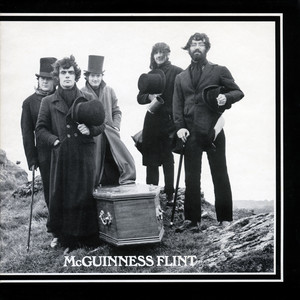
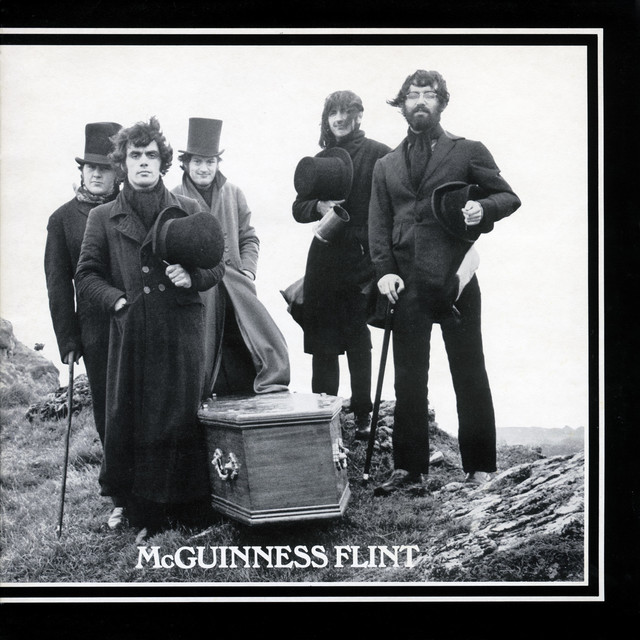
They followed this up with the rootsy "Malt and Barley Blues," which reached number five in England. But the demands of a second album, along with extensive touring, took its toll on the group -- the follow-up album, Happy Birthday, Ruthy Baby, although more ambitious than its predecessor, lacked a hit single to drive its sales and ended up a commercial failure. At the end of 1971, Gallagher and <a href="spotify:artist:5Xht3tbCRsn39mslQva8zG">Lyle</a> quit, and went off to record on their own, as <a href="spotify:artist:2Kq6loh0WNVAGEHlDxxprf">Gallagher & Lyle</a>. <a href="spotify:artist:5gM0neRqVvT7qnNM3Ud4pX">McGuinness</a> and <a href="spotify:artist:64YNzLvOjeRfkTc8rthgPd">Flint</a> carried on, however, with bassist Dixie Dean, and recorded -- as Coulson, Dean, McGuinness, Flint -- the Lo and Behold album; unlike their previous records, which had scarcely found any audience in America, that album became a cult item, built as it was around <a href="spotify:artist:74ASZWbe4lXaubB36ztrGX">Bob Dylan</a> songs that <a href="spotify:artist:74ASZWbe4lXaubB36ztrGX">Dylan</a> had not yet officially released in his own renditions. The group's lineup changes weren't over, however, as Dennis Coulson quit, succeeded by Lou Stonebridge on keyboards, and Jim Evans joined as a second guitarist. They recorded two further LPs, Rainbow (1973) and C'est la Vie (1974), but it was clear by then that even in England their moment had passed, and they ended their run in 1975. Four year later, <a href="spotify:artist:5gM0neRqVvT7qnNM3Ud4pX">McGuinness</a> and Stonebridge recorded together and enjoyed some modest success in England with the single "Oo-Eeh Baby" (number 54 in the U.K.), which was enough to get them an opportunity to do an LP, Corporate Madness, released on RCA Records in 1980.
<a href="spotify:artist:5gM0neRqVvT7qnNM3Ud4pX">McGuinness</a> and <a href="spotify:artist:64YNzLvOjeRfkTc8rthgPd">Flint</a> later crossed paths professionally in the 1980s as members of <a href="spotify:artist:68GsFZshoiZmFCfcCv9ArW">the Blues Band</a>, fronted by ex-<a href="spotify:artist:5670CyWrIOA7702gNjsGMZ">Manfred Mann</a> lead singer <a href="spotify:artist:1I41xgLiwTZvdFsOSgGMvs">Paul Jones</a> -- that group, which landed a contract with Arista Records after cutting a very successful album on its own, lasted into the mid-'80s, though <a href="spotify:artist:64YNzLvOjeRfkTc8rthgPd">Flint</a> exited in 1982. <a href="spotify:artist:5gM0neRqVvT7qnNM3Ud4pX">McGuinness</a> and <a href="spotify:artist:1I41xgLiwTZvdFsOSgGMvs">Jones</a>, along with <a href="spotify:artist:64YNzLvOjeRfkTc8rthgPd">Flint</a>'s replacement, <a href="spotify:artist:5c6GzelCbAGdVnwYReERv2">Rob Townsend</a> (formerly of <a href="spotify:artist:0FtsBt4gg67x9q0CS5FhB6">Family</a>), ended up forming the core of <a href="spotify:artist:3jqT1yfu4HOIDr3k9Ye94N">the Manfreds</a>, a successful effort to revive the <a href="spotify:artist:5670CyWrIOA7702gNjsGMZ">Manfred Mann</a> sound and repertoire (without the participation of keyboard player <a href="spotify:artist:5670CyWrIOA7702gNjsGMZ">Manfred Mann</a> himself, hence the name change). Because of its <a href="spotify:artist:74ASZWbe4lXaubB36ztrGX">Dylan</a>-authored repertoire, Lo and Behold became the group's first album to be issued on compact disc (with bonus tracks, no less). ~ Bruce Eder, Rovi
Monthly Listeners
25,558
Monthly Listeners History
Track the evolution of monthly listeners over the last 28 days.
Followers
5,907
Followers History
Track the evolution of followers over the last 28 days.
Total Streams
5.3 million
Total Streams History
Track the evolution of total streams over the last 28 days. This data is calculated from all tracks listed in the artist's discography.
Top Cities


Related Artists



Terry Dactyl & The Dinosaurs


Slik

The Herd


Splinter

Mr Big
Hurricane Smith


The Congregation
Marshall Hain