Data may be outdated
Last updated: 9 months ago — Click refresh to get the latest statistics.
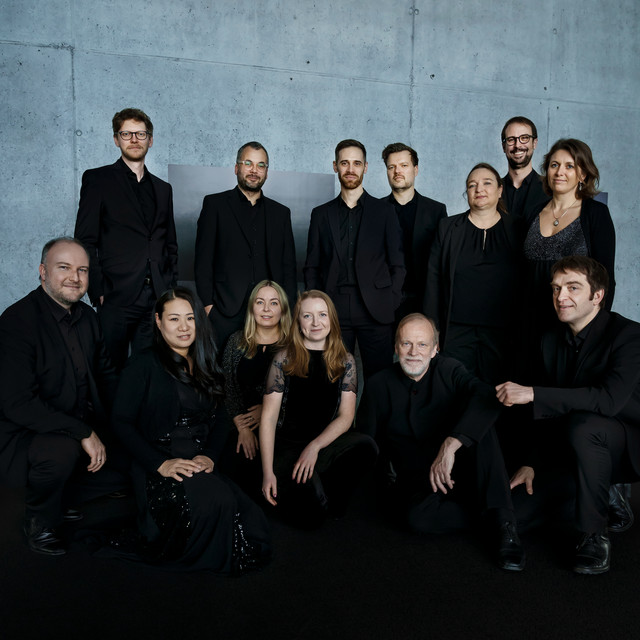
The Gächinger Kantorei was formed in 1954 in the Stuttgart suburb of Gächingen. Kantorei is a common German name for a choir, especially one focusing on sacred music. The Kantorei was formed by conductor <a href="spotify:artist:5TwA5VjT0UxdrtnEWT9saC">Helmuth Rilling</a>, a key German early music conductor whose career extended to both choral and orchestral music in the second half of the 20th century.
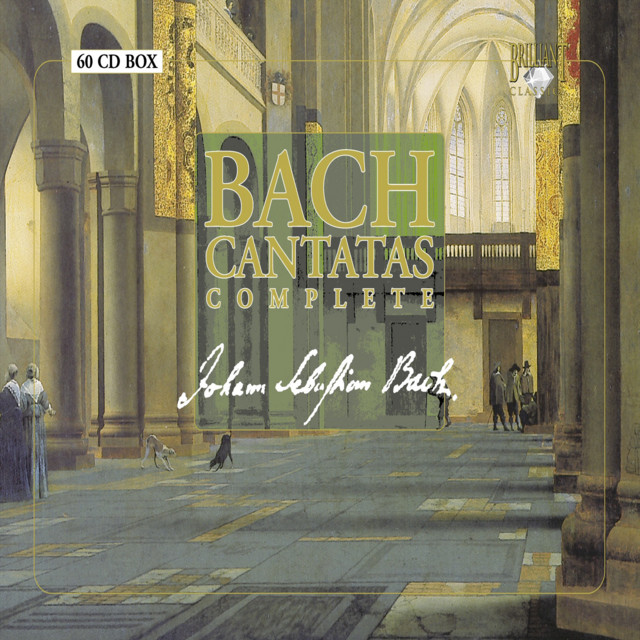
At first, the Kantorei performed mostly music of the 16th and 17th centuries, and then, after <a href="spotify:artist:5TwA5VjT0UxdrtnEWT9saC">Rilling</a> formed the associated <a href="spotify:artist:4XQYvVelb3jgS2YCYKxuiO">Bach-Collegium Stuttgart</a> orchestra, music of the 18th century. The choir's reputation soon extended beyond the Stuttgart area, and beginning in the 1960s, it mounted tours, both alone and with the <a href="spotify:artist:4XQYvVelb3jgS2YCYKxuiO">Bach-Collegium Stuttgart</a>. The group traveled to regions less often visited from what was then West Germany: East Germany, Czechoslovakia, and Hungary in the mid-'60s, and then, in 1968, the U.S. Later performances abroad included one of the <a href="spotify:artist:5wTAi7QkpP6kp8a54lmTOq">Brahms</a> German Requiem with the <a href="spotify:artist:4RkU7dxppCNi2078hPMUI4">Israel Philharmonic</a> in Israel (the first time the work had been performed there), tours in Poland and Russia, and a 2009 performance of <a href="spotify:artist:1QL7yTHrdahRMpvNtn6rI2">Handel</a>'s Messiah with the <a href="spotify:artist:3gacryguGmpmCvgPGt2CBI">New York Philharmonic</a> at Avery Fisher Hall in New York. From the beginning, the Kantorei was prolific as a recording unit. It was the first choir to record a complete cycle of <a href="spotify:artist:5aIqB5nVVvmFsvSdExz408">Bach</a>'s cantatas and oratorios, issuing the last album on March 21, 1985, <a href="spotify:artist:5aIqB5nVVvmFsvSdExz408">Bach</a>'s 300th birthday. In 1996, the group released Magnificat, an album of <a href="spotify:artist:5aIqB5nVVvmFsvSdExz408">Bach</a> choruses. The Kantorei also performed Romantic and contemporary music, and even with early music, its performances were generally not historically oriented; the choir often boasted up to 200 members. That changed when <a href="spotify:artist:3nWpkLjuh0r3wniO2gzL8m">Hans-Christoph Rademann</a> succeeded <a href="spotify:artist:5TwA5VjT0UxdrtnEWT9saC">Rilling</a> as only the Kantorei's second conductor in 2013. Three years later, <a href="spotify:artist:3nWpkLjuh0r3wniO2gzL8m">Rademann</a> adopted the new Gaechinger Cantorey spelling of the choir's name (in line with 18th-century precedents), formed a new Bachakademie Baroque Orchestra in Stuttgart, and set out to make the group conform to Baroque sound ideals. In 2020, an album recorded while still named the Gächinger Kantorei of Beethoven's Missa Solemnis, Op. 123, and other Beethoven choral works was issued on <a href="spotify:search:label%3A%22H%C3%A4nssler+Classic%22">Hänssler Classic</a>. ~ James Manheim, Rovi
At first, the Kantorei performed mostly music of the 16th and 17th centuries, and then, after <a href="spotify:artist:5TwA5VjT0UxdrtnEWT9saC">Rilling</a> formed the associated <a href="spotify:artist:4XQYvVelb3jgS2YCYKxuiO">Bach-Collegium Stuttgart</a> orchestra, music of the 18th century. The choir's reputation soon extended beyond the Stuttgart area, and beginning in the 1960s, it mounted tours, both alone and with the <a href="spotify:artist:4XQYvVelb3jgS2YCYKxuiO">Bach-Collegium Stuttgart</a>. The group traveled to regions less often visited from what was then West Germany: East Germany, Czechoslovakia, and Hungary in the mid-'60s, and then, in 1968, the U.S. Later performances abroad included one of the <a href="spotify:artist:5wTAi7QkpP6kp8a54lmTOq">Brahms</a> German Requiem with the <a href="spotify:artist:4RkU7dxppCNi2078hPMUI4">Israel Philharmonic</a> in Israel (the first time the work had been performed there), tours in Poland and Russia, and a 2009 performance of <a href="spotify:artist:1QL7yTHrdahRMpvNtn6rI2">Handel</a>'s Messiah with the <a href="spotify:artist:3gacryguGmpmCvgPGt2CBI">New York Philharmonic</a> at Avery Fisher Hall in New York. From the beginning, the Kantorei was prolific as a recording unit. It was the first choir to record a complete cycle of <a href="spotify:artist:5aIqB5nVVvmFsvSdExz408">Bach</a>'s cantatas and oratorios, issuing the last album on March 21, 1985, <a href="spotify:artist:5aIqB5nVVvmFsvSdExz408">Bach</a>'s 300th birthday. In 1996, the group released Magnificat, an album of <a href="spotify:artist:5aIqB5nVVvmFsvSdExz408">Bach</a> choruses. The Kantorei also performed Romantic and contemporary music, and even with early music, its performances were generally not historically oriented; the choir often boasted up to 200 members. That changed when <a href="spotify:artist:3nWpkLjuh0r3wniO2gzL8m">Hans-Christoph Rademann</a> succeeded <a href="spotify:artist:5TwA5VjT0UxdrtnEWT9saC">Rilling</a> as only the Kantorei's second conductor in 2013. Three years later, <a href="spotify:artist:3nWpkLjuh0r3wniO2gzL8m">Rademann</a> adopted the new Gaechinger Cantorey spelling of the choir's name (in line with 18th-century precedents), formed a new Bachakademie Baroque Orchestra in Stuttgart, and set out to make the group conform to Baroque sound ideals. In 2020, an album recorded while still named the Gächinger Kantorei of Beethoven's Missa Solemnis, Op. 123, and other Beethoven choral works was issued on <a href="spotify:search:label%3A%22H%C3%A4nssler+Classic%22">Hänssler Classic</a>. ~ James Manheim, Rovi
Monthly Listeners
80,452
Monthly Listeners History
Track the evolution of monthly listeners over the last 28 days.
Followers
1,717
Followers History
Track the evolution of followers over the last 28 days.
Top Cities



Related Artists




Hermann Max

Barockorchester Stuttgart
Hans-Jörg Mammel







Eric Ericson Chamber Choir
Bachchor Mainz

Nico Van Der Meel
Holland Boys Choir, Netherlands Bach Collegium

Howard Crook