Data may be outdated
Last updated: 7 months ago — Click refresh to get the latest statistics.
"None of my music is chamber music, even when it is a Sonata for only one instrument." -- Galina Ustvolskaya
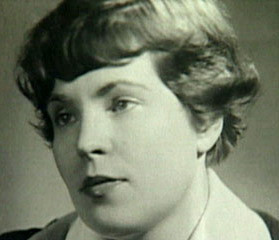
The music of Russian composer Galina Ustvolskaya came shamefully late to the west -- a premiere only in 1986 -- but it carried the force of a catastrophe when it arrived. Struggling mightily for articulate reactions, listeners and writers seemed drawn to descriptive metaphors for strength against itself, on the grandest scales: Ustvolskaya's music was compared to imploding poles, dark stars, paralytic fervor or perfervid paralysis, a small body in a great space, a cosmos rent by a single crushing stroke. For Frans Lemaire, Ustvolskaya's work was a "black hole" with "such density that it imprisons its own light"; for Art Lange it was a musical "suprematism" of apocalyptic geometric violence; for compatriot composer and friend Victor Suslin, Ustvolskaya's body of work was a testament to Russia's "terrible" years, and the black hole that was St. Petersburg; and Dutch musicologist Elmer Schönberger tersely dubbed Ustvolskaya "the lady with a hammer." But perhaps Ustvolskaya's own proud assertion, that none of her music is chamber music, holds best: in her six piano sonatas, five symphonies, and three "compositions," the space doesn't surround the music; the music envelopes the space, and clutches the listener like a new skull with a new blood beating fiercely against its temples.
Galina Ivanovna Ustvolskaya lived in one city -- with three names -- all her life. She was born in "Petrograd" on June 17, 1919, and studied at the music college affiliated with the (then) Leningrad Conservatory from 1937 - 1939. Upon graduating into the Conservatory itself, Ustvolskaya began studies with Shebalin and <a href="spotify:artist:6s1pCNXcbdtQJlsnM1hRIA">Shostakovich</a>. It was presumably here that an intense relationship between <a href="spotify:artist:6s1pCNXcbdtQJlsnM1hRIA">Shostakovich</a> and Ustvolskaya began, eventually becoming romantic, at least on <a href="spotify:artist:6s1pCNXcbdtQJlsnM1hRIA">Shostakovich</a>'s part; hence the older composer's quasi-worship of his pupil. Among his more well-known words to her is his extraordinary confession that "it is not I who have influenced you, but you who have influenced me"; <a href="spotify:artist:6s1pCNXcbdtQJlsnM1hRIA">Shostakovich</a>'s 1952 Fifth String Quartet and 1974 Michelangelo Suite quote a theme from Ustvolskaya's powerful Clarinet Trio of 1949, and do so very conspicuously.
Nevertheless, the relationship seemed doomed, and Ustvolskaya became unequivocal in her feelings: "Then, as now, I determinedly rejected his music...he burdened my life and killed my best feelings." By 1947, Ustvolskaya herself had attained a post as composition teacher at the Conservatory College, and would remain there until 1975. Toward the end of her life, she pursued an ascetic and withdrawn existence, writing only "when I am in a state of grace....When the time comes I reveal the composition. If the time does not come, I simply destroy it. I never accept commissions to order."
Listening to the change which had overtaken Ustvolskaya's music since the early 1950s, one wonders whether <a href="spotify:artist:6s1pCNXcbdtQJlsnM1hRIA">Shostakovich</a>'s shadow indeed hung over Ustvolskaya's work, and whether the terrifying bareness of her music in fact manifests an attempt to annihilate all "anxieties of influence." Whatever the case, any speculation or analysis of Ustvolskaya's extremely naked music is inevitably a means of diluting and dispersing its effect, monolithically present like the beat of a assaulted heart. Often her music proceeds without bar lines in simple quarter, half, or eighth notes; the "language" veers almost entirely between bone-cracking chromatic clusters and unadorned stepwise chants, dynamically between pppppp and ffffff. But no account, no matter how "metaphorically" loaded, can prepare one for the effect of an Ustvolskaya work played "authentically and strongly" in a church: it can crack the sublime in two, and reveal the fear art more often tries so hard to repress.
The music of Russian composer Galina Ustvolskaya came shamefully late to the west -- a premiere only in 1986 -- but it carried the force of a catastrophe when it arrived. Struggling mightily for articulate reactions, listeners and writers seemed drawn to descriptive metaphors for strength against itself, on the grandest scales: Ustvolskaya's music was compared to imploding poles, dark stars, paralytic fervor or perfervid paralysis, a small body in a great space, a cosmos rent by a single crushing stroke. For Frans Lemaire, Ustvolskaya's work was a "black hole" with "such density that it imprisons its own light"; for Art Lange it was a musical "suprematism" of apocalyptic geometric violence; for compatriot composer and friend Victor Suslin, Ustvolskaya's body of work was a testament to Russia's "terrible" years, and the black hole that was St. Petersburg; and Dutch musicologist Elmer Schönberger tersely dubbed Ustvolskaya "the lady with a hammer." But perhaps Ustvolskaya's own proud assertion, that none of her music is chamber music, holds best: in her six piano sonatas, five symphonies, and three "compositions," the space doesn't surround the music; the music envelopes the space, and clutches the listener like a new skull with a new blood beating fiercely against its temples.
Galina Ivanovna Ustvolskaya lived in one city -- with three names -- all her life. She was born in "Petrograd" on June 17, 1919, and studied at the music college affiliated with the (then) Leningrad Conservatory from 1937 - 1939. Upon graduating into the Conservatory itself, Ustvolskaya began studies with Shebalin and <a href="spotify:artist:6s1pCNXcbdtQJlsnM1hRIA">Shostakovich</a>. It was presumably here that an intense relationship between <a href="spotify:artist:6s1pCNXcbdtQJlsnM1hRIA">Shostakovich</a> and Ustvolskaya began, eventually becoming romantic, at least on <a href="spotify:artist:6s1pCNXcbdtQJlsnM1hRIA">Shostakovich</a>'s part; hence the older composer's quasi-worship of his pupil. Among his more well-known words to her is his extraordinary confession that "it is not I who have influenced you, but you who have influenced me"; <a href="spotify:artist:6s1pCNXcbdtQJlsnM1hRIA">Shostakovich</a>'s 1952 Fifth String Quartet and 1974 Michelangelo Suite quote a theme from Ustvolskaya's powerful Clarinet Trio of 1949, and do so very conspicuously.
Nevertheless, the relationship seemed doomed, and Ustvolskaya became unequivocal in her feelings: "Then, as now, I determinedly rejected his music...he burdened my life and killed my best feelings." By 1947, Ustvolskaya herself had attained a post as composition teacher at the Conservatory College, and would remain there until 1975. Toward the end of her life, she pursued an ascetic and withdrawn existence, writing only "when I am in a state of grace....When the time comes I reveal the composition. If the time does not come, I simply destroy it. I never accept commissions to order."
Listening to the change which had overtaken Ustvolskaya's music since the early 1950s, one wonders whether <a href="spotify:artist:6s1pCNXcbdtQJlsnM1hRIA">Shostakovich</a>'s shadow indeed hung over Ustvolskaya's work, and whether the terrifying bareness of her music in fact manifests an attempt to annihilate all "anxieties of influence." Whatever the case, any speculation or analysis of Ustvolskaya's extremely naked music is inevitably a means of diluting and dispersing its effect, monolithically present like the beat of a assaulted heart. Often her music proceeds without bar lines in simple quarter, half, or eighth notes; the "language" veers almost entirely between bone-cracking chromatic clusters and unadorned stepwise chants, dynamically between pppppp and ffffff. But no account, no matter how "metaphorically" loaded, can prepare one for the effect of an Ustvolskaya work played "authentically and strongly" in a church: it can crack the sublime in two, and reveal the fear art more often tries so hard to repress.
Monthly Listeners
2,100
Monthly Listeners History
Track the evolution of monthly listeners over the last 28 days.
Followers
4,297
Followers History
Track the evolution of followers over the last 28 days.
Top Cities
64 listeners

51 listeners

38 listeners

26 listeners

25 listeners

Related Artists
Tristan Murail

Friedrich Cerha

Pascal Dusapin

Elsbeth Moser
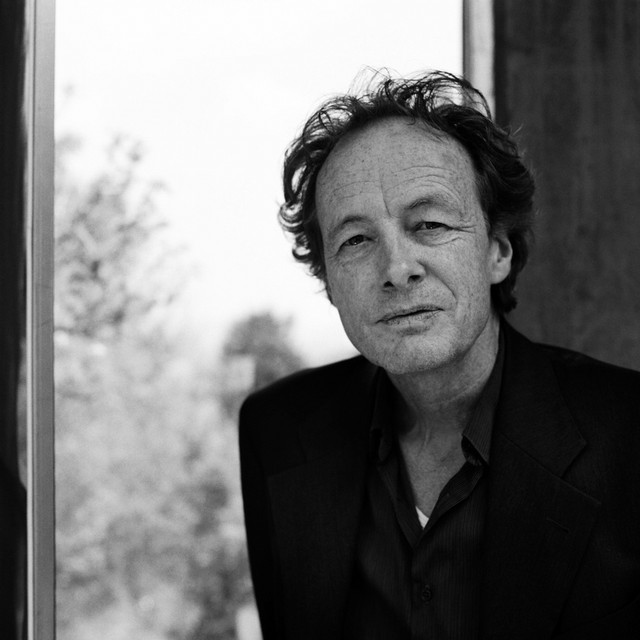
Beat Furrer




Klangforum Wien

Franck Ollu



Rudolf Kelterborn
Bruno Maderna
Quatuor Diotima
Irvine Arditti
Magnus Lindberg

Johannes Kalitzke
andrew barclay