Data may be outdated
Last updated: 1 month ago — Click refresh to get the latest statistics.
Born in Kannapolis, North Carolina, on July 22, 1941, Clinton became interested in doo wop in the early '50s while living in Plainfield, New Jersey. In 1955, he formed <a href="spotify:artist:1Ve5PoI7i5jIIP1xudo6AB">the Parliaments</a>, a vocal group based out of the back room of a barbershop where he straightened hair. The group debuted in 1959 with "Poor Willy," released on a subsidiary of <a href="spotify:search:label%3A%22ABC%22">ABC</a>. An audition for <a href="spotify:search:label%3A%22Motown%22">Motown</a> was unsuccessful, but <a href="spotify:artist:1Ve5PoI7i5jIIP1xudo6AB">the Parliaments</a> linked with smaller Detroit labels <a href="spotify:search:label%3A%22Golden+World%22">Golden World</a> and Revilot, and Clinton landed a gig as a staff writer for <a href="spotify:search:label%3A%22Motown%22">Motown</a> publishing wing <a href="spotify:search:label%3A%22Jobete%22">Jobete</a>. Clinton split time between Plainfield and Detroit, owning and operating the Silk Palace hair parlor and grooming <a href="spotify:artist:1Ve5PoI7i5jIIP1xudo6AB">the Parliaments</a> back home, while co-writing songs such as an obscure 1966 pop-soul gem titled "I'll Bet You" -- recorded by <a href="spotify:search:label%3A%22Golden+World%22">Golden World</a> artist Theresa Lindsey -- and running the short-lived Marton label as an outlet for more of his compositions. <a href="spotify:artist:1Ve5PoI7i5jIIP1xudo6AB">The Parliaments</a> reached their apex in 1967 with the <a href="spotify:search:label%3A%22Revilot%22">Revilot</a> platter "(I Wanna) Testify," which climbed to number three on Billboard's R&B chart and number 20 on the pop chart. Clinton was the only <a href="spotify:artist:1Ve5PoI7i5jIIP1xudo6AB">Parliaments</a> member at the session, but he consequently reconvened with the group and expanded the lineup with a full band of backing musicians to tour.
A legal dispute with the bankrupt <a href="spotify:search:label%3A%22Revilot%22">Revilot</a> temporarily prevented <a href="spotify:artist:1Ve5PoI7i5jIIP1xudo6AB">the Parliaments</a> from continuing under that name. Clinton renamed the group <a href="spotify:artist:450o9jw6AtiQlQkHCdH6Ru">Funkadelic</a> and seized the opportunity for a makeover, pushing the instrumentalists to the fore and embracing psychedelic rock without losing a grip on gospel, soul, and funk. Shortly thereafter, Clinton used the same lineup to launch Parliament, whose 1970-1972 output for <a href="spotify:artist:3ig4Yf8S2Bjq2yVsiayKM0">Holland-Dozier-Holland</a>'s <a href="spotify:search:label%3A%22Invictus%22">Invictus</a> label, amounting to an album and a handful of singles, was often as raucous as <a href="spotify:artist:450o9jw6AtiQlQkHCdH6Ru">Funkadelic</a>'s concurrent wealth of recordings for <a href="spotify:search:label%3A%22Westbound%22">Westbound</a>, another Detroit-based independent. When Parliament joined up with the more commercially minded Los Angeles label <a href="spotify:search:label%3A%22Casablanca%22">Casablanca</a>, the group became increasingly distinct from <a href="spotify:artist:450o9jw6AtiQlQkHCdH6Ru">Funkadelic</a> (who moved up to major-label <a href="spotify:search:label%3A%22Warner+Bros.%22">Warner Bros.</a>), favoring a slicker sound enhanced by <a href="spotify:artist:2uE66NiUti6Wpz90SD4eam">Fred Wesley</a>'s <a href="spotify:artist:5OyhCAuF3ksAqht2yUAT5E">Horny Horns</a>. By the end of the '70s, Parliament and <a href="spotify:artist:450o9jw6AtiQlQkHCdH6Ru">Funkadelic</a> had a combined 39 charting singles, peaking toward the end of the decade with the number one R&B hits "Flash Light," "One Nation Under a Groove," "(Not Just) Knee Deep," and "Aqua Boogie (A Psychoalphadiscobetabioaquadoloop)." Seven of their albums through 1979 went either gold or platinum. Clinton's extended collective had also hatched groups such as U.S. (United Soul), <a href="spotify:artist:07jn9cZPSix2CxynL8Ojnd">Parlet</a>, and <a href="spotify:artist:1UpV4Xw5bG23MNBlhD8rpc">the Brides of Funkenstein</a>, among numerous solo projects, and repurposed a few early Clinton compositions -- "I'll Bet You" and "(I Wanna) Testify" among them -- to freakier effect.
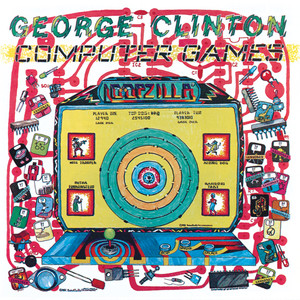
Clinton began to be weighed down by legal difficulties arising from <a href="spotify:search:label%3A%22Polygram%22">Polygram</a>'s acquisition of Parliament's label, <a href="spotify:search:label%3A%22Casablanca%22">Casablanca</a>. Jettisoning the Parliament and <a href="spotify:artist:450o9jw6AtiQlQkHCdH6Ru">Funkadelic</a> names after LPs released in 1980 and 1981, Clinton signed to <a href="spotify:search:label%3A%22Capitol%22">Capitol</a> as a solo act and around the same time got the descriptively named <a href="spotify:artist:4jbdFVscwgzbzxNFmCHjGY">P-Funk All-Stars</a> off the ground. Clinton's first solo album, 1982's Computer Games, contained the Top 20 R&B hit "Loopzilla" and the chart-topping "Atomic Dog." Clinton released three more albums for <a href="spotify:search:label%3A%22Capitol%22">Capitol</a> from 1983 through 1986 -- You Shouldn't-Nuf Bit Fish, Some of My Best Jokes Are Friends, and R&B Skeletons in the Closet -- and hit the R&B Top 20 again with "Nubian Nut" and "Do Fries Go with That Shake?" During the same period, <a href="spotify:artist:4jbdFVscwgzbzxNFmCHjGY">P-Funk All-Stars</a> were behind a couple independent singles and an album through major-label <a href="spotify:search:label%3A%22CBS%22">CBS</a>, and Clinton produced <a href="spotify:artist:0L8ExT028jH3ddEcZwqJJ5">Red Hot Chili Peppers</a>' Freaky Styley. Through the remainder of the '80s (and repeatedly across the following decades), Clinton was on both sides of legal disputes regarding royalty and copyright issues. Some of Clinton's associates were dissatisfied with their compensation, a matter complicated by the large volume of recordings for several labels, among other factors contributing to disorganization. Clinton claimed that his signature was forged on a document that signed away his rights to over 150 of his songs to Bridgeport, the music publishing company operated by <a href="spotify:search:label%3A%22Westbound%22">Westbound</a> founder Armen Boladian. This was particularly devastating for Clinton given that Parliament and <a href="spotify:artist:450o9jw6AtiQlQkHCdH6Ru">Funkadelic</a> songs were being sampled by an increasing quantity of rap producers.
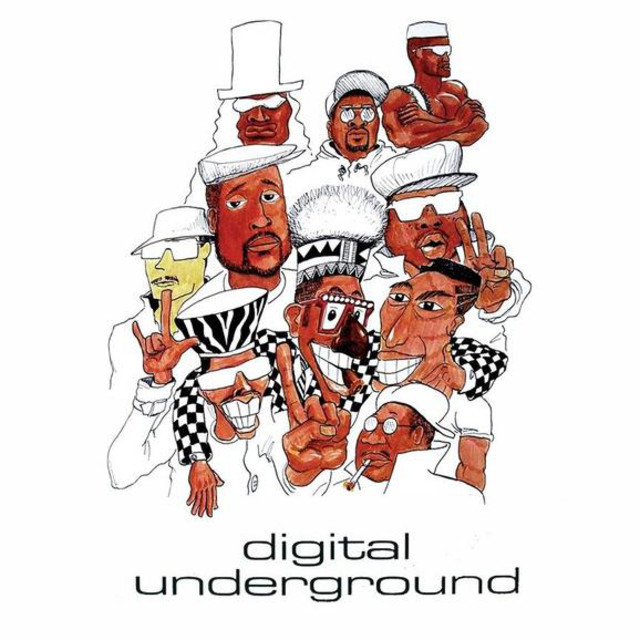
At the tail-end of the '80s, <a href="spotify:search:label%3A%22MCA%22">MCA</a> released "By Way of the Drum," a single credited to <a href="spotify:artist:450o9jw6AtiQlQkHCdH6Ru">Funkadelic</a> with production from Clinton and <a href="spotify:artist:1SaH16LT1AWVsBU8AKY4HN">Jeff Lorber</a>. (A like-titled album's worth of material, recorded from 1983 to 1985, was shelved but released by <a href="spotify:search:label%3A%22Hip-O+Select%22">Hip-O Select</a> in 2007.) Clinton also signed with <a href="spotify:artist:5a2EaR3hamoenG9rDuVn8j">Prince</a>'s <a href="spotify:search:label%3A%22Paisley+Park%22">Paisley Park</a> and eventually released two solo albums for the <a href="spotify:search:label%3A%22Warner+Bros.%22">Warner Bros.</a>-distributed label, 1989's The Cinderella Theory and 1993's Hey Man...Smell My Finger. After the lower-profile <a href="spotify:artist:2FghEpEqZ2V1Jw56aJEcgN">George Clinton & the P-Funk All-Stars</a> album Dope Dogs and other independent projects, Clinton joined the roster of <a href="spotify:search:label%3A%22Epic%22">Epic</a>'s <a href="spotify:search:label%3A%22550+Music%22">550 Music</a>, where he released the 1996 album T.A.P.O.A.F.O.M. (standing for "the awesome power of a fully operational mothership"). Clinton and <a href="spotify:artist:2FghEpEqZ2V1Jw56aJEcgN">the P-Funk All-Stars</a> were active performers all the while, playing for multiple generations of funk devotees, and they reached younger rock-favoring audiences as part of early Lollapalooza lineups. In 1997, Parliament-<a href="spotify:artist:450o9jw6AtiQlQkHCdH6Ru">Funkadelic</a> were inducted into the Rock and Roll Hall of Fame, and <a href="spotify:artist:4akybxRTGHJZ1DXjLhJ1qu">Kirk Franklin</a>'s "Stomp," which interpolated "One Nation Under a Groove," was nominated for a Grammy in the category of Best Rhythm & Blues Song, thereby granting Clinton his first Grammy nomination. Another indicator of P-Funk's enduring clout was the large number of varied disciples who featured Clinton on tracks throughout the '90s. <a href="spotify:artist:7jocoSCuCtpCxCI6IbP8ye">Digital Underground</a>, <a href="spotify:artist:7hJcb9fa4alzcOq3EaNPoG">Snoop Dogg</a>, <a href="spotify:artist:3Mcii5XWf6E0lrY3Uky4cA">Ice Cube</a>, <a href="spotify:artist:3wury2nd8idV4GecUg5xze">Primal Scream</a>, <a href="spotify:artist:1ZwdS5xdxEREPySFridCfh">2Pac</a>, and <a href="spotify:artist:1G9G7WwrXka3Z1r7aIDjI7">OutKast</a> account for only a small percentage.
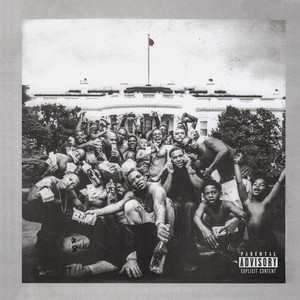
Due in part to legal entanglements, full-length Clinton projects during the 2000s and 2010s were limited to one album each from <a href="spotify:artist:2FghEpEqZ2V1Jw56aJEcgN">the P-Funk All-Stars</a> and the revived Parliament and <a href="spotify:artist:450o9jw6AtiQlQkHCdH6Ru">Funkadelic</a>. Clinton also released an LP as a headliner, 2008's George Clinton and His Gangsters of Love. Regardless of how each release was billed, they were all truly P-Funk, overseen by Clinton with a mix of established and new associates. Clinton himself continued to collaborate with a vast assortment of artists and earned a second Grammy nomination due to his introductory role on <a href="spotify:artist:2YZyLoL8N0Wb9xBt1NhZWg">Kendrick Lamar</a>'s To Pimp a Butterfly, which was up for Album of the Year. In 2019, the same year Clinton retired from touring, he and Parliament-<a href="spotify:artist:450o9jw6AtiQlQkHCdH6Ru">Funkadelic</a> were recipients of a Lifetime Achievement Award from the Recording Academy. ~ Andy Kellman & John Bush, Rovi
Monthly Listeners
941,934
Monthly Listeners History
Track the evolution of monthly listeners over the last 28 days.
Followers
515,171
Followers History
Track the evolution of followers over the last 28 days.
Total Streams
468.4 million
Total Streams History
Track the evolution of total streams over the last 28 days. This data is calculated from all tracks listed in the artist's discography.
Top Cities

Related Artists

Lakeside
Mary Jane Girls
The Whispers
The S.O.S Band