Data may be outdated
Last updated: 9 months ago — Click refresh to get the latest statistics.
Gilles Binchois is one of the most important composers of the early Renaissance era, standing in influence and artistic significance alongside <a href="spotify:artist:3DL7TTcfjDAJiDrhBl3q2H">Dunstable</a> and <a href="spotify:artist:0kLNgrvMXHTm4yWGrfMuLc">Dufay</a>. He and <a href="spotify:artist:0kLNgrvMXHTm4yWGrfMuLc">Dufay</a> were the most important figures in establishing the Burgundian tradition, once known as the First Netherlands School. Traits commonly associated with this style include a transparency of texture and the so-called Burgundian cadence, which features two leading tones. His sacred compositions, many of which have been lost, include the Te Deum, which became widely performed in his time. In addition, various movements from the mass have survived, as well as Magnificat settings and other works of strong artistic merit. Still, his many songs, or rondeaux, comprise his most substantial contribution. Probably Binchois' greatest strength lay in his talent for attractive and distinctive melody, as heard, for example, in Adieu jusques je vous revoye and Mon cuer chante.
Binchois was born around 1400, with the surname of "Binche" or "Bins," to a well-placed bourgeois family. His father, Jean de Binche, was a councilor to Duke Guillaume IV of Hainaut and to the duke's daughter Jaqueline of Bavaria. Binchois may thus have received his first musical training at the court of Mons and was probably a choirboy at a local church. The earliest surviving documents of his life show him as organist at Ste. Waudru in Mons from December 8, 1419 until July 28, 1423. Two lines in <a href="spotify:artist:5bk4CYx5KyU34CeJmoJEaO">Ockeghem</a>'s lament on Binchois' death suggest the possibility of military service. The "honorable worldliness" in this poem could refer to his courtly service to William de la Pole, Earl of Suffolk, who fought campaigns during the English occupation of France. This is where he encountered English music, elements of which are found in his own work. In any event, it appears that Binchois returned to the Mons area in 1425. By this time, he was writing a sizable quantity of secular songs. He also produced a handful of ballades, which include Ma dame que j'ayme et croy and Adieu mon amoureuse joye. Binchois was then taken on as a chaplain at the Court Chapel in Burgundy, probably in the period 1426-1427, but no later than 1431, when surviving payment lists show he was fifth in seniority. It was not necessary to be a priest to serve as chaplain, though some music historians claim that he was one. He composed his single isorhythmic motet, Nove cantum melodie, for the baptism of Duke Philip the Good's son, Anthoine, on January 18, 1431. Binchois was appointed canon at Ste. Waudru in Mons in the 1430s. At around that time, he produced a volume of sacred works entitled Passions en nouvelle maniere. Throughout these years, in fact, Binchois was amassing a substantial body of sacred music, though his secular oeuvre was more sizable still. No complete mass has been found, but there are many surviving parts: Kyrie, Gloria, Credo, Sanctus, and Agnus Dei. In 1449, Binchois attended a gathering of canons in Mons with <a href="spotify:artist:0kLNgrvMXHTm4yWGrfMuLc">Dufay</a>, with whom he had become quite friendly. This is the only known trip the composer made in the 1440s and is one of the few recorded activities of his life in this decade. A provostship at St. Vincent in Soignies from 1452 led to Binchois' retirement there in February 1453. He continued to receive the income from his benefices until his death in 1460. His musical contacts apparently also still thrived in retirement, as the composers Guillaume Malbeque and <a href="spotify:artist:0EWdPilASihvPyL1baOu6o">Johannes Regis</a> both worked in Soignies at this time. Upon Binchois' death, both <a href="spotify:artist:0kLNgrvMXHTm4yWGrfMuLc">Guillaume Dufay</a> and <a href="spotify:artist:5bk4CYx5KyU34CeJmoJEaO">Johannes Ockeghem</a> composed moving laments in music: the one alluding to two specific chansons of Binchois, the other to his general style. Already in 1442, the Burgundian poet Martin le Franc credited Binchois and <a href="spotify:artist:0kLNgrvMXHTm4yWGrfMuLc">Dufay</a> with a rejuvenation of the art of music on the Continent; his chansons would serve composers throughout the century as models for elaboration and parody. ~ TiVo Staff
Binchois was born around 1400, with the surname of "Binche" or "Bins," to a well-placed bourgeois family. His father, Jean de Binche, was a councilor to Duke Guillaume IV of Hainaut and to the duke's daughter Jaqueline of Bavaria. Binchois may thus have received his first musical training at the court of Mons and was probably a choirboy at a local church. The earliest surviving documents of his life show him as organist at Ste. Waudru in Mons from December 8, 1419 until July 28, 1423. Two lines in <a href="spotify:artist:5bk4CYx5KyU34CeJmoJEaO">Ockeghem</a>'s lament on Binchois' death suggest the possibility of military service. The "honorable worldliness" in this poem could refer to his courtly service to William de la Pole, Earl of Suffolk, who fought campaigns during the English occupation of France. This is where he encountered English music, elements of which are found in his own work. In any event, it appears that Binchois returned to the Mons area in 1425. By this time, he was writing a sizable quantity of secular songs. He also produced a handful of ballades, which include Ma dame que j'ayme et croy and Adieu mon amoureuse joye. Binchois was then taken on as a chaplain at the Court Chapel in Burgundy, probably in the period 1426-1427, but no later than 1431, when surviving payment lists show he was fifth in seniority. It was not necessary to be a priest to serve as chaplain, though some music historians claim that he was one. He composed his single isorhythmic motet, Nove cantum melodie, for the baptism of Duke Philip the Good's son, Anthoine, on January 18, 1431. Binchois was appointed canon at Ste. Waudru in Mons in the 1430s. At around that time, he produced a volume of sacred works entitled Passions en nouvelle maniere. Throughout these years, in fact, Binchois was amassing a substantial body of sacred music, though his secular oeuvre was more sizable still. No complete mass has been found, but there are many surviving parts: Kyrie, Gloria, Credo, Sanctus, and Agnus Dei. In 1449, Binchois attended a gathering of canons in Mons with <a href="spotify:artist:0kLNgrvMXHTm4yWGrfMuLc">Dufay</a>, with whom he had become quite friendly. This is the only known trip the composer made in the 1440s and is one of the few recorded activities of his life in this decade. A provostship at St. Vincent in Soignies from 1452 led to Binchois' retirement there in February 1453. He continued to receive the income from his benefices until his death in 1460. His musical contacts apparently also still thrived in retirement, as the composers Guillaume Malbeque and <a href="spotify:artist:0EWdPilASihvPyL1baOu6o">Johannes Regis</a> both worked in Soignies at this time. Upon Binchois' death, both <a href="spotify:artist:0kLNgrvMXHTm4yWGrfMuLc">Guillaume Dufay</a> and <a href="spotify:artist:5bk4CYx5KyU34CeJmoJEaO">Johannes Ockeghem</a> composed moving laments in music: the one alluding to two specific chansons of Binchois, the other to his general style. Already in 1442, the Burgundian poet Martin le Franc credited Binchois and <a href="spotify:artist:0kLNgrvMXHTm4yWGrfMuLc">Dufay</a> with a rejuvenation of the art of music on the Continent; his chansons would serve composers throughout the century as models for elaboration and parody. ~ TiVo Staff
Monthly Listeners
7,371
Monthly Listeners History
Track the evolution of monthly listeners over the last 28 days.
Followers
2,109
Followers History
Track the evolution of followers over the last 28 days.
Top Cities



Related Artists
Alexander Agricola
Baptiste Romain

Adrian Willaert
Johannes Ciconia

Oswald von Wolkenstein

Vincenzo Ruffo
Anna Danilevskaia
Sabine Lutzenberger
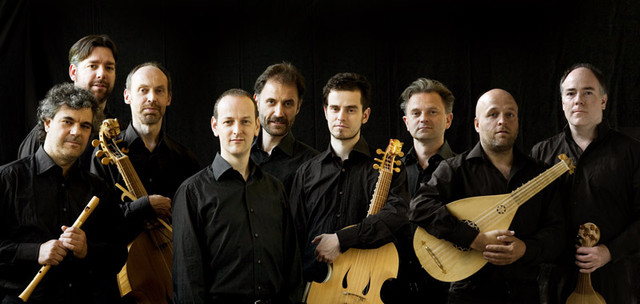
Solage

Leonel Power
Alla Francesca
Currentes
Claudia Caffagni
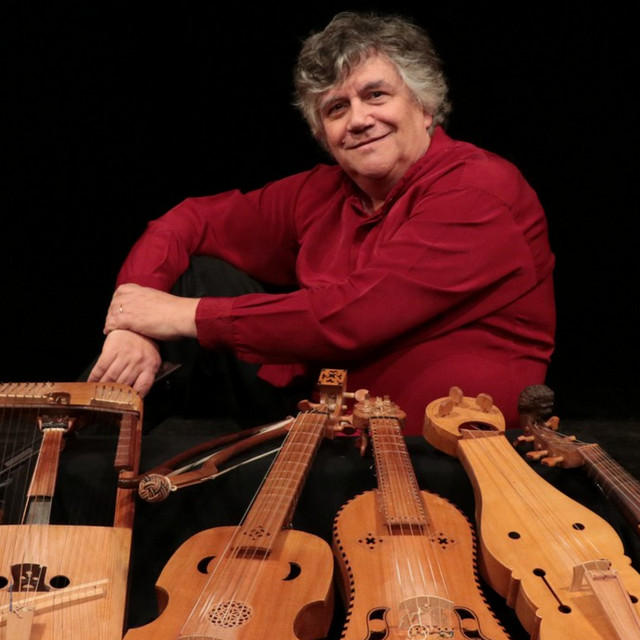
Emmanuel Bonnardot
Ludwig Senfl
Jacob Obrecht
Paolo da Firenze
Walter Frye

Eustache du Caurroy
Agnieszka Budzinska-Bennett