Data may be outdated
Last updated: 7 months ago — Click refresh to get the latest statistics.
Giovanni Giacomo Gastoldi is particularly known for his dance songs, or balletti. These dance songs, however, share their attractive, light, and rhythmically alert character with his madrigals and even some of his sacred music.
Caravaggio is a small town between Brescia and Milan which, about 15 years after the birth of this composer, also produced Michelangelo Amerighi, the painter who took the name of Caravaggio and immortalized the town. Since it is known that Gastoldi was a subdeacon and then a deacon at the ducal chapel of Santa Barbara in Mantua, it is considered likely that he was a boy choral singer there. As an adult, he also sang in that choir, which was under the direction of <a href="spotify:artist:1oMQRPbwi2uetIq5EPnLPP">Giaches de Wert</a>, a leading composer imported from the Low Countries. It is likely that he took over <a href="spotify:artist:1oMQRPbwi2uetIq5EPnLPP">Wert</a>'s duties for a time in 1582, when the latter was ill. Gastoldi was already experienced as a leader, for he had been the music teacher and director for the young priests at Santa Barbara from 1579 to 1587. In 1591, he published his first set of balletti. When <a href="spotify:artist:1oMQRPbwi2uetIq5EPnLPP">Wert</a> died in 1592, Gastoldi succeeded him at Santa Barbara. In the same year, he contributed some choruses for a production of <a href="spotify:artist:1msmFAkMDTmL6tVgUMye9n">Giovanni Guarini</a>'s Il pastor fido, some motets for a book dedicated to <a href="spotify:artist:0BS8IrFmvK1tXenMULjwem">Palestrina</a>, and a madrigal for Il trionfi di door, a wedding collection.
The circumstances under which he left his church job are uncertain. The position was declared vacant in 1605, although Gastoldi was still in Mantua. Before he left town, he contributed to a comedy called L'idropica (The Man With Dropsy). He apparently moved to Milan before 1608, seemingly working in the secular sphere but possibly becoming maestro di cappella of the cathedral there. Nothing is known of the rest of his life.
The 1591 collection of dance songs went through ten reprintings more than 20 years. It was still being reprinted as late as 1662, when a new edition came off the presses in Scotland. His music strongly influenced English songs for a while and certainly stood at the forefront of the new prominence of chordal textures in music of the early Baroque as a whole. His dance music is generally homophonic, while the sacred music (which is much less often played) is in a variety of styles and textures.
Caravaggio is a small town between Brescia and Milan which, about 15 years after the birth of this composer, also produced Michelangelo Amerighi, the painter who took the name of Caravaggio and immortalized the town. Since it is known that Gastoldi was a subdeacon and then a deacon at the ducal chapel of Santa Barbara in Mantua, it is considered likely that he was a boy choral singer there. As an adult, he also sang in that choir, which was under the direction of <a href="spotify:artist:1oMQRPbwi2uetIq5EPnLPP">Giaches de Wert</a>, a leading composer imported from the Low Countries. It is likely that he took over <a href="spotify:artist:1oMQRPbwi2uetIq5EPnLPP">Wert</a>'s duties for a time in 1582, when the latter was ill. Gastoldi was already experienced as a leader, for he had been the music teacher and director for the young priests at Santa Barbara from 1579 to 1587. In 1591, he published his first set of balletti. When <a href="spotify:artist:1oMQRPbwi2uetIq5EPnLPP">Wert</a> died in 1592, Gastoldi succeeded him at Santa Barbara. In the same year, he contributed some choruses for a production of <a href="spotify:artist:1msmFAkMDTmL6tVgUMye9n">Giovanni Guarini</a>'s Il pastor fido, some motets for a book dedicated to <a href="spotify:artist:0BS8IrFmvK1tXenMULjwem">Palestrina</a>, and a madrigal for Il trionfi di door, a wedding collection.
The circumstances under which he left his church job are uncertain. The position was declared vacant in 1605, although Gastoldi was still in Mantua. Before he left town, he contributed to a comedy called L'idropica (The Man With Dropsy). He apparently moved to Milan before 1608, seemingly working in the secular sphere but possibly becoming maestro di cappella of the cathedral there. Nothing is known of the rest of his life.
The 1591 collection of dance songs went through ten reprintings more than 20 years. It was still being reprinted as late as 1662, when a new edition came off the presses in Scotland. His music strongly influenced English songs for a while and certainly stood at the forefront of the new prominence of chordal textures in music of the early Baroque as a whole. His dance music is generally homophonic, while the sacred music (which is much less often played) is in a variety of styles and textures.
Monthly Listeners
4,560
Monthly Listeners History
Track the evolution of monthly listeners over the last 28 days.
Followers
395
Followers History
Track the evolution of followers over the last 28 days.
Top Cities


Related Artists

Melchior Franck
Heinrich Albert
Gregor Aichinger
Die Singphoniker
Adriano Banchieri
Michael Altenburg
Ludwig Senfl

The Toronto Consort

Raimund Hug
Francesco Usper

Pierre Dandrieu

Eustache du Caurroy

The York Waits

John Adson

Adam von Fulda
Ernst Hæfliger
Concilium Musicum
Giovanni Bassano

Robert Pohlers
Cesario Gussago

Thomas Simpson
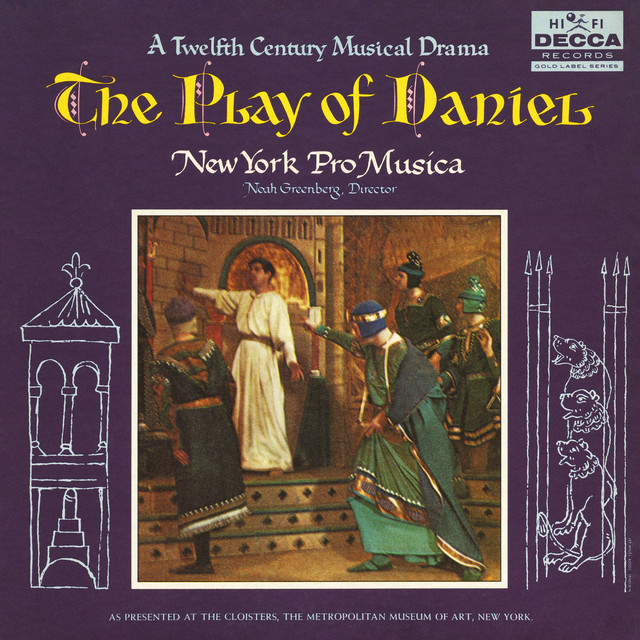
Noah Greenberg
Cesar Bresgen
Thomas Clark

Joel Brown

Les Sacqueboutiers

Mogens Pedersøn

Christoph Demantius
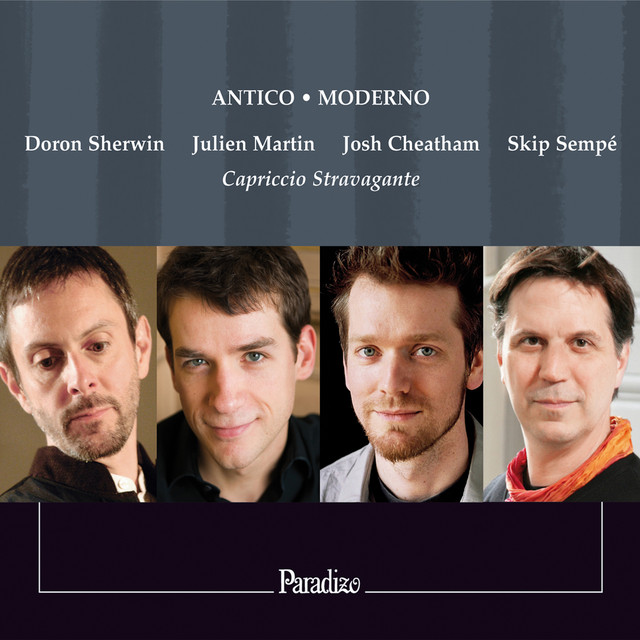
Doron Sherwin

Anna Maria Friman
Maurice of Hesse-Kassel

Heinrich Finck
