Data may be outdated
Last updated: 9 months ago — Click refresh to get the latest statistics.
Very little is known of the early life of sixteenth century French composer Pierre Certon. He may have been a pupil of composer <a href="spotify:artist:31f23hmZawdqgp0sECAzE8">Josquin Desprez</a>, though there is little concrete evidence to support such an assertion; certainly Certon could not have been much more than 10 or 11 years old at the time of <a href="spotify:artist:31f23hmZawdqgp0sECAzE8">Josquin</a>'s death in 1521. Certon first figures into the factual historical record with an appointment as matins clerk at Notre Dame Cathedral, Paris, in October 1529. Certon's headstrong nature seems to have caused something of a strain between himself and his superiors, and when he was indicted in 1530 for initiating sporting activities within the Cathedral courtyard (and for missing the holy service) only the pity of the administration saved the young musician from being thrown in prison.
In 1532 Certon relocated to the Sainte Chapelle, where he remained until his death 40 years later. Although hired as a clerk, from November 15, 1536, Certon was officially in charge of the choirboys as well; as the years went by he assumed further musical duties within the diocese without ever abandoning his primary role as master of choristers. Toward the end of his life he was awarded a number of titles, mostly honorary, which indicate the esteem in which he was held by Church and court, and in 1570 -- just two years before his death -- he became the third composer to earn the title "Composer of Music for the King's Chapel" (though the implications of this title are only partly understood).
In addition to his sacred duties, Certon participated in a number of secular musical activities throughout his life, and developed friendships and contacts with figures as diverse as composer <a href="spotify:artist:0k7fELjPr5qihTEu5cgHrx">Claudin de Sermisy</a> (Certon's Déploration in memory of <a href="spotify:artist:0k7fELjPr5qihTEu5cgHrx">Sermisy</a>, composed sometime after <a href="spotify:artist:0k7fELjPr5qihTEu5cgHrx">Sermisy</a>'s death in 1562, remains a powerful work) and the printer Hubert Jullet (of whose daughter Certon became the godfather).
From Certon's respectable output, eight masses, a magnificat, a wide array of motets, and almost 300 chansons survive. Six of the eight masses use the common sixteenth century technique of parody (the reworking of material from a pre-existing piece into a new musical structure), while the motets tend to combine canonic or ostinato use of cantus firmi with music paraphrased from various chansons. Certon's earliest chansons are composed in a rather melodically fragmented way, while towards the end of his life (and especially in the 1570 collection Les meslanges) a more homophonic texture involving as many as seven or eight voices begins to take shape.
In 1532 Certon relocated to the Sainte Chapelle, where he remained until his death 40 years later. Although hired as a clerk, from November 15, 1536, Certon was officially in charge of the choirboys as well; as the years went by he assumed further musical duties within the diocese without ever abandoning his primary role as master of choristers. Toward the end of his life he was awarded a number of titles, mostly honorary, which indicate the esteem in which he was held by Church and court, and in 1570 -- just two years before his death -- he became the third composer to earn the title "Composer of Music for the King's Chapel" (though the implications of this title are only partly understood).
In addition to his sacred duties, Certon participated in a number of secular musical activities throughout his life, and developed friendships and contacts with figures as diverse as composer <a href="spotify:artist:0k7fELjPr5qihTEu5cgHrx">Claudin de Sermisy</a> (Certon's Déploration in memory of <a href="spotify:artist:0k7fELjPr5qihTEu5cgHrx">Sermisy</a>, composed sometime after <a href="spotify:artist:0k7fELjPr5qihTEu5cgHrx">Sermisy</a>'s death in 1562, remains a powerful work) and the printer Hubert Jullet (of whose daughter Certon became the godfather).
From Certon's respectable output, eight masses, a magnificat, a wide array of motets, and almost 300 chansons survive. Six of the eight masses use the common sixteenth century technique of parody (the reworking of material from a pre-existing piece into a new musical structure), while the motets tend to combine canonic or ostinato use of cantus firmi with music paraphrased from various chansons. Certon's earliest chansons are composed in a rather melodically fragmented way, while towards the end of his life (and especially in the 1570 collection Les meslanges) a more homophonic texture involving as many as seven or eight voices begins to take shape.
Monthly Listeners
3,614
Monthly Listeners History
Track the evolution of monthly listeners over the last 28 days.
Followers
763
Followers History
Track the evolution of followers over the last 28 days.
Top Cities


Related Artists
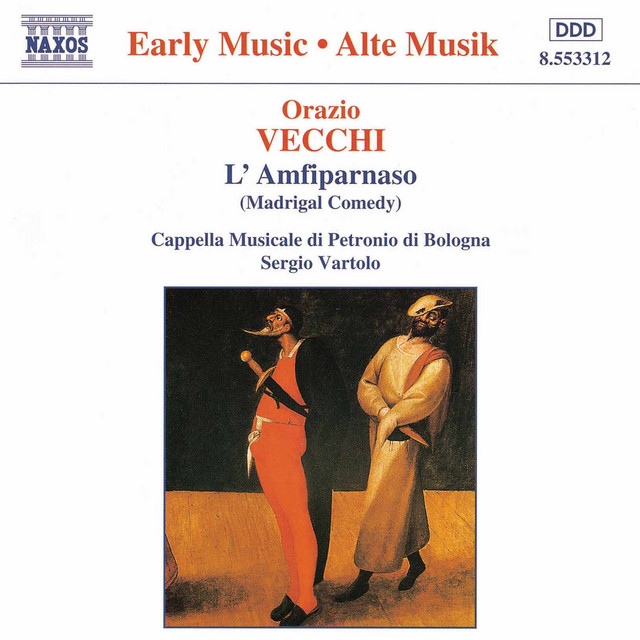
Orazio Vecchi

Ring Around Quartet

Maddalena Casulana
Psalterium

Vincenzo Ruffo

The Toronto Consort
Guillaume Costeley

Gildas Pungier
Ludwig Senfl
Pierre Guédron
Adriano Banchieri

Eustache du Caurroy
Passereau

William Cornysh
Giovanni Bassano

Sven Berger

Cappella Artemisia


Candace Smith
La Camera delle Lacrime

Ensemble Villancico

Les Sacqueboutiers
Cristofano Malvezzi
Thomas Ford
Juan de Anchieta

Helena Ek
Robert Morton