Data may be outdated
Last updated: 9 months ago — Click refresh to get the latest statistics.
The 20th century figure Grace Williams was the first British woman to compose a feature film score and is recognized as the most notable female Welsh composer. A student of <a href="spotify:artist:7wNkISK49lKeXuRaZcQVFe">Ralph Vaughan Williams</a>, among others, she falls into the pastoralist school, but her music has its own distinctive flavor. Williams spent much of her life in Wales, and her music was neglected after her death, but the 21st century has seen a revival in performances and recordings of her music; her songs were the subject of a 2024 recording by baritone <a href="spotify:artist:49RlboDcE5w597pvezkQR6">Jeremy Huw Williams</a>.
Williams was born in Barry, in South Wales, on February 19, 1906. Her father was a notable musician, and she grew up playing piano trios with him and her brother and accompanying her father's choir. She understood the Welsh language (her parents were both Welsh speakers) but did not speak it confidently. A music teacher noted her gift for composition, and she won a scholarship to the University of South Wales in 1923. She studied there with David Evans. Williams moved on to the Royal College of Music in London in 1926. There, her teachers were <a href="spotify:artist:7pTcS325aaWWsWMEpXCyma">Gordon Jacob</a> and <a href="spotify:artist:7wNkISK49lKeXuRaZcQVFe">Ralph Vaughan Williams</a>. Her classes with <a href="spotify:artist:7wNkISK49lKeXuRaZcQVFe">Vaughan Williams</a> also brought her into contact with other young female composers, namely Imogen Holst, Dorothy Gow, and <a href="spotify:artist:6vsthml7w1AetwgOAg5ZKn">Elizabeth Maconchy</a>. Williams rounded out her education studying in Vienna with <a href="spotify:artist:4hMH9qE0Y8H1wbKh5RrnON">Egon Wellesz</a> in 1930 and 1931. In the '30s, she taught at Camden Girls' School and the Southlands College of Education.
Despite her top-rank teachers, Williams was something of a late bloomer as a composer. Her mature works began to appear after Southlands faculty and students were evacuated to rural Grantham at the beginning of World War II; she composed her Symphony No. 1 and what became one of her most popular works, Fantasia on Welsh Nursery Tunes for string orchestra. The latter work has been recorded at least three times. Another popular wartime work from Williams' pen was Sea Sketches, from 1944. The following year, Williams moved back to her hometown, where she would remain for the rest of her life. She devoted herself full-time to composition. Her 1949 score for the film Blue Scar was the first British film score written by a woman. Williams also wrote an opera, The Parlour, which was completed in 1961 and performed in 1966. Her Ballads for orchestra (1968) were written for the National Eisteddfod, a Welsh competitive arts festival. Williams died on February 10, 1977, in Barry. Her works were little played for some years, but the 21st century saw a revival of interest in her music, with more than 45 of her works having been recorded by the mid-2020s. ~ James Manheim, Rovi
Williams was born in Barry, in South Wales, on February 19, 1906. Her father was a notable musician, and she grew up playing piano trios with him and her brother and accompanying her father's choir. She understood the Welsh language (her parents were both Welsh speakers) but did not speak it confidently. A music teacher noted her gift for composition, and she won a scholarship to the University of South Wales in 1923. She studied there with David Evans. Williams moved on to the Royal College of Music in London in 1926. There, her teachers were <a href="spotify:artist:7pTcS325aaWWsWMEpXCyma">Gordon Jacob</a> and <a href="spotify:artist:7wNkISK49lKeXuRaZcQVFe">Ralph Vaughan Williams</a>. Her classes with <a href="spotify:artist:7wNkISK49lKeXuRaZcQVFe">Vaughan Williams</a> also brought her into contact with other young female composers, namely Imogen Holst, Dorothy Gow, and <a href="spotify:artist:6vsthml7w1AetwgOAg5ZKn">Elizabeth Maconchy</a>. Williams rounded out her education studying in Vienna with <a href="spotify:artist:4hMH9qE0Y8H1wbKh5RrnON">Egon Wellesz</a> in 1930 and 1931. In the '30s, she taught at Camden Girls' School and the Southlands College of Education.
Despite her top-rank teachers, Williams was something of a late bloomer as a composer. Her mature works began to appear after Southlands faculty and students were evacuated to rural Grantham at the beginning of World War II; she composed her Symphony No. 1 and what became one of her most popular works, Fantasia on Welsh Nursery Tunes for string orchestra. The latter work has been recorded at least three times. Another popular wartime work from Williams' pen was Sea Sketches, from 1944. The following year, Williams moved back to her hometown, where she would remain for the rest of her life. She devoted herself full-time to composition. Her 1949 score for the film Blue Scar was the first British film score written by a woman. Williams also wrote an opera, The Parlour, which was completed in 1961 and performed in 1966. Her Ballads for orchestra (1968) were written for the National Eisteddfod, a Welsh competitive arts festival. Williams died on February 10, 1977, in Barry. Her works were little played for some years, but the 21st century saw a revival of interest in her music, with more than 45 of her works having been recorded by the mid-2020s. ~ James Manheim, Rovi
Monthly Listeners
855
Monthly Listeners History
Track the evolution of monthly listeners over the last 28 days.
Followers
443
Followers History
Track the evolution of followers over the last 28 days.
Top Cities
22 listeners

8 listeners

7 listeners

7 listeners

7 listeners

Related Artists
David Curtis
Granville Bantock

Liepāja Symphony Orchestra


Roco
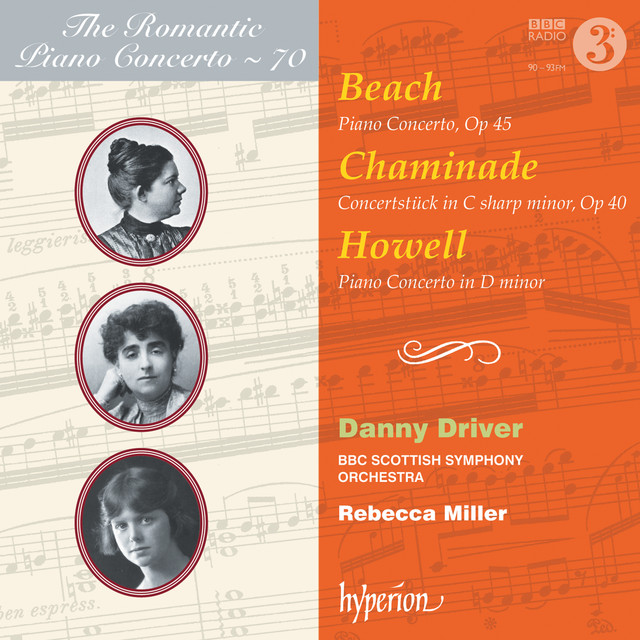
Dorothy Howell

Avril Coleridge-Taylor
Helvi Leiviskä

Väinö Raitio

George Frederick McKay

Thomas Pitfield

Junge Deutsche Philharmonie
Ryan Wigglesworth

Constant Lambert

William Marsey