Data may be outdated
Last updated: 3 weeks ago — Click refresh to get the latest statistics.
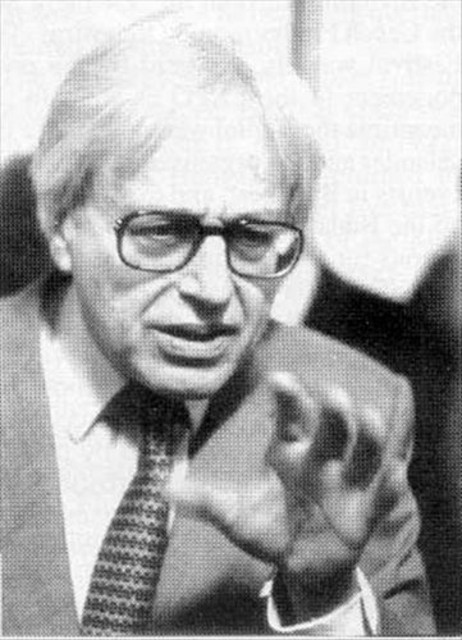
Ligeti was born on May 28, 1923, in the Transylvanian town of Dicsöszentmárton, Romania and grew up in Kolozsvar, Klausenburg. At the age of 14, he began taking piano lessons and soon wrote his first composition, a waltz.
Because he was a Jew living under the Nazi-puppet regime in Hungary, Ligeti was forbidden university study and thus enrolled in the Kolozsvar Conservatory in 1941, and began studies with <a href="spotify:artist:2tJnMrH9PwAmlnIc851Uug">Ferenc Farkas</a>, a Respighi pupil. Later, in Budapest, he also studied with pianist-composer <a href="spotify:artist:3fS5EOROyeQiWaLwoCzOEv">Pál Kadosa</a>.
In January 1944, Ligeti was arrested and sent to a labor camp where he remained imprisoned until 1945. Other family members were sent to Auschwitz, where only his mother survived. Ligeti graduated from the Budapest Academy of Music in 1949 and began an extended period of study of folk music.
In the years of 1950-1956, he served as a professor at the Budapest Academy. His music was largely unadventurous during this period, owing to restrictions by the Hungarian Communist regime. Ligeti and his wife fled their homeland during the Revolution in 1956, settling in Vienna. Ligeti began studying and composing at the Cologne-based Electronic Music Studio from 1957 to 1959, producing the influential Artikulation (1958), one of his first electronic works.
Other important progressive works followed, such as the orchestral composition, Apparitions (1958-1959) and Atmosphères (1961). In 1959, Ligeti began serving as visiting professor at the Academy of Music in Stockholm and also started teaching courses at Darmstadt.
His choral work Requiem (1963-1965) was another success, as were Ramifications (1968-1969), for string orchestra or 12 solo strings, and Clocks and Clouds (1972-1973). In 1972, Ligeti became Composer in Residence at Stanford University and the following year took on a professorship at the Hamburg Academy of Music. Ligeti composed his opera Le Grand Macabre in the period 1975-1977, but revised it in the 1990s, with the final version completed in 1997. It has become one of his most popular large works.
In 1982, the composer's mother died. That same year saw a return of Ligeti's health after a period of five years' sickness. In the 1980s the composer forswore further composition in the realm of electronic music. Ligeti retired from his post as professor of composition at the Hamburg Music Academy in 1989. In the 1990s, he spent much time on the aforementioned second version of Le Grand Macabre.
Ligeti received his share of awards and prizes, including the 1986 Grawemeyer Prize and the 1996 Music Prize of the International Music Council.
Monthly Listeners
60,478
Monthly Listeners History
Track the evolution of monthly listeners over the last 28 days.
Followers
84,757
Followers History
Track the evolution of followers over the last 28 days.
Total Streams
36.7 million
Total Streams History
Track the evolution of total streams over the last 28 days. This data is calculated from all tracks listed in the artist's discography.
Top Cities





Related Artists








Alexei Lubimov




Ivan Wyschnegradsky