Data may be outdated
Last updated: 3 weeks ago — Click refresh to get the latest statistics.
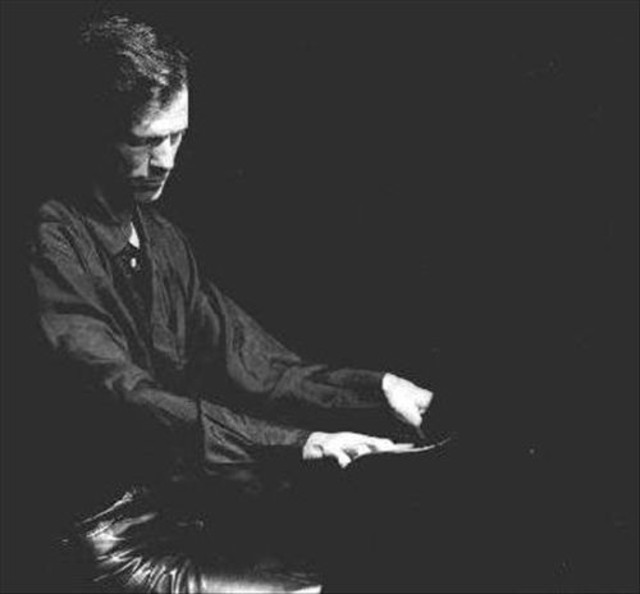
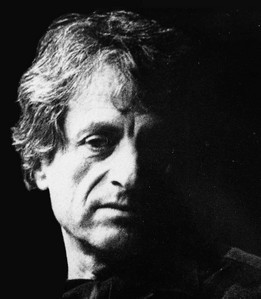
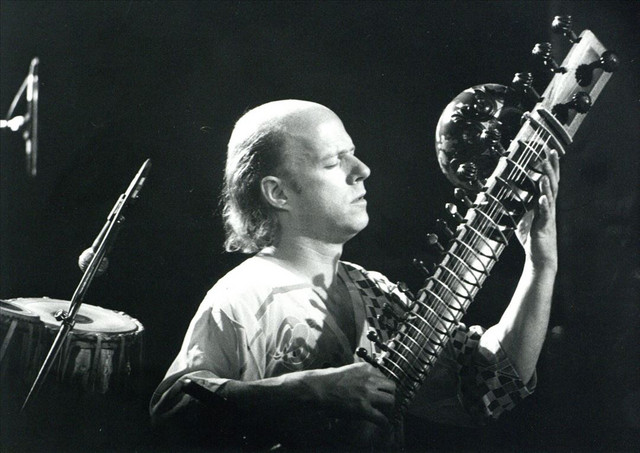
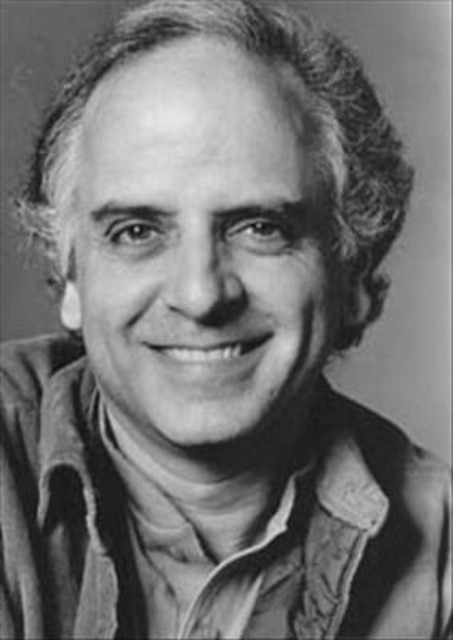
Riley was born June 24, 1935 in Colfax, California and began performing professionally as a solo pianist during the '50s; by the middle of the decade, he was studying composition in San Francisco and Berkeley -- among his classmates was fellow minimalist innovator <a href="spotify:artist:5h2yl4fuAyztOOBgMRyQhE">La Monte Young</a>. Influenced by <a href="spotify:artist:2hGh5VOeeqimQFxqXvfCUf">John Coltrane</a> and <a href="spotify:artist:1Z3fF5lZdCM0ZHugkGoH8s">John Cage</a>, Riley began exploring open improvisation and avant-garde music, and in 1960 he composed Mescalin Mix, a musique concrète piece consisting of tape loops of assorted found sounds, for the Anna Halprin Dance Company.
By the early '60s, Riley was regularly holding solo harmonium performances beginning at 10 p.m. and continuing until sunrise, an obvious precursor of the all-night underground raves to follow decades later. After graduating Berkeley in 1961, his next major work was 1963's Music for the Gift, composed for a play written by Ken Dewey; among the first pieces ever generated by a tape delay/feedback system, it employed two tape recorders -- a setup Riley dubbed the "Time Lag Accumulator" -- playing a loop of <a href="spotify:artist:3rxeQlsv0Sc2nyYaZ5W71T">Chet Baker</a>'s rendition of <a href="spotify:artist:0kbYTNQb4Pb1rPbbaF0pT4">Miles Davis</a>' "So What." The loop effect sparked Riley's interest in repetition as a means of musical expression, and in 1964, he completed his most famous work, the minimalist breakthrough In C; a piece constructed from 53 separate patterns, it was a landmark composition that provided the conception for a new musical form assembled from interlocking repetitive figures.
In time, Riley also learned to play saxophone, introducing the instrument into his so-called all-night flights; these epic improvisational performances became the basis for his most successful recordings, 1968's Poppy Nogood and the Phantom Band, and the following year's A Rainbow in Curved Air, the music's cyclical patterns and ethereal atmospherics predating the rise of the ambient concept by several years. In 1970, Riley made the first of many trips to India to study under vocal master <a href="spotify:artist:6CfG9ca9WNfm6UCck4asst">Pandit Pran Nath</a>, with whom he frequently performed in the years to come; another collaborator was <a href="spotify:artist:5MWBg16f5UYiaSlyVhzlIW">John Cale</a>; that pairing resulted in the 1971 LP Church of Anthrax, arguably Riley's most widely known recording outside of experimental music circles. Throughout the '70s, he also taught composition and North Indian raga at Mills College in Oakland, California
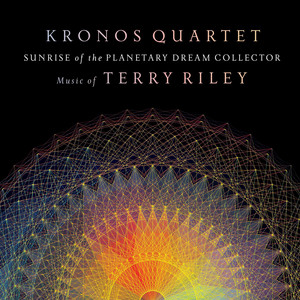
A pair of early-'70s live performances -- one in L.A., the other in Paris -- resulted in the 1972 album Persian Surgery Dervishes, a work of meditative machine music clearly prescient of the trance sound to follow. Around the same time, while on staff at Mills, he befriended David Harrington of <a href="spotify:artist:0M6xcJTswOl2qvExCJhiS3">Kronos Quartet</a>; the two collaborated on a number of concertos for string quartet and orchestra -- one even commissioned by the Salzburg Festival in 1991. Another Riley/<a href="spotify:artist:0M6xcJTswOl2qvExCJhiS3">Kronos</a> collaboration, 1989's Salome Dances for Peace, was nominated for a Grammy. Recording less frequently as the years passed, Riley agreed to stage a performance celebrating the silver anniversary of In C, which was then released in 1990. Through the rest of the decade, and even into the 21st century, Riley saw his own works either re-released or had previously unissued early tapes released by various labels, including <a href="spotify:search:label%3A%22the+Cortical+Foundation%22">the Cortical Foundation</a>, <a href="spotify:search:label%3A%22Wergo%22">Wergo</a>, and <a href="spotify:search:label%3A%22Elision+Fields%22">Elision Fields</a>.
He didn't stop working, however. In 2001, <a href="spotify:artist:0M6xcJTswOl2qvExCJhiS3">Kronos Quartet</a> released Terry Riley: Requiem for Adam on <a href="spotify:search:label%3A%22Nonesuch%22">Nonesuch</a>, and Riley issued Atlantis Nath on his own <a href="spotify:search:label%3A%22Sri+Moonshine%22">Sri Moonshine</a> label. In 2005, he collaborated with poet <a href="spotify:artist:0pEXXYU5Ygc0Mk4unN8FfZ">Michael McClure</a> on I Like Your Eyes Liberty (also on <a href="spotify:search:label%3A%22Sri+Moonshine%22">Sri Moonshine</a>). Riley also worked with avant-garde bassist <a href="spotify:artist:6UDoms7Gb8Ej8prwwGBAl3">Stefano Scodanibbio</a> on Diamond Fiddle Language, which was issued by <a href="spotify:search:label%3A%22Wergo%22">Wergo</a> the same year.
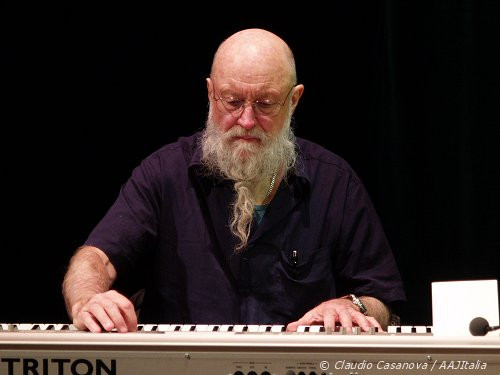
Riley turned 70 in 2008, and the year was marked by two releases. The first was the major Cusp of Magic by <a href="spotify:artist:0M6xcJTswOl2qvExCJhiS3">Kronos Quartet</a> for <a href="spotify:search:label%3A%22Nonesuch%22">Nonesuch</a>. They had commissioned Riley to create a new work for them to celebrate the occasion of his birthday; the composer happily accepted. Later in the year, Riley released the more playful Banana Humberto on <a href="spotify:search:label%3A%22Sri+Moonshine%22">Sri Moonshine</a>. He had the delightfully strange Autodreamographical Tales issued by <a href="spotify:search:label%3A%22Tzadik%22">Tzadik</a> in 2010, on which he played all the instruments and sang and recited stories and dream narratives. Riley released a live concert album with his son <a href="spotify:artist:4QSyH7T6rdEWEQmc41SIZf">Gyan</a> on <a href="spotify:search:label%3A%22Sri+Moonshine%22">Sri Moonshine</a> in 2011, and followed it up with his two-hour, long-form composition Aleph for Korg Triton 88 synthesizer (originally created for the Aleph-Bet Sound Project at the Contemporary Jewish Museum in San Francisco); it was released by <a href="spotify:search:label%3A%22Tzadik%22">Tzadik</a> in early 2012. In honor of Riley's 80th birthday, <a href="spotify:artist:0M6xcJTswOl2qvExCJhiS3">Kronos Quartet</a> released One Earth, One People, One Love, a five-CD box set of their recordings of the composer's work, in 2015. In 2017, Terry and <a href="spotify:artist:4QSyH7T6rdEWEQmc41SIZf">Gyan Riley</a> composed the score for the Canadian historical drama film Hochelaga, Land of Souls, which was subsequently nominated for Best Score at the Prix Iris and Canadian Screen Awards. The following year, the pair released Way Out Yonder, a double-length collection of shorter works wherein the elder composer employed different instruments in each piece.
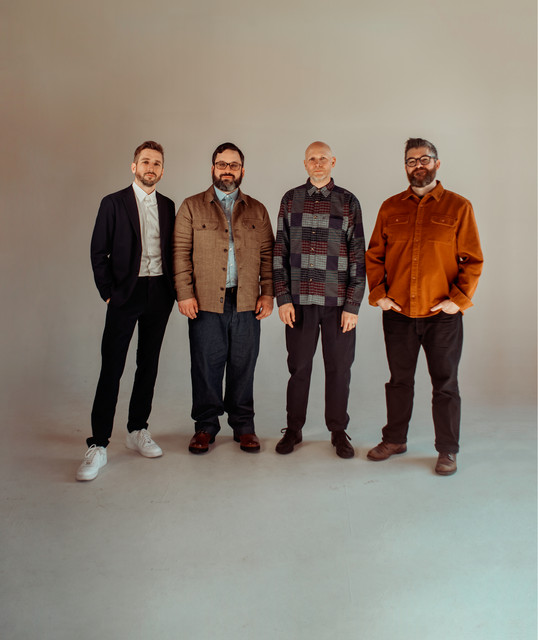
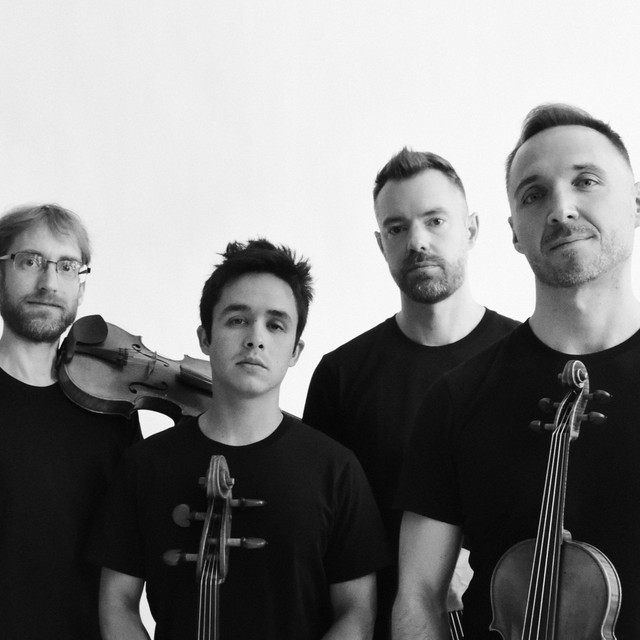
2019 saw the first recording of Sun Rings (2004) in collaboration with <a href="spotify:artist:0M6xcJTswOl2qvExCJhiS3">Kronos Quartet</a>. It utilized space recordings sent home from NASA's Voyager I and II, alongside scraps of poetry, subtle electronics, and vanguard chamber music. In 2021, the composer in association with conductor <a href="spotify:artist:6oDNIDquJobyWKLDZ9rYEH">Julian Wachner</a> and <a href="spotify:artist:1KBoKfkaxjSKZsmD9XCg3B">the Choir of Trinity Wall Street</a>, issued the collaborative vocal work Archangels. It was followed in 2022 by The Sands, the premier recording of Riley's extended work for chamber ensemble and orchestra performed by the <a href="spotify:artist:7CRr5a9zEn4PUKYGnptHCw">Calder Quartet</a> and <a href="spotify:artist:0jJszR81GjA87jeRq0Jgwz">Cleveland Orchestra</a> conducted by James Feddeck. In March, Bang on a Can All-Stars released Autodreamographical Tales in a distinctive, updated new arrangement of the composer's iconic 2010 set of dream diary songs. ~ Jason Ankeny & Thom Jurek, Rovi
Monthly Listeners
43,801
Monthly Listeners History
Track the evolution of monthly listeners over the last 28 days.
Followers
95,292
Followers History
Track the evolution of followers over the last 28 days.
Total Streams
52.5 million
Total Streams History
Track the evolution of total streams over the last 28 days. This data is calculated from all tracks listed in the artist's discography.