Data may be outdated
Last updated: 9 months ago — Click refresh to get the latest statistics.
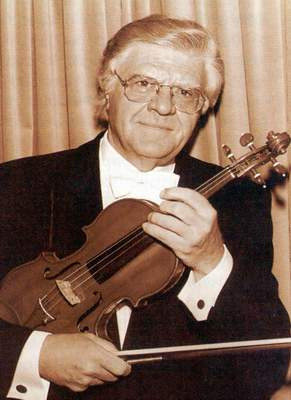
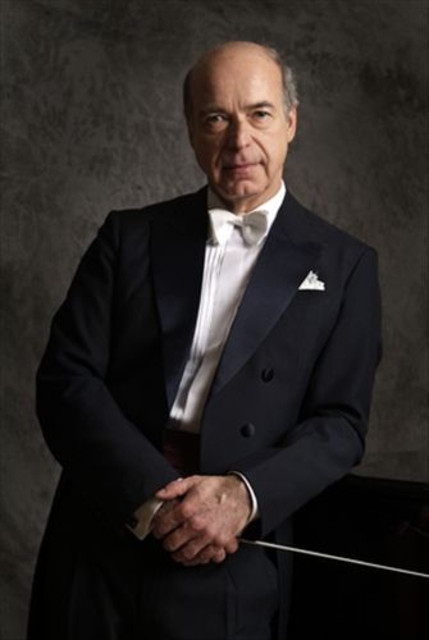
Hans Stadlmair was best known as the longtime artistic director of the <a href="spotify:artist:43CmLUkZNUzmvPNUhxeoSU">Munich Chamber Orchestra</a>, an ensemble he led for 40 years in over 4,000 concerts and on countless recordings. However, certain 21st century listeners knew him primarily as the foremost champion of the symphonies of <a href="spotify:artist:1LA9Zn3bgZCPA1VJVEvDa0">(Joseph) Joachim Raff</a>, whose entire cycle of 11, along with other orchestral works, he recorded to great acclaim for the <a href="spotify:search:label%3A%22Tudor%22">Tudor</a> label from 2005-2007. Stadlmair tended to avoid opera but was otherwise versatile in his choice of repertory, leading works by a range of composers from <a href="spotify:artist:5aIqB5nVVvmFsvSdExz408">J.S. Bach</a> and <a href="spotify:artist:2kMM5v3f7rti00gIbVc1Tk">Biber</a> to <a href="spotify:artist:2LmyJyCF5V1eQyvHgJNbTn">Bernstein</a> and Zwilich. He toured throughout Europe, Asia, the Americas, and Africa and recorded for such labels as <a href="spotify:search:label%3A%22Deutsche+Grammophon%22">Deutsche Grammophon</a>, <a href="spotify:search:label%3A%22Orfeo%22">Orfeo</a>, <a href="spotify:search:label%3A%22Vox%22">Vox</a>, and <a href="spotify:search:label%3A%22Denon%22">Denon</a>.
Stadlmair was born in Neuhofen an der Krems, Austria, on May 3, 1929. From 1946-1952, he studied violin, composition, and conducting at the Vienna Academy of Music, where his teachers included <a href="spotify:artist:0BD0yexvRf2lNmTwda3DvU">Clemens Krauss</a> and <a href="spotify:artist:61G42OTJtpbFnHOlKypoHa">Alfred Uhl</a>. In Stuttgart, he had private studies in composition until 1956 with <a href="spotify:artist:7ebnGg1AQ3KDskiuOJC2yz">Johann Nepomuk David</a>. From 1956-1995, Stadlmair served as the artistic director of the <a href="spotify:artist:43CmLUkZNUzmvPNUhxeoSU">Munich Chamber Orchestra</a>. Under him, the orchestra, founded in 1950, flourished steadily, presenting both traditional fare and many world premieres, including the 1971 premiere of <a href="spotify:artist:440DceSfoE4UhbJAL5fOe2">Wilhelm Killmayer</a>'s Fin al punto. Stadlmair also led the ensemble on more than 500 recorded radio broadcasts for Bavarian Radio. While he conducted the <a href="spotify:artist:43CmLUkZNUzmvPNUhxeoSU">MCO</a> in a regular slate of concerts and on frequent tours abroad, he also managed to find time for composition: Stadlmair achieved considerable success with his 1966 Toccata for strings and harpsichord and 1970 Sinfonia serena, for string orchestra.
Stadlmair and the <a href="spotify:artist:43CmLUkZNUzmvPNUhxeoSU">MCO</a> were gaining international renown throughout the 1970s and 1980s for both recordings and radio broadcasts. As a composer, too, he continued to draw notice from works like the 1981 Sonata da chiesa, for viola and organ. In 1989, Stadlmair received Germany's Order of Merit for his musical achievements. Following his 1996 departure from his long-held Munich post, Stadlmair remained busy, both in composition and as a conductor. He not only led the <a href="spotify:artist:7qs9lBPZgZzLAYAWfHLAll">Bamberg Symphony Orchestra</a> in concert and on recording, but he was turning out such important works as the orchestral piece Miró (2006), which received a delayed but major premiere in 2011 by the <a href="spotify:artist:5jSyEHI4tPkBgp84luyqpO">Munich Philharmonic Orchestra</a> under <a href="spotify:artist:5c2dloAaXR2qRbIVh2C0jD">Christian Thielemann</a>. Stadlmair died in his Munich home on February 13, 2019.
Stadlmair was born in Neuhofen an der Krems, Austria, on May 3, 1929. From 1946-1952, he studied violin, composition, and conducting at the Vienna Academy of Music, where his teachers included <a href="spotify:artist:0BD0yexvRf2lNmTwda3DvU">Clemens Krauss</a> and <a href="spotify:artist:61G42OTJtpbFnHOlKypoHa">Alfred Uhl</a>. In Stuttgart, he had private studies in composition until 1956 with <a href="spotify:artist:7ebnGg1AQ3KDskiuOJC2yz">Johann Nepomuk David</a>. From 1956-1995, Stadlmair served as the artistic director of the <a href="spotify:artist:43CmLUkZNUzmvPNUhxeoSU">Munich Chamber Orchestra</a>. Under him, the orchestra, founded in 1950, flourished steadily, presenting both traditional fare and many world premieres, including the 1971 premiere of <a href="spotify:artist:440DceSfoE4UhbJAL5fOe2">Wilhelm Killmayer</a>'s Fin al punto. Stadlmair also led the ensemble on more than 500 recorded radio broadcasts for Bavarian Radio. While he conducted the <a href="spotify:artist:43CmLUkZNUzmvPNUhxeoSU">MCO</a> in a regular slate of concerts and on frequent tours abroad, he also managed to find time for composition: Stadlmair achieved considerable success with his 1966 Toccata for strings and harpsichord and 1970 Sinfonia serena, for string orchestra.
Stadlmair and the <a href="spotify:artist:43CmLUkZNUzmvPNUhxeoSU">MCO</a> were gaining international renown throughout the 1970s and 1980s for both recordings and radio broadcasts. As a composer, too, he continued to draw notice from works like the 1981 Sonata da chiesa, for viola and organ. In 1989, Stadlmair received Germany's Order of Merit for his musical achievements. Following his 1996 departure from his long-held Munich post, Stadlmair remained busy, both in composition and as a conductor. He not only led the <a href="spotify:artist:7qs9lBPZgZzLAYAWfHLAll">Bamberg Symphony Orchestra</a> in concert and on recording, but he was turning out such important works as the orchestral piece Miró (2006), which received a delayed but major premiere in 2011 by the <a href="spotify:artist:5jSyEHI4tPkBgp84luyqpO">Munich Philharmonic Orchestra</a> under <a href="spotify:artist:5c2dloAaXR2qRbIVh2C0jD">Christian Thielemann</a>. Stadlmair died in his Munich home on February 13, 2019.
Monthly Listeners
23,469
Monthly Listeners History
Track the evolution of monthly listeners over the last 28 days.
Followers
282
Followers History
Track the evolution of followers over the last 28 days.
Top Cities


Related Artists


Josef Mysliveček







Karl Leister
Johannes Goritzki




Nicanor Zabaleta