Data may be outdated
Last updated: 9 months ago — Click refresh to get the latest statistics.
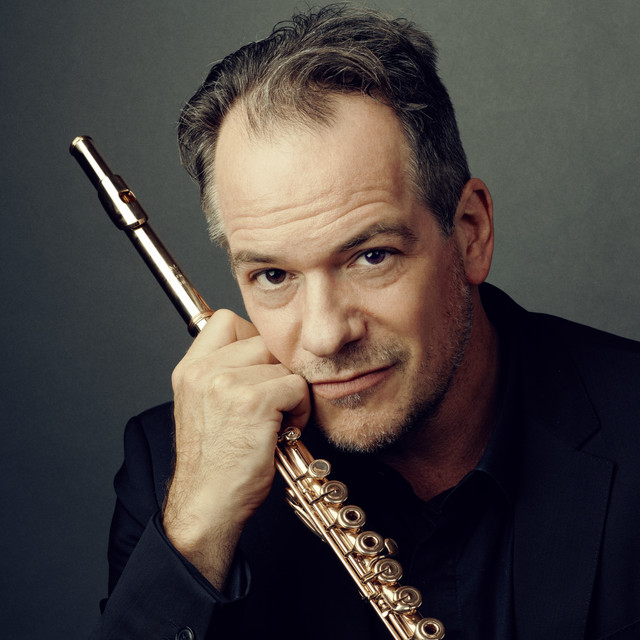
Heinz Holliger is widely considered the greatest oboe virtuoso of modern times. He is also a noted composer and conductor; as a composer, he is one of the few who has maintained a strict adherence to serial procedures. With a deep understanding of the performance practices of all eras of music, Holliger has garnered praise for his mastery of the many extended techniques related to the performance of 20th century music. He is credited with having extended the technical range of the instrument more than any other oboist. Some of these extended techniques include harmonics, double trills, multiphonics, and glissandos.
Holliger was born on May 21, 1939, in Langenthal, Switzerland, near Bern. He began playing the recorder at age four and piano at six. At 11, he switched to oboe, studying with Emile Cassagnaud and <a href="spotify:artist:1v0m28B4HcUr6N2iVVOj1w">Sándor Veress</a> at the Bern Conservatory. He then moved to Paris to study oboe with Pierre Pierlot and piano with <a href="spotify:artist:4ULCpG28KdHVvwdmqdp7Zs">Yvonne Lefébure</a>. In 1959, he won first prize for oboe in the Geneva Competition, and in the same year, he was hired as an oboist by the <a href="spotify:artist:6IHkZ4mLQr4dLxiSJr3yJ8">Basel Symphony Orchestra</a>. Holliger began composing when he was young and has compiled an extensive catalog in many genres. He studied composition in Paris from 1961 to 1963 with <a href="spotify:artist:2prZJWfQMnIgwUKxKcBxH7">Pierre Boulez</a>, who became a key influence on his style. His music is thoroughly influenced by Schoenberg, <a href="spotify:artist:6cg7ooZDeSSLYVTWGpASjX">Webern</a>, and <a href="spotify:artist:6asnrWmE3QdFPTeCxfjLe5">Luigi Nono</a>. The Magical Dances for two dancers, chorus, orchestra, and tape, is a work of exceptional aural density and fine nuances. Holliger's career as an international oboe virtuoso began in 1963. His tours included solo appearances, performances with his late wife, harpist <a href="spotify:artist:4Jvq4oDWIuOi1DXWccoMNC">Ursula Holliger</a>, and chamber music appearances with the Holliger Ensemble, a chamber group he founded.
Holliger was appointed professor of oboe at the Staatliche Musikhochschule of Freiburg in 1965. He quickly became known as the most outstanding oboist of the time, adopting the smoother, thinner French (although exceptionally bright) sound rather than the wider German quality. In interviews, he has disputed the accreditation for extending the oboe's technical range, saying, "I have invented nothing"; he points to instances where these techniques appeared in earlier music, such as a glissando in <a href="spotify:artist:2ANtgfhQkKpsW6EYSDqldz">Mahler</a>'s Third Symphony, but in fact, he was the first to make extensive use of these techniques. In addition, he has introduced new sounds attainable only by placing a microphone inside the instrument. He has been very alert to the need for expanding the repertoire of the instrument, being critical of oboists for not commissioning challenging new works. Holliger has personally commissioned works from <a href="spotify:artist:5M1ZBrPeHjV8y3qFKnq7hO">Berio</a>, <a href="spotify:artist:5PkKmEWhfJ9jHVHXbZl0Ks">Stockhausen</a>, and <a href="spotify:artist:0qEO82Hj3SvjoNyEfKpRku">Penderecki</a>, among others. The Double Concerto for oboe, harp, and chamber orchestra by <a href="spotify:artist:5Ks8fS8lZJnTFbtvxkDOkM">Lutoslawski</a>, written for Holliger and his wife, is considered a masterpiece of 20th century literature. Holliger's music has a very tight, internal logic caused by the strict use of serial procedures. His musical textures can range from slow, attenuated wisps of sound to combinations of instrumental sound so thick that they practically become "white noise." His compositions are almost uniformly technically difficult to perform and highly challenging for the listener. Pneuma (1970) for 36 winds, four radios, organ, and percussion, requires the performers to make specific breathing sounds into microphones; Cardiophonie (1971) uses an amplified stethoscope attached to a solo wind player to add the players' pulse to the music.
Holliger's extensive recording history has seen him featured on dozens of releases on labels including <a href="spotify:search:label%3A%22Decca%22">Decca</a>, <a href="spotify:search:label%3A%22Philips%22">Philips</a>, and <a href="spotify:search:label%3A%22Sony+Classical%22">Sony Classical</a>, among many others. These recordings include performances of his own compositions, winning a Grammy award for his opera Schneewittchen (2000) on the <a href="spotify:search:label%3A%22ECM%22">ECM</a> label; his many recordings on oboe range from classical giants, such as <a href="spotify:artist:5aIqB5nVVvmFsvSdExz408">Bach</a> and <a href="spotify:artist:4NJhFmfw43RLBLjQvxDuRS">Mozart</a>, to contemporary composers, such as <a href="spotify:artist:5Ks8fS8lZJnTFbtvxkDOkM">Lutoslawski</a>. Along with these are recordings of Holliger conducting orchestral works. Notable of these are a complete recording of Schumann's symphonic works with the <a href="spotify:artist:1K91XZsljzXqn1oYcPIsfL">WDR Sinfonieorchester Köln</a> on the <a href="spotify:search:label%3A%22Audite%22">Audite</a> label. In 2017, Holliger completed his second opera, Lunea (expanded from a previous song cycle of the same name), and the following year, it was premiered at the Opernhaus Zürich. Written for baritone <a href="spotify:artist:0reEj3pa0lTG2gOkj9BoPb">Christian Gerhaher</a>, a recording of the opera with Holliger conducting the Philharmonia Zürich, featuring a cast led by <a href="spotify:artist:0reEj3pa0lTG2gOkj9BoPb">Gerhaher</a>, was issued in 2022. ~ TiVo Staff, Rovi
Holliger was born on May 21, 1939, in Langenthal, Switzerland, near Bern. He began playing the recorder at age four and piano at six. At 11, he switched to oboe, studying with Emile Cassagnaud and <a href="spotify:artist:1v0m28B4HcUr6N2iVVOj1w">Sándor Veress</a> at the Bern Conservatory. He then moved to Paris to study oboe with Pierre Pierlot and piano with <a href="spotify:artist:4ULCpG28KdHVvwdmqdp7Zs">Yvonne Lefébure</a>. In 1959, he won first prize for oboe in the Geneva Competition, and in the same year, he was hired as an oboist by the <a href="spotify:artist:6IHkZ4mLQr4dLxiSJr3yJ8">Basel Symphony Orchestra</a>. Holliger began composing when he was young and has compiled an extensive catalog in many genres. He studied composition in Paris from 1961 to 1963 with <a href="spotify:artist:2prZJWfQMnIgwUKxKcBxH7">Pierre Boulez</a>, who became a key influence on his style. His music is thoroughly influenced by Schoenberg, <a href="spotify:artist:6cg7ooZDeSSLYVTWGpASjX">Webern</a>, and <a href="spotify:artist:6asnrWmE3QdFPTeCxfjLe5">Luigi Nono</a>. The Magical Dances for two dancers, chorus, orchestra, and tape, is a work of exceptional aural density and fine nuances. Holliger's career as an international oboe virtuoso began in 1963. His tours included solo appearances, performances with his late wife, harpist <a href="spotify:artist:4Jvq4oDWIuOi1DXWccoMNC">Ursula Holliger</a>, and chamber music appearances with the Holliger Ensemble, a chamber group he founded.
Holliger was appointed professor of oboe at the Staatliche Musikhochschule of Freiburg in 1965. He quickly became known as the most outstanding oboist of the time, adopting the smoother, thinner French (although exceptionally bright) sound rather than the wider German quality. In interviews, he has disputed the accreditation for extending the oboe's technical range, saying, "I have invented nothing"; he points to instances where these techniques appeared in earlier music, such as a glissando in <a href="spotify:artist:2ANtgfhQkKpsW6EYSDqldz">Mahler</a>'s Third Symphony, but in fact, he was the first to make extensive use of these techniques. In addition, he has introduced new sounds attainable only by placing a microphone inside the instrument. He has been very alert to the need for expanding the repertoire of the instrument, being critical of oboists for not commissioning challenging new works. Holliger has personally commissioned works from <a href="spotify:artist:5M1ZBrPeHjV8y3qFKnq7hO">Berio</a>, <a href="spotify:artist:5PkKmEWhfJ9jHVHXbZl0Ks">Stockhausen</a>, and <a href="spotify:artist:0qEO82Hj3SvjoNyEfKpRku">Penderecki</a>, among others. The Double Concerto for oboe, harp, and chamber orchestra by <a href="spotify:artist:5Ks8fS8lZJnTFbtvxkDOkM">Lutoslawski</a>, written for Holliger and his wife, is considered a masterpiece of 20th century literature. Holliger's music has a very tight, internal logic caused by the strict use of serial procedures. His musical textures can range from slow, attenuated wisps of sound to combinations of instrumental sound so thick that they practically become "white noise." His compositions are almost uniformly technically difficult to perform and highly challenging for the listener. Pneuma (1970) for 36 winds, four radios, organ, and percussion, requires the performers to make specific breathing sounds into microphones; Cardiophonie (1971) uses an amplified stethoscope attached to a solo wind player to add the players' pulse to the music.
Holliger's extensive recording history has seen him featured on dozens of releases on labels including <a href="spotify:search:label%3A%22Decca%22">Decca</a>, <a href="spotify:search:label%3A%22Philips%22">Philips</a>, and <a href="spotify:search:label%3A%22Sony+Classical%22">Sony Classical</a>, among many others. These recordings include performances of his own compositions, winning a Grammy award for his opera Schneewittchen (2000) on the <a href="spotify:search:label%3A%22ECM%22">ECM</a> label; his many recordings on oboe range from classical giants, such as <a href="spotify:artist:5aIqB5nVVvmFsvSdExz408">Bach</a> and <a href="spotify:artist:4NJhFmfw43RLBLjQvxDuRS">Mozart</a>, to contemporary composers, such as <a href="spotify:artist:5Ks8fS8lZJnTFbtvxkDOkM">Lutoslawski</a>. Along with these are recordings of Holliger conducting orchestral works. Notable of these are a complete recording of Schumann's symphonic works with the <a href="spotify:artist:1K91XZsljzXqn1oYcPIsfL">WDR Sinfonieorchester Köln</a> on the <a href="spotify:search:label%3A%22Audite%22">Audite</a> label. In 2017, Holliger completed his second opera, Lunea (expanded from a previous song cycle of the same name), and the following year, it was premiered at the Opernhaus Zürich. Written for baritone <a href="spotify:artist:0reEj3pa0lTG2gOkj9BoPb">Christian Gerhaher</a>, a recording of the opera with Holliger conducting the Philharmonia Zürich, featuring a cast led by <a href="spotify:artist:0reEj3pa0lTG2gOkj9BoPb">Gerhaher</a>, was issued in 2022. ~ TiVo Staff, Rovi
Monthly Listeners
120,660
Monthly Listeners History
Track the evolution of monthly listeners over the last 28 days.
Followers
10,586
Followers History
Track the evolution of followers over the last 28 days.
Top Cities
2,076 listeners

1,774 listeners

1,749 listeners

1,154 listeners

1,042 listeners

Related Artists




Maria Teresa Garatti



Giorgio Sasso



Christian Hommel