Data may be outdated
Last updated: 9 months ago — Click refresh to get the latest statistics.
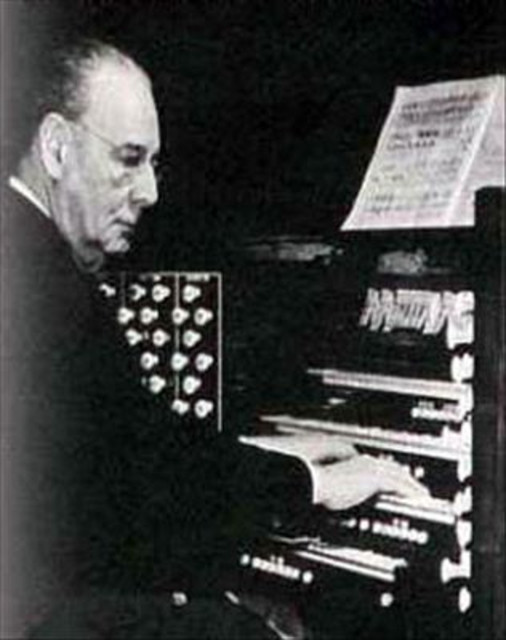
At various times in his 45-year career, Sir Henry Walford Davies enjoyed wide recognition as a composer, teacher, organist, and lecturer and in the latter capacity, he became England's first popular radio personality on the subject of classical music. Henry Walford Davies was born 50 years before the advent of radio as a popular broadcast medium, in 1869, and began his formal musical education in his teens in the choir of St. George's Chapel at Windsor. His natural aptitude for music manifested itself in this setting and Davies spent five years as a pupil/assistant to the cathedral organist Walter Parratt. In 1890, he earned a scholarship to the Royal College of Music that allowed him to study with Hubert Parry and <a href="spotify:artist:1g5nZfwrmjGs2wLKi3XHk2">Charles Villiers Stanford</a>, and he joined the college's faculty at age 26 as a teacher of counterpoint. He composed during these years, but it was as an organist that Davies became well-known at a succession of churches in the London area, including seven years at Christ Church, Hampstead, before becoming the organist and choirmaster at Temple Church from 1898 until 1919. Davies later held the conductorship of the <a href="spotify:artist:7aBHoHldT814X9KS3cXIoM">Bach Choir</a> and in 1918, after being commissioned a major, he was appointed director of music for the Royal Air Force, the position where he wrote his best-known work, the RAF March Past. In 1919, Davies began a distinct new phase of his career when he was appointed professor of music at Aberystwyth, Wales. Over the next 20 years, Davies became one of the leading exponents of Welsh music and musicians, serving as the chairman of the Welsh National Council of Music and acquiring the eternal gratitude of all Welsh people of a musical bent (which by and large meant the entire Welsh population). It was three years later that he received a knighthood. From the end of the teens onward, Davies also found himself in demand as a lecturer on music, his clear diction and outgoing, genial personality making his talks accessible to a wide audience. In the early '20s, he made a series of spoken-word recordings on music for the HMV label. They were so successful that in 1926, the BBC engaged Davies as the speaker on a program called Music and the Ordinary Listener, which lasted until the outbreak of war in 1939. In the process, Davies became the most popular classical music personality in England, occupying a position in the culture of that time akin to that of Deems Taylor, <a href="spotify:artist:2LmyJyCF5V1eQyvHgJNbTn">Leonard Bernstein</a>, and other speakers on music in the United States. In 1934, following the death of <a href="spotify:artist:430byzy0c5bPn5opiu0SRd">Elgar</a>, Davies was appointed Master of the King's Musick, the equivalent of Poet Laureate, and a position once held by his own teacher, Parratt.
Davies composed music throughout his career, though virtually nothing of his work from the nineteenth century is known. He began emerging in 1904 with the oratorio Everyman, which in the years following its premiere was the second-most popular large-scale choral work in England, after <a href="spotify:artist:430byzy0c5bPn5opiu0SRd">Elgar</a>'s The Dream of Gerontius. Apart from his RAF March Past, which remains in the repertory of military and other institutional marching bands (especially in England), Davies' best-remembered works include the Solemn Melody (1908), authored for the John Milton tercentenary; and Jesu, Dulcis Memoria (1918), his only published original piece for organ. In 2001, Dutton Laboratories released a CD tribute to Davies, including compositions by him and also dedicated to him, and two of his broadcast lectures from 1937.
Davies composed music throughout his career, though virtually nothing of his work from the nineteenth century is known. He began emerging in 1904 with the oratorio Everyman, which in the years following its premiere was the second-most popular large-scale choral work in England, after <a href="spotify:artist:430byzy0c5bPn5opiu0SRd">Elgar</a>'s The Dream of Gerontius. Apart from his RAF March Past, which remains in the repertory of military and other institutional marching bands (especially in England), Davies' best-remembered works include the Solemn Melody (1908), authored for the John Milton tercentenary; and Jesu, Dulcis Memoria (1918), his only published original piece for organ. In 2001, Dutton Laboratories released a CD tribute to Davies, including compositions by him and also dedicated to him, and two of his broadcast lectures from 1937.
Monthly Listeners
32,450
Monthly Listeners History
Track the evolution of monthly listeners over the last 28 days.
Followers
377
Followers History
Track the evolution of followers over the last 28 days.
Top Cities




Related Artists
David Halls
David Dunnett
John Stainer


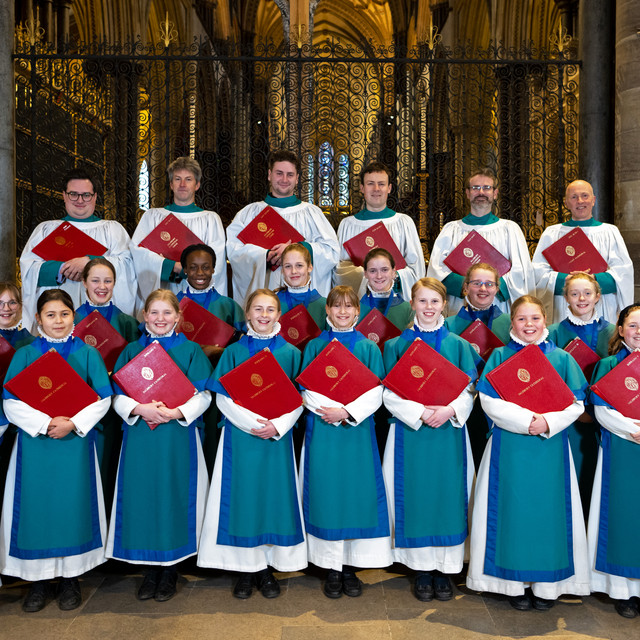
Salisbury Cathedral Choir
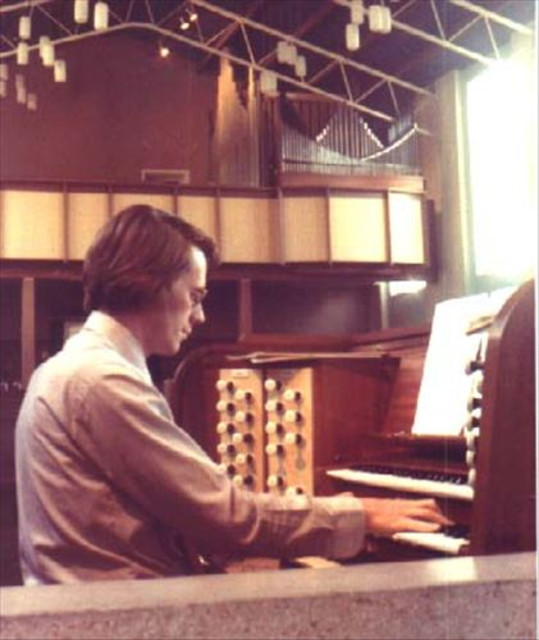
Philip Moore
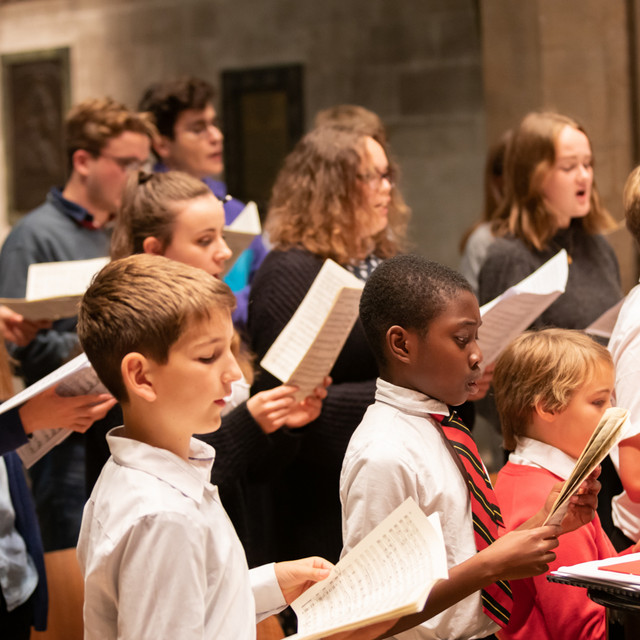
Choir of Jesus College, Cambridge
Malcolm Archer
Iain Simcock

York Minster Choir
Huw Williams

James O'Donnell

Sally Beamish
The Sixteen / Harry Christophers


Bill Ives


Francis Grier
Ashley Grote
Paul Manz
John Scott Whiteley

Healey Willan

Sarah MacDonald