Data may be outdated
Last updated: 2 weeks ago — Click refresh to get the latest statistics.
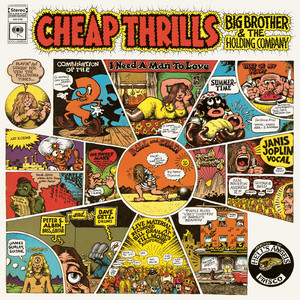
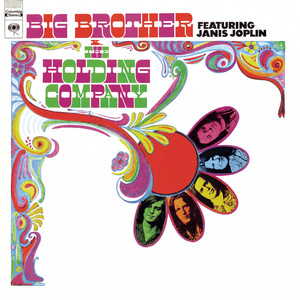
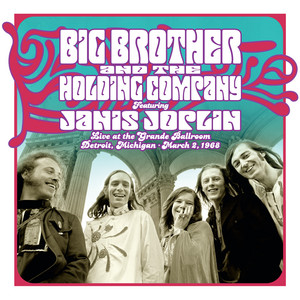
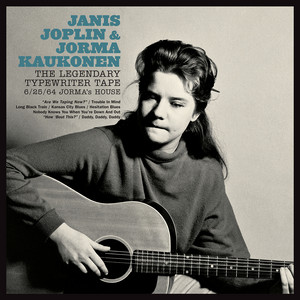
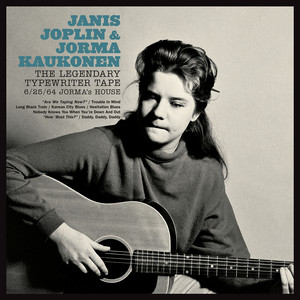
Joplin was raised in the small town of Port Arthur, Texas, and much of her subsequent personal difficulties and unhappiness have been attributed to her inability to fit in with the expectations of the conservative community. She'd been singing blues and folk music since her teens, playing on occasion with future <a href="spotify:artist:2qFr8w5sWUITRlzZ9kZotF">Jefferson Airplane</a> guitarist <a href="spotify:artist:55CXG5KDJpRYwBopfYAJHa">Jorma Kaukonen</a> in the '60s. There are a few live pre-<a href="spotify:artist:4J69yWrKwWJgjv3DKTZcGo">Big Brother</a> recordings (not issued until after her death), reflecting the inspiration of early blues singers like <a href="spotify:artist:5ESobCkc6JI4tIMxQttqeg">Bessie Smith</a>, that demonstrate she was well on her way to developing a personal style before hooking up with the band. She had already been to California before moving there permanently in 1966, when she joined the struggling San Francisco psychedelic group <a href="spotify:artist:4J69yWrKwWJgjv3DKTZcGo">Big Brother & the Holding Company</a>. Although their loose, occasionally sloppy brand of bluesy psychedelia had some charm, there can be no doubt that Joplin -- who initially didn't even sing lead on all of the material -- was primarily responsible for lifting them out of the ranks of the ordinary. She made them a hit at the 1967 Monterey Pop Festival, where her stunning version of "Ball and Chain" (perhaps her very best performance) was captured on film. After a debut on the <a href="spotify:search:label%3A%22Mainstream%22">Mainstream</a> label, <a href="spotify:artist:4J69yWrKwWJgjv3DKTZcGo">Big Brother</a> signed a management deal with Albert Grossman and moved to <a href="spotify:search:label%3A%22Columbia%22">Columbia</a>. Their second album, Cheap Thrills, topped the charts in 1968, but Joplin left the band shortly afterward, enticed by the prospects of stardom as a solo act.
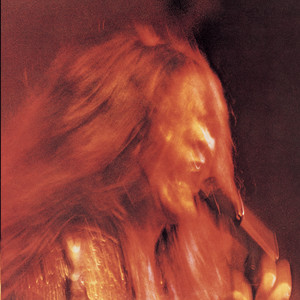
Joplin's first album, I Got Dem Ol' Kozmic Blues Again Mama!, was recorded with the Kozmic Blues Band, a unit that included horns and retained just one of the musicians that had played with her in <a href="spotify:artist:4J69yWrKwWJgjv3DKTZcGo">Big Brother</a> (guitarist Sam Andrew). Although it was a hit, it wasn't her best work; the new group, though more polished musically, weren't the sympathetic accompanists that <a href="spotify:artist:4J69yWrKwWJgjv3DKTZcGo">Big Brother</a> were, purveying a soul-rock groove that could sound forced. That's not to say the album was totally unsuccessful, boasting one of her signature tunes in "Try (Just a Little Bit Harder)."
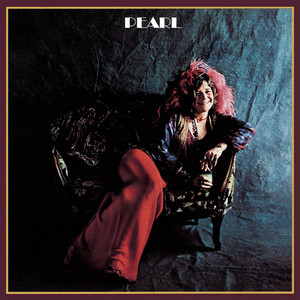
For years, Joplin's life had been a roller coaster of drug addiction, alcoholism, and volatile personal relationships, documented in several biographies. Musically, however, things were on the upswing shortly before her death, as she assembled a better, more versatile backing outfit, the Full Tilt Boogie Band, for her final album Pearl (ably produced by Paul Rothchild). Pearl was solid evidence of her growth into a mature, diverse stylist who could handle blues, soul, and folk-rock. "Mercedes Benz," "Get It While You Can," and <a href="spotify:artist:0vYQRW5LIDeYQOccTviQNX">Kris Kristofferson</a>'s "Me and Bobby McGee" are some of her very best tracks. Tragically, she died before the album's release, overdosing on heroin in a Hollywood hotel room in October 1970. "Me and Bobby McGee" became a posthumous number one single in 1971, and thus the song with which she is most frequently identified. ~ Richie Unterberger, Rovi
Monthly Listeners
3.6 million
Monthly Listeners History
Track the evolution of monthly listeners over the last 28 days.
Followers
3.7 million
Followers History
Track the evolution of followers over the last 28 days.
Total Streams
1.7 billion
Total Streams History
Track the evolution of total streams over the last 28 days. This data is calculated from all tracks listed in the artist's discography.
Top Cities





Related Artists