Data may be outdated
Last updated: 9 months ago — Click refresh to get the latest statistics.
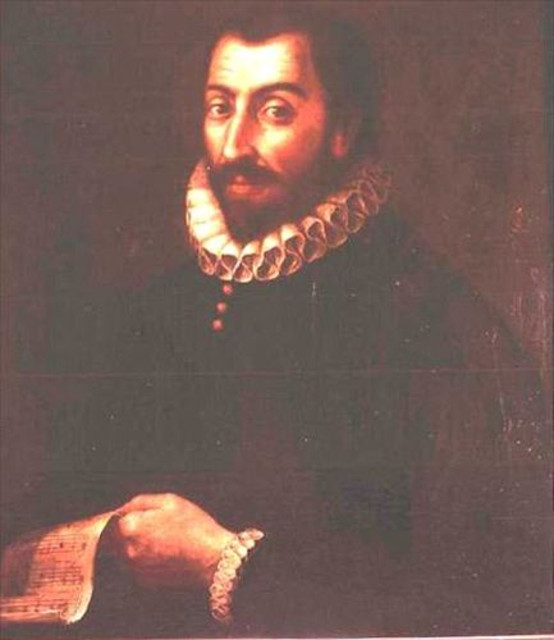
John Bennet was a Renaissance-era English composer, known for his madrigals, his most famous being Weepe, O mine eyes. Little is known about Bennet's life, his birth date, place of birth, and other vital details being matters of conjecture. It seems likely he was born in the Northwest part of England, possibly in Lancashire, as the composer dedicated his 1599 first volume of madrigals to one Ralph Assheton, a civil servant who lived in Lancashire and Cheshire.
Bennet was probably born into a prosperous family and received his first exposure to music as a choirboy. No doubt he had advanced instruction in music and by his early twenties had produced the aforementioned volume of 17 madrigals for four voices. At around that same time Bennet fashioned four psalm settings and a prayer for the 1599 Barley's psalter. Though Bennet's style showed the influence of <a href="spotify:artist:2Af8MPCMzZtfGSbKIvJzBY">Wilbye</a>, <a href="spotify:artist:5ftm4NtQXNcAiJ0awT0A12">Weelkes</a>, and <a href="spotify:artist:1mhwtKvBm1ncoOrUtnQUgk">Dowland</a> (Weepe, O mine eyes was almost certainly inspired by <a href="spotify:artist:1mhwtKvBm1ncoOrUtnQUgk">Dowland</a>'s Flowe my tears), his greatest debt was to <a href="spotify:artist:6nLcghsTUtvQzu7aiu8HbO">Thomas Morley</a>.
It is likely that Bennet had strong connections in high places in English society: many of his madrigals were written for festive occasions held at Court or in private residences of wealthy patrons in London. His madrigal Eliza, her name gives honour was one of several madrigals written for the feted guest at a celebration, in this case Queen Elizabeth. At such events, choirboys from the Chapel Royal were typically the featured performers.
Bennet probably wrote a fairly substantial number of madrigals and other vocal works, but few reached publication or survived in manuscript. Besides his 1599 efforts, he contributed a madrigal to the 1601 collection The Triumphes of Oriana, and composed six secular songs and an anthem for <a href="spotify:artist:51E5M9vJGL8ABzH8ZteWng">Ravenscroft</a>'s 1614 anthology A Briefe Discourse. It is likely that Bennet died in 1614 or shortly afterward.
Bennet was probably born into a prosperous family and received his first exposure to music as a choirboy. No doubt he had advanced instruction in music and by his early twenties had produced the aforementioned volume of 17 madrigals for four voices. At around that same time Bennet fashioned four psalm settings and a prayer for the 1599 Barley's psalter. Though Bennet's style showed the influence of <a href="spotify:artist:2Af8MPCMzZtfGSbKIvJzBY">Wilbye</a>, <a href="spotify:artist:5ftm4NtQXNcAiJ0awT0A12">Weelkes</a>, and <a href="spotify:artist:1mhwtKvBm1ncoOrUtnQUgk">Dowland</a> (Weepe, O mine eyes was almost certainly inspired by <a href="spotify:artist:1mhwtKvBm1ncoOrUtnQUgk">Dowland</a>'s Flowe my tears), his greatest debt was to <a href="spotify:artist:6nLcghsTUtvQzu7aiu8HbO">Thomas Morley</a>.
It is likely that Bennet had strong connections in high places in English society: many of his madrigals were written for festive occasions held at Court or in private residences of wealthy patrons in London. His madrigal Eliza, her name gives honour was one of several madrigals written for the feted guest at a celebration, in this case Queen Elizabeth. At such events, choirboys from the Chapel Royal were typically the featured performers.
Bennet probably wrote a fairly substantial number of madrigals and other vocal works, but few reached publication or survived in manuscript. Besides his 1599 efforts, he contributed a madrigal to the 1601 collection The Triumphes of Oriana, and composed six secular songs and an anthem for <a href="spotify:artist:51E5M9vJGL8ABzH8ZteWng">Ravenscroft</a>'s 1614 anthology A Briefe Discourse. It is likely that Bennet died in 1614 or shortly afterward.
Monthly Listeners
8,485
Monthly Listeners History
Track the evolution of monthly listeners over the last 28 days.
Followers
415
Followers History
Track the evolution of followers over the last 28 days.
Top Cities


Related Artists



Maddalena Casulana
Robert Lucas Pearsall

Orazio Benevoli
St. Charles Singers
Maurice Bevan
Eleanor Daley
Alexander Mason
Alonso Lobo
David Fraser
Robert Parsons

Tenebrae Consort

University of Bielsko-Biala Choir
Mark Opstad
Vicente Lusitano
The Choral Project

Sjaella
Reginald Mobley
Levine Andrade

Fraser Wilson
Thomas Fields
Blasius Amon
Richard Nance

Brian A. Schmidt