Genre
english renaissance
Top English renaissance Artists
Showing 25 of 27 artists

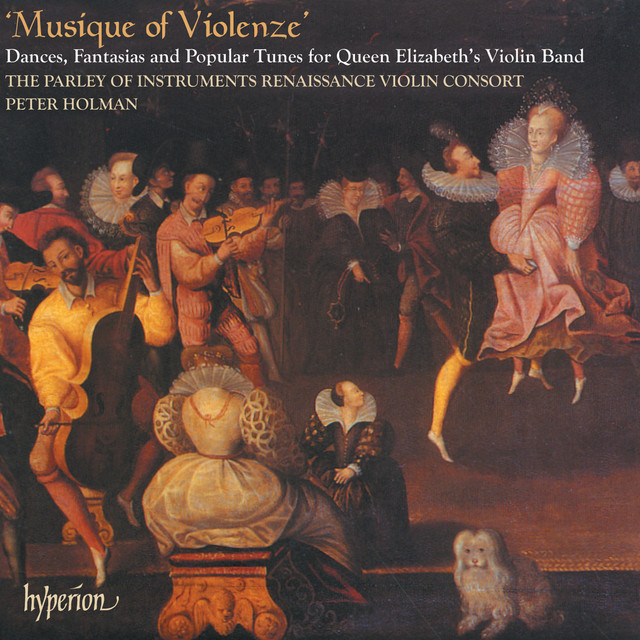


About English renaissance
English Renaissance is the sound of England's deep dive into polyphony and refined vocal writing from roughly the mid-15th century to the early 17th century. It’s not a modern “genre” in the pop sense, but a historical period in which church music, courtly song, and instrumental consorts flourished side by side. The era blends medieval foundations with continental influence, producing a distinctly English approach to harmony, timbre, and text setting that still resonates with listeners today.
The birth of English Renaissance music is tied to the courts, cathedrals, and burgeoning print culture of Tudor England. As composers absorbed Flemish, Italian, and French polyphony, English sacred and secular music began to diverge from its continental neighbors in texture and diction. The English Chapel Royal and the growing number of parish choirs created a thriving environment for composers to write intricate, expressive choral music in both Latin and English. The English Reformation and the Anglican service also shaped the repertoire, guiding many works toward anthem and hymn-like forms that could be performed with a chorus and, later, with small ensembles.
Key figures and ambassadors of the genre include William Byrd, Thomas Tallis, John Taverner, and John Dowland, among others. Thomas Tallis and William Byrd are often regarded as the twin pillars of late Tudor sacred polyphony; their music for the Anglican church and for the Catholic-leaning court carried English sacred sound beyond church walls. John Dowland’s lute songs expanded the English voice into intimate, melancholic secular repertoire, while Orlando Gibbons and his contemporaries carried the tradition into the early Baroque era with crisp, ornamented choral writing and keyboard music. The period also gave birth to masterful consort music for viols and for mixed instrumental forces, as well as English madrigals that reflected both courtly wit and pastoral imagery.
In the modern world, the English Renaissance remains widely popular among classical music enthusiasts. It is most strongly associated with England, but has a broad international following, especially in countries with active early-music scenes such as the United States, the Netherlands, Germany, France, and Australia. The late-20th-century early-music revival cemented its accessibility: ensembles like The Tallis Scholars, The Sixteen, and other period-instrument groups have toured globally, presenting the repertoire in authentic textures and tunings. The repertoire also finds life in smaller vocal groups and university choral programs, where the balance of voices, chant-like cadences, and radiant dissonance continues to captivate.
Listening pointers for enthusiasts: start with Tallis’s Spem in alium, a monumental 40-voice motet that showcases dense architectural polyphony; Byrd’s Sing Joyfully or his mass settings reveal the exuberant and solemn sides of sacred writing; Dowland’s lute songs offer intimate, emotive storytelling; Gibbons’s anthems and organ/keyboard works reveal the late Renaissance’s bright, architectural clarity. For context, explore a modern revival recording by a respected ensemble—the experience of English Renaissance polyphony is as much about texture and balance as it is about melody.
The birth of English Renaissance music is tied to the courts, cathedrals, and burgeoning print culture of Tudor England. As composers absorbed Flemish, Italian, and French polyphony, English sacred and secular music began to diverge from its continental neighbors in texture and diction. The English Chapel Royal and the growing number of parish choirs created a thriving environment for composers to write intricate, expressive choral music in both Latin and English. The English Reformation and the Anglican service also shaped the repertoire, guiding many works toward anthem and hymn-like forms that could be performed with a chorus and, later, with small ensembles.
Key figures and ambassadors of the genre include William Byrd, Thomas Tallis, John Taverner, and John Dowland, among others. Thomas Tallis and William Byrd are often regarded as the twin pillars of late Tudor sacred polyphony; their music for the Anglican church and for the Catholic-leaning court carried English sacred sound beyond church walls. John Dowland’s lute songs expanded the English voice into intimate, melancholic secular repertoire, while Orlando Gibbons and his contemporaries carried the tradition into the early Baroque era with crisp, ornamented choral writing and keyboard music. The period also gave birth to masterful consort music for viols and for mixed instrumental forces, as well as English madrigals that reflected both courtly wit and pastoral imagery.
In the modern world, the English Renaissance remains widely popular among classical music enthusiasts. It is most strongly associated with England, but has a broad international following, especially in countries with active early-music scenes such as the United States, the Netherlands, Germany, France, and Australia. The late-20th-century early-music revival cemented its accessibility: ensembles like The Tallis Scholars, The Sixteen, and other period-instrument groups have toured globally, presenting the repertoire in authentic textures and tunings. The repertoire also finds life in smaller vocal groups and university choral programs, where the balance of voices, chant-like cadences, and radiant dissonance continues to captivate.
Listening pointers for enthusiasts: start with Tallis’s Spem in alium, a monumental 40-voice motet that showcases dense architectural polyphony; Byrd’s Sing Joyfully or his mass settings reveal the exuberant and solemn sides of sacred writing; Dowland’s lute songs offer intimate, emotive storytelling; Gibbons’s anthems and organ/keyboard works reveal the late Renaissance’s bright, architectural clarity. For context, explore a modern revival recording by a respected ensemble—the experience of English Renaissance polyphony is as much about texture and balance as it is about melody.