Data may be outdated
Last updated: 9 months ago — Click refresh to get the latest statistics.
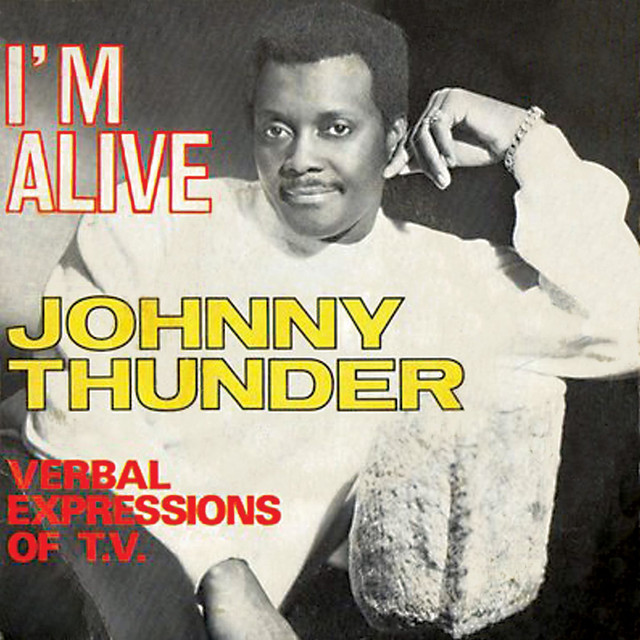
In 1963, Johnny Thunder, born Gil Hamilton, scored the only hit of his career. "Loop de Loop" was essentially a nursery rhyme set to music. The public loved it, and it assailed to the lofty perch of number four on the pop charts. Only "Hey Paula" at number one, "Walk Right In," and <a href="spotify:artist:5MX2l6ewjOaeWn1lYNhzlO">Bobby Vee</a>'s "The Night Has a Thousand Eyes" at number three, prevented it from being the top record during the week of February 9, 1963.
Born August 15, 1941, in Leesburg, Florida, Johnny Thunder started singing in church, high school, and on street corners. Nothing was happening in Florida in the late '50s, so <a href="spotify:artist:3SfrwwVPGtjYTI3vwQ4hEU">Thunder</a> moved to New York City under the advice of a friend who worked as the road manager for <a href="spotify:artist:1FqqOl9itIUpXr4jZPIVoT">the Drifters</a>. <a href="spotify:artist:3SfrwwVPGtjYTI3vwQ4hEU">Thunder</a> even sang for <a href="spotify:search:label%3A%22Atlantic+Records%22">Atlantic Records</a> for a few months prior to <a href="spotify:artist:3plJVWt88EqjvtuB4ZDRV3">Ben E. King</a> leaving to go solo. After the stint, he started recording under his birth name for <a href="spotify:search:label%3A%22Capitol%22">Capitol</a> and <a href="spotify:search:label%3A%22Fury+Records%22">Fury Records</a>, but had no success. To keep the rent paid and food in his belly, he made his self useful as a studio background vocalist working with then-unknowns <a href="spotify:artist:2JSjCHK79gdaiPWdKiNUNp">Dionne Warwick</a>, <a href="spotify:artist:19y5MFBH7gohEdGwKM7QsP">Luther Vandross</a>, <a href="spotify:artist:4QYDxx5VDqINxMtUapyF9q">Cissy Houston</a>, and others. <a href="spotify:artist:3SfrwwVPGtjYTI3vwQ4hEU">Thunder</a>'s high mellow resonant tenor always lifted him above the others. One of his <a href="spotify:search:label%3A%22Capitol%22">Capitol</a> releases was "Tell Him," the same song which became a hit for <a href="spotify:artist:2GF1B0GIaFrLFLdfH6ufRO">the Exciters</a> months after his version had died. (<a href="spotify:artist:2GF1B0GIaFrLFLdfH6ufRO">The Exciters</a>' members included the boisterous voice of Brenda Reid, who's the mother of <a href="spotify:artist:3qEzkkBwK5vKVggMiZYOWa">Antonio "L.A." Reid</a>, who became a songwriting and record producing force with <a href="spotify:artist:3aVoqlJOYx31lH1gibGDt3">Babyface</a> in the '80s and '90s.)
Producer/songwriter Teddy Vann came up with "Loop de Loop," a song that <a href="spotify:artist:3SfrwwVPGtjYTI3vwQ4hEU">Thunder</a> thought was a joke. Vann even suggested the name change from Gil Hamilton to Johnny Thunder. None of his following releases came close to equaling the success of "Loop": "The Rosey Dance" failed to enter the Top 100, stopping at number 122; <a href="spotify:artist:6OlM1c9K0fDPA0CfZ122eF">Bert Bern</a>'s "Everybody Do the Sloopy" did much better, but its showing at number 67 was still unimpressive. Like most singers, <a href="spotify:artist:3SfrwwVPGtjYTI3vwQ4hEU">Thunder</a> didn't like the stuff he recorded, but did it hoping lightening would strike twice. He continued recording throughout the '60s, waxing sides for <a href="spotify:search:label%3A%22Calla%22">Calla</a>, <a href="spotify:search:label%3A%22Vee-Jay%22">Vee-Jay</a>, and <a href="spotify:search:label%3A%22United+Artists%22">United Artists</a>; the <a href="spotify:search:label%3A%22Vee-Jay%22">Vee-Jay</a> 45 dropped under his birth name. In the '70s, he recorded sides for <a href="spotify:search:label%3A%22Arista%22">Arista</a>, but again, no hits. He recorded one album, Loop de Loop, on <a href="spotify:search:label%3A%22Diamond%22">Diamond</a>. The man who was Johnny Thunder died on September 6, 2024, at the age of 93. ~ Andrew Hamilton, Rovi
Born August 15, 1941, in Leesburg, Florida, Johnny Thunder started singing in church, high school, and on street corners. Nothing was happening in Florida in the late '50s, so <a href="spotify:artist:3SfrwwVPGtjYTI3vwQ4hEU">Thunder</a> moved to New York City under the advice of a friend who worked as the road manager for <a href="spotify:artist:1FqqOl9itIUpXr4jZPIVoT">the Drifters</a>. <a href="spotify:artist:3SfrwwVPGtjYTI3vwQ4hEU">Thunder</a> even sang for <a href="spotify:search:label%3A%22Atlantic+Records%22">Atlantic Records</a> for a few months prior to <a href="spotify:artist:3plJVWt88EqjvtuB4ZDRV3">Ben E. King</a> leaving to go solo. After the stint, he started recording under his birth name for <a href="spotify:search:label%3A%22Capitol%22">Capitol</a> and <a href="spotify:search:label%3A%22Fury+Records%22">Fury Records</a>, but had no success. To keep the rent paid and food in his belly, he made his self useful as a studio background vocalist working with then-unknowns <a href="spotify:artist:2JSjCHK79gdaiPWdKiNUNp">Dionne Warwick</a>, <a href="spotify:artist:19y5MFBH7gohEdGwKM7QsP">Luther Vandross</a>, <a href="spotify:artist:4QYDxx5VDqINxMtUapyF9q">Cissy Houston</a>, and others. <a href="spotify:artist:3SfrwwVPGtjYTI3vwQ4hEU">Thunder</a>'s high mellow resonant tenor always lifted him above the others. One of his <a href="spotify:search:label%3A%22Capitol%22">Capitol</a> releases was "Tell Him," the same song which became a hit for <a href="spotify:artist:2GF1B0GIaFrLFLdfH6ufRO">the Exciters</a> months after his version had died. (<a href="spotify:artist:2GF1B0GIaFrLFLdfH6ufRO">The Exciters</a>' members included the boisterous voice of Brenda Reid, who's the mother of <a href="spotify:artist:3qEzkkBwK5vKVggMiZYOWa">Antonio "L.A." Reid</a>, who became a songwriting and record producing force with <a href="spotify:artist:3aVoqlJOYx31lH1gibGDt3">Babyface</a> in the '80s and '90s.)
Producer/songwriter Teddy Vann came up with "Loop de Loop," a song that <a href="spotify:artist:3SfrwwVPGtjYTI3vwQ4hEU">Thunder</a> thought was a joke. Vann even suggested the name change from Gil Hamilton to Johnny Thunder. None of his following releases came close to equaling the success of "Loop": "The Rosey Dance" failed to enter the Top 100, stopping at number 122; <a href="spotify:artist:6OlM1c9K0fDPA0CfZ122eF">Bert Bern</a>'s "Everybody Do the Sloopy" did much better, but its showing at number 67 was still unimpressive. Like most singers, <a href="spotify:artist:3SfrwwVPGtjYTI3vwQ4hEU">Thunder</a> didn't like the stuff he recorded, but did it hoping lightening would strike twice. He continued recording throughout the '60s, waxing sides for <a href="spotify:search:label%3A%22Calla%22">Calla</a>, <a href="spotify:search:label%3A%22Vee-Jay%22">Vee-Jay</a>, and <a href="spotify:search:label%3A%22United+Artists%22">United Artists</a>; the <a href="spotify:search:label%3A%22Vee-Jay%22">Vee-Jay</a> 45 dropped under his birth name. In the '70s, he recorded sides for <a href="spotify:search:label%3A%22Arista%22">Arista</a>, but again, no hits. He recorded one album, Loop de Loop, on <a href="spotify:search:label%3A%22Diamond%22">Diamond</a>. The man who was Johnny Thunder died on September 6, 2024, at the age of 93. ~ Andrew Hamilton, Rovi
Monthly Listeners
91,503
Monthly Listeners History
Track the evolution of monthly listeners over the last 28 days.
Followers
10,623
Followers History
Track the evolution of followers over the last 28 days.
Top Cities
2,504 listeners

1,307 listeners

1,243 listeners
1,162 listeners

1,052 listeners