Artist
Keiji Haino
Data may be outdated
Last updated: 7 months ago — Click refresh to get the latest statistics.
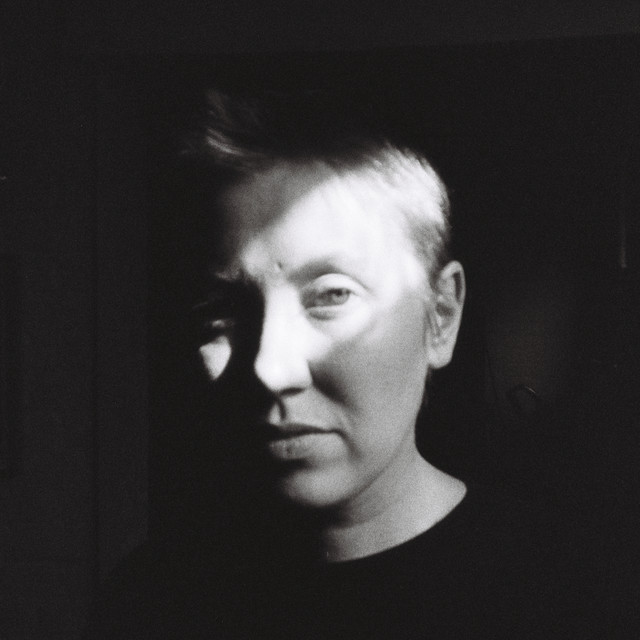
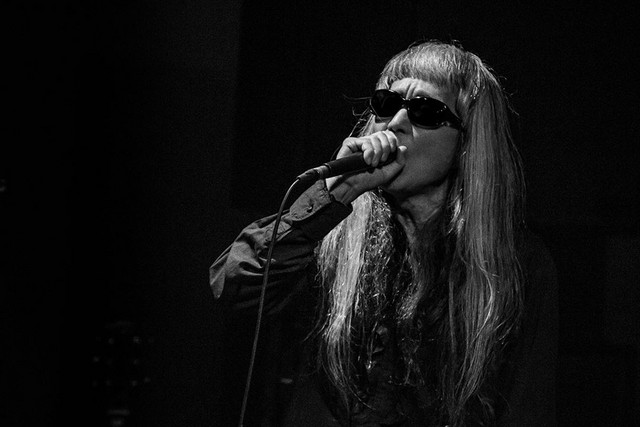
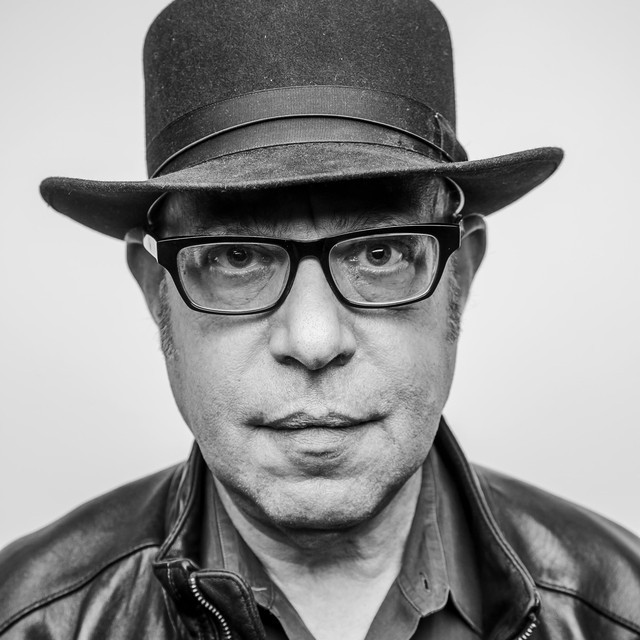
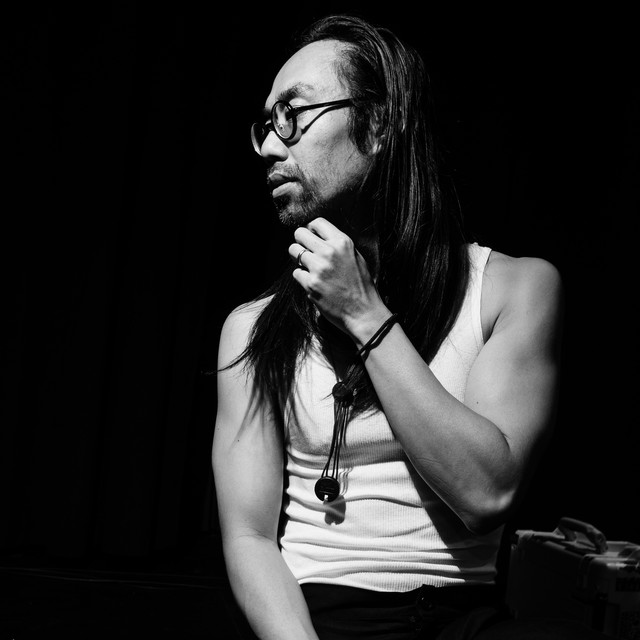
When attempting to describe what Keiji Haino does to a guitar, the verb "play" seems terribly insufficient. "Mauling" might be a more appropriate choice, maybe even "destroying." Regardless, whether as a solo performer, a collaborator, or leading his tremendous trio <a href="spotify:artist:5BBYXXQosRczcbcEtiZRZ0">Fushitsusha</a>, Haino has been leading the loud, free-form, noise-loaded guitar movement in Japan since the 1970s. His many albums are unpredictable and well worth hearing, especially by those enamored with the fringes music performance. His recordings are frequently captured live with no overdubbing, and Haino adds to the frenetic improvisatory mood by emitting shrieks and yelps as he strangles the neck of his Gibson SG. When it comes to pushing the boundaries of music, noise, and where the guitar fits in this discourse, he has few peers. Beginning his solo career with 1981's stark, haunting Watashi-Dake?, he began releasing music at a prolific rate during the early 1990s, including solo and group efforts as well as collaborations with <a href="spotify:artist:0NiVnzdZVyaHThgTofobW2">Derek Bailey</a>, <a href="spotify:artist:5DlFW9TwvDgSJHJuufuiAO">Peter Brötzmann</a>, <a href="spotify:artist:3EgMK920cIH5aLxFnJ6zSi">Boris</a>, and others. 1995's The 21st Century Hard-Y-Guide-Y Man began his occasional explorations of the hurdy-gurdy. 2004's Black Blues, a set of obliterative blues covers, was released in both quiet and loud versions. Beginning with 2010's Tima Formosa, he has released over a dozen improvised collaborations with <a href="spotify:artist:46urSPEzIrRVqKqciwOq2f">Jim O'Rourke</a> and <a href="spotify:artist:1fIzM2bmsXG77E5EMPtdKW">Oren Ambarchi</a>, and he's also made albums with sludge metal trio <a href="spotify:artist:51yGpqOaCT6TlLzV3LefDV">Sumac</a>, including 2022's Into This Juvenile Apocalypse Our Golden Blood to Pour Let Us Never.
Initially interested in theater, Haino started making music as a teenager after he first heard <a href="spotify:artist:22WZ7M8sxp5THdruNY3gXt">the Doors</a>. He eventually became enamored with early blues music, especially <a href="spotify:artist:6EsuMifB8c5rm5P2DdjiLe">Blind Lemon Jefferson</a>, as well as jazz, musique concrète, traditional Japanese music, and countless other styles. He formed an improvisational jazz group called Lost Aaraaf in 1970, and their chaotic performances, marked by Haino's frenzied screaming, were met with derision from audiences. Japanese national broadcaster NHK banned Haino from the airwaves for several decades starting in 1973. After leaving Lost Aaraaf in the mid-'70s, Haino worked with Japanese psychedelic musician <a href="spotify:artist:7DA466dYszoMAkaZHLh0kg">Magical Power Mako</a> before forming <a href="spotify:artist:5BBYXXQosRczcbcEtiZRZ0">Fushitsusha</a> in 1978. Initially a duo including synthesizer player <a href="spotify:artist:0btc4pGkGggdjtdKZgqTu3">Tamio Shiraishi</a>, the group eventually became a trio rounded out by bassist Jun Harmano and drummer Shuhei Takashima. Influenced by Krautrock and British psychedelia, the group shifted lineups numerous times, and didn't release any records until 1989, when influential Japanese underground label <a href="spotify:search:label%3A%22PSF+Records%22">PSF Records</a> issued a double-live album. <a href="spotify:artist:3gkJ7lXtLpE4KauFHpk2vK">John Zorn</a>'s <a href="spotify:search:label%3A%22Avant%22">Avant</a> label released the group's debut studio effort, Allegorical Misunderstanding, in 1993, gaining them an increase in exposure and setting the stage for a steady release schedule throughout the coming decade.
Haino became highly prolific as a solo artist as well. Even though he had released one prior solo album (1981's cathartic, nightmarish Watashi-Dake?), he re-emerged with 1990's Nijiumu, a bleak, droning album partially inspired by medieval music. Further albums appeared on <a href="spotify:search:label%3A%22PSF%22">PSF</a> as well as on <a href="spotify:artist:3gkJ7lXtLpE4KauFHpk2vK">Zorn</a>'s <a href="spotify:search:label%3A%22Tzadik%22">Tzadik</a>, <a href="spotify:search:label%3A%22Table+of+the+Elements%22">Table of the Elements</a>, <a href="spotify:search:label%3A%22Blast+First%22">Blast First</a>, and many other experimental labels, and he became one of the noise genre's most influential artists. While he remained best known as a guitarist, he also explored other instruments on his recordings, including hurdy-gurdy, percussion, and tape loops. He recorded albums with several highly regarded experimental musicians, including <a href="spotify:artist:0Ovok6Sv05ajU7frIiAR0l">Loren Mazzacane Connors</a>, <a href="spotify:artist:1Baf5XU0f8BZTtCWB4fqGc">Alan Licht</a>, and <a href="spotify:artist:0NiVnzdZVyaHThgTofobW2">Derek Bailey</a>. He also started several collaborative projects, many of which only lasted for one or two albums or a handful of performances. Aihiyo, for example, formed in the late '90s and released two albums of extremely unconventional covers of pop songs. One of his more prolific projects was Vajra, an improvisational trio with guitarist/folk singer <a href="spotify:artist:6k86TQQloz0RZNgtbJaM2t">Kan Mikami</a> and drummer Toshiaki Ishizuka.
As the 21st century began, <a href="spotify:artist:5BBYXXQosRczcbcEtiZRZ0">Fushitsusha</a> became largely inactive, but Haino remained prolific as ever, releasing solo albums on labels like <a href="spotify:search:label%3A%22Alien8%22">Alien8</a>, <a href="spotify:search:label%3A%22Turtles%27+Dream%22">Turtles' Dream</a>, and <a href="spotify:search:label%3A%22Swordfish+Records%22">Swordfish Records</a>, in addition to collaborations with the likes of <a href="spotify:artist:3EgMK920cIH5aLxFnJ6zSi">Boris</a>, <a href="spotify:artist:5DlFW9TwvDgSJHJuufuiAO">Peter Brötzmann</a>, and <a href="spotify:artist:5cs6oM65rBCcI4M218O2Im">Ruins</a> drummer <a href="spotify:artist:6TlDFezBFuVUePRTtp9jy7">Tatsuya Yoshida</a>. In 2004, he recorded two different versions of the blues covers album Black Blues, an acoustic Soft Version and an electric Violent Version. He began a fruitful, long-running collaboration with <a href="spotify:artist:46urSPEzIrRVqKqciwOq2f">Jim O'Rourke</a> and <a href="spotify:artist:1fIzM2bmsXG77E5EMPtdKW">Oren Ambarchi</a>, releasing numerous albums on <a href="spotify:artist:1fIzM2bmsXG77E5EMPtdKW">Ambarchi</a>'s <a href="spotify:search:label%3A%22Black+Truffle%22">Black Truffle</a> label. Haino, <a href="spotify:artist:1fIzM2bmsXG77E5EMPtdKW">Ambarchi</a>, and <a href="spotify:artist:6JOZsxwBJZm4bhcEy7gLIU">Stephen O'Malley</a> also formed an improvisational trio called <a href="spotify:artist:5QGYopLBU2jLgD67DTfnKJ">Nazoranai</a> after the three collaborated during a 2006 performance of <a href="spotify:artist:6JOZsxwBJZm4bhcEy7gLIU">O'Malley</a>'s drone metal group <a href="spotify:artist:2e7hYqRjL82c1nIoREHc4J">Sunn O)))</a>. Haino also released albums with Finnish electronic duo <a href="spotify:artist:7qk18OMPkaekOJt2QUva9G">Pan Sonic</a> and German avant-garde classical ensemble <a href="spotify:artist:0fQCIbb4zQSYuj2tFNbdLi">Zeitkratzer</a>. In 2011, <a href="spotify:artist:5BBYXXQosRczcbcEtiZRZ0">Fushitsusha</a> began performing and recording again, and as before, the group's lineup continued to fluctuate frequently. The group released four albums on the Heartfast label in 2012 and 2013.
Many of Haino's recordings have featured long, poetic song and album titles. For example, a 2016 double-LP with <a href="spotify:artist:46urSPEzIrRVqKqciwOq2f">O'Rourke</a> and <a href="spotify:artist:1fIzM2bmsXG77E5EMPtdKW">Ambarchi</a> bore the name I Wonder if You Noticed "I'm Sorry" Is Such a Lovely Sound It Keeps Things from Getting Worse. In 2017, Haino collaborated with keyboardist <a href="spotify:artist:4d3Ice9t3aFOAMk2VJCOwd">Jozef Dumoulin</a> and drummer <a href="spotify:artist:2eMZsuJlUdllW1yrtGWNDA">Teun Verbruggen</a> on The Miracles of Only One Thing. Other collaborations released during the year included Light Never Bright Enough (with <a href="spotify:artist:0ci7QTOgaA15OkgT5GvZ7F">John Butcher</a>) and double-LP This Dazzling, Genuine "Difference" Now Where Shall It Go? (with <a href="spotify:artist:46urSPEzIrRVqKqciwOq2f">O'Rourke</a> and <a href="spotify:artist:1fIzM2bmsXG77E5EMPtdKW">Ambarchi</a>). Haino collaborated with sludge-metal group <a href="spotify:artist:51yGpqOaCT6TlLzV3LefDV">Sumac</a> for the full-length American Dollar Bill: Keep Facing Sideways, You're Too Hideous to Look at Face On, which was released by <a href="spotify:search:label%3A%22Thrill+Jockey%22">Thrill Jockey</a> in 2018. Other collaborations with <a href="spotify:artist:2wDSxU4XnEOY4qS4qpC7Nq">Charles Hayward</a>, <a href="spotify:artist:5UezsklPScipW64XJm7qql">Merzbow</a>, and a second set with <a href="spotify:artist:51yGpqOaCT6TlLzV3LefDV">Sumac</a> rounded out the decade.
Who Knew That So Many Blues Should Reside Here Too..., a solo gamelan performance recorded in 2007 at Osaka University of Arts, was released in 2020. A third <a href="spotify:artist:51yGpqOaCT6TlLzV3LefDV">Sumac</a> collaboration, Into This Juvenile Apocalypse Our Golden Blood to Pour Let Us Never, appeared in 2022. ~ John Dougan & Paul Simpson, Rovi
Initially interested in theater, Haino started making music as a teenager after he first heard <a href="spotify:artist:22WZ7M8sxp5THdruNY3gXt">the Doors</a>. He eventually became enamored with early blues music, especially <a href="spotify:artist:6EsuMifB8c5rm5P2DdjiLe">Blind Lemon Jefferson</a>, as well as jazz, musique concrète, traditional Japanese music, and countless other styles. He formed an improvisational jazz group called Lost Aaraaf in 1970, and their chaotic performances, marked by Haino's frenzied screaming, were met with derision from audiences. Japanese national broadcaster NHK banned Haino from the airwaves for several decades starting in 1973. After leaving Lost Aaraaf in the mid-'70s, Haino worked with Japanese psychedelic musician <a href="spotify:artist:7DA466dYszoMAkaZHLh0kg">Magical Power Mako</a> before forming <a href="spotify:artist:5BBYXXQosRczcbcEtiZRZ0">Fushitsusha</a> in 1978. Initially a duo including synthesizer player <a href="spotify:artist:0btc4pGkGggdjtdKZgqTu3">Tamio Shiraishi</a>, the group eventually became a trio rounded out by bassist Jun Harmano and drummer Shuhei Takashima. Influenced by Krautrock and British psychedelia, the group shifted lineups numerous times, and didn't release any records until 1989, when influential Japanese underground label <a href="spotify:search:label%3A%22PSF+Records%22">PSF Records</a> issued a double-live album. <a href="spotify:artist:3gkJ7lXtLpE4KauFHpk2vK">John Zorn</a>'s <a href="spotify:search:label%3A%22Avant%22">Avant</a> label released the group's debut studio effort, Allegorical Misunderstanding, in 1993, gaining them an increase in exposure and setting the stage for a steady release schedule throughout the coming decade.
Haino became highly prolific as a solo artist as well. Even though he had released one prior solo album (1981's cathartic, nightmarish Watashi-Dake?), he re-emerged with 1990's Nijiumu, a bleak, droning album partially inspired by medieval music. Further albums appeared on <a href="spotify:search:label%3A%22PSF%22">PSF</a> as well as on <a href="spotify:artist:3gkJ7lXtLpE4KauFHpk2vK">Zorn</a>'s <a href="spotify:search:label%3A%22Tzadik%22">Tzadik</a>, <a href="spotify:search:label%3A%22Table+of+the+Elements%22">Table of the Elements</a>, <a href="spotify:search:label%3A%22Blast+First%22">Blast First</a>, and many other experimental labels, and he became one of the noise genre's most influential artists. While he remained best known as a guitarist, he also explored other instruments on his recordings, including hurdy-gurdy, percussion, and tape loops. He recorded albums with several highly regarded experimental musicians, including <a href="spotify:artist:0Ovok6Sv05ajU7frIiAR0l">Loren Mazzacane Connors</a>, <a href="spotify:artist:1Baf5XU0f8BZTtCWB4fqGc">Alan Licht</a>, and <a href="spotify:artist:0NiVnzdZVyaHThgTofobW2">Derek Bailey</a>. He also started several collaborative projects, many of which only lasted for one or two albums or a handful of performances. Aihiyo, for example, formed in the late '90s and released two albums of extremely unconventional covers of pop songs. One of his more prolific projects was Vajra, an improvisational trio with guitarist/folk singer <a href="spotify:artist:6k86TQQloz0RZNgtbJaM2t">Kan Mikami</a> and drummer Toshiaki Ishizuka.
As the 21st century began, <a href="spotify:artist:5BBYXXQosRczcbcEtiZRZ0">Fushitsusha</a> became largely inactive, but Haino remained prolific as ever, releasing solo albums on labels like <a href="spotify:search:label%3A%22Alien8%22">Alien8</a>, <a href="spotify:search:label%3A%22Turtles%27+Dream%22">Turtles' Dream</a>, and <a href="spotify:search:label%3A%22Swordfish+Records%22">Swordfish Records</a>, in addition to collaborations with the likes of <a href="spotify:artist:3EgMK920cIH5aLxFnJ6zSi">Boris</a>, <a href="spotify:artist:5DlFW9TwvDgSJHJuufuiAO">Peter Brötzmann</a>, and <a href="spotify:artist:5cs6oM65rBCcI4M218O2Im">Ruins</a> drummer <a href="spotify:artist:6TlDFezBFuVUePRTtp9jy7">Tatsuya Yoshida</a>. In 2004, he recorded two different versions of the blues covers album Black Blues, an acoustic Soft Version and an electric Violent Version. He began a fruitful, long-running collaboration with <a href="spotify:artist:46urSPEzIrRVqKqciwOq2f">Jim O'Rourke</a> and <a href="spotify:artist:1fIzM2bmsXG77E5EMPtdKW">Oren Ambarchi</a>, releasing numerous albums on <a href="spotify:artist:1fIzM2bmsXG77E5EMPtdKW">Ambarchi</a>'s <a href="spotify:search:label%3A%22Black+Truffle%22">Black Truffle</a> label. Haino, <a href="spotify:artist:1fIzM2bmsXG77E5EMPtdKW">Ambarchi</a>, and <a href="spotify:artist:6JOZsxwBJZm4bhcEy7gLIU">Stephen O'Malley</a> also formed an improvisational trio called <a href="spotify:artist:5QGYopLBU2jLgD67DTfnKJ">Nazoranai</a> after the three collaborated during a 2006 performance of <a href="spotify:artist:6JOZsxwBJZm4bhcEy7gLIU">O'Malley</a>'s drone metal group <a href="spotify:artist:2e7hYqRjL82c1nIoREHc4J">Sunn O)))</a>. Haino also released albums with Finnish electronic duo <a href="spotify:artist:7qk18OMPkaekOJt2QUva9G">Pan Sonic</a> and German avant-garde classical ensemble <a href="spotify:artist:0fQCIbb4zQSYuj2tFNbdLi">Zeitkratzer</a>. In 2011, <a href="spotify:artist:5BBYXXQosRczcbcEtiZRZ0">Fushitsusha</a> began performing and recording again, and as before, the group's lineup continued to fluctuate frequently. The group released four albums on the Heartfast label in 2012 and 2013.
Many of Haino's recordings have featured long, poetic song and album titles. For example, a 2016 double-LP with <a href="spotify:artist:46urSPEzIrRVqKqciwOq2f">O'Rourke</a> and <a href="spotify:artist:1fIzM2bmsXG77E5EMPtdKW">Ambarchi</a> bore the name I Wonder if You Noticed "I'm Sorry" Is Such a Lovely Sound It Keeps Things from Getting Worse. In 2017, Haino collaborated with keyboardist <a href="spotify:artist:4d3Ice9t3aFOAMk2VJCOwd">Jozef Dumoulin</a> and drummer <a href="spotify:artist:2eMZsuJlUdllW1yrtGWNDA">Teun Verbruggen</a> on The Miracles of Only One Thing. Other collaborations released during the year included Light Never Bright Enough (with <a href="spotify:artist:0ci7QTOgaA15OkgT5GvZ7F">John Butcher</a>) and double-LP This Dazzling, Genuine "Difference" Now Where Shall It Go? (with <a href="spotify:artist:46urSPEzIrRVqKqciwOq2f">O'Rourke</a> and <a href="spotify:artist:1fIzM2bmsXG77E5EMPtdKW">Ambarchi</a>). Haino collaborated with sludge-metal group <a href="spotify:artist:51yGpqOaCT6TlLzV3LefDV">Sumac</a> for the full-length American Dollar Bill: Keep Facing Sideways, You're Too Hideous to Look at Face On, which was released by <a href="spotify:search:label%3A%22Thrill+Jockey%22">Thrill Jockey</a> in 2018. Other collaborations with <a href="spotify:artist:2wDSxU4XnEOY4qS4qpC7Nq">Charles Hayward</a>, <a href="spotify:artist:5UezsklPScipW64XJm7qql">Merzbow</a>, and a second set with <a href="spotify:artist:51yGpqOaCT6TlLzV3LefDV">Sumac</a> rounded out the decade.
Who Knew That So Many Blues Should Reside Here Too..., a solo gamelan performance recorded in 2007 at Osaka University of Arts, was released in 2020. A third <a href="spotify:artist:51yGpqOaCT6TlLzV3LefDV">Sumac</a> collaboration, Into This Juvenile Apocalypse Our Golden Blood to Pour Let Us Never, appeared in 2022. ~ John Dougan & Paul Simpson, Rovi
Monthly Listeners
6,373
Monthly Listeners History
Track the evolution of monthly listeners over the last 28 days.
Followers
22,450
Followers History
Track the evolution of followers over the last 28 days.
Top Cities
128 listeners

88 listeners

78 listeners

75 listeners

73 listeners

Related Artists

gaop


Sophie Agnel
Iggor Cavalera
goat (JP)
Aki Onda

Reinhold Friedl
Naoki Zushi

Sheet Noise

CxBxT
Yara Asmar
Nina Garcia


Export


YPY
A LARGE SHEET OF MUSCLE