Data may be outdated
Last updated: 7 months ago — Click refresh to get the latest statistics.
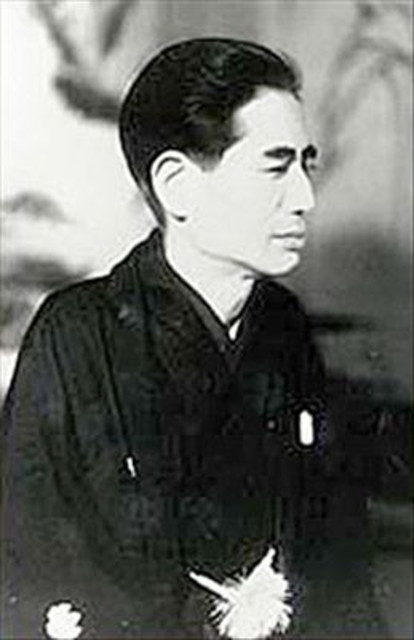
Michio Miyagi was one of the great koto players of the twentieth century and a leader in a movement to absorb elements of Western music into Japanese music using traditional instruments. His father was named Kunijiro Wakabe, but Miyagi was given a prominent family surname, Suga, when he was an infant. He progressively lost his vision and was totally blind by the time he was seven. Having already shown musical talent, it was natural for him to study koto, as there is a tradition that the most famous players of the instrument are blind.
His master from 1902 was Nakajima Kengyo II, a master koto player. Suga debuted as a soloist in 1903. In 1905, he was granted a certificate of highest proficiency on the instrument and was assigned the professional name of Nakasuga. In 1907, he moved to Korea (then the Japanese province of Chosen) and taught koto and shakuhachi (a wooden flute) in Jinsen (Inchon) and Keijo (Seoul).
He wrote his first composition, Mizu no hentai (Metamorphosis of Water), in 1909. He succeeded to the professional title of Kengyo in 1912. His last name change occurred in 1913, when he married Nakako Kita and took the name Michio Miyagi. He returned to Japan in 1917, settling in Tokyo.
In 1920, he and his friend Seifu Yoshida began the New Japanese Music Movement aimed at adapting European musical elements into compositions for traditional Japanese instruments. He gave important concerts of his compositions beginning in 1919. His primary instrument was the zoku-so, or 13-string koto and in 1921, he invented a 17-string koto (jushichigen) and used it in his work Dance of Falling Leaves. The instrument has become a success. He also made some less practical instruments, including an 80-string koto and a large bowed instrument called the kokyu. One of his innovations was the introduction of the Western notion of chamber music into the Japanese tradition. The first such work was his septet called Kairo-cho (1923) using Japanese instruments. He introduced the Western form of theme and variations into Japanese music with his Variations on Sakura in 1923. His Etenraku hensokyoku is essentially a concerto for koto and symphony orchestra.
His efforts worked in the other direction as well. His The sea in spring (Haru no umi) was originally for koto and shakuhachi, but received an arrangement with violin instead of shakuhachi. In that version, it was widely played in the West by <a href="spotify:artist:3HYV4ZdJ1LSOhPo5ehlEqF">Isaac Stern</a>. He was also an important role as a teacher at the Tokyo Music School and the Tokyo National University of Fine Arts and Music, although this was interrupted during part of World War II. In 1948, he was appointed a member of the Japan Art Academy. He was prolific as a composer, mostly using koto in some manner, and as an arranger for the instrument. His death at the age of 62 was in a railroad accident.
His master from 1902 was Nakajima Kengyo II, a master koto player. Suga debuted as a soloist in 1903. In 1905, he was granted a certificate of highest proficiency on the instrument and was assigned the professional name of Nakasuga. In 1907, he moved to Korea (then the Japanese province of Chosen) and taught koto and shakuhachi (a wooden flute) in Jinsen (Inchon) and Keijo (Seoul).
He wrote his first composition, Mizu no hentai (Metamorphosis of Water), in 1909. He succeeded to the professional title of Kengyo in 1912. His last name change occurred in 1913, when he married Nakako Kita and took the name Michio Miyagi. He returned to Japan in 1917, settling in Tokyo.
In 1920, he and his friend Seifu Yoshida began the New Japanese Music Movement aimed at adapting European musical elements into compositions for traditional Japanese instruments. He gave important concerts of his compositions beginning in 1919. His primary instrument was the zoku-so, or 13-string koto and in 1921, he invented a 17-string koto (jushichigen) and used it in his work Dance of Falling Leaves. The instrument has become a success. He also made some less practical instruments, including an 80-string koto and a large bowed instrument called the kokyu. One of his innovations was the introduction of the Western notion of chamber music into the Japanese tradition. The first such work was his septet called Kairo-cho (1923) using Japanese instruments. He introduced the Western form of theme and variations into Japanese music with his Variations on Sakura in 1923. His Etenraku hensokyoku is essentially a concerto for koto and symphony orchestra.
His efforts worked in the other direction as well. His The sea in spring (Haru no umi) was originally for koto and shakuhachi, but received an arrangement with violin instead of shakuhachi. In that version, it was widely played in the West by <a href="spotify:artist:3HYV4ZdJ1LSOhPo5ehlEqF">Isaac Stern</a>. He was also an important role as a teacher at the Tokyo Music School and the Tokyo National University of Fine Arts and Music, although this was interrupted during part of World War II. In 1948, he was appointed a member of the Japan Art Academy. He was prolific as a composer, mostly using koto in some manner, and as an arranger for the instrument. His death at the age of 62 was in a railroad accident.
Monthly Listeners
51,131
Monthly Listeners History
Track the evolution of monthly listeners over the last 28 days.
Followers
3,982
Followers History
Track the evolution of followers over the last 28 days.
Top Cities
Related Artists
Nanae Yoshimura

Yamato Ensemble
Masumi Yonekawa
Chikatoyo Tsujimoto
Megumi Yonekawa
Hiroe Yonekawa

Japan Traditional Music Group


Satomi Saeki And Alcvin Takegawa Ramos

Masayo Ishigure

Duo En
Ikuta Ryu

The Tokyo Gagaku Ensemble

Master Musicians Of The Ikuta School

中能島欣一

高橋 竹山

宮城数江

本條秀太郎
宮城喜代子
竹本金太郎連中

宮内庁式部職楽部
紫絃会

MOJI

宮城喜代子

宮内庁楽部

伶楽舎


七代目 芳村伊十郎
若山胤雄社中若山流家元:四世若山胤雄

初代高橋竹山


Ensemble Hijiri-Kaï

Kafuu
Izumi-kai Original Instrumental Group