Data may be outdated
Last updated: 1 month ago — Click refresh to get the latest statistics.
Oldfield was born in 1953 in Reading, Berkshire, the youngest of three children. His father Henry was a doctor and his mother Maureen was a nurse. His siblings, sister <a href="spotify:artist:1bHrcCJoUjoMbJ8ZBUNJqg">Sally Oldfield</a> and brother <a href="spotify:artist:0DhTHSo00qVa3OQRWLzA8j">Terry Oldfield</a>, are also professional musicians. Oldfield was a prodigy -- he could pick up almost any instrument and figure out how to get what he needed. From 1967 to 1970, he and <a href="spotify:artist:1bHrcCJoUjoMbJ8ZBUNJqg">Sally Oldfield</a> played in a folk duo <a href="spotify:artist:2aRKRdpa204oFLf8C7O9mK">the Sallyangie</a>. After they split, he accepted a gig backing <a href="spotify:artist:5k5yIvxtsqHqWrRBF3nhSY">Kevin Ayers</a> in 1971.
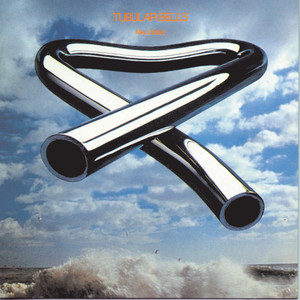
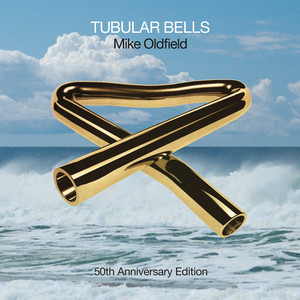
Tubular Bells was originally dubbed Opus 1. It grew out of studio time gifted him by Richard Branson, who at the time was running a mail-order record retail service. After its completion, Oldfield shopped the record to a series of labels, only to meet with rejection. Frustrated, Branson founded his own label to release it, and in 1973, Tubular Bells became the inaugural release of <a href="spotify:search:label%3A%22Virgin+Records%22">Virgin Records</a>. An atmospheric, intricate composition that fused rock and folk motifs with the structures of minimalist composition, the 49-minute instrumental piece (performed on close to 30 different instruments, virtually all of them played by Oldfield) spent months in the number one spot on the U.K. charts, topped the American charts, and eventually sold over 16 million copies. In addition to almost single-handedly establishing <a href="spotify:search:label%3A%22Virgin%22">Virgin</a> as one of the most important labels in the record industry, Tubular Bells also created a market for what would later be dubbed new age music and won a Grammy for Best Instrumental Composition in 1974.
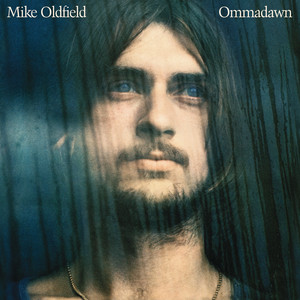
The follow-up, 1974's Hergest Ridge (named after Oldfield's retreat in a remote area of Herefordshire) also proved phenomenally successful and dislodged Tubular Bells at the top of the British chart. With 1975's Ommadawn (written in the aftermath of his mother's death), he explored ambient textures and world music; however, the emergence of punk left Oldfield baffled, and he retreated from sight for three years following the LP's release.
He resurfaced with 1978's Incantations. Platinum, issued a year later, kept its eye on the clubs, and featured a dance version of the <a href="spotify:artist:69lxxQvsfAIoQbB20bEPFC">Philip Glass</a> composition "North Star." With 1980's QE2, Oldfield moved completely away from his epic-length pieces and traveled into progressive pop territory, a shift typified by the album's cover of <a href="spotify:artist:0LcJLqbBmaGUft1e9Mm8HV">ABBA</a>'s "Arrival." He continued in a pop vein for much of the '80s, as albums like 1983's Crises, 1984's Discovery, and 1987's Islands encroached further and further upon mainstream accessibility. That said, all of them charted.
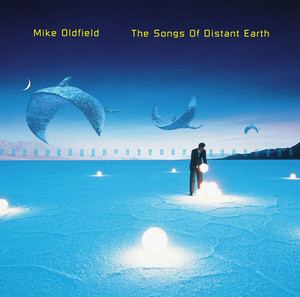
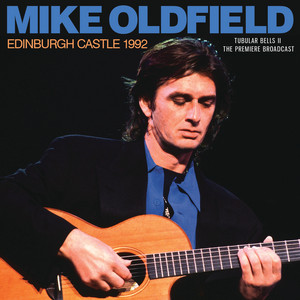
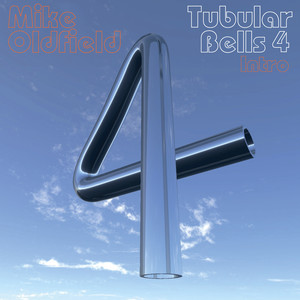
In 1992, Oldfield teamed with producer <a href="spotify:artist:2oQd3GVbHbjyCyeG4MGMuT">Trevor Horn</a> for Tubular Bells II, which returned him to the top of the U.K. charts upon its 20th anniversary. The Songs of Distant Earth appeared two years later, followed by a third Tubular Bells update in 1998. The following year, Oldfield released two albums. On Guitars, all the sounds generated came from the instruments, including percussion. The Millennium Bell consisted of takes on a number of musical styles, representing various historical periods over the past millennium. The long-form work was performed in Berlin for the city's millennium celebrations.
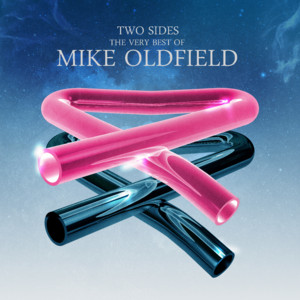
In 2003, Oldfield re-recorded Tubular Bells in celebration of its 30th anniversary with John Cleese as master of ceremonies (replacing the late <a href="spotify:artist:0A2iwswmfmdVRTMvMGX7PR">Vivian Stanshall</a>). The album was issued as a two-disc set and included a video disc. Light + Shade, a double-disc conceptual work of new studio material, appeared in 2006. Oldfield's first album-length classical work, Music of the Spheres, appeared in 2008 with a full orchestra. Its guests included Chinese piano virtuoso <a href="spotify:artist:1YZhNFBxkEB5UKTgMDvot4">Lang Lang</a> on six tracks and New Zealand soprano <a href="spotify:artist:7Jotu5LupekFt00kZZZ7C6">Hayley Westenra</a> performing on the charting single "On My Heart." Music of the Spheres was nominated for a Classical Brit Award in 2009. In 2012 he was a featured guest on <a href="spotify:artist:0DhTHSo00qVa3OQRWLzA8j">Terry Oldfield</a>'s Journey Into Space.
After a four-year break from recording his own material, Oldfield reentered the studio and began working on a return to pop/rock-influenced music. He emerged with 2014's Man on the Rocks. Its critical reception was the best he'd had since the '90s and the album charted across Europe. Two years later, alongside the re-release of remastered scores from 1984, he issued the vinyl-only The 1984 Suite, which remixed highlights from Discovery and The Killing Fields.
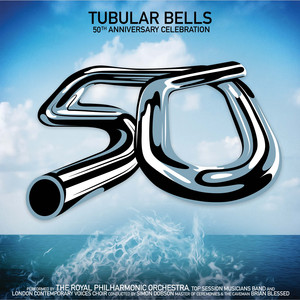
In late 2015, Oldfield announced on Twitter that he had begun to work on a sequel to 1975's Ommadawn. He completed it the following November. Containing two tracks simply titled "Part I" and Part II," the composer described it as "handmade... a genuine piece of music rather than production: hands, fingers, fingernails." It features 22 instruments including mandolin, guitars, acoustic bass, bodhran, African drums, and the tin whistle. Its lone sample is from a line by the children's choir in the 1975 song "On Horseback." Return to Ommadawn was released in January 2017. In April 2023, in commemoration of the 50th anniversary of Tubular Bells, <a href="spotify:search:label%3A%22EMI%22">EMI</a> made Opus One available as a standalone vinyl release for the first time ~ Jason Ankeny & Thom Jurek

Monthly Listeners
2.3 million
Monthly Listeners History
Track the evolution of monthly listeners over the last 28 days.
Followers
694,601
Followers History
Track the evolution of followers over the last 28 days.
Total Streams
813.7 million
Total Streams History
Track the evolution of total streams over the last 28 days. This data is calculated from all tracks listed in the artist's discography.