Data may be outdated
Last updated: 3 months ago — Click refresh to get the latest statistics.
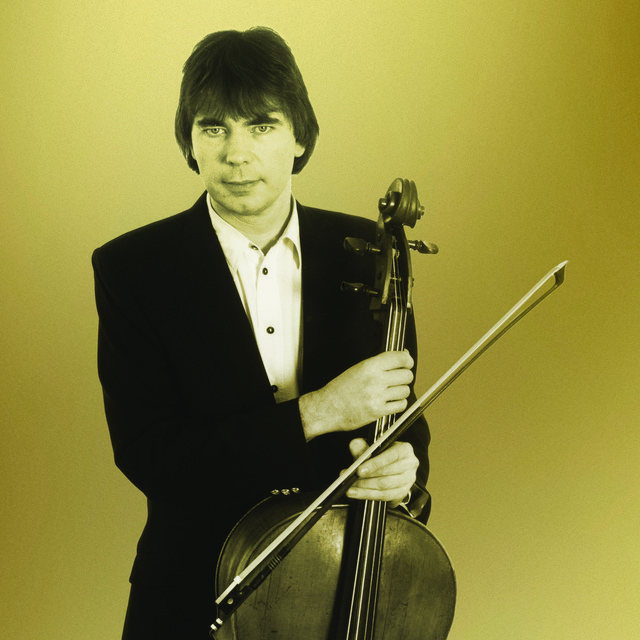
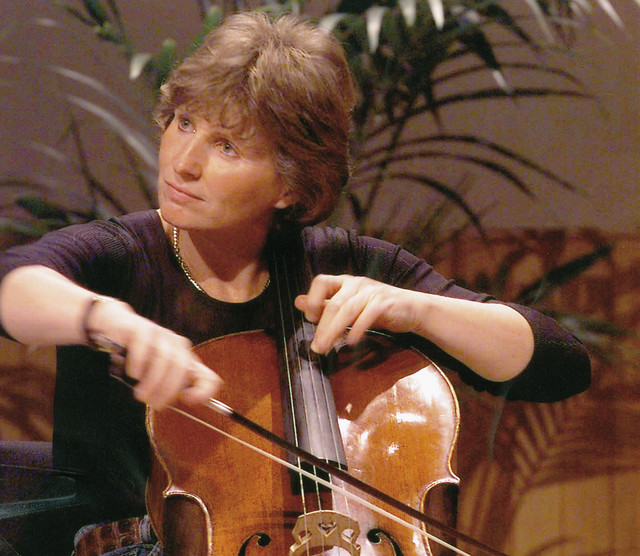
Maisky was born January 10, 1948, in Riga, Latvia, then part of the Soviet Union. The Latvian form of his name was Miša Maiskis. His older brother Valery was an organist and harpsichordist. Maisky took up the cello at eight and entered the Riga Conservatory, but he chafed under the school's rigid curriculum. In 1965, he moved to the larger city of Leningrad (now St. Petersburg), and he quickly flourished. He won a national cello competition, performed with the <a href="spotify:artist:6gl0CzZc0wuNKlZq9MYzSF">Leningrad Philharmonic</a>, and took a prize at Moscow's International Tchaikovsky Competition. On the jury there was <a href="spotify:artist:50hiYMhi0g77BOkkQ4zebB">Rostropovich</a>, who invited Maisky to enroll at the Moscow Conservatory as his student.
Maisky seemed set for a brilliant career, but then his sister emigrated to Israel, and this put Maisky himself under suspicion. After committing a minor crime (buying a black market tape recorder), Maisky was imprisoned for 18 months in a labor camp. When he emerged, he was drafted into the Soviet military, but avoided service by checking himself into a psychiatric facility. Finally, Maisky was allowed to emigrate to Israel on the condition that he pay back the entire cost of his education. Jerusalem mayor Teddy Kollek arranged for support from U.S. sources, and Maisky moved to Israel in 1972; he would not return to Russia until 1995. He toured with the <a href="spotify:artist:4RkU7dxppCNi2078hPMUI4">Israel Philharmonic</a>, including in the U.S., and in California, he met <a href="spotify:artist:04aK7SPCi0hYLpchhD3Y0c">Piatigorsky</a>, who agreed to take Maisky on as his final student.
In the late 1970s, Maisky appeared in London with the <a href="spotify:artist:0MvSBMGRQJY3mRwIbJsqF1">Royal Philharmonic Orchestra</a> and played critically acclaimed recitals with pianist <a href="spotify:artist:2BoWH2w47EUxEiOuvl4mxF">Radu Lupu</a>. In the following years, he would attract still more distinguished recital partners, including <a href="spotify:artist:20iZXzMb8LoWXOeca32i82">Vladimir Ashkenazy</a>, <a href="spotify:artist:66MvLAvLznk5UOvASVGjk4">Martha Argerich</a>, and <a href="spotify:artist:24ibCRKLtfIZcfrixiBAsm">Gidon Kremer</a>. His performances of Bach's solo cello works were especially notable; he recorded them for <a href="spotify:search:label%3A%22Deutsche+Grammophon%22">Deutsche Grammophon</a>, and in the year 2000, gave 100 <a href="spotify:artist:5aIqB5nVVvmFsvSdExz408">Bach</a> performances worldwide, including three in a single day. Maisky has performed concertos under top contemporary conductors, including <a href="spotify:artist:2LxnoYPOe0FCLC82R3xgO2">Valery Gergiev</a>, <a href="spotify:artist:0IuqAyi5CMgpuyhckrcqNs">Mariss Jansons</a>, and <a href="spotify:artist:0cxXnDhpgxcMMkKddhORHY">Gustavo Dudamel</a>.
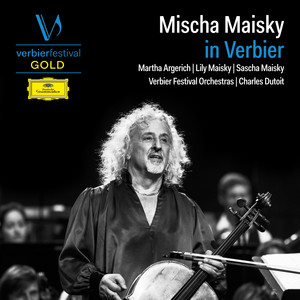
Maisky has recorded the major cello repertory for <a href="spotify:search:label%3A%22Deutsche+Grammophon%22">Deutsche Grammophon</a>, issuing new music almost annually, and he has teamed with his daughter, pianist Lily Maisky, for several albums, including ¡España! (2011) and 20th Century Classics (2019).
Monthly Listeners
585,551
Monthly Listeners History
Track the evolution of monthly listeners over the last 28 days.
Followers
61,958
Followers History
Track the evolution of followers over the last 28 days.
Total Streams
186.5 million
Total Streams History
Track the evolution of total streams over the last 28 days. This data is calculated from all tracks listed in the artist's discography.










![Tchaikovsky: Nocturne in D Minor, Op. 19 No. 4 (Version for Cello and Orchestra) [Live]](https://i.scdn.co/image/ab67616d00001e026f0cfca2e4175ac56e725039)