Data may be outdated
Last updated: 9 months ago — Click refresh to get the latest statistics.
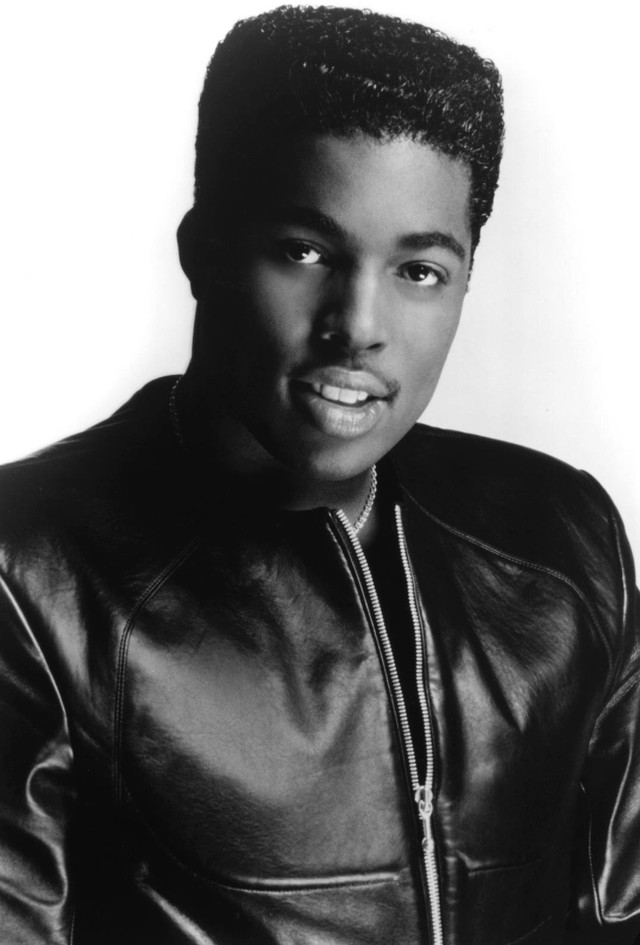
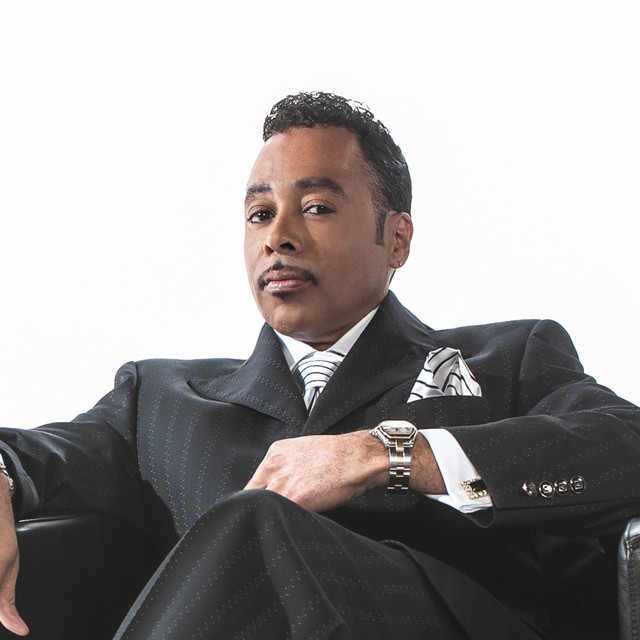
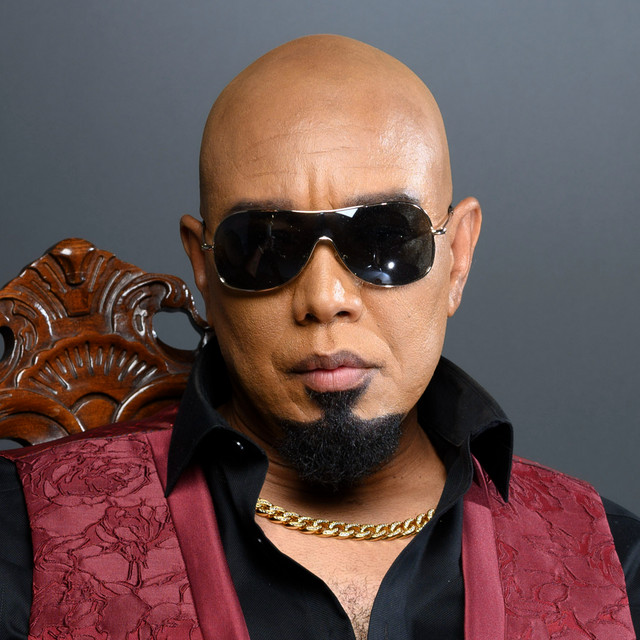
A suave funk showman whose smooth vocals are peppered with indelible ad-libs, Morris Day is known most for having fronted <a href="spotify:artist:1EgGVV9cmmlLEsFlunjmvv">the Time</a> since the band's 1981 inception. Catalysts of the funk-rooted Minneapolis sound, <a href="spotify:artist:1EgGVV9cmmlLEsFlunjmvv">the Time</a> put three singles in the Top 40 of the pop chart, and all five of their albums have hit the R&B Top Ten. Day has also put together an equal number of solo albums, starting with a pair of his own Top Ten R&B LPs, 1985's Color of Success and 1987's Daydreaming, released after <a href="spotify:artist:1EgGVV9cmmlLEsFlunjmvv">the Time</a>'s first breakup. The latter set featured Day's biggest solo hit, the number one R&B single "Fishnet," a typically swaggering song written by Day with bandmates and producers <a href="spotify:artist:4ZaXj4ZrqscgpfqJolMfib">Jimmy Jam</a> and Terry Lewis. Day presented the celebratory and guest-filled Last Call in 2022 as his final solo album.
Originally from Springfield, Illinois, Morris Day moved to Minneapolis with his family when he was eight years old. Day learned to play a variety of instruments including saxophone and set his sights on drums. He practiced informally on furniture and cookware until his mother bought him a department-store kit. In his teens, Day played in a series of bands, including one with fellow drummer Jellybean Johnson, followed by Grand Central, featuring bassist André Anderson (later known as <a href="spotify:artist:4Q4CRlCreilk0EN0myk5Jh">André Cymone</a>) and guitarist <a href="spotify:artist:5a2EaR3hamoenG9rDuVn8j">Prince</a>, and then Enterprise Band of Pleasure. When <a href="spotify:artist:5a2EaR3hamoenG9rDuVn8j">Prince</a>'s solo career took off, Day was hired by <a href="spotify:artist:5a2EaR3hamoenG9rDuVn8j">Prince</a> to be tour videographer. One perk was that Day could use <a href="spotify:artist:5a2EaR3hamoenG9rDuVn8j">Prince</a>'s studio to work on material. This led to Day writing the song that became "Partyup," the finale of <a href="spotify:artist:5a2EaR3hamoenG9rDuVn8j">Prince</a>'s Dirty Mind. In exchange for "Partyup," <a href="spotify:artist:5a2EaR3hamoenG9rDuVn8j">Prince</a> offered Day a choice: payment or a record deal. Day took the latter option, enabling <a href="spotify:artist:5a2EaR3hamoenG9rDuVn8j">Prince</a> to utilize a clause in his <a href="spotify:search:label%3A%22Warner+Bros.%22">Warner Bros.</a> contract that allowed him to sign and produce other acts.
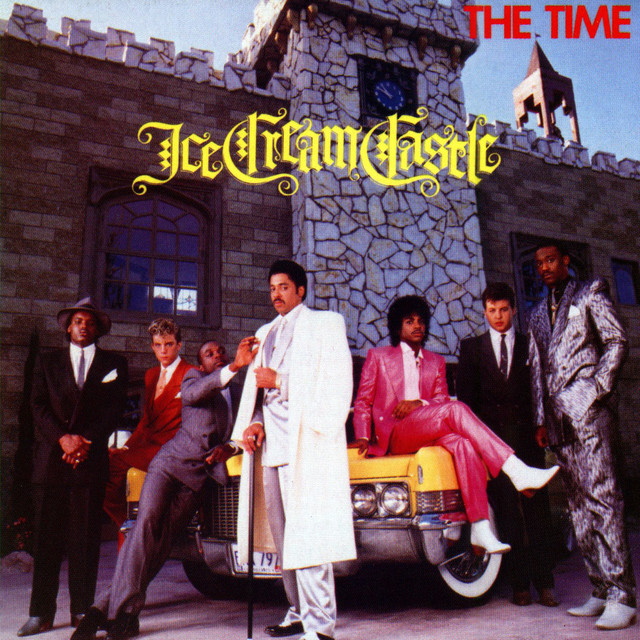
<a href="spotify:artist:1EgGVV9cmmlLEsFlunjmvv">The Time</a> was assembled by Day and <a href="spotify:artist:5a2EaR3hamoenG9rDuVn8j">Prince</a> from Minneapolis' competitive music scene. <a href="spotify:artist:4ZaXj4ZrqscgpfqJolMfib">Jimmy Jam</a>, Terry Lewis, <a href="spotify:artist:4ej5lLhf5QaOnJtVV4Ydty">Monte Moir</a>, and <a href="spotify:artist:047D9GgqEzyMoULd2oKr7G">Alexander O'Neal</a> were pulled from Flyte Tyme, and Day brought <a href="spotify:artist:31h3nKJjsutodtNKRj6Joy">Jesse Johnson</a> and Jerome Benton from Enterprise. Before their first note, the band was momentarily left without a singer when <a href="spotify:artist:5a2EaR3hamoenG9rDuVn8j">Prince</a> was unwilling to accommodate <a href="spotify:artist:047D9GgqEzyMoULd2oKr7G">O'Neal</a>'s financial demands. Day, who had occasionally sung lead with Grand Central -- on covers of songs such as <a href="spotify:artist:0IecGJbdBeYSOVtSPRehh5">Billy Preston</a>'s "Will It Go Round in Circles" and <a href="spotify:artist:0mpVqJaKwg11LdSRrvI0PL">Major Harris</a>' "Love Won't Let Me Wait" -- reluctantly slid into the role with Flyte Tyme's Jellybean Johnson installed as drummer. <a href="spotify:artist:1EgGVV9cmmlLEsFlunjmvv">The Time</a> got off to a hot start, and from 1981 through 1984 released The Time, What Time Is It?, and Ice Cream Castle, albums that delivered the Ten R&B singles "Get It Up," "Cool," "777-9311," and "Jungle Love," the last of which reached number 20 on the pop chart, followed by another Top 40 hit, "The Bird."
Day landed his first of several acting roles in the 1984 <a href="spotify:artist:5a2EaR3hamoenG9rDuVn8j">Prince</a> vehicle Purple Rain, but a number of issues regarding <a href="spotify:artist:5a2EaR3hamoenG9rDuVn8j">Prince</a>'s level of control led to the split of <a href="spotify:artist:1EgGVV9cmmlLEsFlunjmvv">the Time</a>. Additionally, Day launched his solo career on <a href="spotify:search:label%3A%22Warner+Bros.%22">Warner Bros.</a> with neither <a href="spotify:artist:5a2EaR3hamoenG9rDuVn8j">Prince</a> nor any <a href="spotify:artist:1EgGVV9cmmlLEsFlunjmvv">Time</a> bandmates in the picture. Day wrote, arranged, and produced the entirety of his solo debut, Color of Success, and also played drums and synthesizers. Assistance came from a deep cast of session musicians that included <a href="spotify:artist:6WOxIudswU8kNC2LrpeiWu">Greg Phillinganes</a>, <a href="spotify:artist:4QQgXkCYTt3BlENzhyNETg">Earth, Wind & Fire</a>'s Larry Dunn and Roland Bautista, and multi-instrumentalist Rickey "Freeze" Smith, a common factor on many <a href="spotify:search:label%3A%22Solar+Records%22">Solar Records</a> releases who became one of Day's closest associates. A distinctive update of <a href="spotify:artist:1EgGVV9cmmlLEsFlunjmvv">Time</a>-style funk with a little additional pop appeal, Color of Success reached number seven on the R&B chart (number 37 pop) with help from the number three R&B hit lead single "The Oak Tree," followed by the title song and "The Character" as additional charting A-sides. Day returned two years later with Daydreaming. Seven of its songs were co-written and co-produced by Day and his then-wife, Judith, whose own diverse career started with the previous decade with <a href="spotify:artist:1tK3Qagf7uYotg35n3Er9K">the Soul Train Gang</a>. The two other songs reunited <a href="spotify:artist:1EgGVV9cmmlLEsFlunjmvv">the Time</a> (minus <a href="spotify:artist:4ej5lLhf5QaOnJtVV4Ydty">Monte Moir</a>). One of these was "Fishnet," which topped the R&B chart and went Top 40 pop, peaking at number 23. Like Day's debut, Daydreaming went to number seven on the R&B album chart.
In 1989, Day and <a href="spotify:artist:5a2EaR3hamoenG9rDuVn8j">Prince</a>, having made amends, recorded what was intended to be the fourth album credited to <a href="spotify:artist:1EgGVV9cmmlLEsFlunjmvv">the Time</a>, Corporate World, despite the involvement of no other <a href="spotify:artist:1EgGVV9cmmlLEsFlunjmvv">Time</a> members apart from Jerome Benton. <a href="spotify:search:label%3A%22Warner+Bros.%22">Warner Bros.</a> blocked the album from release and also refused to support <a href="spotify:artist:5a2EaR3hamoenG9rDuVn8j">Prince</a>'s Graffiti Bridge project unless the other <a href="spotify:artist:1EgGVV9cmmlLEsFlunjmvv">Time</a> members were brought in. A proper <a href="spotify:artist:1EgGVV9cmmlLEsFlunjmvv">Time</a> reunion occurred for the making of Graffiti Bridge and the band's related four album, Pandemonium, both of which reached the public in 1990. Pandemonium was the first of the two to be released and generated the number nine pop hit "Jerk Out." The same year, Day and Rickey "Freeze" Smith wrote and produced the self-titled album by Day's all-women vocal group, the Day Zs. Solo activity soon resumed with 1992's Guaranteed, a new jack swing-oriented set dominated by serious lyrical content produced by the likes of Bernard Belle and Michael Stokes. Within a few years, Day was playing out with a new lineup of <a href="spotify:artist:1EgGVV9cmmlLEsFlunjmvv">the Time</a>, billed as Morris Day & the Time. They performed "Jungle Love" in <a href="spotify:artist:2LhhMC7Rwi2xDpLBcwEbFR">Kevin Smith</a>'s 2001 film Jay and Silent Bob Strike Back. Day's 2004 album It's About Time consisted mostly of live versions of <a href="spotify:artist:1EgGVV9cmmlLEsFlunjmvv">Time</a> classics.
The original <a href="spotify:artist:1EgGVV9cmmlLEsFlunjmvv">Time</a> members reunited again in 2008. A performance at the 50th Grammy Awards and dates in Las Vegas led to the making of their fifth album. Dubbing themselves <a href="spotify:artist:23GCMwNi77eY0RlJtaDNYm">the Original 7ven</a> -- <a href="spotify:artist:5a2EaR3hamoenG9rDuVn8j">Prince</a>'s ownership of the rights to the name necessitated a change -- they released the album Condensate in 2011. Like the four previous <a href="spotify:artist:1EgGVV9cmmlLEsFlunjmvv">Time</a> albums, Condensate went Top Ten R&B. Following <a href="spotify:artist:5a2EaR3hamoenG9rDuVn8j">Prince</a>'s death in 2016, Morris Day and <a href="spotify:artist:1EgGVV9cmmlLEsFlunjmvv">the Time</a> reconvened to play a handful of tributes to their musical brother. Day published the memoir On Time: A Princely Life in Funk in 2019. Three years later, he returned with Last Call, announced as his last solo album. The characteristically funky LP boasted a guest collaborator list ranging from <a href="spotify:artist:2AM4ilv6UzW0uMRuqKtDgN">ZZ Top</a>'s <a href="spotify:artist:69Iibc3uQ7x2vDeZxTwKCw">Billy Gibbons</a> to <a href="spotify:artist:7hJcb9fa4alzcOq3EaNPoG">Snoop Dogg</a> and Guaranteed collaborator <a href="spotify:artist:6futYSDVulYR2PktBjTB5W">Big Daddy Kane</a>. ~ Andy Kellman, Rovi
Originally from Springfield, Illinois, Morris Day moved to Minneapolis with his family when he was eight years old. Day learned to play a variety of instruments including saxophone and set his sights on drums. He practiced informally on furniture and cookware until his mother bought him a department-store kit. In his teens, Day played in a series of bands, including one with fellow drummer Jellybean Johnson, followed by Grand Central, featuring bassist André Anderson (later known as <a href="spotify:artist:4Q4CRlCreilk0EN0myk5Jh">André Cymone</a>) and guitarist <a href="spotify:artist:5a2EaR3hamoenG9rDuVn8j">Prince</a>, and then Enterprise Band of Pleasure. When <a href="spotify:artist:5a2EaR3hamoenG9rDuVn8j">Prince</a>'s solo career took off, Day was hired by <a href="spotify:artist:5a2EaR3hamoenG9rDuVn8j">Prince</a> to be tour videographer. One perk was that Day could use <a href="spotify:artist:5a2EaR3hamoenG9rDuVn8j">Prince</a>'s studio to work on material. This led to Day writing the song that became "Partyup," the finale of <a href="spotify:artist:5a2EaR3hamoenG9rDuVn8j">Prince</a>'s Dirty Mind. In exchange for "Partyup," <a href="spotify:artist:5a2EaR3hamoenG9rDuVn8j">Prince</a> offered Day a choice: payment or a record deal. Day took the latter option, enabling <a href="spotify:artist:5a2EaR3hamoenG9rDuVn8j">Prince</a> to utilize a clause in his <a href="spotify:search:label%3A%22Warner+Bros.%22">Warner Bros.</a> contract that allowed him to sign and produce other acts.
<a href="spotify:artist:1EgGVV9cmmlLEsFlunjmvv">The Time</a> was assembled by Day and <a href="spotify:artist:5a2EaR3hamoenG9rDuVn8j">Prince</a> from Minneapolis' competitive music scene. <a href="spotify:artist:4ZaXj4ZrqscgpfqJolMfib">Jimmy Jam</a>, Terry Lewis, <a href="spotify:artist:4ej5lLhf5QaOnJtVV4Ydty">Monte Moir</a>, and <a href="spotify:artist:047D9GgqEzyMoULd2oKr7G">Alexander O'Neal</a> were pulled from Flyte Tyme, and Day brought <a href="spotify:artist:31h3nKJjsutodtNKRj6Joy">Jesse Johnson</a> and Jerome Benton from Enterprise. Before their first note, the band was momentarily left without a singer when <a href="spotify:artist:5a2EaR3hamoenG9rDuVn8j">Prince</a> was unwilling to accommodate <a href="spotify:artist:047D9GgqEzyMoULd2oKr7G">O'Neal</a>'s financial demands. Day, who had occasionally sung lead with Grand Central -- on covers of songs such as <a href="spotify:artist:0IecGJbdBeYSOVtSPRehh5">Billy Preston</a>'s "Will It Go Round in Circles" and <a href="spotify:artist:0mpVqJaKwg11LdSRrvI0PL">Major Harris</a>' "Love Won't Let Me Wait" -- reluctantly slid into the role with Flyte Tyme's Jellybean Johnson installed as drummer. <a href="spotify:artist:1EgGVV9cmmlLEsFlunjmvv">The Time</a> got off to a hot start, and from 1981 through 1984 released The Time, What Time Is It?, and Ice Cream Castle, albums that delivered the Ten R&B singles "Get It Up," "Cool," "777-9311," and "Jungle Love," the last of which reached number 20 on the pop chart, followed by another Top 40 hit, "The Bird."
Day landed his first of several acting roles in the 1984 <a href="spotify:artist:5a2EaR3hamoenG9rDuVn8j">Prince</a> vehicle Purple Rain, but a number of issues regarding <a href="spotify:artist:5a2EaR3hamoenG9rDuVn8j">Prince</a>'s level of control led to the split of <a href="spotify:artist:1EgGVV9cmmlLEsFlunjmvv">the Time</a>. Additionally, Day launched his solo career on <a href="spotify:search:label%3A%22Warner+Bros.%22">Warner Bros.</a> with neither <a href="spotify:artist:5a2EaR3hamoenG9rDuVn8j">Prince</a> nor any <a href="spotify:artist:1EgGVV9cmmlLEsFlunjmvv">Time</a> bandmates in the picture. Day wrote, arranged, and produced the entirety of his solo debut, Color of Success, and also played drums and synthesizers. Assistance came from a deep cast of session musicians that included <a href="spotify:artist:6WOxIudswU8kNC2LrpeiWu">Greg Phillinganes</a>, <a href="spotify:artist:4QQgXkCYTt3BlENzhyNETg">Earth, Wind & Fire</a>'s Larry Dunn and Roland Bautista, and multi-instrumentalist Rickey "Freeze" Smith, a common factor on many <a href="spotify:search:label%3A%22Solar+Records%22">Solar Records</a> releases who became one of Day's closest associates. A distinctive update of <a href="spotify:artist:1EgGVV9cmmlLEsFlunjmvv">Time</a>-style funk with a little additional pop appeal, Color of Success reached number seven on the R&B chart (number 37 pop) with help from the number three R&B hit lead single "The Oak Tree," followed by the title song and "The Character" as additional charting A-sides. Day returned two years later with Daydreaming. Seven of its songs were co-written and co-produced by Day and his then-wife, Judith, whose own diverse career started with the previous decade with <a href="spotify:artist:1tK3Qagf7uYotg35n3Er9K">the Soul Train Gang</a>. The two other songs reunited <a href="spotify:artist:1EgGVV9cmmlLEsFlunjmvv">the Time</a> (minus <a href="spotify:artist:4ej5lLhf5QaOnJtVV4Ydty">Monte Moir</a>). One of these was "Fishnet," which topped the R&B chart and went Top 40 pop, peaking at number 23. Like Day's debut, Daydreaming went to number seven on the R&B album chart.
In 1989, Day and <a href="spotify:artist:5a2EaR3hamoenG9rDuVn8j">Prince</a>, having made amends, recorded what was intended to be the fourth album credited to <a href="spotify:artist:1EgGVV9cmmlLEsFlunjmvv">the Time</a>, Corporate World, despite the involvement of no other <a href="spotify:artist:1EgGVV9cmmlLEsFlunjmvv">Time</a> members apart from Jerome Benton. <a href="spotify:search:label%3A%22Warner+Bros.%22">Warner Bros.</a> blocked the album from release and also refused to support <a href="spotify:artist:5a2EaR3hamoenG9rDuVn8j">Prince</a>'s Graffiti Bridge project unless the other <a href="spotify:artist:1EgGVV9cmmlLEsFlunjmvv">Time</a> members were brought in. A proper <a href="spotify:artist:1EgGVV9cmmlLEsFlunjmvv">Time</a> reunion occurred for the making of Graffiti Bridge and the band's related four album, Pandemonium, both of which reached the public in 1990. Pandemonium was the first of the two to be released and generated the number nine pop hit "Jerk Out." The same year, Day and Rickey "Freeze" Smith wrote and produced the self-titled album by Day's all-women vocal group, the Day Zs. Solo activity soon resumed with 1992's Guaranteed, a new jack swing-oriented set dominated by serious lyrical content produced by the likes of Bernard Belle and Michael Stokes. Within a few years, Day was playing out with a new lineup of <a href="spotify:artist:1EgGVV9cmmlLEsFlunjmvv">the Time</a>, billed as Morris Day & the Time. They performed "Jungle Love" in <a href="spotify:artist:2LhhMC7Rwi2xDpLBcwEbFR">Kevin Smith</a>'s 2001 film Jay and Silent Bob Strike Back. Day's 2004 album It's About Time consisted mostly of live versions of <a href="spotify:artist:1EgGVV9cmmlLEsFlunjmvv">Time</a> classics.
The original <a href="spotify:artist:1EgGVV9cmmlLEsFlunjmvv">Time</a> members reunited again in 2008. A performance at the 50th Grammy Awards and dates in Las Vegas led to the making of their fifth album. Dubbing themselves <a href="spotify:artist:23GCMwNi77eY0RlJtaDNYm">the Original 7ven</a> -- <a href="spotify:artist:5a2EaR3hamoenG9rDuVn8j">Prince</a>'s ownership of the rights to the name necessitated a change -- they released the album Condensate in 2011. Like the four previous <a href="spotify:artist:1EgGVV9cmmlLEsFlunjmvv">Time</a> albums, Condensate went Top Ten R&B. Following <a href="spotify:artist:5a2EaR3hamoenG9rDuVn8j">Prince</a>'s death in 2016, Morris Day and <a href="spotify:artist:1EgGVV9cmmlLEsFlunjmvv">the Time</a> reconvened to play a handful of tributes to their musical brother. Day published the memoir On Time: A Princely Life in Funk in 2019. Three years later, he returned with Last Call, announced as his last solo album. The characteristically funky LP boasted a guest collaborator list ranging from <a href="spotify:artist:2AM4ilv6UzW0uMRuqKtDgN">ZZ Top</a>'s <a href="spotify:artist:69Iibc3uQ7x2vDeZxTwKCw">Billy Gibbons</a> to <a href="spotify:artist:7hJcb9fa4alzcOq3EaNPoG">Snoop Dogg</a> and Guaranteed collaborator <a href="spotify:artist:6futYSDVulYR2PktBjTB5W">Big Daddy Kane</a>. ~ Andy Kellman, Rovi
Monthly Listeners
44,005
Monthly Listeners History
Track the evolution of monthly listeners over the last 28 days.
Followers
241,726
Followers History
Track the evolution of followers over the last 28 days.
Top Cities
1,262 listeners

956 listeners

922 listeners
910 listeners
843 listeners
Related Artists
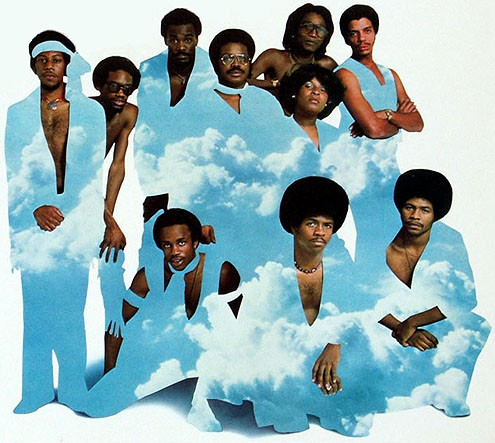

Lakeside

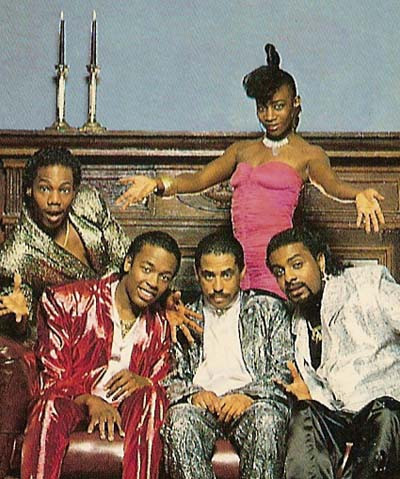
Ready For The World