Data may be outdated
Last updated: 9 months ago — Click refresh to get the latest statistics.
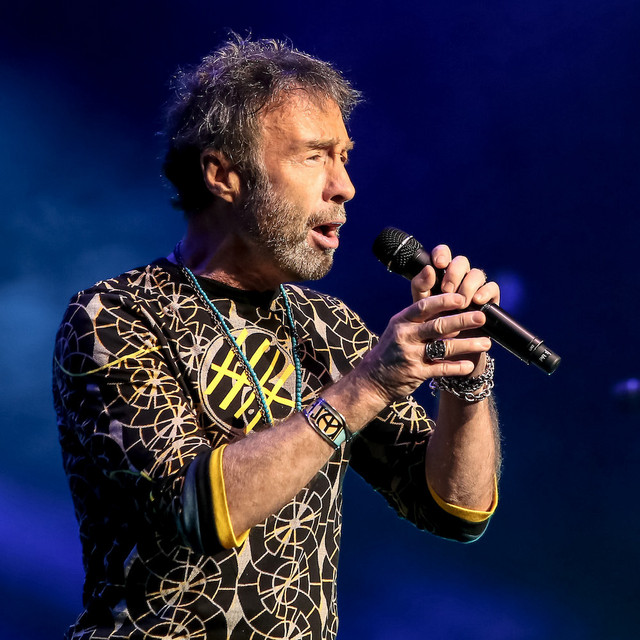
A muscular blues-rock singer who also possesses a gift for nuanced ballads, Paul Rodgers first tasted fame as the frontman for <a href="spotify:artist:2e53aHBQdCMKWqHDuyJsjC">Free</a>, an adventurous hard rock outfit that recorded the enduring rocker "All Right Now." His fame exponentially expanded in <a href="spotify:artist:5AEG63ajney2BoDXi0Vb84">Bad Company</a>, the group he founded with guitarist <a href="spotify:artist:0ImSWynVXHcxCrWffjZ278">Mick Ralphs</a> in 1973. Cutting the classic rock staples "Can't Get Enough," "Feel Like Makin' Love," and "Shooting Star," <a href="spotify:artist:5AEG63ajney2BoDXi0Vb84">Bad Company</a> was one of the biggest acts of the album rock era, yet Rodgers left the band behind in the early '80s, demonstrating a touch of creative wanderlust that served him well in the ensuing years. Rodgers had short-lived groups with both <a href="spotify:artist:36QJpDe2go2KgaRleHCDTp">Led Zeppelin</a> guitarist <a href="spotify:artist:55bGuHb50r5c0PeqqMeNBV">Jimmy Page</a> and <a href="spotify:artist:3v4feUQnU3VEUqFrjmtekL">Faces</a> drummer <a href="spotify:artist:57an2MaFNGGCWGF9oP7zDE">Kenny Jones</a>, eventually embarking on a solo career he put on pause to serve as the replacement for <a href="spotify:artist:4M1FpEWs2PeYfJe7xxJfhH">Freddie Mercury</a> in a reunited version of <a href="spotify:artist:1dfeR4HaWDbWqFHLkxsg1d">Queen</a> in the 2000s. Rodgers later resumed a solo career with 2018's Free Spirit and 2023's Midnight Rose, albums that drew upon all the different shades of rock he's made over the decades.
Rodgers credits his father for buying him a guitar in his youth, but he later taught himself bass and piano as well. He began writing songs when he was in his early teens, before he had mastered any instrument. Rodgers began playing out in clubs around Middlesborough, in northern England, when he was 13, taking singers like <a href="spotify:artist:2y8Jo9CKhJvtfeKOsYzRdT">Rod Stewart</a> as his role models. Right after he left school, he set out for London in a van with a band called <a href="spotify:artist:1zmG0iCbyM4rHwcR6SXnvU">the Roadrunners</a>. The van broke down en route, and while the other members hitchhiked back north, Rodgers went south to London. After a short time he returned home to his parents, who were supportive of his musical endeavors. But having witnessed the club scene in London, he became determined to go back and make his mark there.
One there, he formed the blues band Brown Sugar to see how far he could go as a vocalist, songwriter, and guitarist. In the mid- and late '60s, London was in the midst of a huge blues revival, and Rodgers had the opportunity to see <a href="spotify:artist:4y6J8jwRAwO4dssiSmN91R">Muddy Waters</a> and dozens of other American blues musicians perform at London's Marquee Club and other blues and R&B venues. Seeing <a href="spotify:artist:4y6J8jwRAwO4dssiSmN91R">Waters</a> live had a lasting effect on Rodgers, and his early experiments, Brown Sugar and <a href="spotify:artist:2e53aHBQdCMKWqHDuyJsjC">Free</a>, started out as blues bands.
Rodgers was working with Brown Sugar when guitarist <a href="spotify:artist:3RWZcKPLfAHGMwQ6prAnXP">Paul Kossoff</a> heard him sing. <a href="spotify:artist:3RWZcKPLfAHGMwQ6prAnXP">Kossoff</a> was so impressed with Rodgers' voice that the two decided to create a new band, joined by <a href="spotify:artist:0vKffNhiMY9sJ6lyOJL6NF">Simon Kirke</a> on drums and bassist <a href="spotify:artist:3N9UQPXdiusFPiz3MOf5PW">Andy Fraser</a>. After seeing them at the Nags Head Pub in Battersea, Britain's godfather of blues, <a href="spotify:artist:385tW2q0gMaQTkswc9lMSe">Alexis Korner</a>, suggested they call themselves <a href="spotify:artist:2e53aHBQdCMKWqHDuyJsjC">Free</a>. A song Rodgers co-wrote with <a href="spotify:artist:3N9UQPXdiusFPiz3MOf5PW">Fraser</a>, "All Right Now," hit number one in 20 territories around the world in 1970. The song remains a rock staple, having been entered into ASCAP's "One Million" airplay singles club. By the early '70s, <a href="spotify:artist:2e53aHBQdCMKWqHDuyJsjC">Free</a> was one of the biggest-selling British blues-rock groups; by the time the band dissolved in 1973, they had achieved an uncanny level of superstar success: they had sold more than 20 million albums around the world and played more than 700 arena and festival concerts.
In 1973, Rodgers formed <a href="spotify:artist:5AEG63ajney2BoDXi0Vb84">Bad Company</a>, then a prototype "supergroup," with <a href="spotify:artist:7M1FPw29m5FbicYzS2xdpi">King Crimson</a> bassist Boz Burrell, <a href="spotify:artist:6ysQi6NI88X627t2srsWz6">Mott the Hoople</a> guitarist <a href="spotify:artist:0ImSWynVXHcxCrWffjZ278">Mick Ralphs</a>, and <a href="spotify:artist:2e53aHBQdCMKWqHDuyJsjC">Free</a> drummer <a href="spotify:artist:0vKffNhiMY9sJ6lyOJL6NF">Simon Kirke</a>. This time, though, Rodgers learned from the mistakes he'd made with <a href="spotify:artist:2e53aHBQdCMKWqHDuyJsjC">Free</a>; he was determined to have bandmates who shared his musical vision -- the overnight success that <a href="spotify:artist:2e53aHBQdCMKWqHDuyJsjC">Free</a> experienced put undue pressures on the personalities in the band. Rodgers contacted Peter Grant, <a href="spotify:artist:36QJpDe2go2KgaRleHCDTp">Led Zeppelin</a>'s notorious manager, who was fortuitously starting <a href="spotify:search:label%3A%22Swan+Song+Records%22">Swan Song Records</a>, the group's vanity label. By the close of the '70s, <a href="spotify:artist:5AEG63ajney2BoDXi0Vb84">Bad Company</a> had recorded six multi-platinum albums, which spurred classic blues-rock and rock staples like "Can't Get Enough," "Feel Like Makin' Love," "Shooting Star," and "Rock 'n' Roll Fantasy." By the time <a href="spotify:artist:5AEG63ajney2BoDXi0Vb84">Bad Company</a> called it quits, they had played to over ten million people around the world and sold 30 million albums.
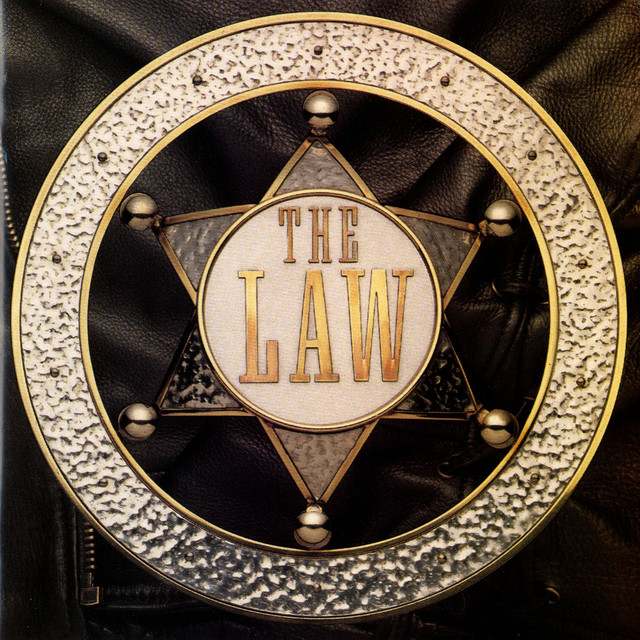
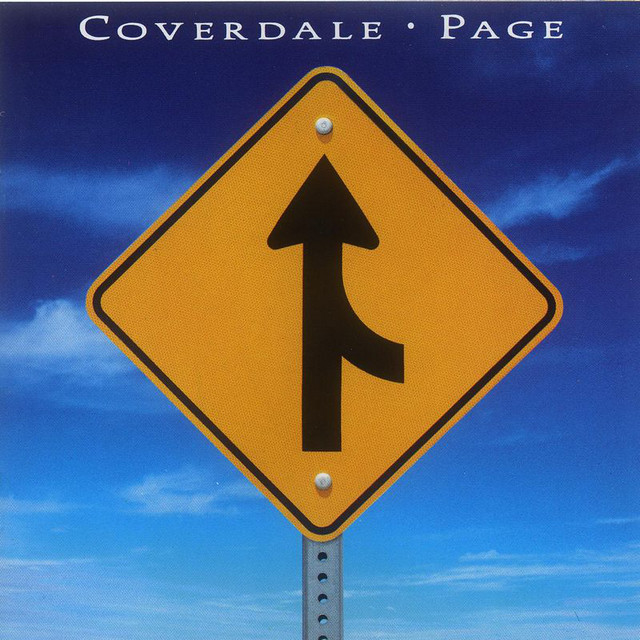
Other highlights of Rodgers' career include a showstopping version of <a href="spotify:artist:60df5JBRRPcnSpsIMxxwQm">Otis Redding</a>'s "(Sittin' On) The Dock of the Bay" at <a href="spotify:search:label%3A%22Atlantic+Records%22">Atlantic Records</a>' 40th anniversary party at Madison Square Garden in 1988, and his formation of a new group with <a href="spotify:artist:55bGuHb50r5c0PeqqMeNBV">Jimmy Page</a> of <a href="spotify:artist:36QJpDe2go2KgaRleHCDTp">Led Zeppelin</a>, <a href="spotify:artist:4rPZAvpw9ObVO3HFGWSHwt">the Firm</a>, in the mid-'80s. Following that band's two albums, Rodgers formed <a href="spotify:artist:5XVZwUzjQ1gbMnxJjqHQY3">the Law</a> with former <a href="spotify:artist:1YqGsKpdixxSVgpfaL2AEQ">Small Faces</a>/<a href="spotify:artist:67ea9eGLXYMsO2eYQRui3w">Who</a> drummer <a href="spotify:artist:57an2MaFNGGCWGF9oP7zDE">Kenny Jones</a>.
Since the early '80s, Rodgers has also released a number of solo albums. They include Cut Loose (1983) and The Morning After the Night Before/Northwind (1984), both for <a href="spotify:search:label%3A%22Atlantic%22">Atlantic</a>. His '90s output includes Muddy Water Blues: A Tribute to Muddy Waters (1993, Victory Records) and The Hendrix Set, a mini-CD released that same year. Muddy Water Blues was nominated for a Grammy and features guest performances by <a href="spotify:artist:4Cqia9vrAbm7ANXbJGXsTE">Slash</a>, <a href="spotify:artist:6uNjT2PKDfR7t48JKhajkh">Richie Sambora</a> of <a href="spotify:artist:58lV9VcRSjABbAbfWS6skp">Bon Jovi</a>, <a href="spotify:artist:0AD4odMWVQ2wUSlgxOB5Rl">Jeff Beck</a>, <a href="spotify:artist:7bMi7pddqeilAI6V9LWZaW">Steve Miller</a>, <a href="spotify:artist:2gCsNOpiBaMNh20jQ5prf0">Buddy Guy</a>, and <a href="spotify:artist:0k17h0D3J5VfsdmQ1iZtE9">Pink Floyd</a>'s <a href="spotify:artist:2FcC4sDMXme2ziI7tGKMK8">David Gilmour</a>. Rodgers then put together a backing band featuring guitarist <a href="spotify:artist:0HqUjGv9szHBJKc5vobOkj">Geoff Whitehorn</a>, bassist Jaz Lochrie, and drummer Jim Copley, and recorded Paul Rodgers Live (1996) and Paul Rodgers Now (1997) for the New York-based <a href="spotify:search:label%3A%22Velvel+Records%22">Velvel Records</a>.
After a <a href="spotify:artist:5AEG63ajney2BoDXi0Vb84">Bad Company</a> reunion in 1999, Rodgers switched over to <a href="spotify:search:label%3A%22CMC+International%22">CMC International</a>, issuing Electric in 2000. Taking a break from his solo career in the middle of the decade, Rodgers joined <a href="spotify:artist:2NcbLU1bW55eahD0UgD7U3">Brian May</a> and <a href="spotify:artist:2PZEd7yktruWruOqORRChA">Roger Taylor</a> in a version of <a href="spotify:artist:1dfeR4HaWDbWqFHLkxsg1d">Queen</a> for some live shows, one of which was documented on 2005's Return of the Champions, a double-disc on the <a href="spotify:search:label%3A%22Hollywood%22">Hollywood</a> label. In 2007 <a href="spotify:search:label%3A%22Eagle+Rock+Entertainment%22">Eagle Rock Entertainment</a> released a new solo album, Live in Glasgow, taken from an October 13, 2006 concert at Clyde Auditorium in Scotland. Released on both CD and DVD, it highlighted both <a href="spotify:artist:5AEG63ajney2BoDXi0Vb84">Bad Company</a> and <a href="spotify:artist:2e53aHBQdCMKWqHDuyJsjC">Free</a> material, some of which Rodgers hadn't performed in 35 years.
Rodgers continued to perform live with <a href="spotify:artist:1dfeR4HaWDbWqFHLkxsg1d">Queen</a> through the end of 2009. Not long afterward, he reunited with <a href="spotify:artist:5AEG63ajney2BoDXi0Vb84">Bad Company</a> for a 2010 tour that was documented on two separate live releases. Rodgers then returned to his solo career, releasing a collection of classic soul covers called The Royal Sessions early in 2014. Shortly afterward, Rodgers suffered a stroke. He managed to complete the 2018 album Free Spirit but in 2019, he had a second major stroke, followed by 11 minor strokes. After a successful endarterectomy, Rodgers made a full recovery and returned with Midnight Rose in 2023 -- an album where he sounds remarkably robust. ~ Richard Skelly, Rovi
Rodgers credits his father for buying him a guitar in his youth, but he later taught himself bass and piano as well. He began writing songs when he was in his early teens, before he had mastered any instrument. Rodgers began playing out in clubs around Middlesborough, in northern England, when he was 13, taking singers like <a href="spotify:artist:2y8Jo9CKhJvtfeKOsYzRdT">Rod Stewart</a> as his role models. Right after he left school, he set out for London in a van with a band called <a href="spotify:artist:1zmG0iCbyM4rHwcR6SXnvU">the Roadrunners</a>. The van broke down en route, and while the other members hitchhiked back north, Rodgers went south to London. After a short time he returned home to his parents, who were supportive of his musical endeavors. But having witnessed the club scene in London, he became determined to go back and make his mark there.
One there, he formed the blues band Brown Sugar to see how far he could go as a vocalist, songwriter, and guitarist. In the mid- and late '60s, London was in the midst of a huge blues revival, and Rodgers had the opportunity to see <a href="spotify:artist:4y6J8jwRAwO4dssiSmN91R">Muddy Waters</a> and dozens of other American blues musicians perform at London's Marquee Club and other blues and R&B venues. Seeing <a href="spotify:artist:4y6J8jwRAwO4dssiSmN91R">Waters</a> live had a lasting effect on Rodgers, and his early experiments, Brown Sugar and <a href="spotify:artist:2e53aHBQdCMKWqHDuyJsjC">Free</a>, started out as blues bands.
Rodgers was working with Brown Sugar when guitarist <a href="spotify:artist:3RWZcKPLfAHGMwQ6prAnXP">Paul Kossoff</a> heard him sing. <a href="spotify:artist:3RWZcKPLfAHGMwQ6prAnXP">Kossoff</a> was so impressed with Rodgers' voice that the two decided to create a new band, joined by <a href="spotify:artist:0vKffNhiMY9sJ6lyOJL6NF">Simon Kirke</a> on drums and bassist <a href="spotify:artist:3N9UQPXdiusFPiz3MOf5PW">Andy Fraser</a>. After seeing them at the Nags Head Pub in Battersea, Britain's godfather of blues, <a href="spotify:artist:385tW2q0gMaQTkswc9lMSe">Alexis Korner</a>, suggested they call themselves <a href="spotify:artist:2e53aHBQdCMKWqHDuyJsjC">Free</a>. A song Rodgers co-wrote with <a href="spotify:artist:3N9UQPXdiusFPiz3MOf5PW">Fraser</a>, "All Right Now," hit number one in 20 territories around the world in 1970. The song remains a rock staple, having been entered into ASCAP's "One Million" airplay singles club. By the early '70s, <a href="spotify:artist:2e53aHBQdCMKWqHDuyJsjC">Free</a> was one of the biggest-selling British blues-rock groups; by the time the band dissolved in 1973, they had achieved an uncanny level of superstar success: they had sold more than 20 million albums around the world and played more than 700 arena and festival concerts.
In 1973, Rodgers formed <a href="spotify:artist:5AEG63ajney2BoDXi0Vb84">Bad Company</a>, then a prototype "supergroup," with <a href="spotify:artist:7M1FPw29m5FbicYzS2xdpi">King Crimson</a> bassist Boz Burrell, <a href="spotify:artist:6ysQi6NI88X627t2srsWz6">Mott the Hoople</a> guitarist <a href="spotify:artist:0ImSWynVXHcxCrWffjZ278">Mick Ralphs</a>, and <a href="spotify:artist:2e53aHBQdCMKWqHDuyJsjC">Free</a> drummer <a href="spotify:artist:0vKffNhiMY9sJ6lyOJL6NF">Simon Kirke</a>. This time, though, Rodgers learned from the mistakes he'd made with <a href="spotify:artist:2e53aHBQdCMKWqHDuyJsjC">Free</a>; he was determined to have bandmates who shared his musical vision -- the overnight success that <a href="spotify:artist:2e53aHBQdCMKWqHDuyJsjC">Free</a> experienced put undue pressures on the personalities in the band. Rodgers contacted Peter Grant, <a href="spotify:artist:36QJpDe2go2KgaRleHCDTp">Led Zeppelin</a>'s notorious manager, who was fortuitously starting <a href="spotify:search:label%3A%22Swan+Song+Records%22">Swan Song Records</a>, the group's vanity label. By the close of the '70s, <a href="spotify:artist:5AEG63ajney2BoDXi0Vb84">Bad Company</a> had recorded six multi-platinum albums, which spurred classic blues-rock and rock staples like "Can't Get Enough," "Feel Like Makin' Love," "Shooting Star," and "Rock 'n' Roll Fantasy." By the time <a href="spotify:artist:5AEG63ajney2BoDXi0Vb84">Bad Company</a> called it quits, they had played to over ten million people around the world and sold 30 million albums.
Other highlights of Rodgers' career include a showstopping version of <a href="spotify:artist:60df5JBRRPcnSpsIMxxwQm">Otis Redding</a>'s "(Sittin' On) The Dock of the Bay" at <a href="spotify:search:label%3A%22Atlantic+Records%22">Atlantic Records</a>' 40th anniversary party at Madison Square Garden in 1988, and his formation of a new group with <a href="spotify:artist:55bGuHb50r5c0PeqqMeNBV">Jimmy Page</a> of <a href="spotify:artist:36QJpDe2go2KgaRleHCDTp">Led Zeppelin</a>, <a href="spotify:artist:4rPZAvpw9ObVO3HFGWSHwt">the Firm</a>, in the mid-'80s. Following that band's two albums, Rodgers formed <a href="spotify:artist:5XVZwUzjQ1gbMnxJjqHQY3">the Law</a> with former <a href="spotify:artist:1YqGsKpdixxSVgpfaL2AEQ">Small Faces</a>/<a href="spotify:artist:67ea9eGLXYMsO2eYQRui3w">Who</a> drummer <a href="spotify:artist:57an2MaFNGGCWGF9oP7zDE">Kenny Jones</a>.
Since the early '80s, Rodgers has also released a number of solo albums. They include Cut Loose (1983) and The Morning After the Night Before/Northwind (1984), both for <a href="spotify:search:label%3A%22Atlantic%22">Atlantic</a>. His '90s output includes Muddy Water Blues: A Tribute to Muddy Waters (1993, Victory Records) and The Hendrix Set, a mini-CD released that same year. Muddy Water Blues was nominated for a Grammy and features guest performances by <a href="spotify:artist:4Cqia9vrAbm7ANXbJGXsTE">Slash</a>, <a href="spotify:artist:6uNjT2PKDfR7t48JKhajkh">Richie Sambora</a> of <a href="spotify:artist:58lV9VcRSjABbAbfWS6skp">Bon Jovi</a>, <a href="spotify:artist:0AD4odMWVQ2wUSlgxOB5Rl">Jeff Beck</a>, <a href="spotify:artist:7bMi7pddqeilAI6V9LWZaW">Steve Miller</a>, <a href="spotify:artist:2gCsNOpiBaMNh20jQ5prf0">Buddy Guy</a>, and <a href="spotify:artist:0k17h0D3J5VfsdmQ1iZtE9">Pink Floyd</a>'s <a href="spotify:artist:2FcC4sDMXme2ziI7tGKMK8">David Gilmour</a>. Rodgers then put together a backing band featuring guitarist <a href="spotify:artist:0HqUjGv9szHBJKc5vobOkj">Geoff Whitehorn</a>, bassist Jaz Lochrie, and drummer Jim Copley, and recorded Paul Rodgers Live (1996) and Paul Rodgers Now (1997) for the New York-based <a href="spotify:search:label%3A%22Velvel+Records%22">Velvel Records</a>.
After a <a href="spotify:artist:5AEG63ajney2BoDXi0Vb84">Bad Company</a> reunion in 1999, Rodgers switched over to <a href="spotify:search:label%3A%22CMC+International%22">CMC International</a>, issuing Electric in 2000. Taking a break from his solo career in the middle of the decade, Rodgers joined <a href="spotify:artist:2NcbLU1bW55eahD0UgD7U3">Brian May</a> and <a href="spotify:artist:2PZEd7yktruWruOqORRChA">Roger Taylor</a> in a version of <a href="spotify:artist:1dfeR4HaWDbWqFHLkxsg1d">Queen</a> for some live shows, one of which was documented on 2005's Return of the Champions, a double-disc on the <a href="spotify:search:label%3A%22Hollywood%22">Hollywood</a> label. In 2007 <a href="spotify:search:label%3A%22Eagle+Rock+Entertainment%22">Eagle Rock Entertainment</a> released a new solo album, Live in Glasgow, taken from an October 13, 2006 concert at Clyde Auditorium in Scotland. Released on both CD and DVD, it highlighted both <a href="spotify:artist:5AEG63ajney2BoDXi0Vb84">Bad Company</a> and <a href="spotify:artist:2e53aHBQdCMKWqHDuyJsjC">Free</a> material, some of which Rodgers hadn't performed in 35 years.
Rodgers continued to perform live with <a href="spotify:artist:1dfeR4HaWDbWqFHLkxsg1d">Queen</a> through the end of 2009. Not long afterward, he reunited with <a href="spotify:artist:5AEG63ajney2BoDXi0Vb84">Bad Company</a> for a 2010 tour that was documented on two separate live releases. Rodgers then returned to his solo career, releasing a collection of classic soul covers called The Royal Sessions early in 2014. Shortly afterward, Rodgers suffered a stroke. He managed to complete the 2018 album Free Spirit but in 2019, he had a second major stroke, followed by 11 minor strokes. After a successful endarterectomy, Rodgers made a full recovery and returned with Midnight Rose in 2023 -- an album where he sounds remarkably robust. ~ Richard Skelly, Rovi
Monthly Listeners
100,309
Monthly Listeners History
Track the evolution of monthly listeners over the last 28 days.
Followers
56,965
Followers History
Track the evolution of followers over the last 28 days.
Top Cities

Related Artists

Paul Kype and Texas Flood