Data may be outdated
Last updated: 8 months ago — Click refresh to get the latest statistics.
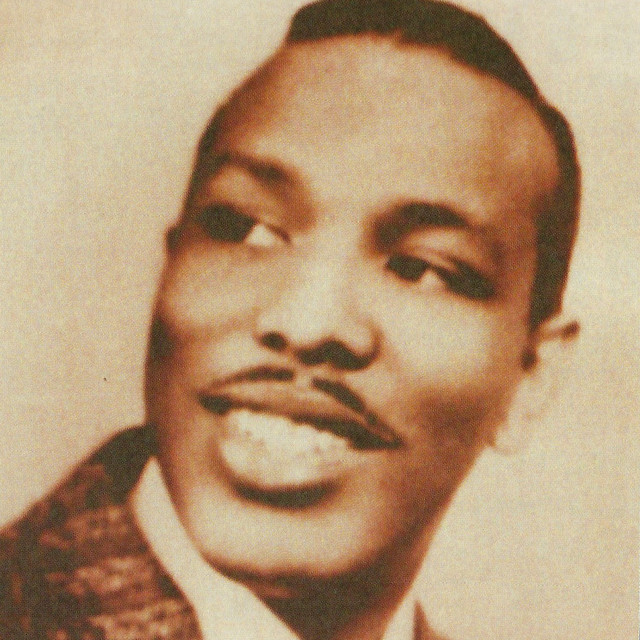
The contemporary blues boom resuscitated the career of many a veteran blues artist who had been silent for ages. Take guitarist Peppermint Harris, who in 1951 topped the R&B charts with his classic booze ode "I Got Loaded." Nobody expected a new Peppermint Harris CD in 1995, but <a href="spotify:search:label%3A%22Home+Cooking%22">Home Cooking</a> producer Roy C. Ames coaxed one out of old Pep for <a href="spotify:search:label%3A%22Collectables%22">Collectables</a> nonetheless. Texas on My Mind may not be as enthralling as Harris' early-'50s output, but it was nice to have him back in circulation. By the time he was in his early twenties, Harrison Nelson, Jr. was lucky enough to have found a mentor and friend on the Houston blues front: <a href="spotify:artist:6EZzVXM2uDRPmnHWq9yPDE">Lightnin' Hopkins</a> took an interest in the young man's musical development. When Harris was deemed ready, <a href="spotify:artist:6MNoS1yW9FWwlYFaGjkz72">Lightnin'</a> accompanied him to Houston's <a href="spotify:search:label%3A%22Gold+Star+Records%22">Gold Star Records</a>. Nothing came of that jaunt, but Harris eventually recorded his debut 78 for the company in 1948 (as Peppermint Nelson).
Bob Shad's <a href="spotify:search:label%3A%22Sittin%27+in+With%22">Sittin' in With</a> label was the vehicle that supplied Harris' early work to the masses -- especially his first major hit, "Raining in My Heart," in 1950. These weren't exactly formal sessions; one legend has it one took place in a Houston bordello. Nor was Shad too cognizant of Pep's surname; when he couldn't recall it, he simply renamed our man Harris.
Harris moved over to Eddie Mesner's <a href="spotify:search:label%3A%22Aladdin+Records%22">Aladdin Records</a> in 1951, cutting far tighter sides for the firm in Los Angeles (often with the ubiquitous Maxwell Davis serving as bandleader and saxist). After "I Got Loaded" lit up the charts in 1951, Harris indulged in one booze ode after another: "Have Another Drink and Talk to Me," "Right Back on It," "Three Sheets in the Wind." But try as they might, the bottle let Harris down as a lyrical launching pad after that.
He drifted from <a href="spotify:search:label%3A%22Money%22">Money</a> and Cash to <a href="spotify:search:label%3A%22RCA%22">RCA</a>'s short-lived subsidiary "<a href="spotify:search:label%3A%22X%22">X</a>" and Don Robey's <a href="spotify:search:label%3A%22Duke%22">Duke</a> logo (where he allegedly penned "As the Years Go Passing By" for <a href="spotify:artist:5WFeN8vtX0TYqv0IYVbWZT">Fenton Robinson</a>) after that, but it wasn't until a long-lasting association with Stan Lewis' Shreveport, Louisiana-based <a href="spotify:search:label%3A%22Jewel+Records%22">Jewel Records</a> commenced in 1965 that Harris landed for longer than a solitary single. Later, Harris worked various day jobs around Houston, including one at a record pressing plant, before moving to Sacramento, California, and then to New Jersey to be with his daughter. ~ Bill Dahl, Rovi
Bob Shad's <a href="spotify:search:label%3A%22Sittin%27+in+With%22">Sittin' in With</a> label was the vehicle that supplied Harris' early work to the masses -- especially his first major hit, "Raining in My Heart," in 1950. These weren't exactly formal sessions; one legend has it one took place in a Houston bordello. Nor was Shad too cognizant of Pep's surname; when he couldn't recall it, he simply renamed our man Harris.
Harris moved over to Eddie Mesner's <a href="spotify:search:label%3A%22Aladdin+Records%22">Aladdin Records</a> in 1951, cutting far tighter sides for the firm in Los Angeles (often with the ubiquitous Maxwell Davis serving as bandleader and saxist). After "I Got Loaded" lit up the charts in 1951, Harris indulged in one booze ode after another: "Have Another Drink and Talk to Me," "Right Back on It," "Three Sheets in the Wind." But try as they might, the bottle let Harris down as a lyrical launching pad after that.
He drifted from <a href="spotify:search:label%3A%22Money%22">Money</a> and Cash to <a href="spotify:search:label%3A%22RCA%22">RCA</a>'s short-lived subsidiary "<a href="spotify:search:label%3A%22X%22">X</a>" and Don Robey's <a href="spotify:search:label%3A%22Duke%22">Duke</a> logo (where he allegedly penned "As the Years Go Passing By" for <a href="spotify:artist:5WFeN8vtX0TYqv0IYVbWZT">Fenton Robinson</a>) after that, but it wasn't until a long-lasting association with Stan Lewis' Shreveport, Louisiana-based <a href="spotify:search:label%3A%22Jewel+Records%22">Jewel Records</a> commenced in 1965 that Harris landed for longer than a solitary single. Later, Harris worked various day jobs around Houston, including one at a record pressing plant, before moving to Sacramento, California, and then to New Jersey to be with his daughter. ~ Bill Dahl, Rovi
Monthly Listeners
2,704
Monthly Listeners History
Track the evolution of monthly listeners over the last 28 days.
Followers
1,089
Followers History
Track the evolution of followers over the last 28 days.
Top Cities
58 listeners
50 listeners

42 listeners

30 listeners

29 listeners
Related Artists










Danny Overbea