Data may be outdated
Last updated: 2 weeks ago — Click refresh to get the latest statistics.
The origins of Queen lay in the hard rock psychedelic group Smile, which guitarist <a href="spotify:artist:2NcbLU1bW55eahD0UgD7U3">Brian May</a> and drummer <a href="spotify:artist:2PZEd7yktruWruOqORRChA">Roger Taylor</a> joined in 1967. Following the departure of Smile's lead vocalist, <a href="spotify:artist:6EtRaGeodP9stdGz92vPtB">Tim Staffell</a>, in 1971, <a href="spotify:artist:2NcbLU1bW55eahD0UgD7U3">May</a> and <a href="spotify:artist:2PZEd7yktruWruOqORRChA">Taylor</a> formed a group with <a href="spotify:artist:4M1FpEWs2PeYfJe7xxJfhH">Freddie Mercury</a>, the former lead singer for Wreckage. Within a few months, bassist <a href="spotify:artist:6KrRVxAW7yvCYrO1ALqPG5">John Deacon</a> joined them, and they began rehearsing. Over the next two years, as all four members completed college, they simply rehearsed, playing just a handful of gigs. By 1973, they had begun to concentrate on their career, releasing their debut album, Queen, that year and setting out on their first tour. Produced by the band, along with <a href="spotify:artist:5UnZl2Izl86NC6yfVwG0CT">Roy Thomas Baker</a> and John Anthony, Queen was more or less a straight metal album and drew favorable comparisons to <a href="spotify:artist:36QJpDe2go2KgaRleHCDTp">Led Zeppelin</a>.
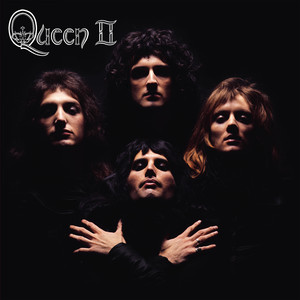
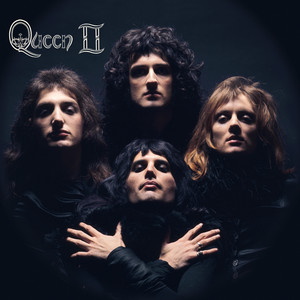
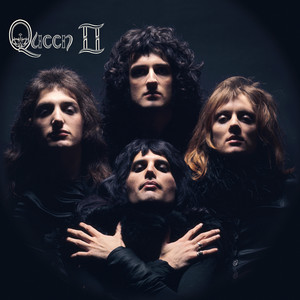
However, it was with their sophomore album, Queen II, that the band unexpectedly broke through in Britain in early 1974. Before its release, the band played Top of the Pops, performing "Seven Seas of Rhye." Both the song and the performance were smash successes, and the single rocketed into the Top Ten, setting the stage for Queen II to reach number five. Following its release, the group embarked on its first American tour, supporting <a href="spotify:artist:6ysQi6NI88X627t2srsWz6">Mott the Hoople</a>. On the strength of their campily dramatic performances, the album climbed to number 43 in the States.
Queen released their third album, Sheer Heart Attack, before the end of 1974. The music hall-meets-<a href="spotify:artist:36QJpDe2go2KgaRleHCDTp">Zeppelin</a> "Killer Queen" climbed to number two on the U.K. charts, taking the album to number two as well. Sheer Heart Attack made some inroads in America, setting the stage for the breakthrough of 1975's A Night at the Opera. Queen labored long and hard over the record; according to many reports, it was the most expensive rock record ever made at the time of its release. The first single, "Bohemian Rhapsody," became Queen's signature song, and with its bombastic, mock-operatic structure punctuated by heavy metal riffing, encapsulated their ambitious, genre-bending musical vision. To support "Bohemian Rhapsody," Queen shot one of the first conceptual music videos, and the gamble paid off as the single spent nine weeks at number one in England, breaking the record for the longest run at number one. The song and A Night at the Opera were equally successful in America, as the album climbed into the Top Ten and quickly went platinum.
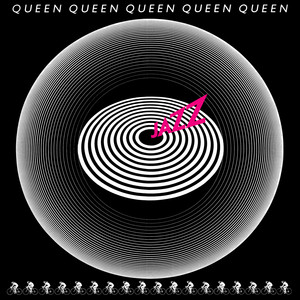
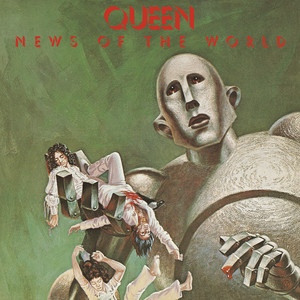
Following A Night at the Opera, Queen were established as superstars, yet they continued to work at a rapid rate. In the summer of 1976, they performed a free concert at London's Hyde Park that broke attendance records, and they released the hit single "Somebody to Love" a few months later. It was followed by A Day at the Races, which was essentially a scaled-down version of A Night at the Opera that reached number one in the U.K. and number five in the U.S. They continued to pile up hit singles in both Britain and America over the next five years, as each of their albums went into the Top Ten, always going gold and usually platinum in the process. Featuring the Top Five double-A-sided single "We Are the Champions"/"We Will Rock You," News of the World became a Top Ten hit in 1977. The following year, Jazz nearly replicated that success, with the single "Fat Bottomed Girls"/"Bicycle Race" becoming an international hit.
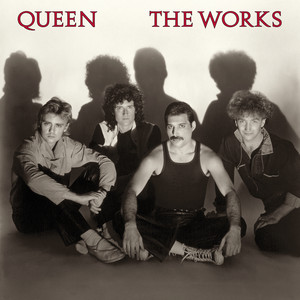
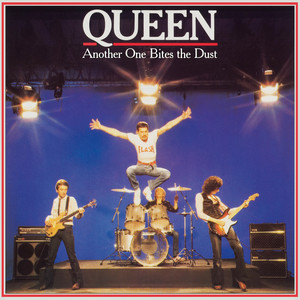
Queen were at the height of their popularity as they entered the '80s, releasing The Game, their most diverse album to date, in 1980. On the strength of two number one singles -- the rockabilly-inspired "Crazy Little Thing Called Love" and the disco-fied "Another One Bites the Dust" -- The Game became the group's first American number one album. Their largely instrumental soundtrack to Flash Gordon arrived later that same year. With the help of <a href="spotify:artist:0oSGxfWSnnOXhD2fKuz2Gy">David Bowie</a>, Queen were able to successfully compete with new wave with the 1981 hit single "Under Pressure" -- their first U.K. number one since "Bohemian Rhapsody" -- which was included both on 1981's Greatest Hits and 1982's Hot Space. Hot Space proved a moderate hit and paved the way for the more rock-oriented The Works, which arrived in 1984. Also a minor hit, it was buoyed the singles "Radio Ga Ga," "Hammer to Fall," and "I Want to Break Free." Shortly afterward, Queen left <a href="spotify:search:label%3A%22Elektra%22">Elektra</a> and signed with <a href="spotify:search:label%3A%22Capitol%22">Capitol</a>.
During this period, Queen began touring foreign markets, cultivating a large, dedicated fan base in Latin America, Asia, and Africa. In 1985, they returned to renewed popularity in Britain in the wake of their show-stopping performance at Live Aid. The following year, they released A Kind of Magic to strong European sales. It debuted at number one in the U.K. and remained there for over 60 weeks, spawning the singles "A Kind of Magic," "One Vision," "Friends Will Be Friends," and "Who Wants to Live Forever." The Miracle followed in 1989 and proved similarly successful, debuting at number one in the U.K. and cracking the Top 30 of the Billboard 200.
The group's 14th studio album, 1991's Innuendo, was greeted even more favorably, going gold and peaking at number 30 in the U.S. It was a far bigger success in Europe, entering the U.K. charts at number one. However, by 1991, Queen had drastically scaled back their activity, causing rumors to circulate about <a href="spotify:artist:4M1FpEWs2PeYfJe7xxJfhH">Freddie Mercury</a>'s health. On November 23, the singer issued a statement confirming that he had AIDS. <a href="spotify:artist:4M1FpEWs2PeYfJe7xxJfhH">Mercury</a> died the next day from bronchial pneumonia resulting from his illness. The following spring, the remaining members of Queen held a memorial concert at Wembley Stadium that was broadcast to an international audience of more than one billion. Featuring such guest artists as <a href="spotify:artist:0oSGxfWSnnOXhD2fKuz2Gy">David Bowie</a>, <a href="spotify:artist:3PhoLpVuITZKcymswpck5b">Elton John</a>, <a href="spotify:artist:5MspMQqdVbdwP6ax3GXqum">Annie Lennox</a>, <a href="spotify:artist:6H1RjVyNruCmrBEWRbD0VZ">Def Leppard</a>, and <a href="spotify:artist:3qm84nBOXUEQ2vnTfUTTFC">Guns N' Roses</a>, the concert raised millions for the Mercury Phoenix Trust, which was established for AIDS awareness. The concert coincided with a revival of interest in "Bohemian Rhapsody," which climbed to number two in the U.S. and number one in the U.K. in the wake of its appearance in the Mike Myers comedy Wayne's World.
Following <a href="spotify:artist:4M1FpEWs2PeYfJe7xxJfhH">Mercury</a>'s death, the remaining members of Queen were fairly quiet. <a href="spotify:artist:2NcbLU1bW55eahD0UgD7U3">Brian May</a> released his second solo album, Back to the Light, in 1993, ten years after the release of his first record. <a href="spotify:artist:2PZEd7yktruWruOqORRChA">Roger Taylor</a> cut a few albums with the Cross, which he had been playing with since 1987, while <a href="spotify:artist:6KrRVxAW7yvCYrO1ALqPG5">Deacon</a> essentially retired. The three reunited in 1994 to record backing tapes for vocal tracks <a href="spotify:artist:4M1FpEWs2PeYfJe7xxJfhH">Mercury</a> recorded on his deathbed. The resulting album, Made in Heaven, was released in 1995 to strong sales, particularly in Europe. Crown Jewels, a box set repackaging their first eight LPs, followed in 1998. Archival live recordings, DVDs, and compilations continued to appear into the new millennium.
The Queen name was revived in 2005, but this time with "+ <a href="spotify:artist:2gaWNB3YrlTc0KRlHNqhol">Paul Rodgers</a>" appended to it. <a href="spotify:artist:2gaWNB3YrlTc0KRlHNqhol">Rodgers</a>, the former lead singer of <a href="spotify:artist:2e53aHBQdCMKWqHDuyJsjC">Free</a> and <a href="spotify:artist:5AEG63ajney2BoDXi0Vb84">Bad Company</a>, joined <a href="spotify:artist:2NcbLU1bW55eahD0UgD7U3">Brian May</a> and <a href="spotify:artist:2PZEd7yktruWruOqORRChA">Roger Taylor</a> (<a href="spotify:artist:6KrRVxAW7yvCYrO1ALqPG5">John Deacon</a> remained retired) for several live shows, one of which was documented on 2005's Return of the Champions, a double-disc release issued by the <a href="spotify:search:label%3A%22Hollywood%22">Hollywood</a> label. International touring continued, as did a new studio album featuring <a href="spotify:artist:2gaWNB3YrlTc0KRlHNqhol">Rodgers</a>' vocals. Released under the "Queen + <a href="spotify:artist:2gaWNB3YrlTc0KRlHNqhol">Paul Rodgers</a>" tag, The Cosmos Rocks appeared in September 2008, followed by an American release one month later. Reception was decidedly mixed. <a href="spotify:artist:2gaWNB3YrlTc0KRlHNqhol">Rodgers</a> departed Queen in 2009 and in his wake came a new compilation called Absolute Greatest.
TV appearances followed over the next two years, including a spot on the 2009 American Idol finale where they performed with <a href="spotify:artist:6prmLEyn4LfHlD9NnXWlf7">Adam Lambert</a>, and in 2010 Queen wound up leaving their home of <a href="spotify:search:label%3A%22EMI%22">EMI</a> for <a href="spotify:search:label%3A%22Island%22">Island</a>, which brought all of the group's recordings to <a href="spotify:search:label%3A%22Universal+Records%22">Universal Records</a>. A new round of reissues followed in 2011, along with a performance with <a href="spotify:artist:6prmLEyn4LfHlD9NnXWlf7">Lambert</a> at the MTV Europe Music Awards, and the vocalist soon became a fixture with the band, as Queen performed several big concerts and television performances in 2012 and 2013, followed by a full tour in 2014. Also that year, Queen released another compilation, Queen Forever, which was anchored by reworked versions of three old songs, including a solo number by <a href="spotify:artist:4M1FpEWs2PeYfJe7xxJfhH">Mercury</a> where he duetted with <a href="spotify:artist:3fMbdgg4jU18AjLCKBhRSm">Michael Jackson</a>. The archival live album, A Night at the Odeon, featuring the band's 1975 Christmas Eve performance at London's Hammersmith Odeon, appeared in 2015.
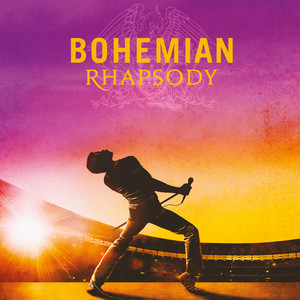
Over the next two years, the band stayed active, appearing live with <a href="spotify:artist:6prmLEyn4LfHlD9NnXWlf7">Lambert</a>. In 2018, Queen was the subject of the biopic Bohemian Rhapsody, which starred Rami Malek as <a href="spotify:artist:4M1FpEWs2PeYfJe7xxJfhH">Freddie Mercury</a>. The band contributed to the soundtrack, which featured classic tracks as well as live recordings and several songs reworked for the film. Bohemian Rhapsody became an international hit and took home four Academy Awards, including Malek's award for Best Actor.
A concert collection featuring <a href="spotify:artist:6prmLEyn4LfHlD9NnXWlf7">Lambert</a>, Live Around the World, arrived in October 2020 but the next major Queen project was an elaborate Collector's Edition reissue of The Miracle. The 1989 album was expanded into a five-CD set containing additional Blu-Rays, DVDs and LPs, all featuring previously unheard material, such as the <a href="spotify:artist:4M1FpEWs2PeYfJe7xxJfhH">Mercury</a>-sung "Face It Alone," which was released as a single prior to the box's October 2022 release. The band continued to tour semi-regularly with <a href="spotify:artist:6prmLEyn4LfHlD9NnXWlf7">Lambert</a> as vocalist, hitting North America in 2023 and Japan in early 2024.~ Stephen Thomas Erlewine
Monthly Listeners
48.5 million
Monthly Listeners History
Track the evolution of monthly listeners over the last 28 days.
Followers
58.4 million
Followers History
Track the evolution of followers over the last 28 days.
Total Streams
30.4 billion
Total Streams History
Track the evolution of total streams over the last 28 days. This data is calculated from all tracks listed in the artist's discography.
Top Cities


Related Artists
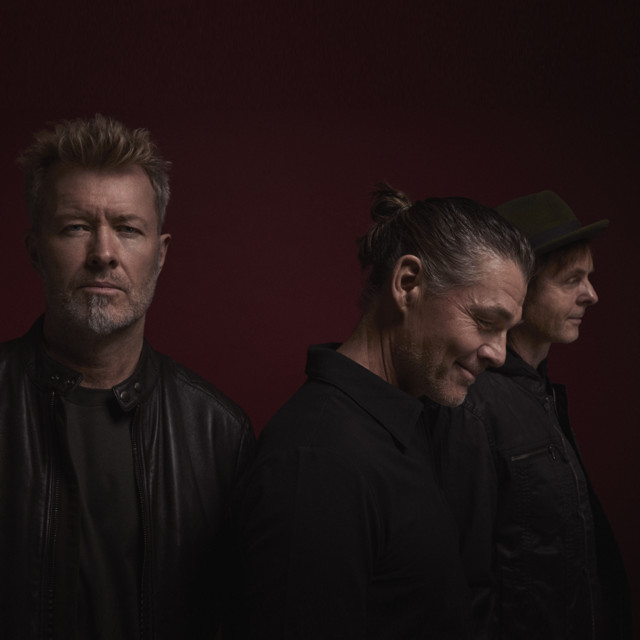
a-ha

Dave Stewart

Earth, Wind & Fire
The Animals