Genre
groove metal
Top Groove metal Artists
Showing 25 of 1,085 artists



About Groove metal
Groove metal is a heavy, mid-tempo extension of thrash and alternative metal that centers around thick, down-tuned guitar riffs and a contagious sense of rhythm. It emphasizes groove over speed, striding forward with swaggering, palm-muted chugs, snare-forward drumming, and a swaggering vocal delivery. The result is a muscular, you-can-feel-it-on-the-bone heaviness that invites head-nodding and foot-stomping in equal measure. While its roots lie in late-1980s metal, the genre truly crystallized in the early 1990s, when a new generation of bands fused precision riffing with punishing grooves.
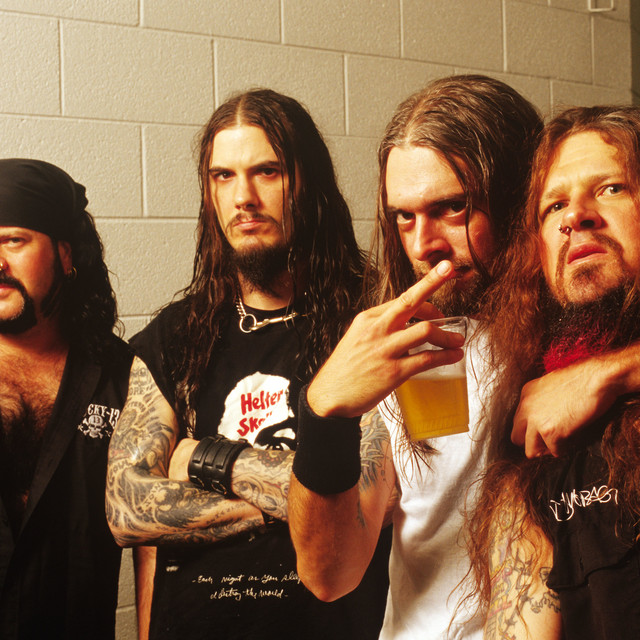
The birth of groove metal is most closely associated with Pantera, whose early-1990s work redefined heavy music. Cowboys from Hell (1990) showcased a tightened, groove-forward approach that blended thrash’s aggression with pounding, hypnotic rhythm sections. Its follow-up, Vulgar Display of Power (1992), hardened the formula—down-tuned guitars, pummeling mid-tempo riffs, and a relentless, crowd-chantable momentum that became a blueprint for countless bands. Pantera’s success helped propel groove metal from a niche descriptor into a recognizable subgenre, capable of stadium-size impact while maintaining serious musical bite.
Beyond Pantera, the 1990s produced several bands that expanded and codified the sound. Down, the New Orleans supergroup led by Phil Anselmo, fused southern sludge with the groove sensibility, culminating in the 1995 album NOLA, a watershed record that married heavy, swampy atmosphere to infectious, groove-driven riffs. Helmet and Prong laid early groundwork for groove’s emphasis on rhythm and space—tight, angular riffs that still moved with a natural, piston-like cadence. Sepultura expanded groove into a global context with Chaos A.D. (1993) and Roots (1996), integrating tribal textures and a thick, percussive weight that influenced countless non-American acts and helped internationalize the style.
As the 2000s rolled in, the genre diversified, while retaining its core attributes. Lamb of God became one of groove metal’s most successful torchbearers in the United States, pairing brutal, extended riff cycles with relentless, syncopated grooves on albums like New American Gospel (2000) and Ashes of the Wake (2004). Machine Head’s shift in the late 1990s and early 2000s—rhythmic, groove-centric riffs embedded in a thrash/death metal framework—kept the flame alive for a new generation. Bands across Europe, Brazil, and beyond absorbed the groove-centric approach, producing a global wave of acts that honored the stamp Pantera had left on the scene.
Geographically, groove metal has enjoyed its strongest footholds in the United States—particularly the Southern and Texas scenes that gave it birth—and in Brazil, where Sepultura’s legacy and the broader metal community sustained the heavier, groove-driven approach. It also found fervent listeners in Europe (notably the UK, Germany, and Scandinavia) and in Japan, where fans gravitated to its molecular mass and chant-ready hooks. Today, groove metal persists as a flexible umbrella for bands that mix aggressive rhythm, heavy downtuned sonics, and a persistent, almost hypnotic groove, inviting listeners to lose themselves in a forward-driving, almost primal metal experience.
The birth of groove metal is most closely associated with Pantera, whose early-1990s work redefined heavy music. Cowboys from Hell (1990) showcased a tightened, groove-forward approach that blended thrash’s aggression with pounding, hypnotic rhythm sections. Its follow-up, Vulgar Display of Power (1992), hardened the formula—down-tuned guitars, pummeling mid-tempo riffs, and a relentless, crowd-chantable momentum that became a blueprint for countless bands. Pantera’s success helped propel groove metal from a niche descriptor into a recognizable subgenre, capable of stadium-size impact while maintaining serious musical bite.
Beyond Pantera, the 1990s produced several bands that expanded and codified the sound. Down, the New Orleans supergroup led by Phil Anselmo, fused southern sludge with the groove sensibility, culminating in the 1995 album NOLA, a watershed record that married heavy, swampy atmosphere to infectious, groove-driven riffs. Helmet and Prong laid early groundwork for groove’s emphasis on rhythm and space—tight, angular riffs that still moved with a natural, piston-like cadence. Sepultura expanded groove into a global context with Chaos A.D. (1993) and Roots (1996), integrating tribal textures and a thick, percussive weight that influenced countless non-American acts and helped internationalize the style.
As the 2000s rolled in, the genre diversified, while retaining its core attributes. Lamb of God became one of groove metal’s most successful torchbearers in the United States, pairing brutal, extended riff cycles with relentless, syncopated grooves on albums like New American Gospel (2000) and Ashes of the Wake (2004). Machine Head’s shift in the late 1990s and early 2000s—rhythmic, groove-centric riffs embedded in a thrash/death metal framework—kept the flame alive for a new generation. Bands across Europe, Brazil, and beyond absorbed the groove-centric approach, producing a global wave of acts that honored the stamp Pantera had left on the scene.
Geographically, groove metal has enjoyed its strongest footholds in the United States—particularly the Southern and Texas scenes that gave it birth—and in Brazil, where Sepultura’s legacy and the broader metal community sustained the heavier, groove-driven approach. It also found fervent listeners in Europe (notably the UK, Germany, and Scandinavia) and in Japan, where fans gravitated to its molecular mass and chant-ready hooks. Today, groove metal persists as a flexible umbrella for bands that mix aggressive rhythm, heavy downtuned sonics, and a persistent, almost hypnotic groove, inviting listeners to lose themselves in a forward-driving, almost primal metal experience.