We are currently migrating our data. We expect the process to take 24 to 48 hours before everything is back to normal.

Last updated: 6 hours ago

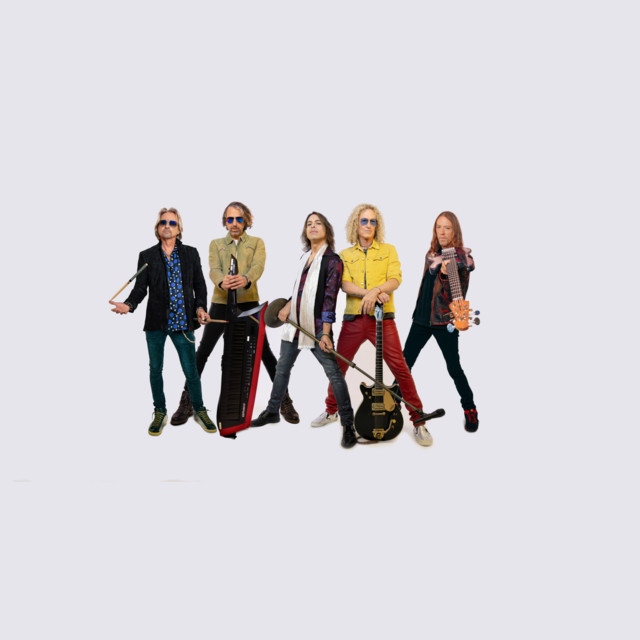
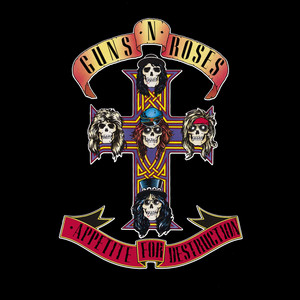
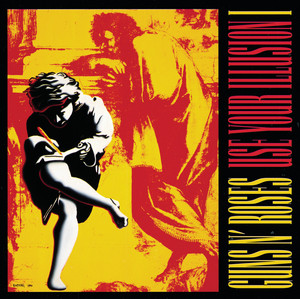
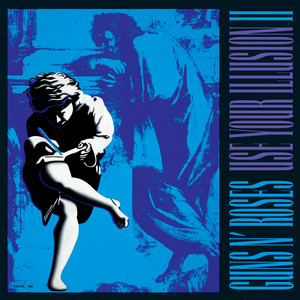
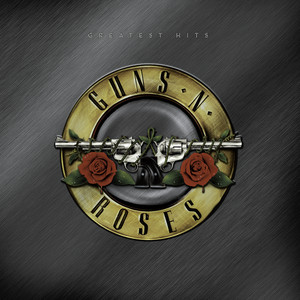
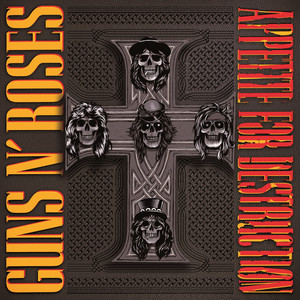
Guns N' Roses are the bridge separating 1980s and 1990s hard rock, the band responsible for ushering in an era of grim, gritty rock & roll. Where such peers as <a href="spotify:artist:0cc6vw3VN8YlIcvr1v7tBL">Mötley Crüe</a> reveled in the decadence of Sunset Strip sleaze, Guns N' Roses focused on the grimy underbelly of the urban jungle, with guitarists <a href="spotify:artist:4Cqia9vrAbm7ANXbJGXsTE">Slash</a> and <a href="spotify:artist:6EZFa5zhajrKobEc3uePtM">Izzy Stradlin</a> cranking out mean riffs that matched the dark fantasies of <a href="spotify:artist:6lig3yUbu7r6VhnB8YGSlF">Axl Rose</a>, the vocalist who led GNR with a serpentine charm. <a href="spotify:artist:6lig3yUbu7r6VhnB8YGSlF">Rose</a> countered his nasty tendencies with a romantic side, one that flourished on "Sweet Child O' Mine," the soaring ballad that went to number one in 1988, turning the band into superstars in the process. Over the next few years, GNR's 1987 debut album, Appetite for Destruction, sold in monstrous numbers, with "Welcome to the Jungle" and "Paradise City" both reaching Billboard's Top Ten and "Patience," from the 1989 EP GNR Lies, also reaching that exalted position. During this peak, Guns N' Roses were lightning rods for controversy, so they avoided trouble by whiling away in the studio crafting their sequel to Appetite for Destruction, the sprawling twin albums Use Your Illusion I and Use Your Illusion II. Released simultaneously in September 1991, the Illusions still were rooted in hard rock, but <a href="spotify:artist:6lig3yUbu7r6VhnB8YGSlF">Rose</a> also pursued majestic, melodramatic balladry, a trait that reached its apotheosis in "November Rain," a ballad that became their last Top Ten hit in 1992. By that point, Guns N' Roses were no longer the paragons of grubby hard rock, not after <a href="spotify:artist:6olE6TJLqED3rqDCT0FyPh">Nirvana</a> ushered in the grunge revolution of the early '90s. The rise of alternative rock coincided with the erosion of the original GNR lineup, a slow attrition that left <a href="spotify:artist:6lig3yUbu7r6VhnB8YGSlF">Axl Rose</a> as the lone remaining founding member by the end of the '90s. He spent much of the 2000s working on his magnum opus Chinese Democracy, which he delivered in 2008, by which point the group were so out of the mainstream that they weren't even considered retro-hip. The situation would eventually change. By 2015, <a href="spotify:artist:4Cqia9vrAbm7ANXbJGXsTE">Slash</a> and bassist <a href="spotify:artist:3KEe5d2p5jKihMMvuXVhr1">Duff McKagan</a> rejoined Guns N Roses, providing the band with a core of original members that would help this be a stable lineup into the 2020s, when the group showed signs of returning to active recording status via the 2022 EP Hard Skool.

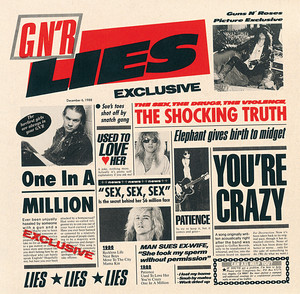
Guns N' Roses released their first EP in 1986, which led to a contract with <a href="spotify:search:label%3A%22Geffen%22">Geffen</a>; the following year, the band released their debut album, Appetite for Destruction. They started to build a following with their numerous live shows, but the album didn't start selling until almost a year later, when MTV began playing "Sweet Child O' Mine." Soon, both the album and single shot to number one, and Guns N' Roses became one of the biggest bands in the world. Their debut single, "Welcome to the Jungle," was re-released and shot into the Top Ten, and "Paradise City" followed in its footsteps. By the end of 1988, they released G N' R Lies, which paired four new, acoustic-based songs (including the Top Five hit "Patience") with their first EP. G N' R Lies' inflammatory closer, "One in a Million," sparked intense controversy, as <a href="spotify:artist:6lig3yUbu7r6VhnB8YGSlF">Rose</a> slipped into misogyny, bigotry, and pure violence; essentially, he somehow managed to distill every form of prejudice and hatred into one five-minute tune.

Guns N' Roses began work on the long-awaited follow-up to Appetite for Destruction at the end of 1990. In October of that year, the band fired <a href="spotify:artist:1bqTpELuDurfcMOGKvJXzl">Adler</a>, claiming that his drug dependency caused him to play poorly; he was replaced by <a href="spotify:artist:1icjlI6iYtR1JjXTJLf4gG">Matt Sorum</a> from <a href="spotify:artist:49DW3KvkyjHO35mK1JnSyS">the Cult</a>. During recording, the band added Dizzy Reed on keyboards. By the time the sessions were finished, the new album had become two new albums. After being delayed for nearly a year, the albums Use Your Illusion I and Use Your Illusion II were released in September 1991. Messy but fascinating, the records showcased a more ambitious band; while there were still a fair number of full-throttle guitar rockers, there were stabs at <a href="spotify:artist:3PhoLpVuITZKcymswpck5b">Elton John</a>-style balladry, acoustic blues, horn sections, female backup singers, ten-minute art rock epics with several different sections, and a good number of introspective, soul-searching lyrics. In short, Guns N' Roses were now making art; amazingly, they were successful at it. The albums sold very well initially, but while they had seemed destined to set the pace for the decade to come, that turned out not to be the case at all.

<a href="spotify:artist:6olE6TJLqED3rqDCT0FyPh">Nirvana</a>'s Nevermind hit number one in early 1992, suddenly making Guns N' Roses -- with all of their pretensions, impressionistic videos, models, and rock star excesses -- seem very uncool. <a href="spotify:artist:6lig3yUbu7r6VhnB8YGSlF">Rose</a> handled the change by becoming a dictator, or at least a petty tyrant; his in-concert temper tantrums became legendary, even going so far as to incite a riot in Montreal. <a href="spotify:artist:6EZFa5zhajrKobEc3uePtM">Stradlin</a> left by the end of 1991, and with his departure the band lost their best songwriter; he was replaced by ex-<a href="spotify:artist:2kKd8kwqemHlbIWZ3eTgf5">Kills for Thrills</a> guitarist <a href="spotify:artist:6Ya7kAthUWvVuSQBX0oIMx">Gilby Clarke</a>. GNR didn't fully grasp the shift in hard rock until 1993, when they released an album of punk covers, The Spaghetti Incident?; it received some good reviews, but the band failed to capture the reckless spirit of not only the original versions but their own Appetite for Destruction. By the middle of 1994, there were rumors flying that GNR were about to break up, since <a href="spotify:artist:6lig3yUbu7r6VhnB8YGSlF">Rose</a> wanted to pursue a new, more industrial direction and <a href="spotify:artist:4Cqia9vrAbm7ANXbJGXsTE">Slash</a> wanted to stick with their blues-inflected hard rock. The band remained in limbo for several more years, and <a href="spotify:artist:4Cqia9vrAbm7ANXbJGXsTE">Slash</a> resurfaced in 1995 with the side project <a href="spotify:artist:4Ros83hWMCi68biw25Xyxg">Slash's Snakepit</a> and an LP, It's Five O'Clock Somewhere.

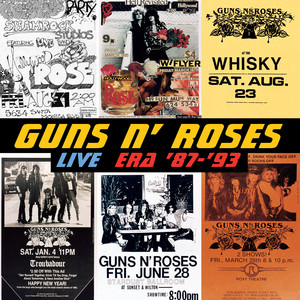
<a href="spotify:artist:6lig3yUbu7r6VhnB8YGSlF">Rose</a> remained out of the spotlight, becoming a virtual recluse and doing nothing but tinkering in the studio; he also recruited various musicians -- including <a href="spotify:artist:3JTMBiL0Bmrxv41WJ8V8cu">Dave Navarro</a>, <a href="spotify:artist:0o1eC2L6gOIyKwkAtxVAWH">Tommy Stinson</a>, and ex-<a href="spotify:artist:0X380XXQSNBYuleKzav5UO">Nine Inch Nails</a> guitarist Robin Finck -- for informal jam sessions. Remaining members were infuriated by <a href="spotify:artist:6lig3yUbu7r6VhnB8YGSlF">Rose</a>'s inclusion of childhood friend Paul Huge in the new sessions when both <a href="spotify:artist:6EZFa5zhajrKobEc3uePtM">Stradlin</a> and <a href="spotify:artist:6Ya7kAthUWvVuSQBX0oIMx">Clarke</a> were excluded from rejoining the band. And a remake of <a href="spotify:artist:22bE4uQ6baNwSHPVcDxLCe">the Rolling Stones</a>' "Sympathy for the Devil" was essentially the straw that broke the camel's back, as <a href="spotify:artist:6lig3yUbu7r6VhnB8YGSlF">Rose</a> cut out some of the other members' contributions and pasted Huge over the song without consulting anyone else. By 1996, <a href="spotify:artist:4Cqia9vrAbm7ANXbJGXsTE">Slash</a> was officially out of Guns N' Roses, leaving <a href="spotify:artist:6lig3yUbu7r6VhnB8YGSlF">Rose</a> the lone remaining survivor from the group's heyday; rumors continued to swirl, and still no new material was forthcoming, though <a href="spotify:artist:6lig3yUbu7r6VhnB8YGSlF">Rose</a> did re-record Appetite for Destruction with a new lineup for rehearsal purposes. The first new original GNR song in eight years, the industrial metal track "Oh My God" finally appeared on the soundtrack to the 1999 Arnold Schwarzenegger film End of Days. Soon after, <a href="spotify:search:label%3A%22Geffen%22">Geffen</a> issued the two-disc Live Era: '87-'93.

The year 2000 brought the addition of guitarists Robin Finck (of <a href="spotify:artist:0X380XXQSNBYuleKzav5UO">Nine Inch Nails</a>) and <a href="spotify:artist:0fDF0jjmdouCIeWhNnblwV">Buckethead</a>, and 2001 was greeted with Guns N' Roses' first live dates in nearly seven years, as the band (which consisted of <a href="spotify:artist:6lig3yUbu7r6VhnB8YGSlF">Rose</a> plus guitarists Finck and <a href="spotify:artist:0fDF0jjmdouCIeWhNnblwV">Buckethead</a>, bassist <a href="spotify:artist:0o1eC2L6gOIyKwkAtxVAWH">Stinson</a>, former <a href="spotify:artist:64mPnRMMeudAet0E62ypkx">Primus</a> drummer Brian "Brain" Mantia, childhood friend and guitarist Paul Huge, and longtime GNR keyboardist Dizzy Reed) played a show on New Year's Eve 2000 in Las Vegas; they also performed at the mammoth Rock in Rio festival the following month. On New Year's Eve 2001, the band played almost the exact same set as the year before.

An appearance at MTV's 2002 Video Music Awards helped garner interest in the new lineup, but a rusty performance from <a href="spotify:artist:6lig3yUbu7r6VhnB8YGSlF">Rose</a> and an interview where he said his new album wasn't coming out anytime soon didn't do much to further their cause. That summer, GNR started on their first tour in almost eight years, and they managed to fulfill all of their commitments in Europe and Asia. Sadly, they caused a violent and destructive riot in Vancouver when <a href="spotify:artist:6lig3yUbu7r6VhnB8YGSlF">Rose</a> failed to show up for the first date of their North American tour. While he was up to his old shenanigans with the retooled lineup, former <a href="spotify:artist:2UazAtjfzqBF0Nho2awK4z">Stone Temple Pilots</a> vocalist <a href="spotify:artist:0RMOWaq3zw0fdgvaGRMcdA">Scott Weiland</a>, <a href="spotify:artist:4Cqia9vrAbm7ANXbJGXsTE">Slash</a>, <a href="spotify:artist:1icjlI6iYtR1JjXTJLf4gG">Sorum</a>, and <a href="spotify:artist:3KEe5d2p5jKihMMvuXVhr1">McKagan</a> formed the successful <a href="spotify:artist:7CHilrn81OdYjkh4uSVnYM">Velvet Revolver</a> in spring 2002.

And so years passed and still no new GNR album, to the point where it became one joke too many. The album was long billed as Chinese Democracy, and occasionally session recordings would leak and make their way onto Internet file-sharing networks. A fascinating article written by Jeff Leeds for The New York Times, published in March 2005, revealed how tangled and costly the making of the album had become. According to the article, titled "The Most Expensive Album Never Released," <a href="spotify:artist:6lig3yUbu7r6VhnB8YGSlF">Rose</a> began work on the album in 1994 and racked up production costs of at least 13 million dollars. Producers involved with the album at one time or another included <a href="spotify:artist:71qdlkRTIt3NCSzshqqL4W">Mike Clink</a>, <a href="spotify:artist:1zf3mY5ZJ69hlt5W24EvYq">Youth</a>, Sean Beavan, and even <a href="spotify:artist:5UnZl2Izl86NC6yfVwG0CT">Roy Thomas Baker</a>. (Curiously, <a href="spotify:artist:3OsRAKCvk37zwYcnzRf5XF">Moby</a> claimed to have been offered the job as well.) <a href="spotify:artist:7yAPsqNhqqsTGsuOSZJg0i">Marco Beltrami</a> and <a href="spotify:artist:3SwPvWceyvNGebkPe2yPKD">Paul Buckmaster</a> were allegedly brought in for orchestral arrangements, and there was a revolving door of guitarists; <a href="spotify:artist:0fDF0jjmdouCIeWhNnblwV">Buckethead</a> left the band in 2004, and <a href="spotify:artist:1pfObbpsH1DmojbIUv2qfs">Ron "Bumblefoot" Thal</a> eventually took his place. In 2006, the record seemed closer to release, as <a href="spotify:artist:6lig3yUbu7r6VhnB8YGSlF">Rose</a> began surfacing in public and even took his band on the road for some shows. The music industry's biggest boondoggle finally bore fruit in 2008, when <a href="spotify:artist:6lig3yUbu7r6VhnB8YGSlF">Axl</a> unveiled an album that was well over a decade in the making. While Chinese Democracy received many rave reviews, and the critical response was positive overall, the record underperformed (its almost impossible) expectations, debuting at number three on the Billboard 200 when it came out in November. A worldwide tour followed.

Guitarist <a href="spotify:artist:0eJ47F21cSoOL7T8yieuHh">DJ Ashba</a> of <a href="spotify:artist:3886aFez2HDLkio5tUzmP6">Sixx:A.M.</a> joined Guns N' Roses in 2009, and the band continued working on new material and playing shows, with some of the group's former members occasionally dropping in for guest appearances. In 2012, GNR's classic lineup was inducted into the Rock & Roll Hall of Fame, and <a href="spotify:artist:4Cqia9vrAbm7ANXbJGXsTE">Slash</a>, <a href="spotify:artist:3KEe5d2p5jKihMMvuXVhr1">McKagan</a>, <a href="spotify:artist:6Ya7kAthUWvVuSQBX0oIMx">Clarke</a>, <a href="spotify:artist:1bqTpELuDurfcMOGKvJXzl">Adler</a>, and <a href="spotify:artist:1icjlI6iYtR1JjXTJLf4gG">Sorum</a> reunited and performed a few Appetite-era songs with vocalist <a href="spotify:artist:2YZOQlBE1v44RxPEAVSdVR">Myles Kennedy</a> replacing <a href="spotify:artist:6lig3yUbu7r6VhnB8YGSlF">Rose</a>, who had declined to participate. <a href="spotify:artist:1KGFAcP7ovMYuoQuloDhOj">Bumblefoot</a> left the group in 2014, and in July 2015, <a href="spotify:artist:0eJ47F21cSoOL7T8yieuHh">Ashba</a> announced that he had departed from the band as well.

In 2016, GNR embarked on the Not in This Lifetime... Tour, which featured <a href="spotify:artist:6lig3yUbu7r6VhnB8YGSlF">Rose</a> alongside a reunited lineup with guitarist <a href="spotify:artist:4Cqia9vrAbm7ANXbJGXsTE">Slash</a>, bassist <a href="spotify:artist:3KEe5d2p5jKihMMvuXVhr1">Duff McKagan</a>, and several longtime touring members. The tour, whose title was a reference to a quote <a href="spotify:artist:6lig3yUbu7r6VhnB8YGSlF">Rose</a> gave in 2012, also found original drummer <a href="spotify:artist:1bqTpELuDurfcMOGKvJXzl">Steven Adler</a> joining the band for several stops. A remastered version of Appetite for Destruction arrived in 2018 and included a previously unreleased single, "Shadow of Your Love," recorded by the original lineup. The group continued to tour throughout 2020 and 2021, debuting several songs, including "Absurd" and "Hard Skool," the latter of which worked as the title track to the 2022 EP Hard Skool. Another GNR single, "Perhaps," appeared a year later in August 2023. ~ Stephen Thomas Erlewine, Rovi

Monthly Listeners

34.2 million

Followers

36.3 million

Total Streams

12.7 billion

Top Cities

1,024,415 listeners
900,202 listeners
631,926 listeners
421,490 listeners
370,730 listeners

Popular Tracks

221 tracks
1
Sweet Child O' Mine

Sweet Child O' Mine

Jul 21, 1987

2.6 billion

streams

2
Welcome To The Jungle

Welcome To The Jungle

Jul 21, 1987

1.6 billion

streams

3
Paradise City

Paradise City

Jul 21, 1987

1.4 billion

streams

4
November Rain

November Rain

Sep 17, 1991

1.3 billion

streams

5
Knockin' On Heaven's Door

Knockin' On Heaven's Door

Sep 18, 1991

997.6 million

streams

6
Don't Cry (Original)

Don't Cry (Original)

Sep 17, 1991

817.8 million

streams

7
Patience

Patience

Jul 21, 1987

476.5 million

streams

8
Live And Let Die

Live And Let Die

Sep 17, 1991

328.2 million

streams

9
You Could Be Mine

You Could Be Mine

Sep 18, 1991

297.7 million

streams

10
Civil War

Civil War

Sep 18, 1991

283.8 million

streams