Data may be outdated
Last updated: 9 months ago — Click refresh to get the latest statistics.
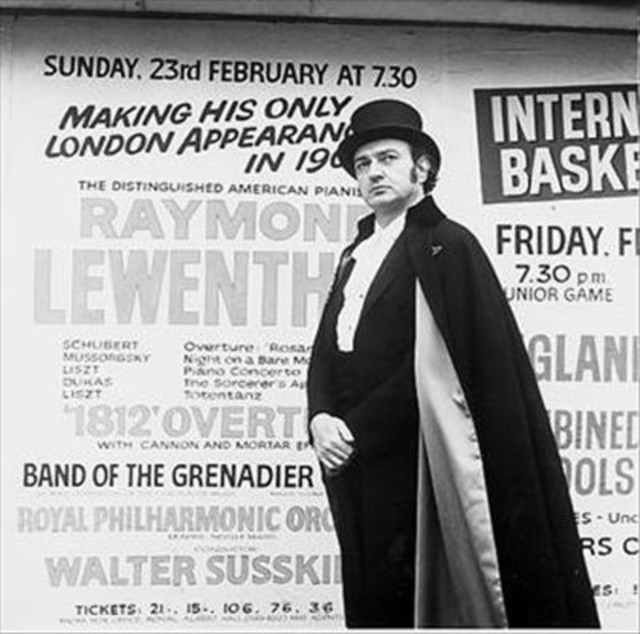
Born in San Antonio, Raymond Lewenthal was educated in Los Angeles from an early age, starting with Lydia Cherkassky, mother to famous concert pianist <a href="spotify:artist:08YhCeN9eg2ydw1U5KDKxZ">Shura Cherkassky</a>. Lewenthal then entered the Curtis Institute of Music in order to study with <a href="spotify:artist:74jGpZy80KRnULzjDiB3Od">Olga Samaroff</a>. Posessing tremendous strength and a dazzling technique, Lewenthal soon gained a reputation as an up-and-coming pianist with a future interpreting modern works. His rendering of the <a href="spotify:artist:4kHtgiRnpmFIV5Tm4BIs8l">Prokofiev</a> Piano Concerto No. 3 was so compelling that in 1948, conductor <a href="spotify:artist:0KEL9I60FHUhaPzRxuCHRT">Dimitri Mitropoulos</a> engaged Lewenthal to play the solo part at a <a href="spotify:artist:3gacryguGmpmCvgPGt2CBI">New York Philharmonic</a> concert that <a href="spotify:artist:0KEL9I60FHUhaPzRxuCHRT">Mitropoulos</a> led. This was unusual as <a href="spotify:artist:0KEL9I60FHUhaPzRxuCHRT">Mitropoulos</a> was known for this work and under normal circumstances conducted it from the keyboard while playing the solo part himself. In 1952, Lewenthal recorded a version of <a href="spotify:artist:4kHtgiRnpmFIV5Tm4BIs8l">Prokofiev</a>'s Toccata, Op. 11, for Westminister that is still regarded as one of the best-ever recordings of that work.
In 1953, Raymond Lewenthal was attacked by muggers in New York's Central Park and had both hands and arms broken in the struggle. Emotionally crushed by this misfortune, Lewenthal fled the United States, vowing never to perform again. However, once in Europe, Lewenthal began to retrain his hands under the patient guidance of <a href="spotify:artist:050gdJliIBXy99gPLsmHiy">Alfred Cortot</a>. Also, Lewenthal's interest in musicology deepened and he began to undertake a study of neglected Romantic composers, in particular the work of <a href="spotify:artist:07OhqeLloDO7wu0yCaVO2D">Charles-Valentin Alkan</a>. In 1963, Lewenthal returned to the U.S. and played a two-hour radio show on WBAI devoted to <a href="spotify:artist:07OhqeLloDO7wu0yCaVO2D">Alkan</a>. Critical interest in both player and composer was enormously positive and Lewenthal repeated the program at a Town Hall concert in September 1964, his first in 11 years. In the intervening time, Lewenthal edited a selection of <a href="spotify:artist:07OhqeLloDO7wu0yCaVO2D">Alkan</a>'s music for Schirmer.
Lewenthal recorded the LP Piano Music of Alkan for RCA Victor in 1965, which was a critical success, but not a big seller. Lewenthal justifed his existence to RCA through recording some more straightforward material for the label, but in 1971, he switched to Columbia Masterworks and instituted the Raymond Lewenthal Romantic Revival Series. This ran to only a few albums and Lewenthal's plan ran well beyond that, as he was then working on reviving composers such as <a href="spotify:artist:0WiK9IsQEQEuIQ1iDxvuPg">Hummel</a>, <a href="spotify:artist:1S7g9vS9FKgRL58StTw43l">Herz</a>, <a href="spotify:artist:0UpUHX0xRdD7TLty6bU40x">Thalberg</a>, <a href="spotify:artist:1ixDxXnQmZDWEiYPYJxNot">Henselt</a>, and <a href="spotify:artist:3gOIm6ckbGpE2x2Cl0XnsW">Czerny</a>. By this time, some critics had begun to circle their wagons against Romantic revivalism and ridiculed Lewenthal for attempting to champion the cause of composers whose work was widely regarded as obsolete.
After the Romantic Revival series came to an end, Lewenthal recorded no more and concertized little. However, Lewenthal's concept of a Romantic revival was not lost on younger pianists and nearly as soon as Lewenthal himself had died, there was a virtual explosion of recordings and performances in the genre through such pianists as <a href="spotify:artist:0pm0LWiklLtNXUP2GVwdqY">Marc-André Hamelin</a>, <a href="spotify:artist:3G5zQYaRH9y6ruE4QnoITP">Stephen Hough</a>, <a href="spotify:artist:1x1BXaOZgIvaHnafQhuPYB">Piers Lane</a>, and others.
Critics still find reason to nitpick with Lewenthal and it is possible that he never fully recovered from his injuries at the hands of the muggers. There are times in Lewenthal's recordings where the technique has rough edges and he seems to have had some trouble projecting in quiet passages. But anyone who can even read the enharmonic spellings of scores such as <a href="spotify:artist:07OhqeLloDO7wu0yCaVO2D">Alkan</a>'s Quasi-Faust has better than average ability and Lewenthal knew many of these difficult works by heart. Raymond Lewenthal coined the very term Romantic revival and would no doubt have been pleased wih the strides the movement has made since his passing.
In 1953, Raymond Lewenthal was attacked by muggers in New York's Central Park and had both hands and arms broken in the struggle. Emotionally crushed by this misfortune, Lewenthal fled the United States, vowing never to perform again. However, once in Europe, Lewenthal began to retrain his hands under the patient guidance of <a href="spotify:artist:050gdJliIBXy99gPLsmHiy">Alfred Cortot</a>. Also, Lewenthal's interest in musicology deepened and he began to undertake a study of neglected Romantic composers, in particular the work of <a href="spotify:artist:07OhqeLloDO7wu0yCaVO2D">Charles-Valentin Alkan</a>. In 1963, Lewenthal returned to the U.S. and played a two-hour radio show on WBAI devoted to <a href="spotify:artist:07OhqeLloDO7wu0yCaVO2D">Alkan</a>. Critical interest in both player and composer was enormously positive and Lewenthal repeated the program at a Town Hall concert in September 1964, his first in 11 years. In the intervening time, Lewenthal edited a selection of <a href="spotify:artist:07OhqeLloDO7wu0yCaVO2D">Alkan</a>'s music for Schirmer.
Lewenthal recorded the LP Piano Music of Alkan for RCA Victor in 1965, which was a critical success, but not a big seller. Lewenthal justifed his existence to RCA through recording some more straightforward material for the label, but in 1971, he switched to Columbia Masterworks and instituted the Raymond Lewenthal Romantic Revival Series. This ran to only a few albums and Lewenthal's plan ran well beyond that, as he was then working on reviving composers such as <a href="spotify:artist:0WiK9IsQEQEuIQ1iDxvuPg">Hummel</a>, <a href="spotify:artist:1S7g9vS9FKgRL58StTw43l">Herz</a>, <a href="spotify:artist:0UpUHX0xRdD7TLty6bU40x">Thalberg</a>, <a href="spotify:artist:1ixDxXnQmZDWEiYPYJxNot">Henselt</a>, and <a href="spotify:artist:3gOIm6ckbGpE2x2Cl0XnsW">Czerny</a>. By this time, some critics had begun to circle their wagons against Romantic revivalism and ridiculed Lewenthal for attempting to champion the cause of composers whose work was widely regarded as obsolete.
After the Romantic Revival series came to an end, Lewenthal recorded no more and concertized little. However, Lewenthal's concept of a Romantic revival was not lost on younger pianists and nearly as soon as Lewenthal himself had died, there was a virtual explosion of recordings and performances in the genre through such pianists as <a href="spotify:artist:0pm0LWiklLtNXUP2GVwdqY">Marc-André Hamelin</a>, <a href="spotify:artist:3G5zQYaRH9y6ruE4QnoITP">Stephen Hough</a>, <a href="spotify:artist:1x1BXaOZgIvaHnafQhuPYB">Piers Lane</a>, and others.
Critics still find reason to nitpick with Lewenthal and it is possible that he never fully recovered from his injuries at the hands of the muggers. There are times in Lewenthal's recordings where the technique has rough edges and he seems to have had some trouble projecting in quiet passages. But anyone who can even read the enharmonic spellings of scores such as <a href="spotify:artist:07OhqeLloDO7wu0yCaVO2D">Alkan</a>'s Quasi-Faust has better than average ability and Lewenthal knew many of these difficult works by heart. Raymond Lewenthal coined the very term Romantic revival and would no doubt have been pleased wih the strides the movement has made since his passing.
Monthly Listeners
1,084
Monthly Listeners History
Track the evolution of monthly listeners over the last 28 days.
Followers
336
Followers History
Track the evolution of followers over the last 28 days.
Top Cities
34 listeners

24 listeners
16 listeners

16 listeners

14 listeners

Related Artists
Piotr Paleczny
Ernst Gröschel

Vera Gornostaeva
Daria Telizyn
Sequeira Costa

Valery Vishnevsky
Artur Pizarro
Grigory Ginzburg
Dieter Zechlin

Burkard Schliessmann
Franz Vorraber
Povilas Stravinsky


Ronald Fries
Richard Tilling
Nodar Gabunia
Eliso Bolkvadze

Hans Richter-Haaser
Květa Novotná
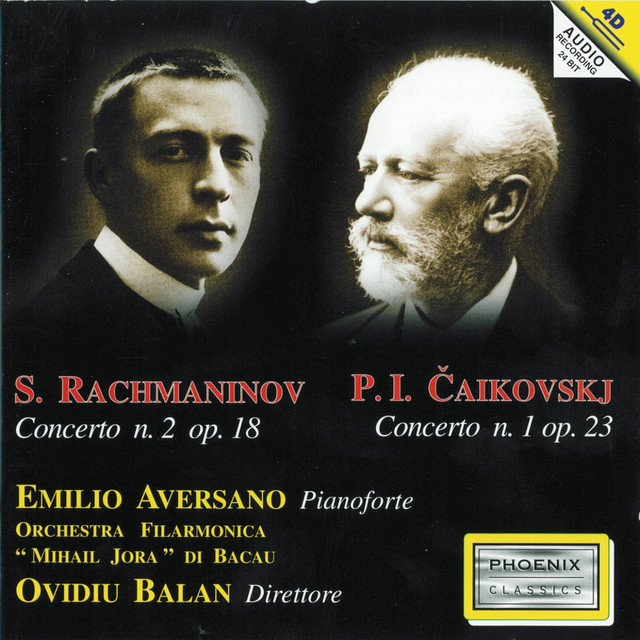
Ovidiu Balan
Louis Kentner
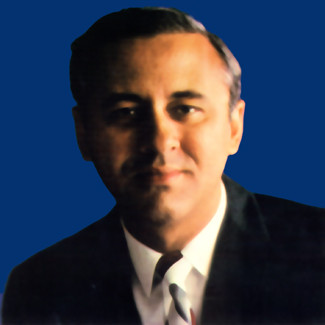
Leonard Pennario

Walter Geiseking
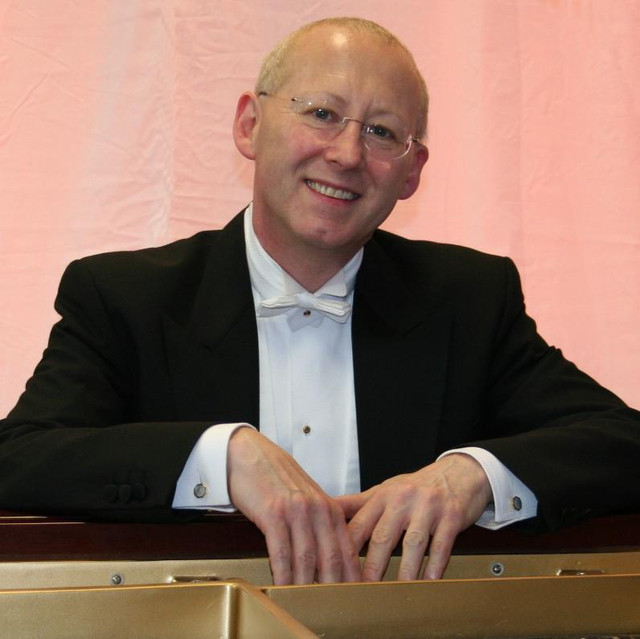
Nicholas Walker

Peter Zeugin
Vladimir Shakin
Ilse von Alpenheim
Dieter Goldmann
Heino Schwarting
Daniel Blanch

Allen Brings

Pavel Serebryakov
Trio Zingara
Travnicek Quartet

Solomon
