Data may be outdated
Last updated: 7 months ago — Click refresh to get the latest statistics.
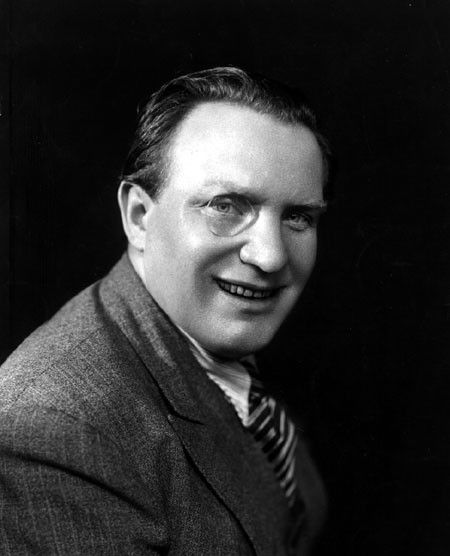
Richard Tauber remains, for many, the quintessential Viennese operetta tenor. As well as a performer, he was a composer, his works displaying his understanding of the operetta and song genres if not the genius of a <a href="spotify:artist:3O3SOoPYtUSjajTdIag0nT">Lehár</a> or Johann Strauss, Jr. He did not have a perfect voice; his Bs and Cs were labored and his habit of using falsetto to reach the rest of the upper range, while producing some ravishing results, could become mannered and overly applied. That said, his graceful charm of expression and lyrical warmth made him one of the most beloved singers of his time.
He was the son of an actor and theater director and an actress, and was raised by his father after the age of seven, thus increasing his exposure to music and the theater. His early studies at the Frankfurt Conservatory focused on conducting and composition, his voice studies instead taking place at Freiburg under Carl Beines. He made his opera debut at the Chemnitz Neues Stadt-Theater in March, 1913, as Tamino in <a href="spotify:artist:4NJhFmfw43RLBLjQvxDuRS">Mozart</a>'s The Magic Flute. He was almost immediately given a five-year contract by the Dresden Opera where he became the established lyric tenor. As his career continued to develop throughout Germany, he was strongly associated with <a href="spotify:artist:4NJhFmfw43RLBLjQvxDuRS">Mozart</a>; when he appeared as Tamino, <a href="spotify:artist:4NJhFmfw43RLBLjQvxDuRS">Mozart</a>'s opera was often jokingly renamed Die Tauberflöte. Astonishingly, however, his 1915 Berlin Opera debut was as Bacchus in <a href="spotify:artist:6pAwHPeExeUbMd5w7Iny6D">Richard Strauss</a>' Ariadne auf Naxos (a role that many heroic tenors find incredibly taxing), sung with 48 hours' notice and only one rehearsal! Tauber became known for his fast learning and musicianship, and was often called upon for such emergencies. He once took over as conductor for a tour with the <a href="spotify:artist:3PfJE6ebCbCHeuqO4BfNeA">London Philharmonic Orchestra</a>.
In the 1920s, he began to specialize in operetta and song, and became best known for those roles and for recitals, recordings, and film work. <a href="spotify:artist:3O3SOoPYtUSjajTdIag0nT">Lehár</a> wrote the operettas Paganini, Der Zarewitsch, Friederike, and The Land of Smiles with him in mind, and in each, made sure to include a showpiece (soon known as the Tauberlied) for his talents. In 1931, he made his debut in England at the Drury Lane Theater in <a href="spotify:artist:3O3SOoPYtUSjajTdIag0nT">Lehár</a>'s The Land of Smiles, and he remained in England for fear of Nazi persecution (he was of Jewish extraction), becoming a naturalized citizen in 1940. Like most singers, his career was interrupted by the war, but he made his operatic farewell in 1947 as Don Ottavio in <a href="spotify:artist:4NJhFmfw43RLBLjQvxDuRS">Mozart</a>'s Don Giovanni. Though already seriously ill with the lung cancer that was to kill him the next year, according to critics and documented by air check recordings, it would have been a creditable performance for a singer in the best of health.
Tauber owed much of his fame to his then-prodigious 725 recordings; rivaled only by the recorded output of <a href="spotify:artist:0uqddFnkR5VFHepMk9NEz3">John McCormack</a>. Tauber's catalog unquestionably displays the most variety, including songs by <a href="spotify:artist:09E7wcrEyqU2n1rnhzVT0h">Jerome Kern</a> and <a href="spotify:artist:32zXZpxwb2bq7oGzAhe1Ii">Irving Berlin</a>, arias and duets from <a href="spotify:artist:1JOQXgYdQV2yfrhewqx96o">Verdi</a>'s Il trovatore and Aida, Offenbach's The Tales of Hoffmann, German lieder, and even the Neapolitan and Irish songs in which <a href="spotify:artist:2uB3KPGd1ZUGRsox7N1iH5">Caruso</a> and McCormack were the main exponents. He also appeared in several movies, including a film of <a href="spotify:artist:72auy9NefUbGecYVrTiPzq">Leoncavallo</a>'s Pagliacci, Blossom Time, Heart's Desire, and Forbidden Music. Today, his operetta Old Chelsea (which he wrote to celebrate his naturalization as an English citizen) is still sometimes performed.
He was the son of an actor and theater director and an actress, and was raised by his father after the age of seven, thus increasing his exposure to music and the theater. His early studies at the Frankfurt Conservatory focused on conducting and composition, his voice studies instead taking place at Freiburg under Carl Beines. He made his opera debut at the Chemnitz Neues Stadt-Theater in March, 1913, as Tamino in <a href="spotify:artist:4NJhFmfw43RLBLjQvxDuRS">Mozart</a>'s The Magic Flute. He was almost immediately given a five-year contract by the Dresden Opera where he became the established lyric tenor. As his career continued to develop throughout Germany, he was strongly associated with <a href="spotify:artist:4NJhFmfw43RLBLjQvxDuRS">Mozart</a>; when he appeared as Tamino, <a href="spotify:artist:4NJhFmfw43RLBLjQvxDuRS">Mozart</a>'s opera was often jokingly renamed Die Tauberflöte. Astonishingly, however, his 1915 Berlin Opera debut was as Bacchus in <a href="spotify:artist:6pAwHPeExeUbMd5w7Iny6D">Richard Strauss</a>' Ariadne auf Naxos (a role that many heroic tenors find incredibly taxing), sung with 48 hours' notice and only one rehearsal! Tauber became known for his fast learning and musicianship, and was often called upon for such emergencies. He once took over as conductor for a tour with the <a href="spotify:artist:3PfJE6ebCbCHeuqO4BfNeA">London Philharmonic Orchestra</a>.
In the 1920s, he began to specialize in operetta and song, and became best known for those roles and for recitals, recordings, and film work. <a href="spotify:artist:3O3SOoPYtUSjajTdIag0nT">Lehár</a> wrote the operettas Paganini, Der Zarewitsch, Friederike, and The Land of Smiles with him in mind, and in each, made sure to include a showpiece (soon known as the Tauberlied) for his talents. In 1931, he made his debut in England at the Drury Lane Theater in <a href="spotify:artist:3O3SOoPYtUSjajTdIag0nT">Lehár</a>'s The Land of Smiles, and he remained in England for fear of Nazi persecution (he was of Jewish extraction), becoming a naturalized citizen in 1940. Like most singers, his career was interrupted by the war, but he made his operatic farewell in 1947 as Don Ottavio in <a href="spotify:artist:4NJhFmfw43RLBLjQvxDuRS">Mozart</a>'s Don Giovanni. Though already seriously ill with the lung cancer that was to kill him the next year, according to critics and documented by air check recordings, it would have been a creditable performance for a singer in the best of health.
Tauber owed much of his fame to his then-prodigious 725 recordings; rivaled only by the recorded output of <a href="spotify:artist:0uqddFnkR5VFHepMk9NEz3">John McCormack</a>. Tauber's catalog unquestionably displays the most variety, including songs by <a href="spotify:artist:09E7wcrEyqU2n1rnhzVT0h">Jerome Kern</a> and <a href="spotify:artist:32zXZpxwb2bq7oGzAhe1Ii">Irving Berlin</a>, arias and duets from <a href="spotify:artist:1JOQXgYdQV2yfrhewqx96o">Verdi</a>'s Il trovatore and Aida, Offenbach's The Tales of Hoffmann, German lieder, and even the Neapolitan and Irish songs in which <a href="spotify:artist:2uB3KPGd1ZUGRsox7N1iH5">Caruso</a> and McCormack were the main exponents. He also appeared in several movies, including a film of <a href="spotify:artist:72auy9NefUbGecYVrTiPzq">Leoncavallo</a>'s Pagliacci, Blossom Time, Heart's Desire, and Forbidden Music. Today, his operetta Old Chelsea (which he wrote to celebrate his naturalization as an English citizen) is still sometimes performed.
Monthly Listeners
6,213
Monthly Listeners History
Track the evolution of monthly listeners over the last 28 days.
Followers
5,118
Followers History
Track the evolution of followers over the last 28 days.
Top Cities



Related Artists
Joseph Schmidt

Werner Schmidt-Boelcke
Heinz Hoppe
Karl Schmitt-Walter

Debroy Somers
Helge Rosvaenge
Herbert Ernst Groh
Erna Sack
Peter Minich
Colehan
Peter Anders

Kölner Rundfunkorchester

Joseph Locke
Anibal Vela
Odeon-Künstler-Orchester

Richard Tauber
Fred Raymond
Edward Lockton

Lawrence Tibbett
Josef Ebner
Emil Kaiser
Werner Eisbrenner
Norbert Schultze

Rudolf Schock
