Data may be outdated
Last updated: 9 months ago — Click refresh to get the latest statistics.
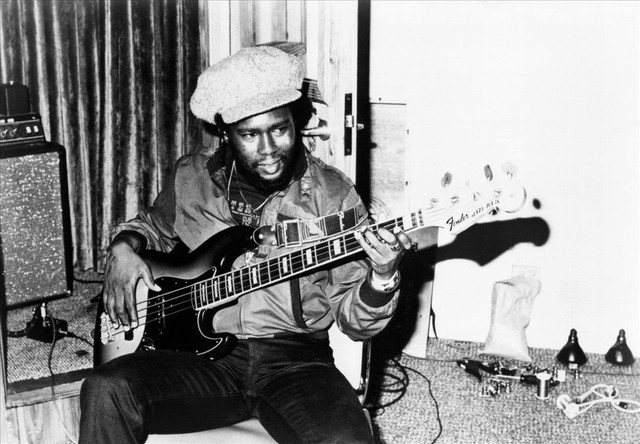
As half of "the Riddim Twins" with drummer <a href="spotify:artist:2Ub1N1tF1AK2NkWvw87oP8">Sly Dunbar</a>, multi-Grammy winner Robbie Shakespeare played on and co-produced literally thousands of recordings by reggae, pop, and jazz artists ranging from <a href="spotify:artist:6qaKS0nzGP4hfjl4aFZmEU">Burning Spear</a> and <a href="spotify:artist:2f9ZiYA2ic1r1voObUimdd">Grace Jones</a> to <a href="spotify:artist:6yTNMMqumesCWhMJ47HB2a">Yellowman</a> and <a href="spotify:artist:74ASZWbe4lXaubB36ztrGX">Bob Dylan</a>. Between 1975 and 1980, he and <a href="spotify:artist:2Ub1N1tF1AK2NkWvw87oP8">Dunbar</a> issued 20 albums as <a href="spotify:artist:72kiVqCJIy9eOnmLp8r0h7">the Revolutionaries</a>. In 1980, <a href="spotify:artist:6jJG408jz8VayohX86nuTt">Sly & Robbie</a> founded label and production house Taxi Productions, served as Compass Point Studios' house rhythm section, and released four commercially successful albums: Gamblers Choice (1980), Language Barrier (1985), Rhythm Killer (1987), and Silent Assassin (1989). During the '90s they delivered the global smash "Bam Bam" by <a href="spotify:artist:6RQkaOWddQmiLLJqSgnTbm">Chacka Demus & Pliers</a>, initiating the dancehall revival globally. The duo produced a range of artists including <a href="spotify:artist:4wLAjfeqAsV66AocWNcowA">Buju Banton</a> and <a href="spotify:artist:6NOvBZrkd83MSD51xkq4on">Elephant Man</a> in the early 21st century while continuing to release albums like 2006's Rhythm Double, 2014's Dubrising, and 2020's Red Hill Road.
Robert Warren Dale Shakespeare was born in East Kingston, Jamaica in 1953. He grew up in a music-loving home that served as a rehearsal space for local musicians. His brother Lloyd played in an R&B-cum-calypso group called the Emotions and they practiced at the house. Shakespeare's first instrument, dictated by necessity, was the guitar -- a stray one was always sitting around. A bit later he drifted over to the drums. Bassist <a href="spotify:artist:5sroD1hthJxqlcgjWTJRuV">Aston "Family Man" Barrett</a> began hanging out in Shakespeare's yard -- allegedly a popular place to procure marijuana. He'd already heard the older man play and had fallen in love with the bass, and insisted that <a href="spotify:artist:5sroD1hthJxqlcgjWTJRuV">Barrett</a> teach him. <a href="spotify:artist:5sroD1hthJxqlcgjWTJRuV">Barrett</a> agreed and became Shakespeare's instructor and mentor. The young bassist entered a recording studio for the first time as a roadie for <a href="spotify:artist:5sroD1hthJxqlcgjWTJRuV">Aston</a>'s brother drummer Carlton Barrett. Eventually, he was allowed to hang around as musicians were working. Shakespeare showed up at <a href="spotify:artist:5sroD1hthJxqlcgjWTJRuV">Barrett</a>'s many studio and live gigs (he was a member of the <a href="spotify:artist:579Ncba3u16DyUSrvxctnx">Hippy Boys</a> and <a href="spotify:artist:12CNljuN6DW9e5x61FS03b">the Upsetters</a> at the time). Shakespeare listened as well as watched the bass player. Afterwards, he would ask <a href="spotify:artist:5sroD1hthJxqlcgjWTJRuV">Barrett</a> to teach him the basslines he'd heard.
When <a href="spotify:artist:5sroD1hthJxqlcgjWTJRuV">Barrett</a> joined Bob Marley & the Wailers, Shakespeare took over the bass chair in the <a href="spotify:artist:579Ncba3u16DyUSrvxctnx">Hippy Boys</a>. In 1972, the older man brought his charge to the <a href="spotify:artist:2QsynagSdAqZj3U9HgDzjD">Marley</a> recording session that netted Catch a Fire; Shakespeare played on "Concrete Jungle." By 1975, he was a very busy studio musician: That year he played on no less than 19 recordings, including dates by <a href="spotify:artist:6qaKS0nzGP4hfjl4aFZmEU">Burning Spear</a> (the reggae classic Marcus Garvey and its dub companion, Garvey's Ghost), <a href="spotify:artist:7a6In9UVdQx5TpBGLZT2RZ">Keith Hudson</a> (The Torch of Freedom), <a href="spotify:artist:3rJ3m1tM6vUgiWLjfV8sRf">Jimmy Cliff</a> (Follow My Mind), <a href="spotify:artist:1FOvLj8sNCGHjgueUOVvJi">Cornell Campbell</a> (Dance in a Greenwich Farm), and <a href="spotify:artist:1vc9BdsxN00MpgIY1lifuB">Ras Michael & the Sons of Negus</a> (Rastafari).
That year, Shakespeare met drummer <a href="spotify:artist:2Ub1N1tF1AK2NkWvw87oP8">Sly Dunbar</a> who, with bassist Bertram "Ranchie" McLean, had formed <a href="spotify:artist:72kiVqCJIy9eOnmLp8r0h7">the Revolutionaries</a> as the house band at Channel One Studios a year earlier. Shakespeare replaced McLean in 1976, and <a href="spotify:artist:72kiVqCJIy9eOnmLp8r0h7">the Revolutionaries</a> issued four albums: Revival Dub Roots Now, Earthquake Dub, Revolutionary Sounds, and Satta Dub Strictly Roots, that showcased their aggressive and musically progressive "rockers reggae" style, which replaced roots reggae's dominant "one drop" approach. Between 1976 and 1980, the group released 20 albums, including 1978's Pancho Alphonso collaboration Never Get to Zion, Guerilla Dub with <a href="spotify:artist:2qX63C7rYqUDrY3CD7sbUm">the Aggrovators</a>, and their own Jonkanoo Dub. The duo also served in <a href="spotify:artist:0oea1hwGMfUxZbLxJc1XUN">Peter Tosh</a>'s band and played on seven of his albums through 1983, including Equal Rights (Shakespeare only), Legalize It, and Bush Doctor. In 1979 they produced <a href="spotify:artist:01C9OoXDvCKkGcf735Tcfo">Serge Gainsbourg</a>'s Aux Armes, Etc., the latter's best-selling album.
In 1980, the duo formed Taxi Productions, housing a studio and a label, to abide their growing interest in recording technology. Gamblers Choice, their <a href="spotify:search:label%3A%22Taxi%22">Taxi</a> debut, showcased the pair's love of funk, disco, fusion, and pop as well as reggae, and found <a href="spotify:artist:2Ub1N1tF1AK2NkWvw87oP8">Dunbar</a> using electronic Syndrums as well as his acoustic kit. In addition, the pair served as rhythm section for and produced <a href="spotify:artist:5keeQyPKYRxUCKDMECTXG3">Black Uhuru</a> on their debut Showcase (which appeared on <a href="spotify:search:label%3A%22Taxi%22">Taxi</a>), Sinsemilla, and 1981's Grammy-winning Red (the duo remained with the vocal trio through 1985); they also produced <a href="spotify:artist:2f9ZiYA2ic1r1voObUimdd">Grace Jones</a>' commercial breakthrough Nightclubbing in 1981. They duo became <a href="spotify:search:label%3A%22Island%22">Island</a> boss Chris Blackwell's house rhythm section at Nassau's Compass Point Studios. In 1982 <a href="spotify:artist:6jJG408jz8VayohX86nuTt">Sly & Robbie</a> produced <a href="spotify:artist:77HthcNFa6SbicRaQKdhyy">Gwen Guthrie</a>'s eponymous set (and many subsequent dates) and issued The '60s, '70s + '80s = Taxi. Its songs were radical reworkings of '60s R&B, soul, and pop hits that influenced the first wave of ska and reggae musicians. The duo also produced <a href="spotify:artist:2Ub1N1tF1AK2NkWvw87oP8">Dunbar</a>'s solo album, Sly-Go-Ville, that charted in England and France.
Over the next couple of years, they released Taxi Connection (1983), and produced, played on, and released recordings by <a href="spotify:artist:6McXmoIhUTNwdyzXBLWAG2">Toots Hibbert</a>, <a href="spotify:artist:2ieAXAuLe6qQ3RJsqCxpoC">Horace Andy</a>, <a href="spotify:artist:1VJspRsoC6c0bvqhnSiFCs">Ini Kamoze</a>, <a href="spotify:artist:6iTD167bhyfYwEd7fd2bGn">Sugar Minott</a>, and dozens more. They also assisted <a href="spotify:artist:74ASZWbe4lXaubB36ztrGX">Bob Dylan</a> on Infidels, Empire Burlesque, and Down in the Groove.
In 1985 the duo teamed with bassist/producer <a href="spotify:artist:5RISqKCcrhGITX2TQAPGPL">Bill Laswell</a> and released Language Barrier for <a href="spotify:search:label%3A%22Island%22">Island</a>. The critically acclaimed set registered the chart single "Make Em Move" in England and won critical notice for its future dub cover of <a href="spotify:artist:0kbYTNQb4Pb1rPbbaF0pT4">Miles Davis</a>' "Black Satin." That year they also worked with <a href="spotify:artist:3d2pb1dHTm8b61zAGVUVvO">Mick Jagger</a> on She's the Boss. The following year the duo's <a href="spotify:artist:6rgcttwINZzxUQK8YM8vVt">Taxi Gang</a> issued The Sting, a steamy futurist dub outing recorded on a Fairlight, and Taxi Gang: Live in London.
With <a href="spotify:artist:5RISqKCcrhGITX2TQAPGPL">Laswell</a> producing, <a href="spotify:artist:6jJG408jz8VayohX86nuTt">Sly & Robbie</a> issued Rhythm Killers in 1987. The six-song set was recorded in New York City with a wildly diverse cast that included <a href="spotify:artist:0bSP8obSwEpc8XEOE7qc63">Henry Threadgill</a>, <a href="spotify:artist:0AcEt9ujUBWQ50cZsaskWo">Shinehead</a>, <a href="spotify:artist:63aP18bg2ABSOqSNQcAMNy">Allen Toussaint</a>, <a href="spotify:artist:3vB7T6czx1Jh89YEnzM0UF">Bernie Worrell</a>, and <a href="spotify:artist:52moXqtWO6xU1tPREt3fvn">Karl Berger</a>. The studio band covered the <a href="spotify:artist:6m30rs1IQqnWqV5nKMpU7U">Ohio Players</a>' "Fire" and issued the charting single "Boops (Here to Go)." The set accomplished two things for Shakespeare and <a href="spotify:artist:2Ub1N1tF1AK2NkWvw87oP8">Dunbar</a>: Rhythm Killers placed on year-end critics' and fans' lists internationally for starters, and less visible but perhaps more importantly, it revealed how much Shakespeare's playing evolved out of rockers reggae (without forsaking it) and moved over toward jazz-funk. He and <a href="spotify:artist:2Ub1N1tF1AK2NkWvw87oP8">Dunbar</a> were so focused on creating complex grooves for the album that Shakespeare would sometimes play basslines that <a href="spotify:artist:2Ub1N1tF1AK2NkWvw87oP8">Dunbar</a> adopted note for note as a rhythm. The duo toured hard and continued to play on and produce singles.
In 1989, <a href="spotify:artist:6jJG408jz8VayohX86nuTt">Sly & Robbie</a> released the <a href="spotify:artist:2gINJ8xw86xawPyGvx1bla">KRS-One</a>-produced Silent Assassin, an attempt at a commercial rap album. Guests included <a href="spotify:artist:5m7wCUhYhBh7A3A3YMxrbt">Queen Latifah</a>, <a href="spotify:artist:5n30a5V4ftXNMHCHChmK2h">Young MC</a>, Shah of Brooklyn, <a href="spotify:artist:7ipr4gJAFLoygvGdGs667W">Willie D</a>, and <a href="spotify:artist:2gINJ8xw86xawPyGvx1bla">KRS-One</a>. It garnered positive reviews, and was regarded as an innovative collaboration melding rap, reggae, funk, and jazz. In 1991 they released The Many Moods of Sly & Robbie and in 1992, Remember Precious Times, the second volume of the <a href="spotify:search:label%3A%22Taxi%22">Taxi</a> comp The '60s, '70s + '80s = Taxi. The duo altered the course of Caribbean music -- and rap, too -- with their production of the <a href="spotify:artist:6RQkaOWddQmiLLJqSgnTbm">Chaka Demus & Pliers</a>' single "Murder She Wrote"/"Bam Bam." The contrast between <a href="spotify:artist:6RQkaOWddQmiLLJqSgnTbm">DJ Demus</a>' harsh toasting and <a href="spotify:artist:6RQkaOWddQmiLLJqSgnTbm">Pliers</a>' sweet, soulful singing was a hit all over the Caribbean, and in New York, Chicago, London, and Paris. Some credited it as the first modern dancehall single while most claimed it as a revitalization of the dancehall style that had all but disappeared during the '80s. For Shakespeare, it was an adventurous time: <a href="spotify:artist:2Ub1N1tF1AK2NkWvw87oP8">Dunbar</a> began adding percussion instruments to his arsenal, primarily playing tablas, and Shakespeare sometimes left his bass behind for samples and keyboards on sessions.
The duo continued to innovate, producing dozens of singles for up-and-coming artists while continuing to support veterans like <a href="spotify:artist:3aTuTR5Nf6pVW3837q2ZL7">Maxi Priest</a>, <a href="spotify:artist:6iTD167bhyfYwEd7fd2bGn">Sugar Minott</a>, and Mykal Rose (who went solo after leaving <a href="spotify:artist:5keeQyPKYRxUCKDMECTXG3">Black Uhuru</a>). They also released Sly & Robbie Present the Taxi Gang: Hail Up the Taxi in 1995. In 1997, they melded their production and funky musical approach with Latin music on The Sound of La Trenggae. The set offered hard-grooving, dubwise salsa and Caribbean sounds appended by polished production techniques. At Shakespeare's suggestion, they covered <a href="spotify:artist:2ZvrvbQNrHKwjT7qfGFFUW">Herbie Hancock</a>'s "Watermelon Man," collaborated with pianist <a href="spotify:artist:30V1rKijENF5MFcGidInfh">Monty Alexander</a> on readings of <a href="spotify:artist:5hW4L92KnC6dX9t7tYM4Ve">Joni Mitchell</a> and <a href="spotify:artist:3pO5VjZ4wOHCMBXOvbMISG">Antonio Carlos Jobim</a> tunes, and offered beat-wise, shuffling vocal reads of "Quando Quando" (feat. <a href="spotify:artist:4Hwetfrw6mAJJibkHgF8uH">Ambelique</a>) and "La Isla Bonita" (feat. Leba). These were followed by Mambo Taxi, a funky Latin jazz take on pop, jazz, and reggae tunes with a dozen guests including <a href="spotify:artist:2NgsVYg7cMgPQNYXW7CO6R">Dean Fraser</a>, <a href="spotify:artist:0IH1Rx8zeWyZLVrBloZp1Q">Ansel Collins</a>, and Robbie Lyn. Finally, they issued the star-studded Friends. Its guests included <a href="spotify:artist:1zxmHkQCUfZYDjwV6MYjZN">Mick Hucknall</a>, <a href="spotify:artist:3aTuTR5Nf6pVW3837q2ZL7">Priest</a>, <a href="spotify:artist:08avsqaGIlK2x3i2Cu7rKH">Keith Richards</a>, <a href="spotify:artist:0gYuavkgXQapJXmASabd2o">Ali Campbell</a>, and <a href="spotify:artist:5jhqwsWfRaETrWPWI0Rc7u">Jah Wobble</a>. It took home the Grammy award for Best Reggae Album the following year. In 1999, Strip to the Bone, a collaboration with DJ/producer <a href="spotify:artist:1DAJPl1Q9bNwPGUqL08nzG">Howie B</a>, netted the hit single "Superthruster" thanks to its animated video. Further, it pushed the album onto the English and French charts.
Following their collaborations with jazz pianist <a href="spotify:artist:30V1rKijENF5MFcGidInfh">Alexander</a> on La Trenggae, they reteamed with him for Monty Meets Sly & Robbie on <a href="spotify:search:label%3A%22Telarc%22">Telarc</a> in 2000. The set offered their highly stylized versions of classic jazz-funk, soul-jazz, R&B, early reggae, and pop tunes. While it sold respectably, it is considered one of the most successful reggae/jazz collaborations. Various <a href="spotify:artist:6rgcttwINZzxUQK8YM8vVt">Taxi Gang</a> collabs and productions were released on several different labels over several years and in 2008, the duo joined Detroit-based keyboardist, composer, and longtime fan <a href="spotify:artist:39g75EmRFeFbvHhsGjUpLU">Amp Fiddler</a> to inaugurate Inspiration Information -- a collaboration series for <a href="spotify:search:label%3A%22Strut%22">Strut</a> -- with their bubbling, slippery, glide across psychedelic funk, steamy dub, and R&B. They toured with artists ranging from the <a href="spotify:artist:22bE4uQ6baNwSHPVcDxLCe">Rolling Stones</a> and <a href="spotify:artist:5WcGRaGsl0b9sul7jVdDgc">Don Carlos</a> to <a href="spotify:artist:4sD9znwiVFx9cgRPZ42aQ1">Sinead O'Conor</a>. In 2009, they worked alongside singer <a href="spotify:artist:2t3eEaWiT5weaCJIh6aRv2">Bitty McLean</a> on the Movin' On album, that they co-produced with singer and associate Guillaume Bougard. The effort won many accolades and critical nominations as the year's best reggae album. They toured Japan and Europe with McLean releasing Bitty McLean & Sly & Robbie: Live in Tokyo in 2010. In 2012, they produced and played on <a href="spotify:artist:137W8MRPWKqSmrBGDBFSop">Wiz Khalifa</a>'s album GRIOT 2012, and planned the Jamaican Legends tour across Europe with <a href="spotify:artist:30V1rKijENF5MFcGidInfh">Alexander</a> and guitarist <a href="spotify:artist:6RTCb5pWKinqlUyG2qacit">Ernest Ranglin</a>. Lastly, they issued the steamy, Afro-futurist Blackwood Dub. The following year saw them collaborate with <a href="spotify:artist:5EvFsr3kj42KNv97ZEnqij">Shaggy</a> on Out of Many, One Music, Stepper on Takes the Taxi, and Griot on 13 with Khalifa. Sly & Robbie Present: No-Maddz appeared in 2014. In 2017, the duo issued three acclaimed, wildly experimental digital albums: Bad, Book of Dubelation, and Dubocalypse, and collaborated with <a href="spotify:artist:4Fzw2E5VNONlRDMvJpNsaY">Junior Natural</a> on Militant.
The following year they reignited their working relationship with <a href="spotify:artist:2t3eEaWiT5weaCJIh6aRv2">Mclean</a> on his seminal Love Deluxe. Shakespeare (sans <a href="spotify:artist:2Ub1N1tF1AK2NkWvw87oP8">Dunbar</a>) recorded the track "Epileptic Landscape" with Switzerland's 18th Parallel for the various-artists EP Magnetic Buzz Riddim. That year also saw the release of Nordub, the duo's collaboration with Norwegian jazz trumpeter <a href="spotify:artist:2r1f1zkIjuQ7ETeJHsXpsc">Nils Petter Molvær</a> that included his countryman, guitarist <a href="spotify:artist:0VqQFqLcy0bBMPDnKB25vC">Eivind Aarset</a> and Finnish electronicist <a href="spotify:artist:5E3H2KyR31E2Dj3K6vIUe9">Vladislav Delay</a> (Sasu Ripatti). In 2019 The Final Battle, a collaboration between <a href="spotify:artist:6jJG408jz8VayohX86nuTt">Sly & Robbie</a> and <a href="spotify:artist:2tm55XgrmiuDC0RBTE9AQT">Roots Radics</a>, appeared followed by the digital offering Dub Serge, a collection of dubs re-recorded from their 1979 sessions with the composer. In November 2020, Red Hills Road, <a href="spotify:artist:6jJG408jz8VayohX86nuTt">Sly & Robbie</a>'s last duo album, appeared from <a href="spotify:search:label%3A%22Taxi%22">Taxi</a>. They collaborated with the <a href="spotify:artist:03DAYY30oSGySGwfHm2tlk">Reggae Angels</a> on 2021's Remember Our Creator.
On December 8, 2021, Shakespeare died following complications from kidney surgery. In 2023, <a href="spotify:search:label%3A%22Tabou1+Records%22">Tabou1 Records</a> released Forward by McLean. The set was created as a tribute to Shakespeare by the singer, label boss Bougard, and <a href="spotify:artist:2Ub1N1tF1AK2NkWvw87oP8">Dunbar</a> using the bassist's archived rhythms from the label's vaults, then building new tracks around them. ~ Thom Jurek, Rovi
Robert Warren Dale Shakespeare was born in East Kingston, Jamaica in 1953. He grew up in a music-loving home that served as a rehearsal space for local musicians. His brother Lloyd played in an R&B-cum-calypso group called the Emotions and they practiced at the house. Shakespeare's first instrument, dictated by necessity, was the guitar -- a stray one was always sitting around. A bit later he drifted over to the drums. Bassist <a href="spotify:artist:5sroD1hthJxqlcgjWTJRuV">Aston "Family Man" Barrett</a> began hanging out in Shakespeare's yard -- allegedly a popular place to procure marijuana. He'd already heard the older man play and had fallen in love with the bass, and insisted that <a href="spotify:artist:5sroD1hthJxqlcgjWTJRuV">Barrett</a> teach him. <a href="spotify:artist:5sroD1hthJxqlcgjWTJRuV">Barrett</a> agreed and became Shakespeare's instructor and mentor. The young bassist entered a recording studio for the first time as a roadie for <a href="spotify:artist:5sroD1hthJxqlcgjWTJRuV">Aston</a>'s brother drummer Carlton Barrett. Eventually, he was allowed to hang around as musicians were working. Shakespeare showed up at <a href="spotify:artist:5sroD1hthJxqlcgjWTJRuV">Barrett</a>'s many studio and live gigs (he was a member of the <a href="spotify:artist:579Ncba3u16DyUSrvxctnx">Hippy Boys</a> and <a href="spotify:artist:12CNljuN6DW9e5x61FS03b">the Upsetters</a> at the time). Shakespeare listened as well as watched the bass player. Afterwards, he would ask <a href="spotify:artist:5sroD1hthJxqlcgjWTJRuV">Barrett</a> to teach him the basslines he'd heard.
When <a href="spotify:artist:5sroD1hthJxqlcgjWTJRuV">Barrett</a> joined Bob Marley & the Wailers, Shakespeare took over the bass chair in the <a href="spotify:artist:579Ncba3u16DyUSrvxctnx">Hippy Boys</a>. In 1972, the older man brought his charge to the <a href="spotify:artist:2QsynagSdAqZj3U9HgDzjD">Marley</a> recording session that netted Catch a Fire; Shakespeare played on "Concrete Jungle." By 1975, he was a very busy studio musician: That year he played on no less than 19 recordings, including dates by <a href="spotify:artist:6qaKS0nzGP4hfjl4aFZmEU">Burning Spear</a> (the reggae classic Marcus Garvey and its dub companion, Garvey's Ghost), <a href="spotify:artist:7a6In9UVdQx5TpBGLZT2RZ">Keith Hudson</a> (The Torch of Freedom), <a href="spotify:artist:3rJ3m1tM6vUgiWLjfV8sRf">Jimmy Cliff</a> (Follow My Mind), <a href="spotify:artist:1FOvLj8sNCGHjgueUOVvJi">Cornell Campbell</a> (Dance in a Greenwich Farm), and <a href="spotify:artist:1vc9BdsxN00MpgIY1lifuB">Ras Michael & the Sons of Negus</a> (Rastafari).
That year, Shakespeare met drummer <a href="spotify:artist:2Ub1N1tF1AK2NkWvw87oP8">Sly Dunbar</a> who, with bassist Bertram "Ranchie" McLean, had formed <a href="spotify:artist:72kiVqCJIy9eOnmLp8r0h7">the Revolutionaries</a> as the house band at Channel One Studios a year earlier. Shakespeare replaced McLean in 1976, and <a href="spotify:artist:72kiVqCJIy9eOnmLp8r0h7">the Revolutionaries</a> issued four albums: Revival Dub Roots Now, Earthquake Dub, Revolutionary Sounds, and Satta Dub Strictly Roots, that showcased their aggressive and musically progressive "rockers reggae" style, which replaced roots reggae's dominant "one drop" approach. Between 1976 and 1980, the group released 20 albums, including 1978's Pancho Alphonso collaboration Never Get to Zion, Guerilla Dub with <a href="spotify:artist:2qX63C7rYqUDrY3CD7sbUm">the Aggrovators</a>, and their own Jonkanoo Dub. The duo also served in <a href="spotify:artist:0oea1hwGMfUxZbLxJc1XUN">Peter Tosh</a>'s band and played on seven of his albums through 1983, including Equal Rights (Shakespeare only), Legalize It, and Bush Doctor. In 1979 they produced <a href="spotify:artist:01C9OoXDvCKkGcf735Tcfo">Serge Gainsbourg</a>'s Aux Armes, Etc., the latter's best-selling album.
In 1980, the duo formed Taxi Productions, housing a studio and a label, to abide their growing interest in recording technology. Gamblers Choice, their <a href="spotify:search:label%3A%22Taxi%22">Taxi</a> debut, showcased the pair's love of funk, disco, fusion, and pop as well as reggae, and found <a href="spotify:artist:2Ub1N1tF1AK2NkWvw87oP8">Dunbar</a> using electronic Syndrums as well as his acoustic kit. In addition, the pair served as rhythm section for and produced <a href="spotify:artist:5keeQyPKYRxUCKDMECTXG3">Black Uhuru</a> on their debut Showcase (which appeared on <a href="spotify:search:label%3A%22Taxi%22">Taxi</a>), Sinsemilla, and 1981's Grammy-winning Red (the duo remained with the vocal trio through 1985); they also produced <a href="spotify:artist:2f9ZiYA2ic1r1voObUimdd">Grace Jones</a>' commercial breakthrough Nightclubbing in 1981. They duo became <a href="spotify:search:label%3A%22Island%22">Island</a> boss Chris Blackwell's house rhythm section at Nassau's Compass Point Studios. In 1982 <a href="spotify:artist:6jJG408jz8VayohX86nuTt">Sly & Robbie</a> produced <a href="spotify:artist:77HthcNFa6SbicRaQKdhyy">Gwen Guthrie</a>'s eponymous set (and many subsequent dates) and issued The '60s, '70s + '80s = Taxi. Its songs were radical reworkings of '60s R&B, soul, and pop hits that influenced the first wave of ska and reggae musicians. The duo also produced <a href="spotify:artist:2Ub1N1tF1AK2NkWvw87oP8">Dunbar</a>'s solo album, Sly-Go-Ville, that charted in England and France.
Over the next couple of years, they released Taxi Connection (1983), and produced, played on, and released recordings by <a href="spotify:artist:6McXmoIhUTNwdyzXBLWAG2">Toots Hibbert</a>, <a href="spotify:artist:2ieAXAuLe6qQ3RJsqCxpoC">Horace Andy</a>, <a href="spotify:artist:1VJspRsoC6c0bvqhnSiFCs">Ini Kamoze</a>, <a href="spotify:artist:6iTD167bhyfYwEd7fd2bGn">Sugar Minott</a>, and dozens more. They also assisted <a href="spotify:artist:74ASZWbe4lXaubB36ztrGX">Bob Dylan</a> on Infidels, Empire Burlesque, and Down in the Groove.
In 1985 the duo teamed with bassist/producer <a href="spotify:artist:5RISqKCcrhGITX2TQAPGPL">Bill Laswell</a> and released Language Barrier for <a href="spotify:search:label%3A%22Island%22">Island</a>. The critically acclaimed set registered the chart single "Make Em Move" in England and won critical notice for its future dub cover of <a href="spotify:artist:0kbYTNQb4Pb1rPbbaF0pT4">Miles Davis</a>' "Black Satin." That year they also worked with <a href="spotify:artist:3d2pb1dHTm8b61zAGVUVvO">Mick Jagger</a> on She's the Boss. The following year the duo's <a href="spotify:artist:6rgcttwINZzxUQK8YM8vVt">Taxi Gang</a> issued The Sting, a steamy futurist dub outing recorded on a Fairlight, and Taxi Gang: Live in London.
With <a href="spotify:artist:5RISqKCcrhGITX2TQAPGPL">Laswell</a> producing, <a href="spotify:artist:6jJG408jz8VayohX86nuTt">Sly & Robbie</a> issued Rhythm Killers in 1987. The six-song set was recorded in New York City with a wildly diverse cast that included <a href="spotify:artist:0bSP8obSwEpc8XEOE7qc63">Henry Threadgill</a>, <a href="spotify:artist:0AcEt9ujUBWQ50cZsaskWo">Shinehead</a>, <a href="spotify:artist:63aP18bg2ABSOqSNQcAMNy">Allen Toussaint</a>, <a href="spotify:artist:3vB7T6czx1Jh89YEnzM0UF">Bernie Worrell</a>, and <a href="spotify:artist:52moXqtWO6xU1tPREt3fvn">Karl Berger</a>. The studio band covered the <a href="spotify:artist:6m30rs1IQqnWqV5nKMpU7U">Ohio Players</a>' "Fire" and issued the charting single "Boops (Here to Go)." The set accomplished two things for Shakespeare and <a href="spotify:artist:2Ub1N1tF1AK2NkWvw87oP8">Dunbar</a>: Rhythm Killers placed on year-end critics' and fans' lists internationally for starters, and less visible but perhaps more importantly, it revealed how much Shakespeare's playing evolved out of rockers reggae (without forsaking it) and moved over toward jazz-funk. He and <a href="spotify:artist:2Ub1N1tF1AK2NkWvw87oP8">Dunbar</a> were so focused on creating complex grooves for the album that Shakespeare would sometimes play basslines that <a href="spotify:artist:2Ub1N1tF1AK2NkWvw87oP8">Dunbar</a> adopted note for note as a rhythm. The duo toured hard and continued to play on and produce singles.
In 1989, <a href="spotify:artist:6jJG408jz8VayohX86nuTt">Sly & Robbie</a> released the <a href="spotify:artist:2gINJ8xw86xawPyGvx1bla">KRS-One</a>-produced Silent Assassin, an attempt at a commercial rap album. Guests included <a href="spotify:artist:5m7wCUhYhBh7A3A3YMxrbt">Queen Latifah</a>, <a href="spotify:artist:5n30a5V4ftXNMHCHChmK2h">Young MC</a>, Shah of Brooklyn, <a href="spotify:artist:7ipr4gJAFLoygvGdGs667W">Willie D</a>, and <a href="spotify:artist:2gINJ8xw86xawPyGvx1bla">KRS-One</a>. It garnered positive reviews, and was regarded as an innovative collaboration melding rap, reggae, funk, and jazz. In 1991 they released The Many Moods of Sly & Robbie and in 1992, Remember Precious Times, the second volume of the <a href="spotify:search:label%3A%22Taxi%22">Taxi</a> comp The '60s, '70s + '80s = Taxi. The duo altered the course of Caribbean music -- and rap, too -- with their production of the <a href="spotify:artist:6RQkaOWddQmiLLJqSgnTbm">Chaka Demus & Pliers</a>' single "Murder She Wrote"/"Bam Bam." The contrast between <a href="spotify:artist:6RQkaOWddQmiLLJqSgnTbm">DJ Demus</a>' harsh toasting and <a href="spotify:artist:6RQkaOWddQmiLLJqSgnTbm">Pliers</a>' sweet, soulful singing was a hit all over the Caribbean, and in New York, Chicago, London, and Paris. Some credited it as the first modern dancehall single while most claimed it as a revitalization of the dancehall style that had all but disappeared during the '80s. For Shakespeare, it was an adventurous time: <a href="spotify:artist:2Ub1N1tF1AK2NkWvw87oP8">Dunbar</a> began adding percussion instruments to his arsenal, primarily playing tablas, and Shakespeare sometimes left his bass behind for samples and keyboards on sessions.
The duo continued to innovate, producing dozens of singles for up-and-coming artists while continuing to support veterans like <a href="spotify:artist:3aTuTR5Nf6pVW3837q2ZL7">Maxi Priest</a>, <a href="spotify:artist:6iTD167bhyfYwEd7fd2bGn">Sugar Minott</a>, and Mykal Rose (who went solo after leaving <a href="spotify:artist:5keeQyPKYRxUCKDMECTXG3">Black Uhuru</a>). They also released Sly & Robbie Present the Taxi Gang: Hail Up the Taxi in 1995. In 1997, they melded their production and funky musical approach with Latin music on The Sound of La Trenggae. The set offered hard-grooving, dubwise salsa and Caribbean sounds appended by polished production techniques. At Shakespeare's suggestion, they covered <a href="spotify:artist:2ZvrvbQNrHKwjT7qfGFFUW">Herbie Hancock</a>'s "Watermelon Man," collaborated with pianist <a href="spotify:artist:30V1rKijENF5MFcGidInfh">Monty Alexander</a> on readings of <a href="spotify:artist:5hW4L92KnC6dX9t7tYM4Ve">Joni Mitchell</a> and <a href="spotify:artist:3pO5VjZ4wOHCMBXOvbMISG">Antonio Carlos Jobim</a> tunes, and offered beat-wise, shuffling vocal reads of "Quando Quando" (feat. <a href="spotify:artist:4Hwetfrw6mAJJibkHgF8uH">Ambelique</a>) and "La Isla Bonita" (feat. Leba). These were followed by Mambo Taxi, a funky Latin jazz take on pop, jazz, and reggae tunes with a dozen guests including <a href="spotify:artist:2NgsVYg7cMgPQNYXW7CO6R">Dean Fraser</a>, <a href="spotify:artist:0IH1Rx8zeWyZLVrBloZp1Q">Ansel Collins</a>, and Robbie Lyn. Finally, they issued the star-studded Friends. Its guests included <a href="spotify:artist:1zxmHkQCUfZYDjwV6MYjZN">Mick Hucknall</a>, <a href="spotify:artist:3aTuTR5Nf6pVW3837q2ZL7">Priest</a>, <a href="spotify:artist:08avsqaGIlK2x3i2Cu7rKH">Keith Richards</a>, <a href="spotify:artist:0gYuavkgXQapJXmASabd2o">Ali Campbell</a>, and <a href="spotify:artist:5jhqwsWfRaETrWPWI0Rc7u">Jah Wobble</a>. It took home the Grammy award for Best Reggae Album the following year. In 1999, Strip to the Bone, a collaboration with DJ/producer <a href="spotify:artist:1DAJPl1Q9bNwPGUqL08nzG">Howie B</a>, netted the hit single "Superthruster" thanks to its animated video. Further, it pushed the album onto the English and French charts.
Following their collaborations with jazz pianist <a href="spotify:artist:30V1rKijENF5MFcGidInfh">Alexander</a> on La Trenggae, they reteamed with him for Monty Meets Sly & Robbie on <a href="spotify:search:label%3A%22Telarc%22">Telarc</a> in 2000. The set offered their highly stylized versions of classic jazz-funk, soul-jazz, R&B, early reggae, and pop tunes. While it sold respectably, it is considered one of the most successful reggae/jazz collaborations. Various <a href="spotify:artist:6rgcttwINZzxUQK8YM8vVt">Taxi Gang</a> collabs and productions were released on several different labels over several years and in 2008, the duo joined Detroit-based keyboardist, composer, and longtime fan <a href="spotify:artist:39g75EmRFeFbvHhsGjUpLU">Amp Fiddler</a> to inaugurate Inspiration Information -- a collaboration series for <a href="spotify:search:label%3A%22Strut%22">Strut</a> -- with their bubbling, slippery, glide across psychedelic funk, steamy dub, and R&B. They toured with artists ranging from the <a href="spotify:artist:22bE4uQ6baNwSHPVcDxLCe">Rolling Stones</a> and <a href="spotify:artist:5WcGRaGsl0b9sul7jVdDgc">Don Carlos</a> to <a href="spotify:artist:4sD9znwiVFx9cgRPZ42aQ1">Sinead O'Conor</a>. In 2009, they worked alongside singer <a href="spotify:artist:2t3eEaWiT5weaCJIh6aRv2">Bitty McLean</a> on the Movin' On album, that they co-produced with singer and associate Guillaume Bougard. The effort won many accolades and critical nominations as the year's best reggae album. They toured Japan and Europe with McLean releasing Bitty McLean & Sly & Robbie: Live in Tokyo in 2010. In 2012, they produced and played on <a href="spotify:artist:137W8MRPWKqSmrBGDBFSop">Wiz Khalifa</a>'s album GRIOT 2012, and planned the Jamaican Legends tour across Europe with <a href="spotify:artist:30V1rKijENF5MFcGidInfh">Alexander</a> and guitarist <a href="spotify:artist:6RTCb5pWKinqlUyG2qacit">Ernest Ranglin</a>. Lastly, they issued the steamy, Afro-futurist Blackwood Dub. The following year saw them collaborate with <a href="spotify:artist:5EvFsr3kj42KNv97ZEnqij">Shaggy</a> on Out of Many, One Music, Stepper on Takes the Taxi, and Griot on 13 with Khalifa. Sly & Robbie Present: No-Maddz appeared in 2014. In 2017, the duo issued three acclaimed, wildly experimental digital albums: Bad, Book of Dubelation, and Dubocalypse, and collaborated with <a href="spotify:artist:4Fzw2E5VNONlRDMvJpNsaY">Junior Natural</a> on Militant.
The following year they reignited their working relationship with <a href="spotify:artist:2t3eEaWiT5weaCJIh6aRv2">Mclean</a> on his seminal Love Deluxe. Shakespeare (sans <a href="spotify:artist:2Ub1N1tF1AK2NkWvw87oP8">Dunbar</a>) recorded the track "Epileptic Landscape" with Switzerland's 18th Parallel for the various-artists EP Magnetic Buzz Riddim. That year also saw the release of Nordub, the duo's collaboration with Norwegian jazz trumpeter <a href="spotify:artist:2r1f1zkIjuQ7ETeJHsXpsc">Nils Petter Molvær</a> that included his countryman, guitarist <a href="spotify:artist:0VqQFqLcy0bBMPDnKB25vC">Eivind Aarset</a> and Finnish electronicist <a href="spotify:artist:5E3H2KyR31E2Dj3K6vIUe9">Vladislav Delay</a> (Sasu Ripatti). In 2019 The Final Battle, a collaboration between <a href="spotify:artist:6jJG408jz8VayohX86nuTt">Sly & Robbie</a> and <a href="spotify:artist:2tm55XgrmiuDC0RBTE9AQT">Roots Radics</a>, appeared followed by the digital offering Dub Serge, a collection of dubs re-recorded from their 1979 sessions with the composer. In November 2020, Red Hills Road, <a href="spotify:artist:6jJG408jz8VayohX86nuTt">Sly & Robbie</a>'s last duo album, appeared from <a href="spotify:search:label%3A%22Taxi%22">Taxi</a>. They collaborated with the <a href="spotify:artist:03DAYY30oSGySGwfHm2tlk">Reggae Angels</a> on 2021's Remember Our Creator.
On December 8, 2021, Shakespeare died following complications from kidney surgery. In 2023, <a href="spotify:search:label%3A%22Tabou1+Records%22">Tabou1 Records</a> released Forward by McLean. The set was created as a tribute to Shakespeare by the singer, label boss Bougard, and <a href="spotify:artist:2Ub1N1tF1AK2NkWvw87oP8">Dunbar</a> using the bassist's archived rhythms from the label's vaults, then building new tracks around them. ~ Thom Jurek, Rovi
Monthly Listeners
3,303
Monthly Listeners History
Track the evolution of monthly listeners over the last 28 days.
Followers
2,771
Followers History
Track the evolution of followers over the last 28 days.
Top Cities
71 listeners

63 listeners
61 listeners

40 listeners
32 listeners

Related Artists

The Banjo Lounge 4

Derrick Lara
Bruno Blum



Adelante

Slow Joe



Ilene Barnes
Sidney Crooks

Skatton Club

Jeremy Taylor