Data may be outdated
Last updated: 7 months ago — Click refresh to get the latest statistics.
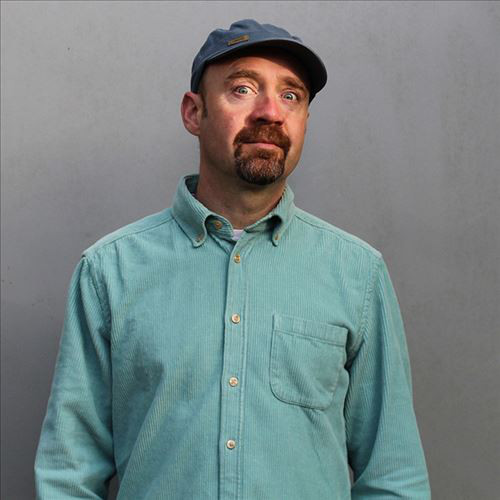
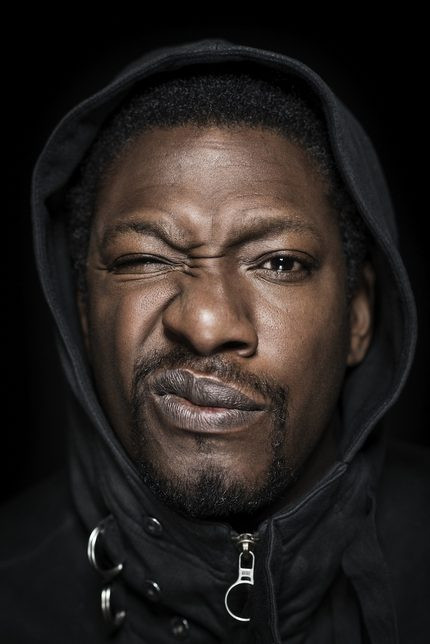
British rapper/producer Rodney Smith established himself as Roots Manuva in the late '90s and began releasing a series of highly regarded albums through <a href="spotify:search:label%3A%22Big+Dada%22">Big Dada</a>. Smith's work was firmly rooted in dub and ragga but also incorporated much of the trip-hop style often associated with <a href="spotify:search:label%3A%22Ninja+Tune%22">Ninja Tune</a>, the U.K. imprint that often distributed <a href="spotify:search:label%3A%22Big+Dada%22">Big Dada</a> releases. The MC debuted in 1999 with Brand New Second Hand, a promising album that garnered a sizable amount of attention from the international hip-hop crowd and won Britain's coveted MOBO award. Beginning in late 1999, shortly after the album was released, Smith returned to the studio to begin work on Run Come Save Me, his follow-up. He completed the album and released it on <a href="spotify:search:label%3A%22Big+Dada%22">Big Dada</a> in 2001; thanks to his own production on the breakout single "Witness (I Hope)," the album became a British hit and increased his worldwide recognition. It narrowly missed winning the prestigious Mercury Prize and spawned an excellent dub album, Dub Come Save Me, released one year later. His third album, the introverted and somewhat constricted Awfully Deep, appeared in 2005 and peaked within the Top 30 of the U.K. album chart.
The following year's Alternately Deep, featuring remixes and original tracks recorded around the same time as those of its predecessor, was a looser affair. It hinted at the prospect of material with lighter subject matter, but Slime & Reason, released in 2008, was yet another set based on inward-looking, occasionally grim, content. <a href="spotify:artist:1qQMHG8mXZi1oWbnrRdNKr">Wrongtom</a>, who produced versions of seven of the album's cuts for the sake of a two-disc edition, was eventually allowed to do the same with tracks from the entirety of Roots Manuva's catalog. The result of this experiment, Duppy Writer, was issued in 2010. 4everevolution, released the following year, was the most diverse Roots Manuva full-length and included appearances from <a href="spotify:artist:5HlXA01kcjssYDT7EoqUJF">Skunk Anansie</a>'s Skin and Cass Lewis. A few singles and EPs appeared in 2012 and 2013, including collaborations with <a href="spotify:artist:3XxxEq6BREC57nCWXbQZ7o">Jamie Cullum</a>, <a href="spotify:artist:0wyNXZtiqbwJC0ODZBvqHP">Ill Audio</a>, and <a href="spotify:artist:4oH23eStsQtgTe83Riw3h0">Hiem</a>. Smith began working on a new Roots Manuva full-length for release in 2015, with a double A-side single, "Facety 2:11"/"Like a Drum," featuring production by <a href="spotify:artist:7Eu1txygG6nJttLHbZdQOh">Four Tet</a> and <a href="spotify:artist:06xa1OLBsMQJFXcl2tQkH4">Machinedrum</a>. Preceded by further singles "One Thing" and "Don't Breathe Out," Bleeds (which also featured production by <a href="spotify:artist:4vZIz0gG5DD3Qj9MB6kclW">Adrian Sherwood</a>) appeared in late October 2015. ~ Jason Birchmeier & Andy Kellman, Rovi
The following year's Alternately Deep, featuring remixes and original tracks recorded around the same time as those of its predecessor, was a looser affair. It hinted at the prospect of material with lighter subject matter, but Slime & Reason, released in 2008, was yet another set based on inward-looking, occasionally grim, content. <a href="spotify:artist:1qQMHG8mXZi1oWbnrRdNKr">Wrongtom</a>, who produced versions of seven of the album's cuts for the sake of a two-disc edition, was eventually allowed to do the same with tracks from the entirety of Roots Manuva's catalog. The result of this experiment, Duppy Writer, was issued in 2010. 4everevolution, released the following year, was the most diverse Roots Manuva full-length and included appearances from <a href="spotify:artist:5HlXA01kcjssYDT7EoqUJF">Skunk Anansie</a>'s Skin and Cass Lewis. A few singles and EPs appeared in 2012 and 2013, including collaborations with <a href="spotify:artist:3XxxEq6BREC57nCWXbQZ7o">Jamie Cullum</a>, <a href="spotify:artist:0wyNXZtiqbwJC0ODZBvqHP">Ill Audio</a>, and <a href="spotify:artist:4oH23eStsQtgTe83Riw3h0">Hiem</a>. Smith began working on a new Roots Manuva full-length for release in 2015, with a double A-side single, "Facety 2:11"/"Like a Drum," featuring production by <a href="spotify:artist:7Eu1txygG6nJttLHbZdQOh">Four Tet</a> and <a href="spotify:artist:06xa1OLBsMQJFXcl2tQkH4">Machinedrum</a>. Preceded by further singles "One Thing" and "Don't Breathe Out," Bleeds (which also featured production by <a href="spotify:artist:4vZIz0gG5DD3Qj9MB6kclW">Adrian Sherwood</a>) appeared in late October 2015. ~ Jason Birchmeier & Andy Kellman, Rovi
Monthly Listeners
387,263
Monthly Listeners History
Track the evolution of monthly listeners over the last 28 days.
Followers
173,328
Followers History
Track the evolution of followers over the last 28 days.
Top Cities
28,932 listeners

8,370 listeners

8,173 listeners
6,882 listeners
4,478 listeners
Related Artists
Pan Amsterdam