Data may be outdated
Last updated: 4 months ago — Click refresh to get the latest statistics.
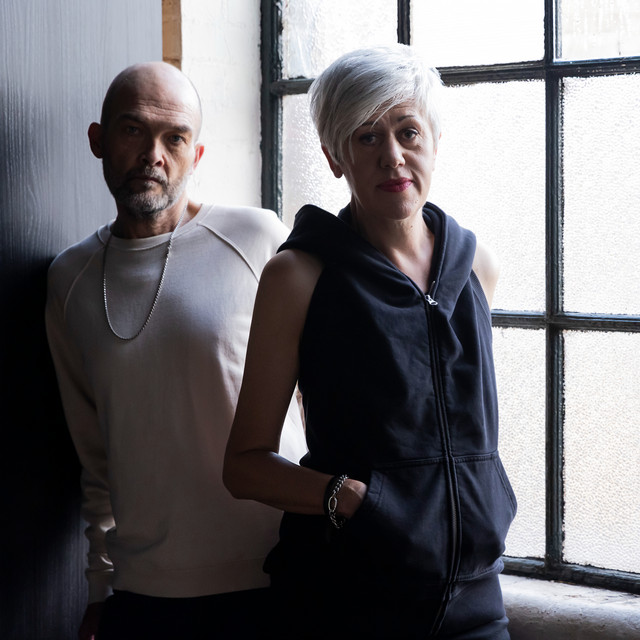
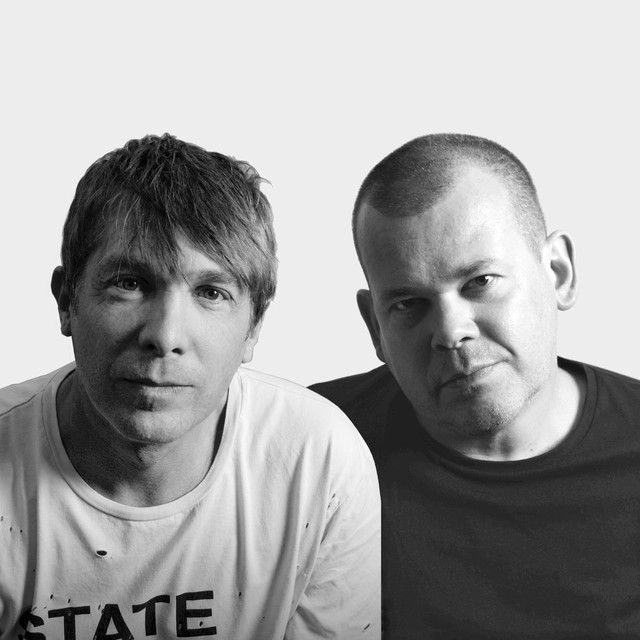
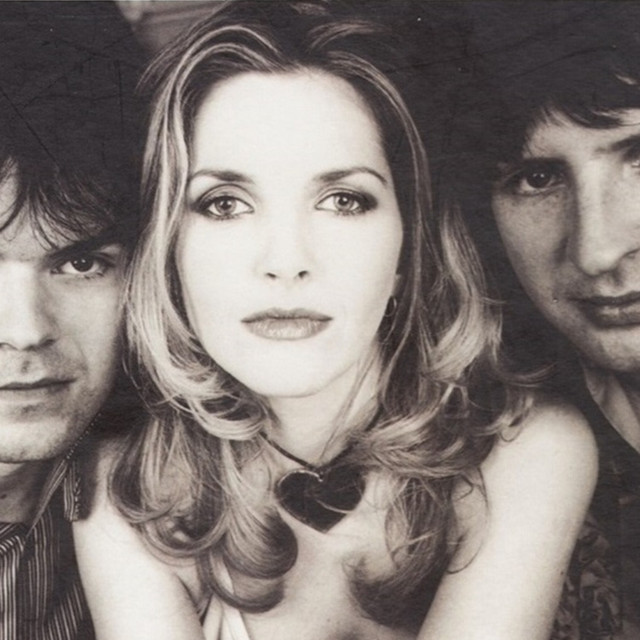
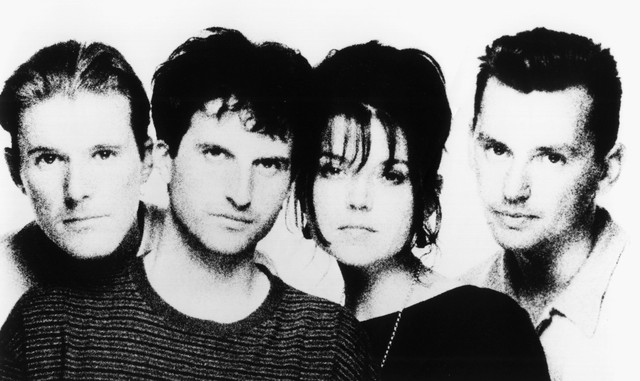
The origins of Saint Etienne date back to the early '80s, when childhood friends Bob Stanley and Pete Wiggs began making party tapes together in their hometown of Croydon, Surrey, England. After completing school, the pair worked various jobs -- most notably, Stanley was a music journalist -- before deciding to concentrate on a musical career in 1988. Adopting the name Saint Etienne from the French football team of the same name, the duo moved to Camden, where they began recording with the help of producer/engineer Ian Catt. By the beginning of 1990, the pair had signed a record contract with the indie label <a href="spotify:search:label%3A%22Heavenly%22">Heavenly</a>. In the spring of 1990, Saint Etienne released their first single, a house-tinged cover of <a href="spotify:artist:6v8FB84lnmJs434UJf2Mrm">Neil Young</a>'s "Only Love Can Break Your Heart," which featured lead vocals from Moira Lambert of the indie pop band Faith Over Reason. The song became an underground hit, getting a fair amount of airplay in nightclubs across England, especially after receiving a coveted <a href="spotify:artist:5J85JTgIYIUP276hmuIozn">Andrew Weatherall</a> remix. Later in the year, Saint Etienne released their second single, a cover of the indie pop group <a href="spotify:artist:3KH6DLHeoFZgVbtKiLXb6L">Field Mice</a>'s "Let's Kiss and Make Up," which was sung by Donna Savage of the New Zealand band <a href="spotify:artist:3R6JWhh0dvSFVLS0E1rQSN">Dead Famous People</a>. Like its predecessor, "Kiss and Make Up" was an underground hit, helping set the stage for "Nothing Can Stop Us." Released in the spring of 1991, the song was the first Saint Etienne single sung by <a href="spotify:artist:1zNEDEkB3OxMFs1T4elb7q">Sarah Cracknell</a>, who had been in a number of indie bands and sang on a track by Lovecut DB.
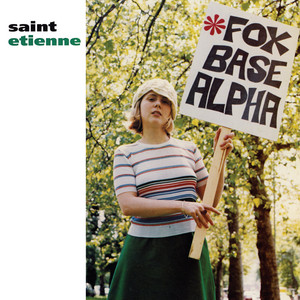
After Stanley and Wiggs abandoned the idea of using a rotating cast of singers, they chose <a href="spotify:artist:1zNEDEkB3OxMFs1T4elb7q">Cracknell</a> as the main vocalist on the group's debut effort, Fox Base Alpha, which was issued in the fall of 1991. Following that release, <a href="spotify:artist:1zNEDEkB3OxMFs1T4elb7q">Cracknell</a> officially became a member of Saint Etienne. The album was well-received and the trio gained a strong fan base not only in England but all over Europe. Throughout 1992, the group released a series of singles -- "Join Our Club," "People Get Real," and "Avenue" -- which maintained their popularity and began to stretch the boundaries of their established sound. In addition to writing and recording music for Saint Etienne, Stanley and Wiggs became active producers, songwriters, remixers, and label heads as well. In 1989, Stanley founded <a href="spotify:search:label%3A%22Caff+Records%22">Caff Records</a>, which issued limited-edition 7" singles of bands as diverse as <a href="spotify:artist:36E7oYfz3LLRto6l2WmDcD">Pulp</a> and the <a href="spotify:artist:2uH0RyPcX7fnCcT90HFDQX">Manic Street Preachers</a>, as well as a number of other lesser-known acts like <a href="spotify:artist:0g7hF3i6YBkGoZvw1tb4Cl">World of Twist</a>. In 1992, Stanley and Wiggs founded <a href="spotify:search:label%3A%22Icerink%22">Icerink</a>, which intended to put out records by pop groups, not rock groups. The label released singles from several artists -- including <a href="spotify:artist:1Yti3CsDazWVjNMXBHx1Af">Oval</a>, Sensurround, <a href="spotify:search:label%3A%22Elizabeth+City+State%22">Elizabeth City State</a>, and Golden -- and a compilation CD titled We Are Icerink.
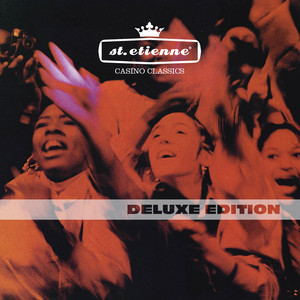
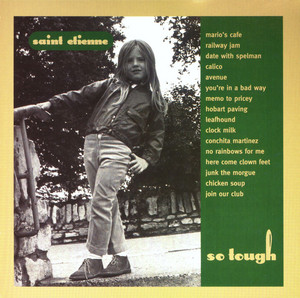
Preceded by the single "You're in a Bad Way," Saint Etienne's second album, the sample-heavy So Tough, appeared in the spring of 1993 to generally positive reviews and sales. Over the course of 1993, the group released three more singles -- "Who Do You Think You Are," "Hobart Paving," and "I Was Born on Christmas Day" -- which all charted well. The band's third album, 1994's Tiger Bay, combined sleek dancefloor tracks with British folk melodies, dub excursions, and real orchestration to become their most expansive release to date. They returned the next year with a Euro-disco-influenced collaboration starring French singer <a href="spotify:artist:5aDKJuLDczfmHfRSOmHCJk">Etienne Daho</a>, "He's on the Phone," then decided to take an extended break during 1996, only releasing a remix album titled Casino Classics.
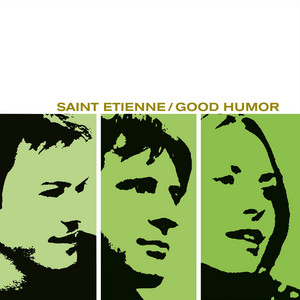
<a href="spotify:artist:1zNEDEkB3OxMFs1T4elb7q">Sarah Cracknell</a> pursued a solo project, releasing a single titled "Anymore" in the fall of the year. Bob Stanley and Pete Wiggs began a record label for <a href="spotify:search:label%3A%22EMI+Records%22">EMI Records</a>, with the intention of releasing music from young developing bands. When they decided to make more music together as a group, they decamped to Sweden with producer Tore Johansson, who had worked previously with <a href="spotify:artist:1tqZaCwM57UFKjWoYwMLrw">the Cardigans</a>. Sporting an organic sound with nary a sample in sight, 1998's Good Humor was their first album to be issued by <a href="spotify:search:label%3A%22Sub+Pop%22">Sub Pop</a>; the label also released a collection of EP tracks titled Places to Visit in 1999. The experience of recording in another country went so well that Saint Etienne headed to Germany to work with <a href="spotify:artist:0DRlmNJq133uYhzXxJfF3a">To Rococo Rot</a> at their studio. Sound of Water was released in 2000 and also featured production by their new mate Gerard Johnson and arrangements by <a href="spotify:artist:4dMtztditoMOlTzkFdqWRk">Sean O'Hagan</a> of <a href="spotify:artist:4C6mJ6VZtsBnwzGKZmmzeF">the High Llamas</a>. After a U.S. tour in support of the album, <a href="spotify:search:label%3A%22Sub+Pop%22">Sub Pop</a> issued Interlude -- a collection of new tracks, instrumentals, and B-sides -- in early 2001. The band's 2002 album Finisterre was recorded once again with Ian Catt and featured a less sonically focused approach than their previous two records, instead following various strands of sample-based and electronic music, much as their early albums had done.
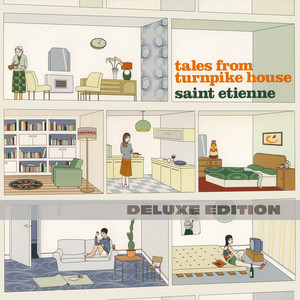
After a couple of years spent raising families and working on the 2005 Finisterre: A Film About London, the trio returned to the studio with Ian Catt to record Tales from Turnpike House, their first crack at a loosely constructed concept album. With lush backing vocals from legendary British singer <a href="spotify:artist:3P6tUOYAQK4B68l0AYPG5Y">Tony Rivers</a> and his son <a href="spotify:artist:7hN1aI9crOW3OqSzXNTY3B">Anthony</a>, a guest appearance by <a href="spotify:artist:46n0cAhBmsRJZiX6GSFmbf">David Essex</a>, and some glitter provided by <a href="spotify:artist:73j1Dkuu6FdSiuT0epNpuy">Xenomania</a>, the album is an oft-overlooked high point of their discography.
Following a seven-year break during which the bandmembers worked on making films, doing remixes, and various solo projects, musical and otherwise, the group resurfaced in 2012 with Words and Music by Saint Etienne, an album loosely based on the concept of how music can affect and shape lives unexpectedly, both positively and negatively. It would be another five years before they released new music, but, as ever, the bandmembers kept themselves busy with other projects in the meantime. <a href="spotify:artist:1zNEDEkB3OxMFs1T4elb7q">Cracknell</a> signed to <a href="spotify:search:label%3A%22Cherry+Records%22">Cherry Records</a> and released the solo album Red Kite in 2015; Stanley's second book, Yeah! Yeah! Yeah!: The Story of Pop Music from Bill Haley to Beyoncé, was published in 2014; and Wiggs contributed the soundtrack to the film Year 7.
After Saint Etienne played a series of shows in 2016 to commemorate the 25th anniversary of Foxbase Alpha, they decided it was time to record some new tunes. The band selected producer <a href="spotify:artist:3DkmShHV6P6CezJN6EPmCJ">Shawn Lee</a> and began writing songs inspired by the counties in the southeast of England, where each of the bandmembers spent their teenage years. Working quickly with <a href="spotify:artist:3DkmShHV6P6CezJN6EPmCJ">Lee</a> and his studio full of vintage instruments, the group finished the record, titled Home Counties, in three weeks, and it was released in June 2017 by <a href="spotify:search:label%3A%22Heavenly%22">Heavenly</a>. The band set off on a tour of the U.K., then headed to America for a rare string of appearances. They returned not too much later for a short tour celebrating the 20th anniversary of the release of Good Humour. Nostalgia struck again when they performed Tiger Bay in full with the <a href="spotify:artist:1Uw2tN8RWQAKO3jtsqIJ8M">London Contemporary Orchestra</a> in 2019, just before a short U.K. tour and a box set reissue of the album itself. Along with their work for the band, Stanley and Wiggs also become known as prolific curators of compilations of all sorts of obscure sounds for the <a href="spotify:search:label%3A%22Ace%22">Ace</a> label.
In 2020, finding it impossible to work together on music, the bandmembers recorded in their respective homes, with Stanley digging up samples in Bradford, Wiggs providing music in Hove, and <a href="spotify:artist:1zNEDEkB3OxMFs1T4elb7q">Cracknell</a> adding vocals in Oxford. They were assisted on a number of tracks by film music producer Augustin Bousfield, who is also in the band Gurgles. Released in late 2021, I've Been Trying to Tell You set forth a melancholy, dub-influenced alternative pop universe circa the late '90s with the assist of samples culled from songs by <a href="spotify:artist:0dlOr0VIysztGWvU1dpjmP">Natalie Imbruglia</a>, <a href="spotify:artist:6EgtYGZoF5jLydCpz43xu1">Tasmin Archer</a>, the <a href="spotify:artist:6edGSAX5dVpeJVwu1Q0NwJ">Lighthouse Family</a>, and <a href="spotify:artist:3Ps27dDfvubd75rh5A0wz9">Honeyz</a>, among others. The group continued working on other projects and living life, then met Bousfield in the studio to begin work on an album that was even more ambient than its predecessor; this time they relied less on samples and brought <a href="spotify:artist:1zNEDEkB3OxMFs1T4elb7q">Cracknell</a>'s deeply blue vocals to the fore. Night was recorded between June and August of 2024, then issued by <a href="spotify:search:label%3A%22Heavenly%22">Heavenly</a> in December. ~ Stephen Thomas Erlewine & Tim Sendra, Rovi
Monthly Listeners
1.5 million
Monthly Listeners History
Track the evolution of monthly listeners over the last 28 days.
Followers
185,034
Followers History
Track the evolution of followers over the last 28 days.
Total Streams
123.4 million
Total Streams History
Track the evolution of total streams over the last 28 days. This data is calculated from all tracks listed in the artist's discography.
Top Cities


Related Artists
Pale Saints






Panda Bear

spirit blue