Data may be outdated
Last updated: 3 weeks ago — Click refresh to get the latest statistics.
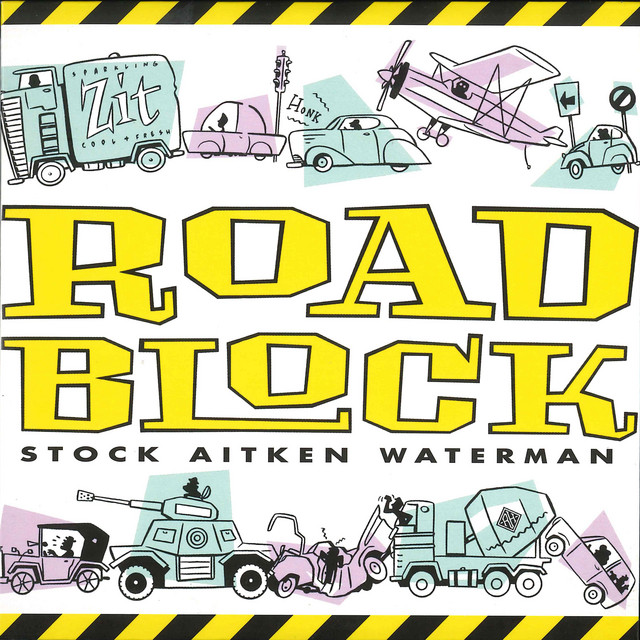
Stock, Aitken & Waterman were about as commercial as it gets -- at times, they were downright bubblegum -- and that fact wasn't lost on the British rock critics who bashed them unmercifully. When Stock, Aitken & Waterman produced an album, they could usually count on receiving their share of scathing reviews from the British press; and plenty of American critics weren't terribly supportive, either. But what critics like and what the public buys are often two entirely different things, and Stock, Aitken & Waterman helped British stars like <a href="spotify:artist:5WWSL6rElJeUk3Uc1S2RyD">Dead or Alive</a>, <a href="spotify:artist:3sc7iUG1Wwpwx7bHeZolgx">Bananarama</a>, <a href="spotify:artist:4k7b3DWqBnYpobDWbNWLdM">Mel & Kim</a>, and <a href="spotify:artist:0gxyHStUsqpMadRV0Di1Qt">Rick Astley</a> sell a lot of records in the '80s.
The producer/songwriters first joined forces in 1984, and it wasn't long before they were working with Liverpool group <a href="spotify:artist:5WWSL6rElJeUk3Uc1S2RyD">Dead or Alive</a>, whose biggest hits favored an exuberant blend of Hi-NRG (which was essentially late-'70s Euro-disco with a more high-tech production style) and pop/rock. Produced by Stock, Aitken & Waterman in 1985, <a href="spotify:artist:5WWSL6rElJeUk3Uc1S2RyD">Dead or Alive</a>'s Youthquake was the album that really put the group over the top commercially. The infectious single "You Spin Me Round (Like a Record)" became a smash hit in both the U.K. and North America, and Youthquake's next single, "Lover Come Back to Me," was also huge. In 1986, the trio produced another album for <a href="spotify:artist:5WWSL6rElJeUk3Uc1S2RyD">Dead or Alive</a>, Mad, Bad & Dangerous to Know, which contained the hits "Something in My House," "I'll Save You All My Kisses," and "Brand New Lover." While <a href="spotify:artist:5WWSL6rElJeUk3Uc1S2RyD">Dead or Alive</a>'s members did their own writing, Stock, Aitken & Waterman served as both producers and songwriters for other artists.
In 1987, the trio produced and wrote most of singer <a href="spotify:artist:0gxyHStUsqpMadRV0Di1Qt">Rick Astley</a>'s debut album, Whenever You Need Someday, including the hit title song and the smash "Never Gonna Give You Up" (which became a number one hit in England and the United States). In the late '80s, Stock, Aitken & Waterman also produced and wrote <a href="spotify:artist:0ym94xKp2PIOJtTZKpxbAa">Samantha Fox</a>'s single "Nothing's Gonna Stop Me Now"; that was in addition to working with British female groups <a href="spotify:artist:4k7b3DWqBnYpobDWbNWLdM">Mel & Kim</a> (not to be confused with '70s soulsters <a href="spotify:artist:2ubLClBEuddw29m7QRx4IL">Mel & Tim</a>) and <a href="spotify:artist:3sc7iUG1Wwpwx7bHeZolgx">Bananarama</a>. It was in 1986 that Stock, Aitken & Waterman produced <a href="spotify:artist:3sc7iUG1Wwpwx7bHeZolgx">Bananarama</a>'s smash Hi-NRG remake of <a href="spotify:artist:5WimOFbBnCU5wI6t5PPpEk">Shocking Blue</a>'s "Venus." Other major '80s hits that the team produced for <a href="spotify:artist:3sc7iUG1Wwpwx7bHeZolgx">Bananarama</a> included "Love in the First Degree" and "I Heard a Rumor."
But not every artist that Stock, Aitken & Waterman worked with was British. Theirs was the team that American star <a href="spotify:artist:2eogQKWWoohI3BSnoG7E2U">Donna Summer</a> turned to when, in 1989, she wanted to return to a Euro-disco/Euro-dance approach. That year, the Londoners did most of the producing, writing, and arranging on <a href="spotify:artist:2eogQKWWoohI3BSnoG7E2U">Summer</a>'s Another Place & Time, which contained the hit "This Time I Know It's for Real." And in the late '80s and early '90s, the team worked with Australian superstar <a href="spotify:artist:4RVnAU35WRWra6OZ3CbbMA">Kylie Minogue</a> extensively (producing major hits like "I Should Be So Lucky," "Better the Devil You Know," "Shocked," and "What Do I Have to Do?"). With <a href="spotify:artist:4RVnAU35WRWra6OZ3CbbMA">Minogue</a>, Stock, Aitken & Waterman wanted a very hands-on approach; in addition to doing the producing and writing, they wanted to control the image that <a href="spotify:artist:4RVnAU35WRWra6OZ3CbbMA">Minogue</a> projected in her videos. But as time passed, <a href="spotify:artist:4RVnAU35WRWra6OZ3CbbMA">Minogue</a> wanted more and more creative input; she wanted to help with the songwriting, and when it came to videos, she and Stock, Aitken & Waterman were not seeing eye to eye. While the trio wanted to depict <a href="spotify:artist:4RVnAU35WRWra6OZ3CbbMA">Minogue</a> as the wholesome, fresh-faced girl next door -- sort of a dance-pop version of Meg Ryan -- the Melbourne, Australia, native wanted to project a sexier, more <a href="spotify:artist:6tbjWDEIzxoDsBA1FuhfPW">Madonna</a>-ish image, so by 1994, <a href="spotify:artist:4RVnAU35WRWra6OZ3CbbMA">Minogue</a> had parted company with the London-based hitmakers.
Other artists who Stock, Aitken & Waterman worked with in the early '90s included <a href="spotify:artist:34ugek7kTxRhRSsT1d9Yer">Lonnie Gordon</a> and <a href="spotify:artist:1EbIfIjVcauDatNO4vagL1">Sybil</a>, but by the latter part of the decade, the team's popularity had decreased. However, their songs were still being covered here and there. In the late '90s, Swedish female dance-pop/Hi-NRG duo Jemma & Elise recorded remakes of two of their big hits of the '80s, "I Should Be So Lucky" and "Love in the First Degree." ~ Alex Henderson
Monthly Listeners
5,101
Monthly Listeners History
Track the evolution of monthly listeners over the last 28 days.
Followers
5,906
Followers History
Track the evolution of followers over the last 28 days.
Total Streams
1.9 million
Total Streams History
Track the evolution of total streams over the last 28 days. This data is calculated from all tracks listed in the artist's discography.
Top Cities



Related Artists



Gary Byrd & The G.B. Experience

Rochelle


The Beat Masters
2 Men A Drum Machine And A Trumpet