Data may be outdated
Last updated: 9 months ago — Click refresh to get the latest statistics.
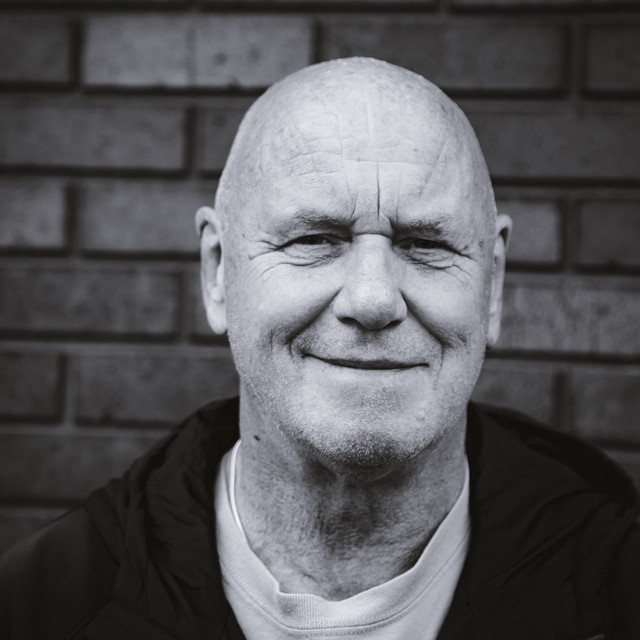
The only direct link from the '90s ambient house community to its space rocking forebear of the '70s, <a href="spotify:artist:4ruO9Y424Hf796fUGMLKcC">Steve Hillage</a> played in the prog rock band <a href="spotify:artist:47yvARr7dCOKqvjDVwfbf3">Gong</a>, released several solo albums during the late '70s and early '80s on Virgin, and later returned to music in the '90s to form System 7, more of a recording collective than an actual band. <a href="spotify:artist:4ruO9Y424Hf796fUGMLKcC">Hillage</a> was recruited back to the music scene by Dr. Alex Paterson of <a href="spotify:artist:5HAtRoEPUvGSA7ziTGB1cF">the Orb</a>, who spun <a href="spotify:artist:4ruO9Y424Hf796fUGMLKcC">Hillage</a>'s Rainbow Dome Musick at London's Heaven one night while <a href="spotify:artist:4ruO9Y424Hf796fUGMLKcC">Hillage</a> was there himself. The two became friends, and Paterson encouraged him to begin recording ambient house -- with <a href="spotify:artist:4ruO9Y424Hf796fUGMLKcC">Hillage</a>'s guitar explorations just as prominent in the mix as on his solo work. With collaborator Miquette Giraudy (an old friend from his days in <a href="spotify:artist:47yvARr7dCOKqvjDVwfbf3">Gong</a>), <a href="spotify:artist:4ruO9Y424Hf796fUGMLKcC">Hillage</a> released the single "Sunburst" in late 1990, and followed with a self-titled album in September 1991, produced with the help of a varied cast of techno heavyweights (including Paterson and <a href="spotify:artist:0v6N0xV7AfHHKVcgUOjC51">Derrick May</a>). Soon after, System 7 was signed to an American contract by Astralwerks, though the existence of a similarly named band caused <a href="spotify:artist:4ruO9Y424Hf796fUGMLKcC">Hillage</a> to name his outfit 777. The System 7 album was finally given a U.S. release in 1992 as 777.
During 1992, <a href="spotify:artist:4ruO9Y424Hf796fUGMLKcC">Hillage</a> and Giraudy released the British-only singles "Freedom Fighters" and "Altitude" -- as System 7, since the restriction applied only in America -- and prepared their second album. Given the confusing title of 777, it was nonetheless a completely different work than the earlier LP, and featured additional production by Dr. Alex Paterson. Though it wasn't given an American release, System 7's next project, a techno album and an ambient one released on the same day in late 1994, was issued in America as a two-disc set (again as 777). Signed to Britain's Butterfly label by producer <a href="spotify:artist:1zf3mY5ZJ69hlt5W24EvYq">Youth</a> (who had engineered several sessions), the group worked with <a href="spotify:artist:0v6N0xV7AfHHKVcgUOjC51">Derrick May</a> and <a href="spotify:artist:17dbJyUCrxh4I7iyUrjaHU">Carl Craig</a> plus Paterson to record 1996's Power of Seven. Though the album was not released in America, later that year the industrial label Cleopatra signed System 7 -- finally allowed to use their real name in the U.S. as well -- and released the remix LP System Express in early 1997. System 7 returned later in 1997 with Golden Section. 2002's Seventh Wave and Mysterious Traveller followed, as well as 2006's Encantado and Live Transmissions.
Released in January of 2008, the conceptual album Phoenix was based on the manga graphic novels series of the same name by Osamu Tezuka, one the founders of Japanese manga culture. Each track corresponded to a character or image in the book series and featured an array of collaborators including Mito, bassist from Art rock cum J-Pop band <a href="spotify:artist:1gpNGL4WHSegm0WXj2j1m0">Clammbon</a>, <a href="spotify:artist:2K6Hu64Ja0FveuTYg8nC3Q">Son Kite</a>, Jam El Mar, <a href="spotify:artist:5NzgIP3Nss2uao20MDXavK">Eat Static</a>, Slack Baba, and <a href="spotify:artist:4TKZe6WKiBlHCvnhO1lsa7">Daevid Allen</a>. It was followed a year later by Live @ Shinjuku Face 11.4.2009. <a href="spotify:artist:4ruO9Y424Hf796fUGMLKcC">Hillage</a> and Giraudy also took the opportunity to reunite with <a href="spotify:artist:4TKZe6WKiBlHCvnhO1lsa7">Allen</a> and <a href="spotify:artist:47yvARr7dCOKqvjDVwfbf3">Gong</a> for the album 2032 that year.
System 7's next studio offering was 2011's Up; it featured collaborations with <a href="spotify:artist:1TV0WTE9ukywcLGMh4j4iU">A Guy Called Gerald</a>, <a href="spotify:artist:6DQLkRykAsF6paJnlIMX4H">Josh Wink</a> and Funky Gong Minoru (a.k.a. guitarist Minoru Tsunoda). The EPs Positive Noise and Passion followed.
2013 saw System 7 in a landmark collaboration with vanguard Japanese band <a href="spotify:artist:2qZ6ysNx87m5VqGl58osSf">Rovo</a> for Phoenix Rising (as Rovo System 7) that also netted the Hinotori EP.
2015's X Port featured <a href="spotify:artist:2qZ6ysNx87m5VqGl58osSf">Rovo</a> on the track "Love For The Phoenix. The album also included collaboratives with Paterson and James Munro. It was almost immediately followed by N Port from <a href="spotify:artist:4zBupgQ0BhDPuBceJDocoi">Mirror System</a> (System 7's downtempo alterego) and the mini-album N + X System, jointly credited to System 7 and <a href="spotify:artist:4zBupgQ0BhDPuBceJDocoi">Mirror System</a>. ~ John Bush, Rovi
During 1992, <a href="spotify:artist:4ruO9Y424Hf796fUGMLKcC">Hillage</a> and Giraudy released the British-only singles "Freedom Fighters" and "Altitude" -- as System 7, since the restriction applied only in America -- and prepared their second album. Given the confusing title of 777, it was nonetheless a completely different work than the earlier LP, and featured additional production by Dr. Alex Paterson. Though it wasn't given an American release, System 7's next project, a techno album and an ambient one released on the same day in late 1994, was issued in America as a two-disc set (again as 777). Signed to Britain's Butterfly label by producer <a href="spotify:artist:1zf3mY5ZJ69hlt5W24EvYq">Youth</a> (who had engineered several sessions), the group worked with <a href="spotify:artist:0v6N0xV7AfHHKVcgUOjC51">Derrick May</a> and <a href="spotify:artist:17dbJyUCrxh4I7iyUrjaHU">Carl Craig</a> plus Paterson to record 1996's Power of Seven. Though the album was not released in America, later that year the industrial label Cleopatra signed System 7 -- finally allowed to use their real name in the U.S. as well -- and released the remix LP System Express in early 1997. System 7 returned later in 1997 with Golden Section. 2002's Seventh Wave and Mysterious Traveller followed, as well as 2006's Encantado and Live Transmissions.
Released in January of 2008, the conceptual album Phoenix was based on the manga graphic novels series of the same name by Osamu Tezuka, one the founders of Japanese manga culture. Each track corresponded to a character or image in the book series and featured an array of collaborators including Mito, bassist from Art rock cum J-Pop band <a href="spotify:artist:1gpNGL4WHSegm0WXj2j1m0">Clammbon</a>, <a href="spotify:artist:2K6Hu64Ja0FveuTYg8nC3Q">Son Kite</a>, Jam El Mar, <a href="spotify:artist:5NzgIP3Nss2uao20MDXavK">Eat Static</a>, Slack Baba, and <a href="spotify:artist:4TKZe6WKiBlHCvnhO1lsa7">Daevid Allen</a>. It was followed a year later by Live @ Shinjuku Face 11.4.2009. <a href="spotify:artist:4ruO9Y424Hf796fUGMLKcC">Hillage</a> and Giraudy also took the opportunity to reunite with <a href="spotify:artist:4TKZe6WKiBlHCvnhO1lsa7">Allen</a> and <a href="spotify:artist:47yvARr7dCOKqvjDVwfbf3">Gong</a> for the album 2032 that year.
System 7's next studio offering was 2011's Up; it featured collaborations with <a href="spotify:artist:1TV0WTE9ukywcLGMh4j4iU">A Guy Called Gerald</a>, <a href="spotify:artist:6DQLkRykAsF6paJnlIMX4H">Josh Wink</a> and Funky Gong Minoru (a.k.a. guitarist Minoru Tsunoda). The EPs Positive Noise and Passion followed.
2013 saw System 7 in a landmark collaboration with vanguard Japanese band <a href="spotify:artist:2qZ6ysNx87m5VqGl58osSf">Rovo</a> for Phoenix Rising (as Rovo System 7) that also netted the Hinotori EP.
2015's X Port featured <a href="spotify:artist:2qZ6ysNx87m5VqGl58osSf">Rovo</a> on the track "Love For The Phoenix. The album also included collaboratives with Paterson and James Munro. It was almost immediately followed by N Port from <a href="spotify:artist:4zBupgQ0BhDPuBceJDocoi">Mirror System</a> (System 7's downtempo alterego) and the mini-album N + X System, jointly credited to System 7 and <a href="spotify:artist:4zBupgQ0BhDPuBceJDocoi">Mirror System</a>. ~ John Bush, Rovi
Monthly Listeners
18,151
Monthly Listeners History
Track the evolution of monthly listeners over the last 28 days.
Followers
31,063
Followers History
Track the evolution of followers over the last 28 days.
Top Cities
1,132 listeners

287 listeners
270 listeners
263 listeners

232 listeners