Data may be outdated
Last updated: 9 months ago — Click refresh to get the latest statistics.
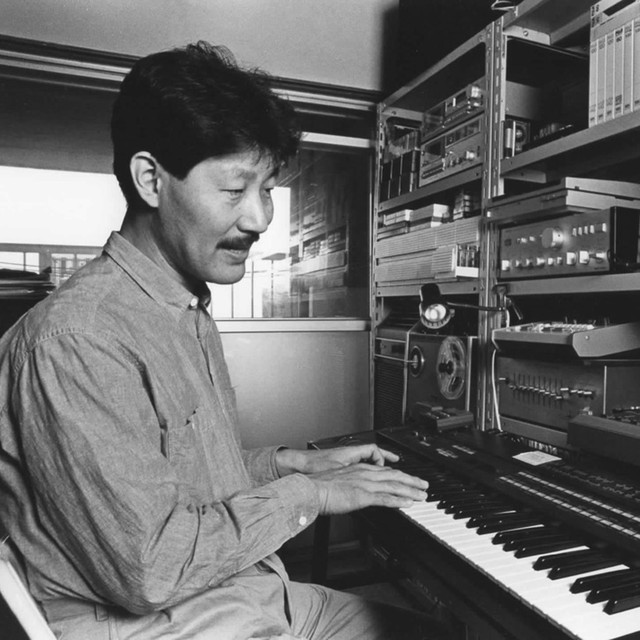
From his early work with the pioneering Krautrock band <a href="spotify:artist:5mNY0NPszdalbrb4ITO3M8">Cluster</a> to his later, more ambient solo recordings and beyond, Hans-Joachim Roedelius has remained one of the most innovative and prolific figures in contemporary electronic music. Evolving from the avant-garde improvisational trio <a href="spotify:artist:7lIKVwbDfQHvHtGRPue9jY">Kluster</a>, the music of <a href="spotify:artist:5mNY0NPszdalbrb4ITO3M8">Cluster</a> (Roedelius and Dieter Moebius) moved from harsh, alien soundscapes to the more melodic proto-synth pop of landmark albums such as 1974's Zuckerzeit. Along with <a href="spotify:artist:4njCJpFlUJkSmFRj6vDZ9D">Michael Rother</a>, both members of <a href="spotify:artist:5mNY0NPszdalbrb4ITO3M8">Cluster</a> produced hypnotic electronic rock music as the short-lived but influential project <a href="spotify:artist:0tHDVpPzMs1JqKTAuGQkQR">Harmonia</a>. Roedelius made his solo debut in 1978 with the guitar-driven Durch die Wüste, then continued exploring numerous directions, from the ambient reflections of the Selbstportrait series to the jazzy abstractions of 1982's Wasser im Wind and piano-focused neo-classical works like 1984's Geschenk Des Augenblicks. Remaining prolific well into the 21st century, he has collaborated with artists such as <a href="spotify:artist:6S7EbdcNj5pWjBdeNU0FWc">Tim Story</a>, <a href="spotify:artist:5CXWXFfhDhFN5uzbfUwAKt">Lloyd Cole</a>, <a href="spotify:artist:2kiN34DD6EDaawrTSxzn3n">Stefan Schneider</a>, and countless others, in addition to releasing several albums as part of <a href="spotify:artist:3N4xZtWhq6zRj8N89mG4cL">Qluster</a>, a continuation of <a href="spotify:artist:5mNY0NPszdalbrb4ITO3M8">Cluster</a>. His vast body of work has been a major influence on several generations of experimental rock, electronic, and new age musicians. Along with the release of multiple other archival projects, Roedelius celebrated his 90th birthday in 2024 with the release of 90, an extensive set of unreleased recordings made largely between 1968 and 1980.
Born in Berlin in 1934, Roedelius drifted through a series of odd jobs before turning to music, later collaborating with conceptual artist <a href="spotify:artist:79f49kyfxgPm1WF8EHz2vf">Conrad Schnitzler</a> in a series of experimental bands including <a href="spotify:search:label%3A%22Plus%2FMinus%22">Plus/Minus</a>, Noises, and the Human Being. In 1968, Roedelius and <a href="spotify:artist:79f49kyfxgPm1WF8EHz2vf">Schnitzler</a> were among the co-founders of the Zodiak Free Arts Lab, a group of avant-garde artists from a variety of creative disciplines that quickly became one of the driving forces of the Berlin underground scene; with Dieter Moebius, they formed <a href="spotify:artist:7lIKVwbDfQHvHtGRPue9jY">Kluster</a> in 1969, performing extended improvisational live dates throughout West Germany.
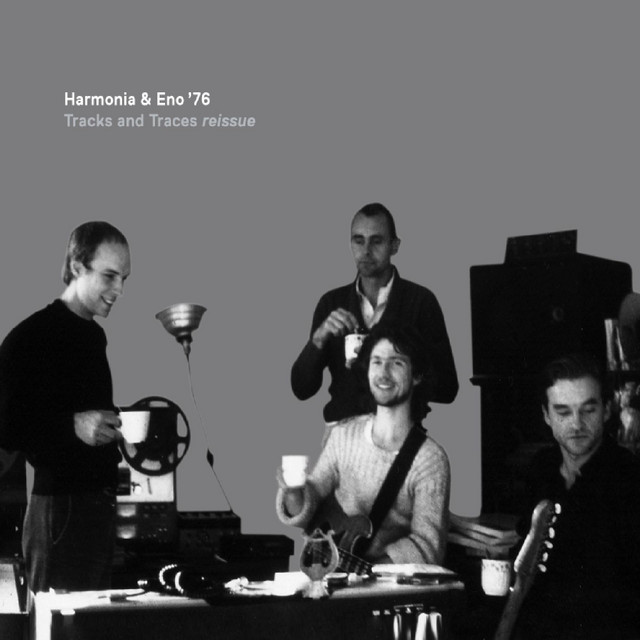
<a href="spotify:artist:7lIKVwbDfQHvHtGRPue9jY">Kluster</a> released their debut LP, Klopfzeichen, in 1970; in the wake of their third album, 1971's Eruption, <a href="spotify:artist:79f49kyfxgPm1WF8EHz2vf">Schnitzler</a> exited to pursue a solo career, and Roedelius and Moebius continued as <a href="spotify:artist:5mNY0NPszdalbrb4ITO3M8">Cluster</a>. Working with famed producer <a href="spotify:artist:1NvaYXFBSMlgokdn84mOkx">Conny Plank</a>, the duo began to move increasingly toward more structured soundscapes; with 1974's Zuckerzeit, they even pursued an electronic pop sound similar in spirit to <a href="spotify:artist:0dmPX6ovclgOy8WWJaFEUU">Kraftwerk</a>. Roedelius and Moebius also teamed with <a href="spotify:artist:2CqEOngQOOMstJupNn6Hmf">Neu!</a>'s <a href="spotify:artist:4njCJpFlUJkSmFRj6vDZ9D">Michael Rother</a> in <a href="spotify:artist:0tHDVpPzMs1JqKTAuGQkQR">Harmonia</a>, releasing a pair of mid-'70s LPs that caught the attention of <a href="spotify:artist:7MSUfLeTdDEoZiJPDSBXgi">Brian Eno</a>, who in response collaborated with the trio on a legendary session (released much later as Tracks & Traces), heralding a turn toward ambient textures (and influencing the sound of the 1976 <a href="spotify:artist:5mNY0NPszdalbrb4ITO3M8">Cluster</a> album Sowiesoso). Roedelius and Moebius subsequently worked with <a href="spotify:artist:7MSUfLeTdDEoZiJPDSBXgi">Eno</a> on 1977's Cluster and Eno and 1979's After the Heat.
In the interim, Roedelius made his solo debut with 1978's Durch die Wüste; after <a href="spotify:artist:5mNY0NPszdalbrb4ITO3M8">Cluster</a> went on hiatus in the wake of 1981's Curiosum, he plunged fully into solo work, regularly releasing several new LPs each year. Although most of these projects pursued ambient paths -- the multi-chapter Selbstportrait series, 1981's Lustwandel, 1987's Momenti Felici, and 1992's Friendly Game all being good examples -- others, like 1982's Offene Türen and 1994's Sinfonia Contempora, No. 1, explored more dissonant electronic soundscapes. Additionally, Roedelius worked in a series of mediums including theater, dance, and film, collaborating with everyone from <a href="spotify:artist:58nPlJ5CNYu0nGLOuE1Uuk">Holger Czukay</a> to <a href="spotify:artist:4u9mLb6exlbHuNehyJ11jq">Peter Baumann</a>; in 1990, he and Moebius also reunited for Apropos Cluster, and the duo continued working together throughout the decade to follow, though they formally severed musical ties in 2011, and Roedelius formed the musical ensemble <a href="spotify:artist:3N4xZtWhq6zRj8N89mG4cL">Qluster</a> with Onnen Bock.
Collaboration became Roedelius' primary M.O. from the '90s on, though he continued to issue volumes in his Selbstportrait series. The list of his musical partners is not only a who's-who of electronic musicians and pioneers, but also of modern composers. Some of his most notable recordings in the '90s also included the solo Tace! in 1993; One Hour with Cluster and Sinfonia Contempora, No. 1: Von Zeit zu Zeit in 1994; Pink, Blue and Amber in 1996; and Meeting the Magus in collaboration with electronics duo Aqueous in 1997 as well as Drive, by the one-shot band Global Trotters, who also included <a href="spotify:artist:1UwZz1gjQPWb8zMm8qY7Hr">Alquimia</a>, David Bickley, <a href="spotify:artist:2ueNXWUQ0UVgL04QGqpaee">Felix Jay</a>, Kenji Konishi, and <a href="spotify:artist:6kaueP97pX7WZoOwF8XsI2">Susumu Hirasawa</a>.
At the beginning of the 21st century, Roedelius accelerated his already prolific output. While his first offering of the new decade was the solo ambient Roedeliusweg, he soon began a wide-ranging series of collaborative projects. Some of the most notable were the collage Veni Creator Spiritus with Eric Spitzer-Marlyn in 2000. The Japanese-only release Acon 2000/1 in collaboration with electronics legend <a href="spotify:artist:79f49kyfxgPm1WF8EHz2vf">Conrad Schnitzler</a> offered a startling contrast of both men's styles. In 2003, joint projects accounted for two of his three releases, including Imagine Imagine, the first of his three albums with <a href="spotify:artist:3M4ThdJR28z9eSMcQHAZ5G">the Fratellis</a>. The ambient solo offering Amerika Recycled was his only album released in 2004. One of his most compelling releases, an ambient classical crossover project with pianist <a href="spotify:artist:7zyMwBawm5wNhzlCx1Bopk">Morgan Fisher</a>, was issued in 2005.
<a href="spotify:artist:5mNY0NPszdalbrb4ITO3M8">Cluster</a> reunited for a tour in 2007; a live document Berlin 07 was released in 2008, along with Errata, which found him in a partnership with classical/new age musician <a href="spotify:artist:6S7EbdcNj5pWjBdeNU0FWc">Tim Story</a> and the dark electronic soundscape artist <a href="spotify:artist:4ipviQoDW1A1oCMBECS99k">Dwight Ashley</a>. The last year of the first decade of the century was marked by Sustanza di Cose Sperata, with the brilliant and wildly idiosyncratic new music pianist and composer <a href="spotify:artist:0BbHILJDz4eN90gbl1mHZj">Alessandra Celletti</a>. That year also saw the release of Qua, the final studio album by <a href="spotify:artist:5mNY0NPszdalbrb4ITO3M8">Cluster</a>.
Roedelius began a new working partnership in 2010, this one with producer and electronic pop musician <a href="spotify:artist:2kiN34DD6EDaawrTSxzn3n">Stefan Schneider</a> (aka <a href="spotify:artist:3howkCr7bhjjUIYuaEEtUp">Mapstation</a>) of <a href="spotify:artist:0DRlmNJq133uYhzXxJfF3a">To Rococo Rot</a> and <a href="spotify:artist:6YuaNIJm6LAKBvRdb8PGIt">Kreidler</a>. Their first album together was Stunden, released by <a href="spotify:search:label%3A%22Bureau+B%22">Bureau B</a>. Roedelius evolved <a href="spotify:artist:5mNY0NPszdalbrb4ITO3M8">Cluster</a> into <a href="spotify:artist:3N4xZtWhq6zRj8N89mG4cL">Qluster</a>, in collaboration with Berlin musician Onnen Bock; Fragen and Rufen both appeared on <a href="spotify:search:label%3A%22Bureau+B%22">Bureau B</a> in 2011, with Antworten arriving the following year. A solo piano gig titled Plays Piano: Bloomsbury Theatre, London, July 28th, 1985 was released in 2012. Selected Studies, Vol. 1, a surprise collaboration with singer and songwriter <a href="spotify:artist:5CXWXFfhDhFN5uzbfUwAKt">Lloyd Cole</a>, was released in early 2013, as was Roedelius' next full-length with <a href="spotify:artist:2kiN34DD6EDaawrTSxzn3n">Schneider</a>, Tiden. The label reissued much of Roedelius' back catalog, and released Tape Archive 1973-1978, an extensive multimedia box set of unreleased material, in 2014.
Outside of the <a href="spotify:search:label%3A%22Bureau+B%22">Bureau B</a> label, Roedelius continued to collaborate with other artists: Lindabrunn Collage with Werner Moebius appeared on No Thing That Exists in 2014, Imagori with <a href="spotify:artist:1SfG2EaOjpp24lnk1pRywx">Christoph H. Müller</a> surfaced on <a href="spotify:search:label%3A%22Gr%C3%B6nland+Records%22">Grönland Records</a> in 2015, and Ubi Bene with <a href="spotify:artist:21MAZsI61b53ABCgqM3euO">Leon Muraglia</a> was released by <a href="spotify:search:label%3A%22Passus+Records%22">Passus Records</a> the same year. Einfluss, recorded with Arnold Kasar, was released by <a href="spotify:search:label%3A%22Deutsche+Grammophon%22">Deutsche Grammophon</a> in 2017. Also appearing that year was Nordlicht, a more drone-based LP with <a href="spotify:artist:1gGIN9oDjwg7cTzBOCUGcx">Carl Michael von Hausswolff</a>, and the calmer Triptych in Blue, with <a href="spotify:artist:4FXcAaU5uNDSlh1ySswoki">Christopher Chaplin</a> and <a href="spotify:artist:6T7yiG3KFgyLHRXZSZ0XhT">Andrew Heath</a>. Imagori II, also with <a href="spotify:artist:1SfG2EaOjpp24lnk1pRywx">Müller</a>, was issued in 2018. Roedelius continued his long-running Selbstportrait series with the 2020 full-length Wahre Liebe. 2020 also saw the release of long-playing album Drauf und Dran as well as Tape Archive Essence 1973-1978, a collection of unreleased songs, sounds, and sketches from the artist's extensive archives. Another such archival release surfaced in 2024 with the release of 90. Named in celebration of Roedelius' 90th year on the planet, the collection again gathered up unreleased material, much of which was recorded live to a rudimentary tape recorder using just a Farfisa organ and an analog tape delay unit. ~ Jason Ankeny & Thom Jurek, Rovi
Born in Berlin in 1934, Roedelius drifted through a series of odd jobs before turning to music, later collaborating with conceptual artist <a href="spotify:artist:79f49kyfxgPm1WF8EHz2vf">Conrad Schnitzler</a> in a series of experimental bands including <a href="spotify:search:label%3A%22Plus%2FMinus%22">Plus/Minus</a>, Noises, and the Human Being. In 1968, Roedelius and <a href="spotify:artist:79f49kyfxgPm1WF8EHz2vf">Schnitzler</a> were among the co-founders of the Zodiak Free Arts Lab, a group of avant-garde artists from a variety of creative disciplines that quickly became one of the driving forces of the Berlin underground scene; with Dieter Moebius, they formed <a href="spotify:artist:7lIKVwbDfQHvHtGRPue9jY">Kluster</a> in 1969, performing extended improvisational live dates throughout West Germany.
<a href="spotify:artist:7lIKVwbDfQHvHtGRPue9jY">Kluster</a> released their debut LP, Klopfzeichen, in 1970; in the wake of their third album, 1971's Eruption, <a href="spotify:artist:79f49kyfxgPm1WF8EHz2vf">Schnitzler</a> exited to pursue a solo career, and Roedelius and Moebius continued as <a href="spotify:artist:5mNY0NPszdalbrb4ITO3M8">Cluster</a>. Working with famed producer <a href="spotify:artist:1NvaYXFBSMlgokdn84mOkx">Conny Plank</a>, the duo began to move increasingly toward more structured soundscapes; with 1974's Zuckerzeit, they even pursued an electronic pop sound similar in spirit to <a href="spotify:artist:0dmPX6ovclgOy8WWJaFEUU">Kraftwerk</a>. Roedelius and Moebius also teamed with <a href="spotify:artist:2CqEOngQOOMstJupNn6Hmf">Neu!</a>'s <a href="spotify:artist:4njCJpFlUJkSmFRj6vDZ9D">Michael Rother</a> in <a href="spotify:artist:0tHDVpPzMs1JqKTAuGQkQR">Harmonia</a>, releasing a pair of mid-'70s LPs that caught the attention of <a href="spotify:artist:7MSUfLeTdDEoZiJPDSBXgi">Brian Eno</a>, who in response collaborated with the trio on a legendary session (released much later as Tracks & Traces), heralding a turn toward ambient textures (and influencing the sound of the 1976 <a href="spotify:artist:5mNY0NPszdalbrb4ITO3M8">Cluster</a> album Sowiesoso). Roedelius and Moebius subsequently worked with <a href="spotify:artist:7MSUfLeTdDEoZiJPDSBXgi">Eno</a> on 1977's Cluster and Eno and 1979's After the Heat.
In the interim, Roedelius made his solo debut with 1978's Durch die Wüste; after <a href="spotify:artist:5mNY0NPszdalbrb4ITO3M8">Cluster</a> went on hiatus in the wake of 1981's Curiosum, he plunged fully into solo work, regularly releasing several new LPs each year. Although most of these projects pursued ambient paths -- the multi-chapter Selbstportrait series, 1981's Lustwandel, 1987's Momenti Felici, and 1992's Friendly Game all being good examples -- others, like 1982's Offene Türen and 1994's Sinfonia Contempora, No. 1, explored more dissonant electronic soundscapes. Additionally, Roedelius worked in a series of mediums including theater, dance, and film, collaborating with everyone from <a href="spotify:artist:58nPlJ5CNYu0nGLOuE1Uuk">Holger Czukay</a> to <a href="spotify:artist:4u9mLb6exlbHuNehyJ11jq">Peter Baumann</a>; in 1990, he and Moebius also reunited for Apropos Cluster, and the duo continued working together throughout the decade to follow, though they formally severed musical ties in 2011, and Roedelius formed the musical ensemble <a href="spotify:artist:3N4xZtWhq6zRj8N89mG4cL">Qluster</a> with Onnen Bock.
Collaboration became Roedelius' primary M.O. from the '90s on, though he continued to issue volumes in his Selbstportrait series. The list of his musical partners is not only a who's-who of electronic musicians and pioneers, but also of modern composers. Some of his most notable recordings in the '90s also included the solo Tace! in 1993; One Hour with Cluster and Sinfonia Contempora, No. 1: Von Zeit zu Zeit in 1994; Pink, Blue and Amber in 1996; and Meeting the Magus in collaboration with electronics duo Aqueous in 1997 as well as Drive, by the one-shot band Global Trotters, who also included <a href="spotify:artist:1UwZz1gjQPWb8zMm8qY7Hr">Alquimia</a>, David Bickley, <a href="spotify:artist:2ueNXWUQ0UVgL04QGqpaee">Felix Jay</a>, Kenji Konishi, and <a href="spotify:artist:6kaueP97pX7WZoOwF8XsI2">Susumu Hirasawa</a>.
At the beginning of the 21st century, Roedelius accelerated his already prolific output. While his first offering of the new decade was the solo ambient Roedeliusweg, he soon began a wide-ranging series of collaborative projects. Some of the most notable were the collage Veni Creator Spiritus with Eric Spitzer-Marlyn in 2000. The Japanese-only release Acon 2000/1 in collaboration with electronics legend <a href="spotify:artist:79f49kyfxgPm1WF8EHz2vf">Conrad Schnitzler</a> offered a startling contrast of both men's styles. In 2003, joint projects accounted for two of his three releases, including Imagine Imagine, the first of his three albums with <a href="spotify:artist:3M4ThdJR28z9eSMcQHAZ5G">the Fratellis</a>. The ambient solo offering Amerika Recycled was his only album released in 2004. One of his most compelling releases, an ambient classical crossover project with pianist <a href="spotify:artist:7zyMwBawm5wNhzlCx1Bopk">Morgan Fisher</a>, was issued in 2005.
<a href="spotify:artist:5mNY0NPszdalbrb4ITO3M8">Cluster</a> reunited for a tour in 2007; a live document Berlin 07 was released in 2008, along with Errata, which found him in a partnership with classical/new age musician <a href="spotify:artist:6S7EbdcNj5pWjBdeNU0FWc">Tim Story</a> and the dark electronic soundscape artist <a href="spotify:artist:4ipviQoDW1A1oCMBECS99k">Dwight Ashley</a>. The last year of the first decade of the century was marked by Sustanza di Cose Sperata, with the brilliant and wildly idiosyncratic new music pianist and composer <a href="spotify:artist:0BbHILJDz4eN90gbl1mHZj">Alessandra Celletti</a>. That year also saw the release of Qua, the final studio album by <a href="spotify:artist:5mNY0NPszdalbrb4ITO3M8">Cluster</a>.
Roedelius began a new working partnership in 2010, this one with producer and electronic pop musician <a href="spotify:artist:2kiN34DD6EDaawrTSxzn3n">Stefan Schneider</a> (aka <a href="spotify:artist:3howkCr7bhjjUIYuaEEtUp">Mapstation</a>) of <a href="spotify:artist:0DRlmNJq133uYhzXxJfF3a">To Rococo Rot</a> and <a href="spotify:artist:6YuaNIJm6LAKBvRdb8PGIt">Kreidler</a>. Their first album together was Stunden, released by <a href="spotify:search:label%3A%22Bureau+B%22">Bureau B</a>. Roedelius evolved <a href="spotify:artist:5mNY0NPszdalbrb4ITO3M8">Cluster</a> into <a href="spotify:artist:3N4xZtWhq6zRj8N89mG4cL">Qluster</a>, in collaboration with Berlin musician Onnen Bock; Fragen and Rufen both appeared on <a href="spotify:search:label%3A%22Bureau+B%22">Bureau B</a> in 2011, with Antworten arriving the following year. A solo piano gig titled Plays Piano: Bloomsbury Theatre, London, July 28th, 1985 was released in 2012. Selected Studies, Vol. 1, a surprise collaboration with singer and songwriter <a href="spotify:artist:5CXWXFfhDhFN5uzbfUwAKt">Lloyd Cole</a>, was released in early 2013, as was Roedelius' next full-length with <a href="spotify:artist:2kiN34DD6EDaawrTSxzn3n">Schneider</a>, Tiden. The label reissued much of Roedelius' back catalog, and released Tape Archive 1973-1978, an extensive multimedia box set of unreleased material, in 2014.
Outside of the <a href="spotify:search:label%3A%22Bureau+B%22">Bureau B</a> label, Roedelius continued to collaborate with other artists: Lindabrunn Collage with Werner Moebius appeared on No Thing That Exists in 2014, Imagori with <a href="spotify:artist:1SfG2EaOjpp24lnk1pRywx">Christoph H. Müller</a> surfaced on <a href="spotify:search:label%3A%22Gr%C3%B6nland+Records%22">Grönland Records</a> in 2015, and Ubi Bene with <a href="spotify:artist:21MAZsI61b53ABCgqM3euO">Leon Muraglia</a> was released by <a href="spotify:search:label%3A%22Passus+Records%22">Passus Records</a> the same year. Einfluss, recorded with Arnold Kasar, was released by <a href="spotify:search:label%3A%22Deutsche+Grammophon%22">Deutsche Grammophon</a> in 2017. Also appearing that year was Nordlicht, a more drone-based LP with <a href="spotify:artist:1gGIN9oDjwg7cTzBOCUGcx">Carl Michael von Hausswolff</a>, and the calmer Triptych in Blue, with <a href="spotify:artist:4FXcAaU5uNDSlh1ySswoki">Christopher Chaplin</a> and <a href="spotify:artist:6T7yiG3KFgyLHRXZSZ0XhT">Andrew Heath</a>. Imagori II, also with <a href="spotify:artist:1SfG2EaOjpp24lnk1pRywx">Müller</a>, was issued in 2018. Roedelius continued his long-running Selbstportrait series with the 2020 full-length Wahre Liebe. 2020 also saw the release of long-playing album Drauf und Dran as well as Tape Archive Essence 1973-1978, a collection of unreleased songs, sounds, and sketches from the artist's extensive archives. Another such archival release surfaced in 2024 with the release of 90. Named in celebration of Roedelius' 90th year on the planet, the collection again gathered up unreleased material, much of which was recorded live to a rudimentary tape recorder using just a Farfisa organ and an analog tape delay unit. ~ Jason Ankeny & Thom Jurek, Rovi
Monthly Listeners
103,782
Monthly Listeners History
Track the evolution of monthly listeners over the last 28 days.
Followers
37,280
Followers History
Track the evolution of followers over the last 28 days.
Top Cities
3,519 listeners

1,674 listeners

1,646 listeners

1,547 listeners

1,346 listeners
Related Artists

David Moore