Data may be outdated
Last updated: 1 month ago — Click refresh to get the latest statistics.
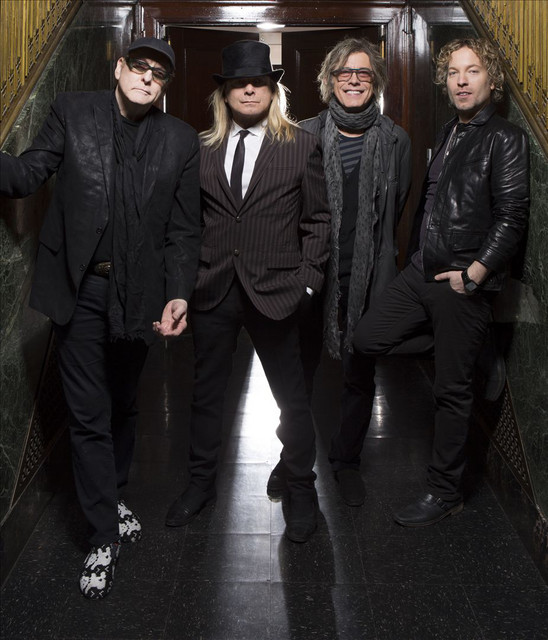
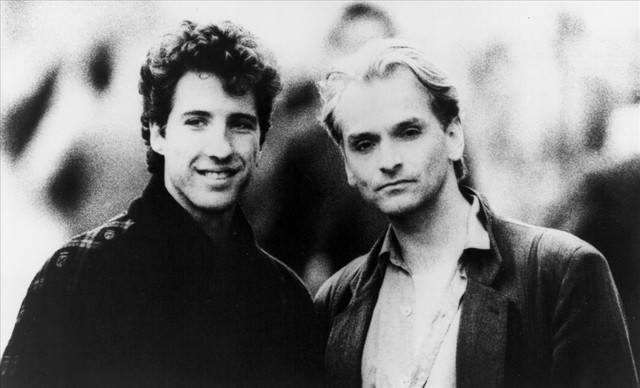
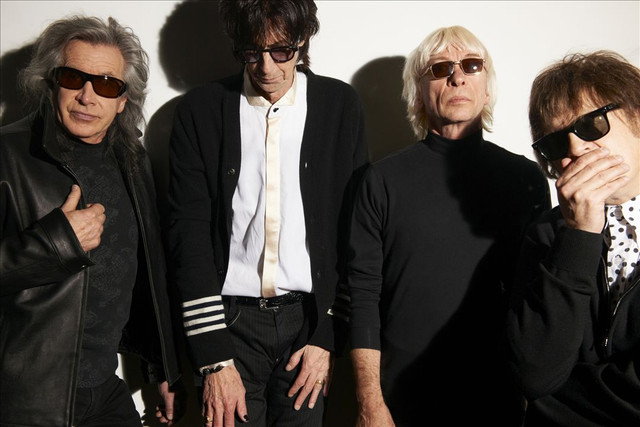
<a href="spotify:artist:1iTrwmoisuv7HbdY5tTVUt">Ric Ocasek</a> (guitar, vocals) and <a href="spotify:artist:6FV7vG3YdZqITxCEbUK98Y">Ben Orr</a> (bass, vocals) had been collaborators for several years before forming the Cars in 1976. <a href="spotify:artist:1iTrwmoisuv7HbdY5tTVUt">Ocasek</a> began playing guitar and writing songs when he was ten. After briefly attending Antioch College and Bowling Green State University, he dropped out of school and moved to Cleveland where he met <a href="spotify:artist:6FV7vG3YdZqITxCEbUK98Y">Orr</a>, who had led the house band on the TV show Upbeat as a teenager. The two began writing songs and led bands in Cleveland, New York City, Woodstock, and Ann Arbor before settling in Cambridge, Massachusetts in the early '70s. In 1972, the pair was the core of a folk trio named <a href="spotify:artist:4HDd88jR2IxHe1zmzOnts1">Milkwood</a>. The band released an album on <a href="spotify:search:label%3A%22Paramount+Records%22">Paramount Records</a> in late 1972 that was ignored; the record featured keyboards by a session musician named <a href="spotify:artist:2syzbwXXqgozQLG1PSWSaD">Greg Hawkes</a>. By 1974, <a href="spotify:artist:1iTrwmoisuv7HbdY5tTVUt">Ocasek</a> and <a href="spotify:artist:6FV7vG3YdZqITxCEbUK98Y">Orr</a> had formed Cap'n Swing, which featured <a href="spotify:artist:4DItbcZMDgmNPU5NjtXeou">Elliot Easton</a> on lead guitar. Cap'n Swing became a popular concert attraction in Boston, but the group broke up in 1975. <a href="spotify:artist:1iTrwmoisuv7HbdY5tTVUt">Ocasek</a>, <a href="spotify:artist:6FV7vG3YdZqITxCEbUK98Y">Orr</a>, and <a href="spotify:artist:4DItbcZMDgmNPU5NjtXeou">Easton</a> formed a new band called the Cars in 1976 with former <a href="spotify:artist:2eRdPaLHWAL4d1WcNUO9Vz">Modern Lovers</a> drummer Dave Robinson and keyboardist <a href="spotify:artist:2syzbwXXqgozQLG1PSWSaD">Hawkes</a>.
Early in 1977, the Cars sent a demo tape of "Just What I Needed" to the influential Boston radio station WBCN and it quickly became the station's most-requested song. For the remainder of 1977, the Cars played Boston clubs, and by the end of the year they signed with <a href="spotify:search:label%3A%22Elektra%22">Elektra</a>. The group's eponymous debut album appeared in the summer of 1978 and it slowly built a following thanks to the hit singles "Just What I Needed" (number 27), "My Best Friend's Girl" (number 35), and "Good Times Roll" (number 41). The Cars stayed on the charts for over two-and-a-half years, delaying the release of the group's second album, and it eventually sold over six million copies.
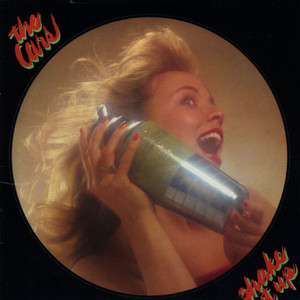
Recorded early in 1979, Candy-O wasn't released until later that summer. The album was an instant hit, quickly climbing to number three on the charts and going platinum two months after its release. The record launched the Top Ten hit "Let's Go" and sent the band to the arena rock circuit. Perhaps as a reaction to the Cars' quick success, the group explored more ambitious territory on 1980's Panorama. Though the album wasn't as big a hit as its predecessors, it nevertheless peaked at number five and went platinum. Before recording their fourth album, several bandmembers pursued extracurricular interests, with <a href="spotify:artist:1iTrwmoisuv7HbdY5tTVUt">Ocasek</a> earning a reputation as a successful new wave producer for his work with <a href="spotify:artist:6uVeWolwyRDrT84lLsaZyW">Suicide</a> and <a href="spotify:artist:20kRNjGAzhnBIflemL8JfY">Romeo Void</a> (he even produced some demos for <a href="spotify:artist:33EUXrFKGjpUSGacqEHhU4">Iggy Pop</a>). The Cars released their fourth album, Shake It Up, in the fall of 1981, and it quickly went platinum, with its title track becoming the group's first Top Ten single.
Following the success of Shake It Up, the band recorded the soundtrack to the short film Chapter-X and then took an extended leave, with <a href="spotify:artist:1iTrwmoisuv7HbdY5tTVUt">Ocasek</a> releasing his solo album Beatitude in 1982 and <a href="spotify:artist:2syzbwXXqgozQLG1PSWSaD">Hawkes</a> issuing Niagara Falls the following year; <a href="spotify:artist:1iTrwmoisuv7HbdY5tTVUt">Ocasek</a> also produced the debut album from the hardcore punk band <a href="spotify:artist:1oVj9JmPUPg4SQ2uerV2xc">Bad Brains</a>. The Cars reconvened in 1983 to record their fifth album, Heartbeat City, which was released in early 1984. Supported by a groundbreaking, computer-animated video, the album's first single, "You Might Think," became a Top Ten hit, sending Heartbeat City to number three on the album charts. Three other Top 40 singles -- "Magic" (number 12), "Drive" (number three), and "Hello Again" (number 20) -- followed later that year, and the record went triple platinum in the summer of 1985. At the end of the year, the group released Greatest Hits, which featured two new hit singles, "Tonight She Comes" and "You Are the Girl."
The Cars were on hiatus for much of 1985 and 1986, during which time <a href="spotify:artist:4DItbcZMDgmNPU5NjtXeou">Easton</a> released Change No Change and <a href="spotify:artist:6FV7vG3YdZqITxCEbUK98Y">Orr</a> issued The Lace. During 1987, the group completed its seventh album, Door to Door. The album was a moderate hit upon its summer release in 1987, launching the single "You Are the Girl," which peaked at number 17. Door to Door had seemed half-hearted, sparking speculation that the group was on the verge of splitting up. The Cars announced in February of 1988 that they had indeed broken up. All of the members pursued solo careers, but only <a href="spotify:artist:1iTrwmoisuv7HbdY5tTVUt">Ocasek</a> released albums with regularity. By the '90s, he'd also become a much sought-after alt-rock producer, having worked with with the likes of <a href="spotify:artist:3jOstUTkEu2JkjvRdBA5Gu">Weezer</a>, <a href="spotify:artist:2yJwXpWAQOOl5XFzbCxLs9">Bad Religion</a>, <a href="spotify:artist:1DDG3ZoXbfw3gL9G8YdHY9">Black 47</a>, <a href="spotify:artist:5SHQUMAmEK5KmuSb0aDvsn">Hole</a>, <a href="spotify:artist:4oV5EVJ0XFWsJKoOvdRPvl">Guided by Voices</a>, <a href="spotify:artist:0cQbJU1aAzvbEmTuljWLlF">No Doubt</a>, <a href="spotify:artist:11zHPjHnZN0ACA50rSnTcy">Nada Surf</a>, <a href="spotify:artist:3JIIoIyMtOyG0Z4DcsDOpk">Johnny Bravo</a>, <a href="spotify:artist:31qpG7j9WcUDUKzYRY7SVi">D Generation</a>, <a href="spotify:artist:1MxAxGmAWGiuN3EvJD6aQu">Possum Dixon</a>, <a href="spotify:artist:6hkch2KhRl0tywpeVK5xR5">Jonathan Richman</a>, <a href="spotify:artist:7GBLSeDdlx3gl2cxHvYuOh">the Wannadies</a>, and former <a href="spotify:artist:6uVeWolwyRDrT84lLsaZyW">Suicide</a> members <a href="spotify:artist:2jlt5Z6VojDVMzSj1JHkcd">Alan Vega</a> and <a href="spotify:artist:4zDG2kkm3SmF383uO3Hgo8">Martin Rev</a>. <a href="spotify:artist:4DItbcZMDgmNPU5NjtXeou">Easton</a> later reappeared with <a href="spotify:artist:5nqr3PugZYyBcQrnKtFkAu">Creedence Clearwater Revisited</a>, while sadly, <a href="spotify:artist:6FV7vG3YdZqITxCEbUK98Y">Orr</a> lost a battle with pancreatic cancer and died on October 3, 2000.
After <a href="spotify:artist:6FV7vG3YdZqITxCEbUK98Y">Orr</a>'s passing, a few new Cars releases appeared on the marketplace, including the concert DVD Live (taped originally in Germany during 1979, and featuring an interview with the group shortly before <a href="spotify:artist:6FV7vG3YdZqITxCEbUK98Y">Orr</a>'s death), a double-disc deluxe edition of their classic self-titled debut album, and a more extensive hits collection titled Complete Greatest Hits. By early 2002, <a href="spotify:artist:1iTrwmoisuv7HbdY5tTVUt">Ocasek</a> was at work putting together a Cars documentary film, comprised of backstage footage and unreleased promo clips that the band filmed itself. He also continued working on solo material, releasing Nexterday in 2005 to warm reviews. Meanwhile, <a href="spotify:artist:2syzbwXXqgozQLG1PSWSaD">Greg Hawkes</a> and <a href="spotify:artist:4DItbcZMDgmNPU5NjtXeou">Elliot Easton</a> teamed up with <a href="spotify:artist:0Lpr5wXzWLtDWm1SjNbpPb">Todd Rundgren</a> to form <a href="spotify:artist:2BdkkHt4TvnCGcr6vT3Nbp">the New Cars</a>, a pop supergroup whose repertoire included <a href="spotify:artist:0Lpr5wXzWLtDWm1SjNbpPb">Rundgren</a>'s solo songs, the Cars' past hits, and some new material. <a href="spotify:artist:2BdkkHt4TvnCGcr6vT3Nbp">The New Cars</a> toured with <a href="spotify:artist:4tpUmLEVLCGFr93o8hFFIB">Blondie</a> in 2006 and released one record, the concert album It's Alive!, before <a href="spotify:artist:0Lpr5wXzWLtDWm1SjNbpPb">Rundgren</a> resumed his solo career the following year. By 2010, the Cars officially reunited for the first time in two decades, with the late <a href="spotify:artist:6FV7vG3YdZqITxCEbUK98Y">Orr</a> serving as the reunion's sole absentee. Working with producer <a href="spotify:artist:1fixTBy0r22vTuK2sQNAqY">Jacknife Lee</a>, they took up temporary residence in a recording studio in Millbrook, New York, emerging with 2011's Move Like This. Released on <a href="spotify:search:label%3A%22Hear+Music%22">Hear Music</a> and greeted by positive reviews, Move Like This peaked at seven upon its release and the group supported it with a brief tour. Afterwards, the Cars entered hibernation, with the only new activity being the band's 2015 nomination for the Rock & Roll Hall of Fame (they were not inducted) and the 2016 compilations Moving in Stereo: The Best of the Cars and the complete box set The Elektra Years 1978-1987. ~ Stephen Thomas Erlewine, Rovi
Monthly Listeners
9.9 million
Monthly Listeners History
Track the evolution of monthly listeners over the last 28 days.
Followers
2.2 million
Followers History
Track the evolution of followers over the last 28 days.
Total Streams
1.9 billion
Total Streams History
Track the evolution of total streams over the last 28 days. This data is calculated from all tracks listed in the artist's discography.
Top Cities

Related Artists