Data may be outdated
Last updated: 1 month ago — Click refresh to get the latest statistics.
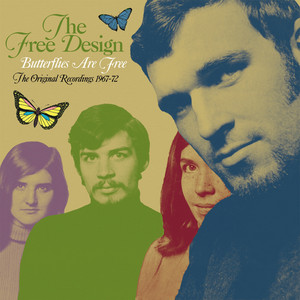
The Free Design originally comprised siblings <a href="spotify:artist:0ejKajmLi2MClrte6SV5BC">Chris</a>, Bruce, and <a href="spotify:artist:0pj5MsDg83cEbKBTFI9soj">Sandy Dedrick</a>, natives of Delevan, New York, whose father Art served as a trombonist and arranger with <a href="spotify:artist:5TD3Mad384osX9K8DLkx7L">Vaughn Monroe</a>. When <a href="spotify:artist:0ejKajmLi2MClrte6SV5BC">Chris</a> moved to New York City in 1966 to attend the Manhattan School of Music, he recruited Bruce (now living on Long Island) and <a href="spotify:artist:1kYd37riIExqdm9g0juqGJ">Sandy</a> (a teacher in Queens) to form a folk group, and soon the trio emerged as a popular attraction on the Greenwich Village coffeehouse circuit.
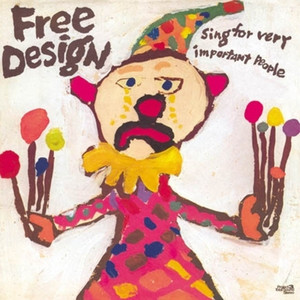
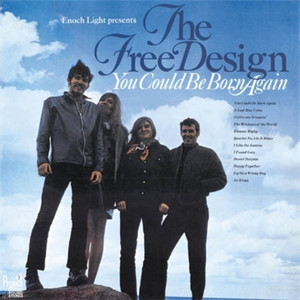
In time, <a href="spotify:artist:0ejKajmLi2MClrte6SV5BC">Chris</a> began composing original material for the Free Design to perform, and with the assistance of their father, the siblings cut a demo, ultimately signing with producer <a href="spotify:artist:3bWuJAAUsvSiavkQHpOlLl">Enoch Light</a>'s audiophile label <a href="spotify:search:label%3A%22Project+3%22">Project 3</a>. The title track from their 1967 debut LP, Kites Are Fun, was also their first single, cracking the Top 40 on the Billboard adult contemporary chart but reaching only number 114 on the pop chart -- somewhat amazingly, it was the Free Design's biggest hit. Another Dedrick sister, Ellen, joined the group after graduating high school, making her debut on 1968's You Could Be Born Again. "2002: A Hit Song," from 1969's Heaven/Earth, satirically addressed the Free Design's continuing inability to make a commercial impact, but still the group's chart woes continued, and with their next effort, 1970's Songs for Very Important People, they targeted a new audience: children.
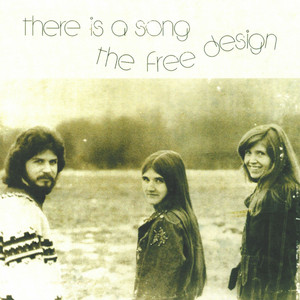
Stars/Time/Bubbles/Love, also released in 1970, returned the Free Design to their adult constituency. After issuing One by One two years later, the group were dropped by <a href="spotify:search:label%3A%22Project+3%22">Project 3</a>, at which time they relocated from New York to Canada. There Chris Dedrick recorded a solo album, Be Free, which went unreleased. Signing to the <a href="spotify:search:label%3A%22Ambrotype%22">Ambrotype</a> label, the Free Design recorded one final LP, 1973's There Is a Song, before disbanding in 1975. In the years to follow, <a href="spotify:artist:0ejKajmLi2MClrte6SV5BC">Chris</a> remained the most musically active sibling, forming the choral ensemble <a href="spotify:artist:0wTOf4EGXZDte24oMUrQzc">Star Scape Singers</a>, as well as arranging and composing for <a href="spotify:artist:51LdwFHCk1yoK1jELZ4VOu">the Canadian Brass</a>. He also won a series of Gemini Awards for his scores for Canadian film and television productions.
By the '90s, artists including <a href="spotify:artist:2vJObElaIZWYDLpiXiJMo9">Cornelius</a>, <a href="spotify:artist:0IQalWuw5NBk1xXG5GK0Bv">Pizzicato 5</a>, and <a href="spotify:artist:46LmDfSgIWeh975lhmu9cU">Louis Philippe</a> were regularly citing the Free Design as a key influence, resulting in the 1998 release of Kites Are Fun: The Best of the Free Design. The new millennium saw the Free Design regroup for another album -- 2001's Cosmic Peekaboo -- which gathered <a href="spotify:artist:1kYd37riIExqdm9g0juqGJ">Sandy</a>, <a href="spotify:artist:0ejKajmLi2MClrte6SV5BC">Chris</a>, and Bruce Dedrick back together again. The band's music from the late '60s and '70s would continue to find new listeners with further reissue campaigns and song placements in various films and television shows. In August 2010, <a href="spotify:artist:0ejKajmLi2MClrte6SV5BC">Chris</a> died of cancer, leaving behind a lifetime's worth of music to be remembered by. ~ Jason Ankeny & Fred Thomas, Rovi
Monthly Listeners
127,372
Monthly Listeners History
Track the evolution of monthly listeners over the last 28 days.
Followers
31,578
Followers History
Track the evolution of followers over the last 28 days.
Total Streams
20.9 million
Total Streams History
Track the evolution of total streams over the last 28 days. This data is calculated from all tracks listed in the artist's discography.
Top Cities

Related Artists
Vashti Bunyan



The Moldy Peaches
The Magnetic Fields
Kimya Dawson
Pogo

Kermit

gabrielle hope
Michael Cera


Judi Singh
pr1zes

Lady Lamb