Data may be outdated
Last updated: 8 months ago — Click refresh to get the latest statistics.
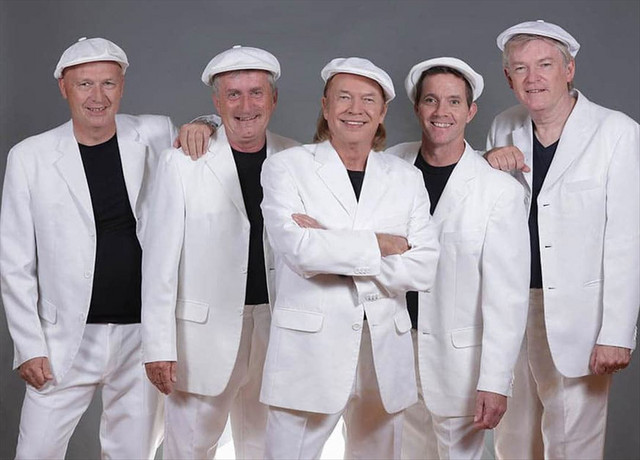
Formed in 1973 in England, the Rubettes were originally organized as a session outfit by <a href="spotify:artist:3uqwAaXXQlBpUuM3xBbFqX">Wayne Bickerton</a> of <a href="spotify:search:label%3A%22Polydor%22">Polydor</a> A&R. Inspired by the successes of <a href="spotify:artist:2SmjZ060s1uBMud6afmImP">Sha Na Na</a>, <a href="spotify:artist:3cqIsBnzV3BabbPWKz8Txf">Mud</a>, and <a href="spotify:artist:3zIIUxcnIoUMouVQdphkeC">Showaddywaddy</a>, they combined glam rock presentation (red and white suits with matching caps) with a rock & roll revival sound. Their first release, 1974's "Sugar Baby Love," was an instant smash, remaining at number one in England for five weeks while denting the U.S. charts at number 37 in August, and remains their best-known record. Subsequent releases would be less successful, but the band soldiered on and continued to tour on the nostalgia circuit well into the 2000s.
"Sugar Baby Love" was recorded in October 1973 by a group of session musicians, with <a href="spotify:artist:54OfgvgkUThSBHWzOnhbxL">Paul DaVinci</a> singing lead. Three months after the song's recording, the band was established with a lineup consisting of vocalist/guitarist <a href="spotify:artist:2LxmPzZVLVWdMS878rJsoE">Alan Williams</a>, <a href="spotify:artist:71RVZ9zn7zDUCo3NXGGm7u">John Richardson</a> on drums, Mick Clarke on bass, Bill Hurd and Peter Arnesen on keyboards, and <a href="spotify:artist:0bGWaOPlgV2snPdJGbjDpE">Tony Thorpe</a> on guitar. The Rubettes' name, like their music, was selected to consciously tap into '50s America iconography, and the revival sound bore fruit in the U.K. on several more singles: The "Sugar Baby Love" sound-alike "Tonight" was a strong follow-up, and "Jukebox Jive" and "I Can Do It" went Top Ten there as well. None charted in the States, though, and the group moved from glammy nostalgia into more serious territory. They turned many a head with 1976's "Under One Roof," a sensitive portrayal of a gay man disowned and later murdered by his father; along with <a href="spotify:artist:2y8Jo9CKhJvtfeKOsYzRdT">Rod Stewart</a>'s "The Killing of Georgie," it was one of very few songs tackling the difficult topic of homophobia. The track reached the Top 40, and the band scored one more Top Ten hit with 1977's "Baby I Know" before they dissolved by the end of the decade.
In 1982, though, at the urging of a German promoter, <a href="spotify:artist:2LxmPzZVLVWdMS878rJsoE">Williams</a> re-formed the group for festival shows. Redubbed the Rubettes featuring Alan Williams to counteract other acts passing themselves off as the Rubettes, the reconstituted unit continued to tour Europe in oldies revival packages intermittently into the 2000s, with original members <a href="spotify:artist:71RVZ9zn7zDUCo3NXGGm7u">Richardson</a> and Clarke back in the fold along with ex-<a href="spotify:artist:1SQRv42e4PjEYfPhS0Tk9E">Kinks</a> keyboardist Mark Haley. ~ Joseph McCombs, Rovi
"Sugar Baby Love" was recorded in October 1973 by a group of session musicians, with <a href="spotify:artist:54OfgvgkUThSBHWzOnhbxL">Paul DaVinci</a> singing lead. Three months after the song's recording, the band was established with a lineup consisting of vocalist/guitarist <a href="spotify:artist:2LxmPzZVLVWdMS878rJsoE">Alan Williams</a>, <a href="spotify:artist:71RVZ9zn7zDUCo3NXGGm7u">John Richardson</a> on drums, Mick Clarke on bass, Bill Hurd and Peter Arnesen on keyboards, and <a href="spotify:artist:0bGWaOPlgV2snPdJGbjDpE">Tony Thorpe</a> on guitar. The Rubettes' name, like their music, was selected to consciously tap into '50s America iconography, and the revival sound bore fruit in the U.K. on several more singles: The "Sugar Baby Love" sound-alike "Tonight" was a strong follow-up, and "Jukebox Jive" and "I Can Do It" went Top Ten there as well. None charted in the States, though, and the group moved from glammy nostalgia into more serious territory. They turned many a head with 1976's "Under One Roof," a sensitive portrayal of a gay man disowned and later murdered by his father; along with <a href="spotify:artist:2y8Jo9CKhJvtfeKOsYzRdT">Rod Stewart</a>'s "The Killing of Georgie," it was one of very few songs tackling the difficult topic of homophobia. The track reached the Top 40, and the band scored one more Top Ten hit with 1977's "Baby I Know" before they dissolved by the end of the decade.
In 1982, though, at the urging of a German promoter, <a href="spotify:artist:2LxmPzZVLVWdMS878rJsoE">Williams</a> re-formed the group for festival shows. Redubbed the Rubettes featuring Alan Williams to counteract other acts passing themselves off as the Rubettes, the reconstituted unit continued to tour Europe in oldies revival packages intermittently into the 2000s, with original members <a href="spotify:artist:71RVZ9zn7zDUCo3NXGGm7u">Richardson</a> and Clarke back in the fold along with ex-<a href="spotify:artist:1SQRv42e4PjEYfPhS0Tk9E">Kinks</a> keyboardist Mark Haley. ~ Joseph McCombs, Rovi
Monthly Listeners
477,040
Monthly Listeners History
Track the evolution of monthly listeners over the last 28 days.
Followers
115,530
Followers History
Track the evolution of followers over the last 28 days.
Top Cities


Related Artists



5000 Volts