Data may be outdated
Last updated: 9 months ago — Click refresh to get the latest statistics.
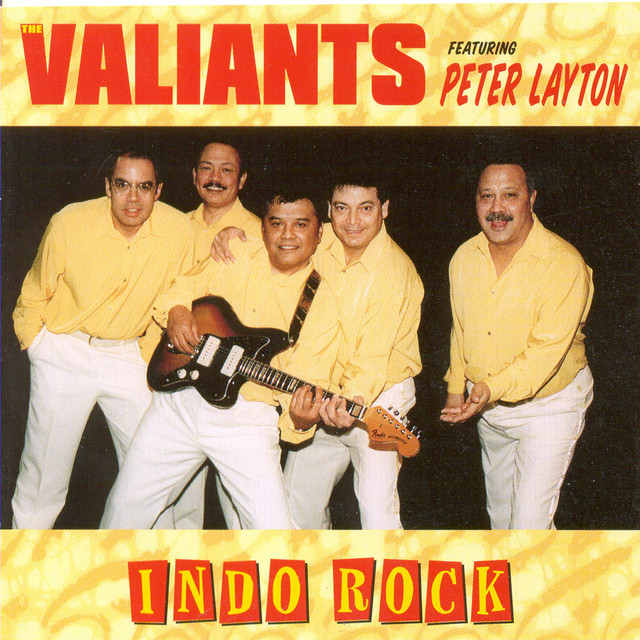
The labyrinthine history of Los Angeles doo wop group the Valiants dates to early 1955, when second tenor Sheridan "Rip" Spencer formed <a href="spotify:artist:4A9jBhoUQJfjpBS4EBWN1k">the Sabers</a> with his cousin Brice Coefield, who assumed baritone duties. According to Marv Goldberg's profile on his R&B Notebooks website, the cousins added first tenor Billy Spicer and bass Walter Carter prior to issuing their Cal-West label debut single, "Always, Forever," in late 1955. When the record flopped, <a href="spotify:artist:4A9jBhoUQJfjpBS4EBWN1k">the Sabers</a> rechristened themselves the Chavelles, and with the intervention of Coefield's postman father met local jazz pianist <a href="spotify:artist:4lLtnsb67T7hW7XN6WtuYr">Lloyd Glenn</a>, who introduced the group to Specialty Records A&R chief "Bumps" Blackwell. A studio session soon followed, and after Blackwell shopped the master tape to the Pasadena-based Vita label, the first Chavelles single hit stores in the spring of 1956. Commercial success again eluded the group, and with the addition of ex-Squires guitarist Chester Pipkin, the core trio of Spencer, Coefield, and Spicer formed yet another vehicle, the Valiants, borrowing the name from the popular comic strip Prince Valiant. (This lineup's first session with Blackwell further added to the confusion when the Aladdin label mistakenly credited their 1957 debut, "Happenin' After School," to the Gents.)
Only when "This Is the Night" appeared on Keen in late 1957 did the Valiants receive proper attribution. Featuring Spicer on lead, the single fell just shy of the R&B Top 40, additionally crossing over to the number 69 slot on the pop charts. The 1958 follow-up, "Lover, Lover," attracted scant attention, however, and the same fate befell "Please Wait My Love." After the Valiants' fifth Keen single, "We Knew," also failed to match their early success, the label terminated the group's contract. Spicer exited the lineup soon after, adopting the name <a href="spotify:artist:1ZzYpqlzryQn2FvG9taU1o">Billy Storm</a> and recruiting Pipkin's former Squires bandmates to cut the single "Every Word of the Song." He scored a Top 40 pop hit in 1959 with "I've Come of Age." Meanwhile, the remaining Valiants added tenor Don Trotter and bass Ed Wallace to cut "Dear Cindy" for the London Records subsidiary Shar-Dee before agreeing to again change their name, this time becoming the Untouchables. After signing with producers <a href="spotify:artist:1PqdKx88nAgPolRy079lMl">Herb Alpert</a> and Lou Adler, the Untouchables released 1960's "New Fad" on the Madison imprint, the first in a series of little-noticed efforts for the fledgling label including a cover of <a href="spotify:artist:0EkpTQlDjByRT3m4wOsr4P">the Spaniels</a>' classic "Goodnight Sweetheart Goodnight" and "Sixty Minute Man." For reasons unknown, their 1961 one-off for the Screen Gems label, "Summertime Nights," gives credit to the Happy Tones.
The Untouchables signed to Liberty in the spring of 1961 for "You're on Top." Its follow-up, "Papa," deserves footnote status as featuring producer <a href="spotify:artist:1PqdKx88nAgPolRy079lMl">Alpert</a>'s first recorded trumpet performance, an instrument he would further pursue to enormous commercial success. By 1962 the Untouchables were no more. Pipkin formed a new group, the Electras, which later included Spencer and <a href="spotify:artist:1ZzYpqlzryQn2FvG9taU1o">Billy Storm</a> as well. At year's end, Lou Adler formed the Alley Cats, a group of session vocalists he planned to lease to producer <a href="spotify:artist:3jVMgT4X7YeuYE4aludcmE">Phil Spector</a>. In addition to Spencer and Coefield, the lineup also included Pipkin's cousin Gary, bass James Barker, and tenor <a href="spotify:artist:4nXmXA3DSTnMbVlZcjUCcv">Bobby Sheen</a>, who as <a href="spotify:artist:2ry5nwK1VNmh5zMZpmOAyc">Bob B. Soxx</a> previously recorded the <a href="spotify:artist:3jVMgT4X7YeuYE4aludcmE">Spector</a>-helmed smash "Zip-a-Dee-Doo-Dah." Spencer, Coefield, and Gary Pipkin also co-wrote the Alley Cats' debut effort, "Puddin' n' Tain," which ascended to number 21 on the R&B chart in early 1963. <a href="spotify:artist:3jVMgT4X7YeuYE4aludcmE">Spector</a> chose not to work with the group again, however, and Spencer and Barker continued collaborating as <a href="spotify:artist:58taiRgC884l3wNTnDja24">Marvin & Johnny</a>, assuming the names of the long-lived R&B duo that previously featured Spencer's uncle, Marvin Phillips. Spencer, Coefield, <a href="spotify:artist:1ZzYpqlzryQn2FvG9taU1o">Storm</a>, and Chester Pipkin re-formed the Electras in 1966, adding Billy Mann and Warren Joyner for the Ruby-Doo label effort "Mary Mary." Two years later, Adler hired this iteration of the group to record the psychedelic soul LP Music from "Lil Brown", credited to Africa. ~ Jason Ankeny, Rovi
Only when "This Is the Night" appeared on Keen in late 1957 did the Valiants receive proper attribution. Featuring Spicer on lead, the single fell just shy of the R&B Top 40, additionally crossing over to the number 69 slot on the pop charts. The 1958 follow-up, "Lover, Lover," attracted scant attention, however, and the same fate befell "Please Wait My Love." After the Valiants' fifth Keen single, "We Knew," also failed to match their early success, the label terminated the group's contract. Spicer exited the lineup soon after, adopting the name <a href="spotify:artist:1ZzYpqlzryQn2FvG9taU1o">Billy Storm</a> and recruiting Pipkin's former Squires bandmates to cut the single "Every Word of the Song." He scored a Top 40 pop hit in 1959 with "I've Come of Age." Meanwhile, the remaining Valiants added tenor Don Trotter and bass Ed Wallace to cut "Dear Cindy" for the London Records subsidiary Shar-Dee before agreeing to again change their name, this time becoming the Untouchables. After signing with producers <a href="spotify:artist:1PqdKx88nAgPolRy079lMl">Herb Alpert</a> and Lou Adler, the Untouchables released 1960's "New Fad" on the Madison imprint, the first in a series of little-noticed efforts for the fledgling label including a cover of <a href="spotify:artist:0EkpTQlDjByRT3m4wOsr4P">the Spaniels</a>' classic "Goodnight Sweetheart Goodnight" and "Sixty Minute Man." For reasons unknown, their 1961 one-off for the Screen Gems label, "Summertime Nights," gives credit to the Happy Tones.
The Untouchables signed to Liberty in the spring of 1961 for "You're on Top." Its follow-up, "Papa," deserves footnote status as featuring producer <a href="spotify:artist:1PqdKx88nAgPolRy079lMl">Alpert</a>'s first recorded trumpet performance, an instrument he would further pursue to enormous commercial success. By 1962 the Untouchables were no more. Pipkin formed a new group, the Electras, which later included Spencer and <a href="spotify:artist:1ZzYpqlzryQn2FvG9taU1o">Billy Storm</a> as well. At year's end, Lou Adler formed the Alley Cats, a group of session vocalists he planned to lease to producer <a href="spotify:artist:3jVMgT4X7YeuYE4aludcmE">Phil Spector</a>. In addition to Spencer and Coefield, the lineup also included Pipkin's cousin Gary, bass James Barker, and tenor <a href="spotify:artist:4nXmXA3DSTnMbVlZcjUCcv">Bobby Sheen</a>, who as <a href="spotify:artist:2ry5nwK1VNmh5zMZpmOAyc">Bob B. Soxx</a> previously recorded the <a href="spotify:artist:3jVMgT4X7YeuYE4aludcmE">Spector</a>-helmed smash "Zip-a-Dee-Doo-Dah." Spencer, Coefield, and Gary Pipkin also co-wrote the Alley Cats' debut effort, "Puddin' n' Tain," which ascended to number 21 on the R&B chart in early 1963. <a href="spotify:artist:3jVMgT4X7YeuYE4aludcmE">Spector</a> chose not to work with the group again, however, and Spencer and Barker continued collaborating as <a href="spotify:artist:58taiRgC884l3wNTnDja24">Marvin & Johnny</a>, assuming the names of the long-lived R&B duo that previously featured Spencer's uncle, Marvin Phillips. Spencer, Coefield, <a href="spotify:artist:1ZzYpqlzryQn2FvG9taU1o">Storm</a>, and Chester Pipkin re-formed the Electras in 1966, adding Billy Mann and Warren Joyner for the Ruby-Doo label effort "Mary Mary." Two years later, Adler hired this iteration of the group to record the psychedelic soul LP Music from "Lil Brown", credited to Africa. ~ Jason Ankeny, Rovi
Monthly Listeners
3,079
Monthly Listeners History
Track the evolution of monthly listeners over the last 28 days.
Followers
770
Followers History
Track the evolution of followers over the last 28 days.
Top Cities



Related Artists

Royal Six

Roy & The Kiliaan Brothers
The Crazy Rockers

THE STARLIGHTS

The Hot Jumpers


The Rocking Birds
Peter Layton

Mike Lorentz

The Blue Moon Rockers

The Bell Boys


The Explosion Rockets

The East & West Rockers
Johnny & The Rockers


Indonesian Revival Band

Ricky & The Rhythm Strings

Rocking Jojo and his Red Angels

Ricky Lee


The Nightbreakers


Roy and the Kiliaan Brothers

Shadoogie

Eddy Chatelin

The Hurricane Rollers

The Silhouets

The Rocking Teens

The Jumping Strings
Ruud Everett
