Data may be outdated
Last updated: 9 months ago — Click refresh to get the latest statistics.
Pittsburgh-born vocalist Tommy Hunt's recording career began at age 20, when he cut singles with his first group, <a href="spotify:artist:4fz0SWDQmPa54H0w1Cs0WT">the Five Echoes</a>, in 1953. It was five years later, however, that he made his greatest mark on popular music, rock & roll, and R&B, as a member of <a href="spotify:artist:6iygtKnPG7TRvDaTYcLOd6">the Flamingos</a> from 1958 through 1961. Those years coincided with the group's being signed to <a href="spotify:search:label%3A%22End+Records%22">End Records</a>, and the release of their biggest, most identifiable hit, "I Only Have Eyes for You" -- Hunt's dramatic background singing, coupled with the restrained piano backing, made it one of the transcendent documents of '50s R&B. He can also be seen singing lead in a killer jump-blues performance in the juke box movie classic Go, Johnny, Go, as the group (back to a five-piece) mimes to their <a href="spotify:search:label%3A%22End%22">End</a> recording of "Jump Children."
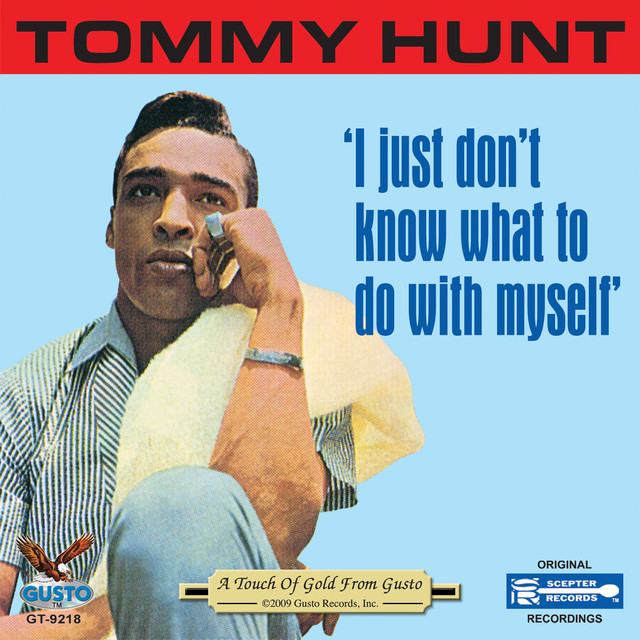
Hunt left <a href="spotify:artist:6iygtKnPG7TRvDaTYcLOd6">the Flamingos</a> in 1962 and signed as a solo artist with Florence Greenberg's <a href="spotify:search:label%3A%22Scepter+Records%22">Scepter Records</a> in New York. <a href="spotify:artist:2eVVaUkKOP4cOwkbHqMYMO">Greenberg</a> reportedly wasn't impressed with Hunt as a singer or an individual, but <a href="spotify:artist:0KgtVp38OlEU60lcNslgJO">Luther Dixon</a>, the company's chief of A&R and general music director, loved Hunt's voice, providing him with "Human," which became a number five R&B hit in late 1961. Hunt continued with the label for another three years, until 1964, cutting a complete album (I Just Don't Know What to Do with Myself) in late 1962. His version of the title track was never a single, but it predated the more famous hit by <a href="spotify:artist:5zaXYwewAXedKNCff45U5l">Dusty Springfield</a> by nearly two years. In late 1963, following the departure of <a href="spotify:artist:4hs4QcruAuaZtBZ99qw6G2">Dixon</a> from <a href="spotify:search:label%3A%22Scepter%22">Scepter</a>, <a href="spotify:artist:4fgbkjDCSGUHANHRope4Ox">Ed Townsend</a> became the company's music director, and one of his very first productions was Tommy Hunt's recording of Townsend's "I Am a Witness," which featured <a href="spotify:artist:0v0wFiHWFaKEEAwlDtDiRT">Bernard Purdie</a> on drums and <a href="spotify:artist:2PnyEnxPA8H95IhFEBu5u7">Mickey Baker</a> on guitar, with Hunt's vocals backed up by <a href="spotify:artist:0x83OBqixqdCHnStP5VMcn">the Shirelles</a>, <a href="spotify:artist:3KeTziLAcJFEnbhfIMRh5w">Dee Dee Warwick</a>, and <a href="spotify:artist:1wonEkTZkBGYq7J4w56yZl">the Sweet Inspirations</a>. The single was Hunt's last chart entry for the label, reaching number 71.
Hunt left <a href="spotify:search:label%3A%22Scepter%22">Scepter</a> in 1964, and later moved to the <a href="spotify:search:label%3A%22Dynamo%22">Dynamo</a> label, on which he had a charting single in 1967. He later moved to Europe, and performed in Germany and the United Kingdom, developing a strong following on the British Northern Soul scene. In 2001, he was inducted into the Rock & Roll Hall of Fame as a member of <a href="spotify:artist:6iygtKnPG7TRvDaTYcLOd6">the Flamingos</a>, and in the 2010s he led Tommy Hunt & the New Flamingos. Hunt's only album, on <a href="spotify:search:label%3A%22Scepter%22">Scepter</a>, hasn't been reissued, but tracks from it, as well as his hit singles from the label and several other sides, turned up on <a href="spotify:search:label%3A%22Capricorn%22">Capricorn</a>'s 1992 Scepter Records Story double-CD set. Tommy Hunt died on February 12, 2025, at the age of 91. ~ Bruce Eder, Rovi
Hunt left <a href="spotify:artist:6iygtKnPG7TRvDaTYcLOd6">the Flamingos</a> in 1962 and signed as a solo artist with Florence Greenberg's <a href="spotify:search:label%3A%22Scepter+Records%22">Scepter Records</a> in New York. <a href="spotify:artist:2eVVaUkKOP4cOwkbHqMYMO">Greenberg</a> reportedly wasn't impressed with Hunt as a singer or an individual, but <a href="spotify:artist:0KgtVp38OlEU60lcNslgJO">Luther Dixon</a>, the company's chief of A&R and general music director, loved Hunt's voice, providing him with "Human," which became a number five R&B hit in late 1961. Hunt continued with the label for another three years, until 1964, cutting a complete album (I Just Don't Know What to Do with Myself) in late 1962. His version of the title track was never a single, but it predated the more famous hit by <a href="spotify:artist:5zaXYwewAXedKNCff45U5l">Dusty Springfield</a> by nearly two years. In late 1963, following the departure of <a href="spotify:artist:4hs4QcruAuaZtBZ99qw6G2">Dixon</a> from <a href="spotify:search:label%3A%22Scepter%22">Scepter</a>, <a href="spotify:artist:4fgbkjDCSGUHANHRope4Ox">Ed Townsend</a> became the company's music director, and one of his very first productions was Tommy Hunt's recording of Townsend's "I Am a Witness," which featured <a href="spotify:artist:0v0wFiHWFaKEEAwlDtDiRT">Bernard Purdie</a> on drums and <a href="spotify:artist:2PnyEnxPA8H95IhFEBu5u7">Mickey Baker</a> on guitar, with Hunt's vocals backed up by <a href="spotify:artist:0x83OBqixqdCHnStP5VMcn">the Shirelles</a>, <a href="spotify:artist:3KeTziLAcJFEnbhfIMRh5w">Dee Dee Warwick</a>, and <a href="spotify:artist:1wonEkTZkBGYq7J4w56yZl">the Sweet Inspirations</a>. The single was Hunt's last chart entry for the label, reaching number 71.
Hunt left <a href="spotify:search:label%3A%22Scepter%22">Scepter</a> in 1964, and later moved to the <a href="spotify:search:label%3A%22Dynamo%22">Dynamo</a> label, on which he had a charting single in 1967. He later moved to Europe, and performed in Germany and the United Kingdom, developing a strong following on the British Northern Soul scene. In 2001, he was inducted into the Rock & Roll Hall of Fame as a member of <a href="spotify:artist:6iygtKnPG7TRvDaTYcLOd6">the Flamingos</a>, and in the 2010s he led Tommy Hunt & the New Flamingos. Hunt's only album, on <a href="spotify:search:label%3A%22Scepter%22">Scepter</a>, hasn't been reissued, but tracks from it, as well as his hit singles from the label and several other sides, turned up on <a href="spotify:search:label%3A%22Capricorn%22">Capricorn</a>'s 1992 Scepter Records Story double-CD set. Tommy Hunt died on February 12, 2025, at the age of 91. ~ Bruce Eder, Rovi
Monthly Listeners
3,193
Monthly Listeners History
Track the evolution of monthly listeners over the last 28 days.
Followers
1,422
Followers History
Track the evolution of followers over the last 28 days.
Top Cities
163 listeners

68 listeners
44 listeners

43 listeners

42 listeners
Related Artists

Tina Britt





Percy Milem



the Kelly Brothers